
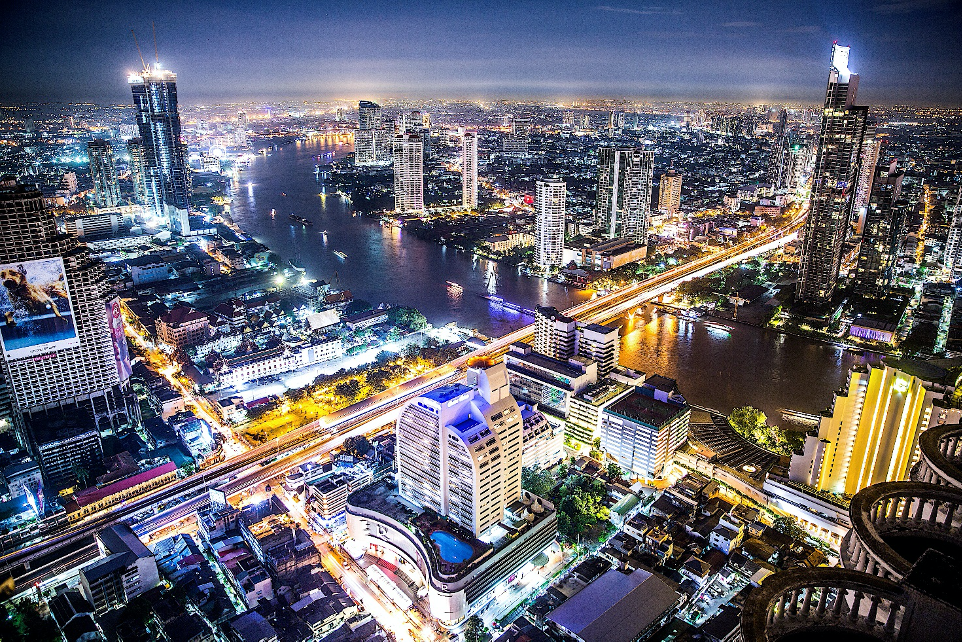
Thailand's response to the Covid-19 crisis Thailand has effectively addressed the economic and health consequences of the coronavirus pandemic standing out as a model for all.
On July 9th, the Italy-ASEAN Association organized a webinar on Thailand and its response to the crisis caused by Covid-19 with the President of the Italy-ASEAN Association, Enrico Letta, the Ambassador of Thailand in Italy, Chirdchu Raktabutr, the Ambassador of Italy to Thailand, Lorenzo Galanti, the President of the Foreign Affairs Commission of the Thai Senate, Pikulkaew Krairiksh, the Thai Minister for Social Development and Human Security, Chuti Krairiksh and Ducati's CEO, Claudio Domenicali. The meeting was moderated by the Vice-President of the Italy-ASEAN Association and former Ambassador of Italy to Thailand Michelangelo Pipan.
Although Thailand was the first country after China to confirm a Covid-19 case on its territory in early January, the management of the coronavirus pandemic by Thai authorities has since then emerged as one of the greatest success stories in South-East Asia and beyond. At the moment, in fact, Thailand is only the 99th most hard-hit country in the world, with an extremely low total number of cases, at about 3200 units as opposed to a population of over 70 million inhabitants, and a proportion of deaths in relation to the overall population among the lowest in the world. These enviable epidemiological outcomes are the result of effective governmental action, which imposed restrictive measures in a timely fashion, but are also a by-product of the incredible social discipline of Thai citizens.
On the economic front, Thailand has greatly suffered from the collapse of international trade and international tourism, both of which are key sectors for the economy of the Kingdom. The most recent estimates from the Thai Central Bank and from the World Bank project a GDP contraction between 5 and 8 percentage points in 2020 and a partial recovery between 4% and 5% in 2021. The Thai government has thus responded to the grave economic crisis by launching a 64 billion US dollars stimulus package, amounting to 16% of the country's GDP, designed to assist families, businesses and local development projects in the area. In spite of the inevitable economic devastation caused by the coronavirus pandemic, thanks to the financial solidity of the Kingdom, which can count on a 44% debt-to-GDP ratio, the Thai government is confident it can control the damage and get the economy back on its feet in a relatively short time.
The evolution of the Covid-19 crisis in Thailand has shown a certain resilience of the country to external shocks. On both the economic and health front, Thailand has shown great resistance and flexibility in its response to the pandemic. However, the current goal of the Thai government in the medium-term is to carry out a cautious reopening to international trade and tourism, while at the same time seeking to reduce its excessive dependence on external factors. The government has shown intention to pursue a political strategy based on the notion of "immunity", combining health security, economic resilience and preparation for external crises. The Thai government thus intends to strengthen its economic self-reliance, in an attempt to limit excessive exposure to international upheavals, while maintaining a high degree of openness of the national market to foreign trade and tourism.
Thailand has proven itself to be a resilient country in its approach to the coronavirus pandemic, doing everything possible to limit the economic and health consequences of the Covid-19 crisis. The challenge for the Kingdom in the coming years will be to further increase its resilience to external shocks in the event of new crises of analogous seriousness.
Article edited by Andrea Dugo.

 English
  Italian