The independent foreign policy of Marcos Jr

Many predicted a continuation of Rodrigo Duterte's international line, but with the new president, the Philippines is back to being 'everyone's friend and no one's enemy' 

Article by Geraldine Ramilo

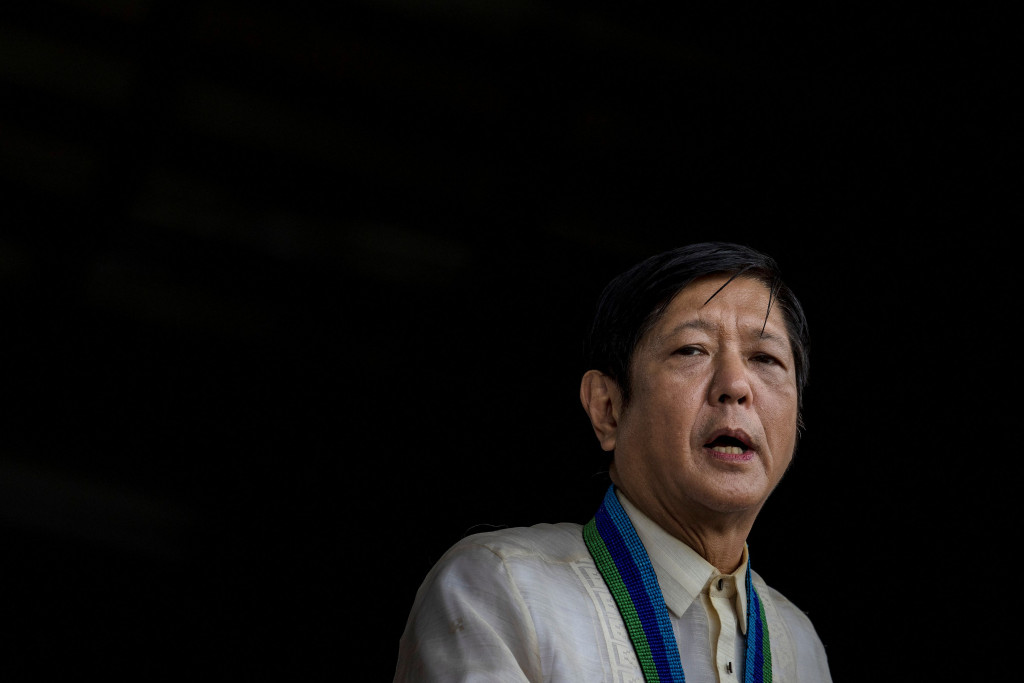
Ferdinand Marcos Jr., son of former dictator Ferdinand Marcos, took office as the new Philippine President in June 2022, winning a landslide election victory the month before. During his election campaign, references to his foreign policy intentions were vague. Some initial speculation predicted a continuation of his predecessor Rodrigo Duterte's line of rapprochement and cooperation with China. Now, however, a few months after his official inauguration, Marcos Jr. seems to have no intentions of getting too involved in the delicate confrontation between the US and China. 

The Philippines, due to its strategic location, is a contested area of influence in the rivalry between the two superpowers for dominance in the Indo-Pacific region. On the one hand, the Philippines and the US have a privileged economic and security relationship. Indeed, the two countries established a formal diplomatic relationship in 1946 and entered into a mutual defence pact in 1951. On the other hand, China is now a major economic partner of the Philippines due to its huge investments in the Philippines' domestic infrastructure. The relationship with Beijing was also fostered by the previous head of state Duterte, who conducted a policy line openly hostile to the West and the United States in particular.

Some recent episodes have made it possible to contemplate a rapprochement of the Marcos Jr. administration towards Washington. Already during the election campaign, the then President-elect had mentioned the importance and benefits the Philippines derives from its relationship with the US. The White House had also expressed interest in restoring the 'normalcy' of relations between the two countries that had been interrupted under Duterte. Current US President Joe Biden was even the first foreign head of state to congratulate Marcos Jr. on his victory. This rapprochement with the United States should not, however, suggest that the relationship built with China has broken down. Marcos and his family have always had a close relationship with the Asian giant, so much so that the president himself, after being elected, had a long telephone conversation with Chinese President Xi Jinping, where both expressed interest in strengthening the bilateral relationship.

It is therefore expected that Marcos Jr. will not take any drastic stance in favour of either the US or China for the time being, but will maintain a collaborative and balanced position between the two poles. As proof of this, during his first State of the Nation Address in July 2022, Marcos Jr. declared his intentions to implement an independent foreign policy while maintaining good relations with both powers. He announced the Philippines' ambition to be 'friends of all and enemies of none', and then appealing to the generality of the constituent countries of the international community, the newly elected president added: 'If we agree, we will cooperate and work together. If we disagree, we will dialogue more until we agree'.

Marcos Jr. thus seems to have distanced himself from the anti-Western and strongly anti-US policy of his predecessor, following instead an independent foreign policy line more similar to that of Duterte's predecessors, including that of his own father. The idea behind such a policy is to secure maximum benefits from both poles and leave room for manoeuvre to move according to national interests. Marcos Jr. thus seems to be oriented towards building a delicate balance between the US and China, leaving open the possibility of exploring opportunities for cooperation on both fronts.  

In the context of the rapprochement in Washington after the break-up with Duterte, the visit of US Vice President Kamala Harris to the Palawan Islands and her meeting with the Philippine President in the past few days is part of the US aim to strengthen and reaffirm relations with its historical allies. Indeed, the Philippines is a crucial point for the Biden administration and its diplomatic strategy to contain Chinese ambitions in the Pacific. Despite Palawan's geographical proximity to the South China Sea and the implicit message from the US, the visit does not necessarily pose a direct threat to China. But some Philippine experts are concerned about the awkward position their country will find itself in with Beijing and the risk to national interests should the dispute between the two powers escalate.

Indonesia and palm biodiesel

Indonesia is the world's largest producer of palm oil. The question for Jakarta is: can the blend of diesel combined with 40 per cent 'cooking oil' help meet the government's targets?

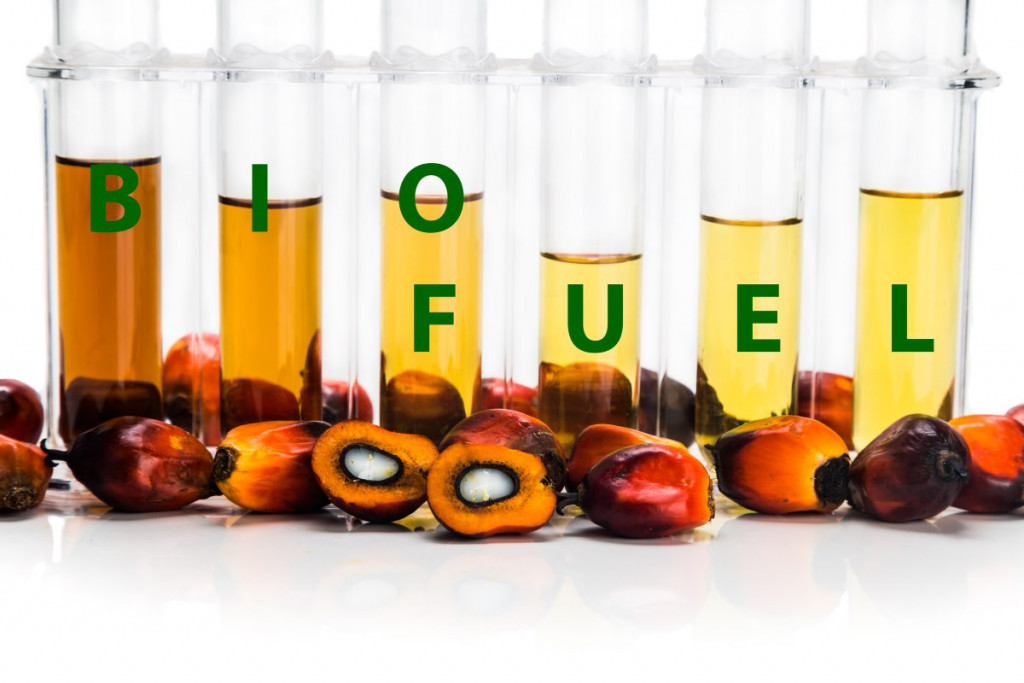
Indonesia is testing a biodiesel blend to be used as fuel for cars, of which palm oil makes up 40 per cent. In particular, Jakarta is testing whether this combination of diesel and palm oil (also called 'cooking oil') can work at high altitudes. In fact, in general, palm oil tends to harden in colder climates. Blending biodiesel with palm oil is nothing new in Indonesia. The South-East Asian country currently requires cars to use a 30% blend (or 'B30' - 'B30 requirement'), and is trying to increase this to 40% ('B40' - 'B40 requirement'). To find out whether the tropical oil can adapt to higher altitudes, a few weeks ago the experimenters left Dieng, an active volcanic region in central Java, for a test tour. Therefore, in the coming weeks, six Toyota Innova minivans, fuelled with 40 per cent palm oil biodiesel, will be on a trial run on the island of Java. 

Should the tests yield the desired result, the government's target would be to increase the requirement from B30 to B40, and thus mandate the 40% 'cooking oil' blend of diesel. The consequence would be a redistribution of palm oil: palm oil exports would be reduced and there would be more local consumption instead. Indonesia's goal is precisely this: on the one hand to increase domestic consumption of palm oil and on the other hand to reduce imports of fossil fuels. In addition, a greater use of palm biodiesel would also lead to a reduction in emissions. Thus, the impetus for increased use of palm oil is the hope to reduce emissions, reduce fossil fuel imports and consume surplus palm oil stocks..

As already mentioned, a positive test result would also lead to less palm oil being exported and this would certainly have an impact on exports of the product. The Indonesian government's plan could cause prices to rise globally, resulting in higher oil prices. In fact, following the basic rules of economics, if there is less supply against more demand, the price of the product is bound to rise. This is not the first time Indonesia has tried to decrease palm oil exports. Already earlier this year, the country tried to ban exports in an attempt to reduce local inflation. As a result of this policy, palm oil prices had reached record levels. The country only changed its strategy when it found itself with far more palm oil stocks than its citizens could realistically consume. Exports then resumed and prices started to fall.

To understand whether there will be another decrease in exports from Indonesia, however, we have to wait for the end of the tests and the possible announcement of the Jakarta government on the implementation of the 'B40' requirement. The final results will come in around December when the trial is over. According to Dadan Kusdiana, Director General of New and Renewable Energy at the Ministry of Energy and Mineral Resources, the results of road tests so far indicate that the efficiency of this blend is generally comparable to the 'B30' blend. The ministry hopes for positive results so that the technical specifications for the 'B40 requirement' can then be formulated. As stated by Director General Kusidiana, with the B30 requirement, the Jakarta government's goal was to achieve an annual consumption of 11 million kilolitres. By October 2022, already 8 kilolitres had been used. If the B40 requirement is implemented, domestic use of palm biodiesel will increase by about 3.4 million to 3.5 million kilolitres. When B40 is in place, the government expects palm oil-based fuel use to rise to 15 million kilolitres per year.

Global dialogue restarts from ASEAN

Cambodia, Indonesia and Thailand are the three cardinal points of the multilateral summits that marked the return of diplomacy at the tail end of a turbulent year

The difficult recovery from the Covid-19 pandemic, inflation rising at a record pace, the war in Ukraine, and tensions between the United States and China. In short, there were all the ingredients for a huge washout. Instead, the two weeks of multilateral summits in Southeast Asia ended on a high note. Cambodia can breathe a sigh of relief after hosting the ASEAN summit without a hitch. Concerns about the global economy, threats of recession, and food and energy security took center stage over the impasse of the Russia-Ukraine conflict and the Myanmar problem. Moreover, the 10 ASEAN members managed to make some tough decisions on long-standing issues. Starting with the bloc's announcement that it has accepted East Timor "in principle" as the bloc's 11th member, after more than 10 years of consideration. While eventual full membership will require a "criteria-based road map," East Timor will be able to attend all meetings as an observer member, albeit without decision-making rights. Relations with the United States and India have been elevated to ASEAN Comprehensive Strategic Partnerships, making them the third and fourth dialogue partners to be granted this status, after China and Australia. Phnom Penh has demonstrated its ability to manage great-power rivalry. It has attended and co-chaired two summits with the United States, despite poor bilateral relations, showing the ability to handle difficult situations. Indonesia and Thailand achieved the same, with a final joint statement condemning the war in Ukraine but with a balanced text also accepted as "constructive" by their Russian counterparts. Above all, the G20 and APEC summits served as a springboard for a newfound dialogue between Washington and Beijing, with the important face-to-face meeting between Joe Biden and Xi Jinping in Bali. Meeting that was followed by intense diplomatic activity where the West, Asia and the Pacific seemed willing to build bridges in relations. For Southeast Asia and ASEAN, a test of maturity passed with flying colors.

Malaysia, Anwar Ibrahim is the new prime minister

After a five-day deadlock, the Council of Sultans has chosen Malaysia's new prime minister. An overview of the most complex election ever held in the country

Malaysia has a new premier. It took five days, hours of consultations and the intervention of the sultan before the results of the 15th general election were (for now) crystallised. On Thursday 24 November, the current monarch Sultan Abdullah Sultan Ahmad Shah convened a special meeting with his counterparts from the nine Malaysian states (an overview of the sultans' rotation system here) and made the final decision. Normally, the Yang di-Pertuan Agong plays a representative role, but can intervene in situations of emergency or uncertainty, as happened in recent days.

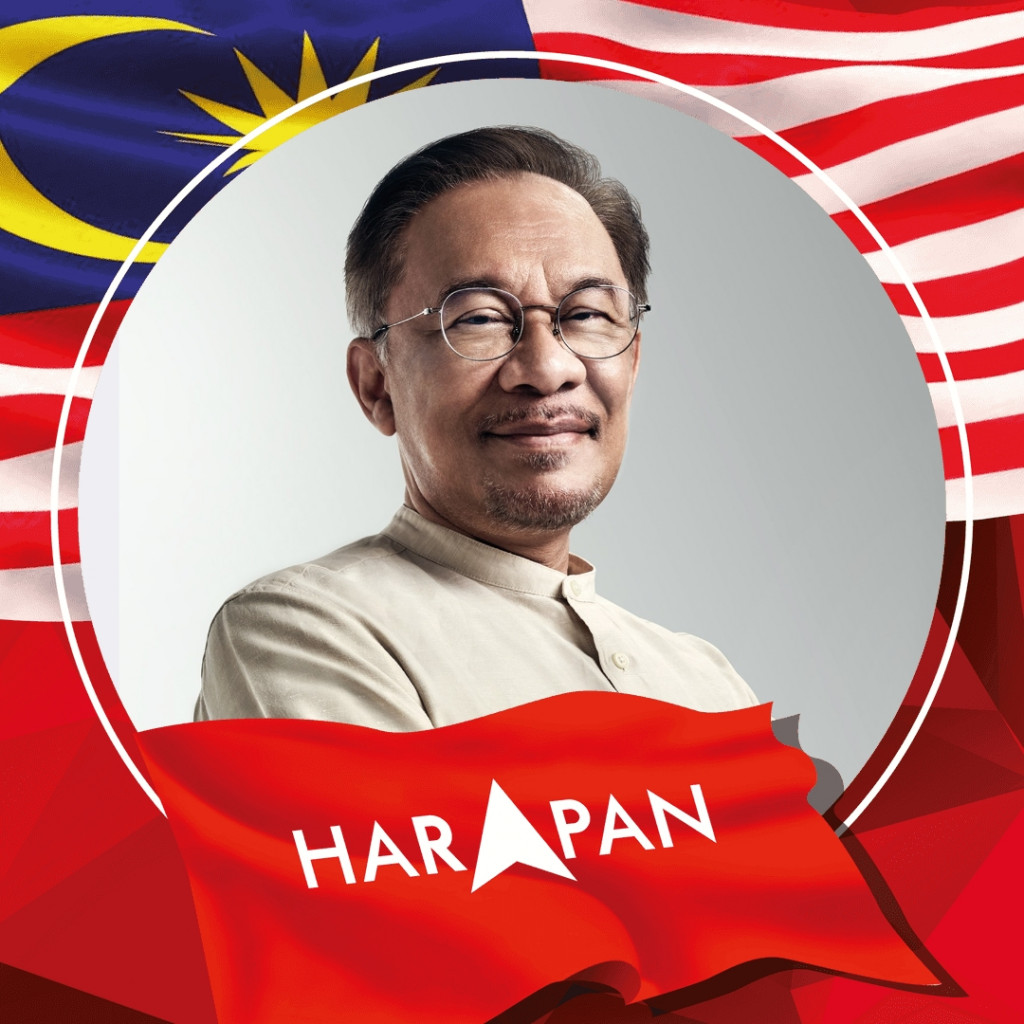
Malaysia's Prime Minister is now Anwar Ibrahim, leader of Pakatan Harapan (PH), the coalition that had triumphed in the 2018 elections only to be scuttled by the factional changes of some key leaders. Now 75, he was a member of Malaysia's historically ruling party, the United Malays National Organisation (UMNO). In 1997, with the arrival of the worst financial crisis in Asia's history, he clashed with the party leadership over his reformist views, initiating a new generation of democracy activists with the Reformasi movement. Expelled from the party and imprisoned in 1998 for sodomy and corruption (charges common to many political imprisonments in Malaysia), he returned to the political scene in 2004, after the resignation of the historic UMNO premier Mahathir Mohamad. With his entry into the PH leadership, Anwar has the merit, observers claim, of having created Malaysia's first truly multi-ethnic coalition, capable of both gaining the support of the Malaysian Muslim majority and that of the country's main minorities (Sinhalese and Indians).

The election results

The 19 November elections had ended without a clear majority, although the balance of votes hung in favour of Pakatan Harapan (PH). At the count, the PH had gained 82 out of 222 seats in the lower house, compared to 73 for the Perikatan Nasional (PN) and 30 for the Barisan Nasional (BN). But to gain confidence, PH needed to win the support of at least 112 MPs, an attempt also made by the BN and PN. Five days before the vote, it was still unclear who would lead the country for the coming years. Right from the start, part of the Malaysian public was against BN and PN's obstructionism: 'It is absurd that the party that won the most seats is somehow defeated. Malaysians have voted, Anwar must become premier'.

The 2022 elections have shown how much the political scenario is changing: before 2018, government crises of this magnitude had never happened, nor had so much friction emerged between the key players in Malaysian politics. The results of the 15th general election, however, confirmed the slow decline of the ethnonationalist United Malays National Organisation (UMNO) faction. Once the party of the Malaysian government for almost sixty years, it has now moved to the other side of the political contest after its worst election defeat ever.

In the meeting scheduled before the meeting with the sultan on Tuesday, 22 November, former UMNO interim premier Ismail Sabri Yaakob (who took over the leadership of the government after the 2020 reshuffle) had then confirmed that he would remain in opposition. Later, UMNO itself said it was in favour of trust as long as the PN leader, Muhyiddin Yassin, was not elected premier.

Winners and losers

The real winner of these elections, observers claim, would be the PN coalition. Formed after the 2020 crisis, the group was able to take home a larger percentage of votes than expected with its strong Muslim and Malay identity connotations. Also winning the souls of its voters, analysts point out, was the search for a third way to the conflict between PH and BN.

This choice has not convinced everyone: there are those who accuse the PN of having thus favoured the rise of the Malaysian Islamic Party (44 seats), a party emblematic of that wing of Malaysian politics in favour of the total implementation of Sharia law. So much so that one citizen vented on Twitter: 'Now it's obvious. Malaysians are racists and religious fanatics. Welcome back to the past. Sayonara to our future."

Time for change?

No significant surge in the youth vote, as anticipated by some analysts. With the lowering of the right to vote to 18 years of age, the electorate took in 1.4 million new voters, and this may have affected the sinking of some historical leaders and UMNO itself. Among the big losers in these elections was the man who led the Malaysian government for almost two decades, the 97-year-old Mahatir Mohamad. His coalition, the Gerakan Tanah Air (GTA), failed to reach 20% of the vote, and the former premier lost the chance to win a seat in Langkawi, in the north of the country: the first time this has happened to him since 1969. The reaction of the markets was consistent with the uncertainty in the hours after the polls closed: on Monday the ringgit fell 0.8% against the dollar and stocks on the stock exchange demonstrated investors' low expectations of the stability of Malaysia's political class.

The impasse did not keep irony on the internet at bay. Memes circulated on social media with a job advertisement titled: 'Position open for the role of Malaysia's tenth prime minister'. Other users spoke of the embarrassment of feeling one's fate in the hands of the political class: 'It feels like we are all in divorce court, waiting for someone to decide who should take custody of us'. Social media were, however, also a cause for concern. Widely used platforms such as TikTok were alerted by the Malaysian authorities for fear that content inciting violence, or fake news, would depopulate.

The results of the APEC summit in Bangkok

The APEC 2022 Leaders' Summit in Bangkok closed with a joint declaration, an unexpected outcome at the opening of the meetings. For Thailand it is a success. The account of what happened diplomatically (with China and the United States in the lead) and the results of the summit

Article by Francesco Mattogno

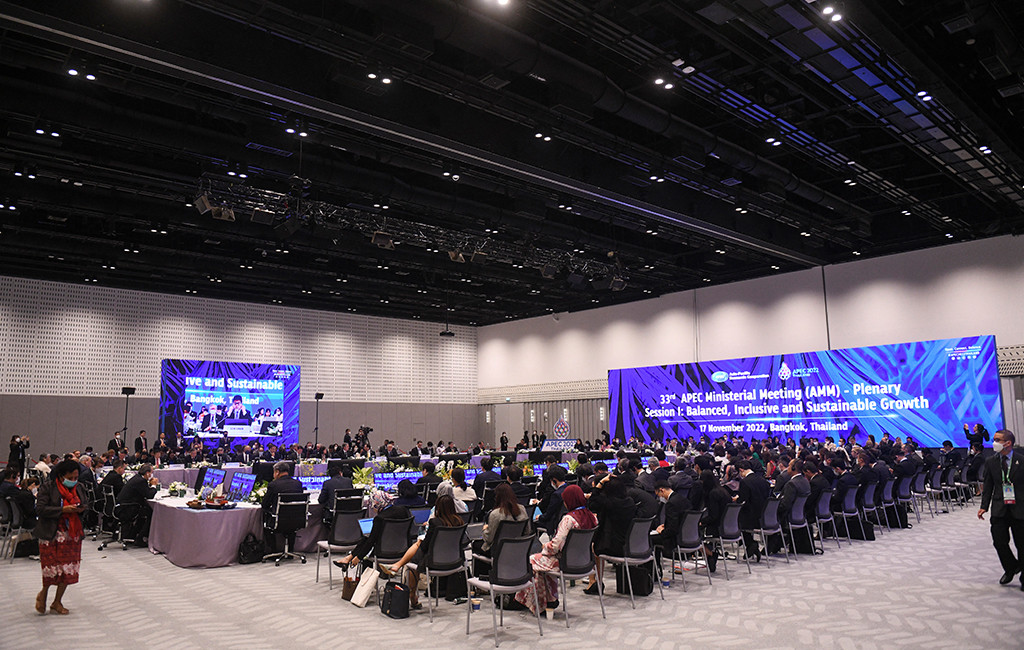
Better times have been seen, that's for sure. But the annual Asia-Pacific Economic Cooperation (APEC) summit, staged in Bangkok from 14 to 19 November, went better than expected and ended with a joint declaration by the leaders of the group's 21 economies. The outcome was not trivial: announced failure was long around the corner. With a final sigh of relief, Thai Prime Minister Prayut Chan-o-cha (who held the 2022 chairmanship of the economic forum) called the summit 'a success'.

On Friday, just hours before the leaders - who were expected to meet for the last two days of the APEC meeting - officially opened, news of North Korea's launch of an intercontinental ballistic missile arrived in Thailand. US Vice President Kamala Harris, standing in for President Joe Biden, called an emergency meeting with the number ones of Japan, South Korea, Australia, Canada and New Zealand to 'strongly condemn' Pyongyang's actions.

For three days, Xi Jinping was the undisputed star in Bangkok. Fresh from a G20 summit full of bilateral engagements and talks, Xi confirmed his return to the world diplomatic scene by doing the same in Thailand. "The Asia-Pacific is no one's backyard and should not become an arena for competition between great powers," he began in a letter presented at the meeting between representatives of APEC countries. Reiterating his no to a new 'cold war', Xi reassured partners of China's willingness to pursue 'economic cooperation' and rejected 'protectionism' and the 'politicisation of trade relations'. He then moved on to the face-to-face meetings.

The most significant, though not the most important in terms of content, was Saturday's (brief) one with Kamala Harris. It served to confirm what he said with Biden in Bali: China and the US must 'keep the lines of communication open'. Instead, the meeting with Japanese Prime Minister Fumio Kishida was more dense. Beyond diplomatic pleasantries, during their first face-to-face meeting the two leaders discussed security and Tokyo's concerns about the South China Sea, the Senkaku Islands (which China claims as its own and calls Diaoyu) and Taiwan. While Kishida reiterated the importance of maintaining 'peace' over the strait, Xi confirmed that China does not accept 'external interference'.

New Zealand's Premier Jacinda Ardern raised the same concerns as her Japanese counterpart in her talks with the Chinese leader. On the Taiwan issue, the exchange Xi Jinping had with Taipei's representative at the summit, TSMC founder Morris Chang, was interesting. A light-hearted but 'pleasant and polite' conversation, Chang said at the press conference. In addition to host Prayut, Xi also held 'business' talks with the prime ministers of Singapore (Lee Hsien Loong) and Papua New Guinea (James Marape), and the presidents of Chile and the Philippines, Gabriel Boric and Ferdinand Marcos Jr. respectively.

The Philippines is one of the countries with which China has open disputes over the South China Sea. The general secretary of the CCP asked Marcos to 'not take sides' and not to choose between Washington and Beijing, but on this front Harris scored a point. Following the APEC summit, Biden's deputy left for Manila. There he scheduled meetings with Marcos Jr. and his vice-president, Sara Duterte, before travelling on Tuesday 22 to the province of Palawan, right next to the disputed South China Sea area with Beijing.

During her two days in Bangkok, Harris sought to challenge Xi on both diplomacy (there were many bilaterals for her as well, discussing semiconductors with Morris Chang himself) and rhetoric. "The United States is a proud Pacific power," she declared at the summit, "and has an enduring economic commitment to the region." In short: we are here to stay. The US number two was accompanied by Trade Representative Katherine Tai - who spoke with counterpart ministers from South Korea and China - and Secretary of State Antony Blinken.

After receiving the baton of the APEC chairmanship from Prayut (the next summit will be held in San Francisco in 2023), Harris committed the US to Thai nuclear development. "Our investments are transparent, climate-friendly" and do not "put countries in debt", he said in clear allusion to China.

Despite calls for cooperation and trade liberalisation, the subtext thus always seems to be the Washington-Beijing confrontation/clash. For French President Emmanuel Macron, the summit's external guest, avoiding this kind of 'choice between the two superpowers' is crucial to ensuring the region's economic development. This is also what emerges from the leaders' final joint statement.

It was not the strengthening of trade ties, however, that risked not producing the summit's concluding document. The needle of the scales remained the disagreements over the war in Ukraine, which were resolved with a compromise in line with that already reached at the G20. While 'recognising that APEC is not the [appropriate] forum for security issues, security issues can have significant consequences for the global economy', the statement read. Thus, it was decided to include that 'most members strongly condemned the war in Ukraine' on the understanding that there are 'other points of view' on the conflict.

It was a linguistic balancing act that allowed Thailand to drive home the declaration, and thus get the other 20 economies in the group to share its agenda. The leaders approved a work plan for a future regional free trade agreement - building on the existing RCEP and CPTPP - and for facilitating cross-border travel, made more complicated by covid. Above all, with the declaration, APEC countries effectively adopted the Bangkok Bio-Circular-Green (BCG) project, whereby members commit to invest in economic activities that protect environmental sustainability. The actual sustainability of APEC projects and regional economic integration will all be issues delegated to the future. There have been some signs of thawing, but divisions between China and the US remain, over trade and the war in Ukraine: in general, over the fate of the current international system. Probably only the absence of a truly weighty profile to represent Russia in Bangkok (there was Deputy Prime Minister Andrei Belousov) prevented the summit from failing. These days, a success.

The success of the Indonesian G20

The Bali summit concluded with a joint statement expressing unease over the war in Ukraine. And it showed the first signs of a thaw between the West and China

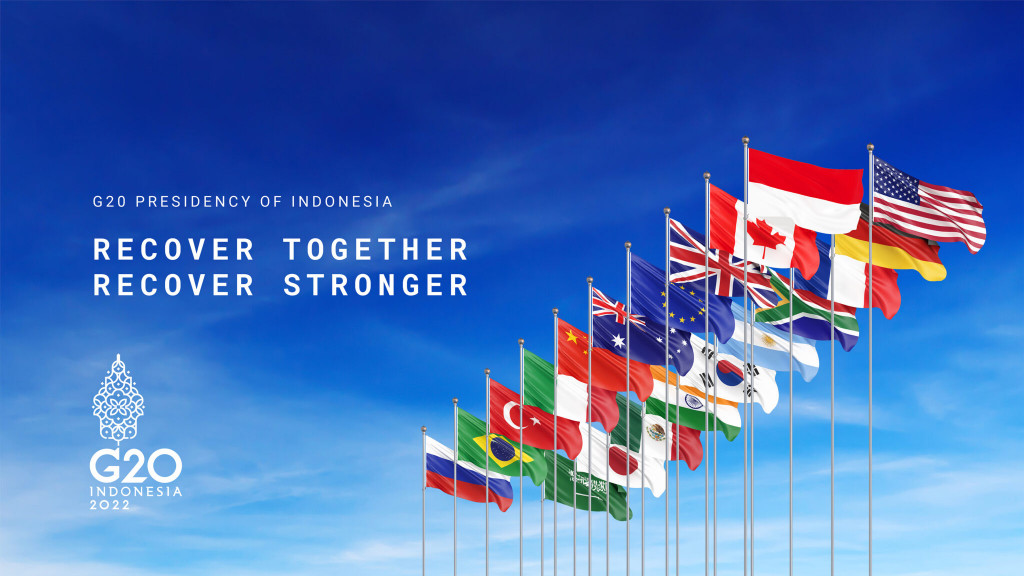
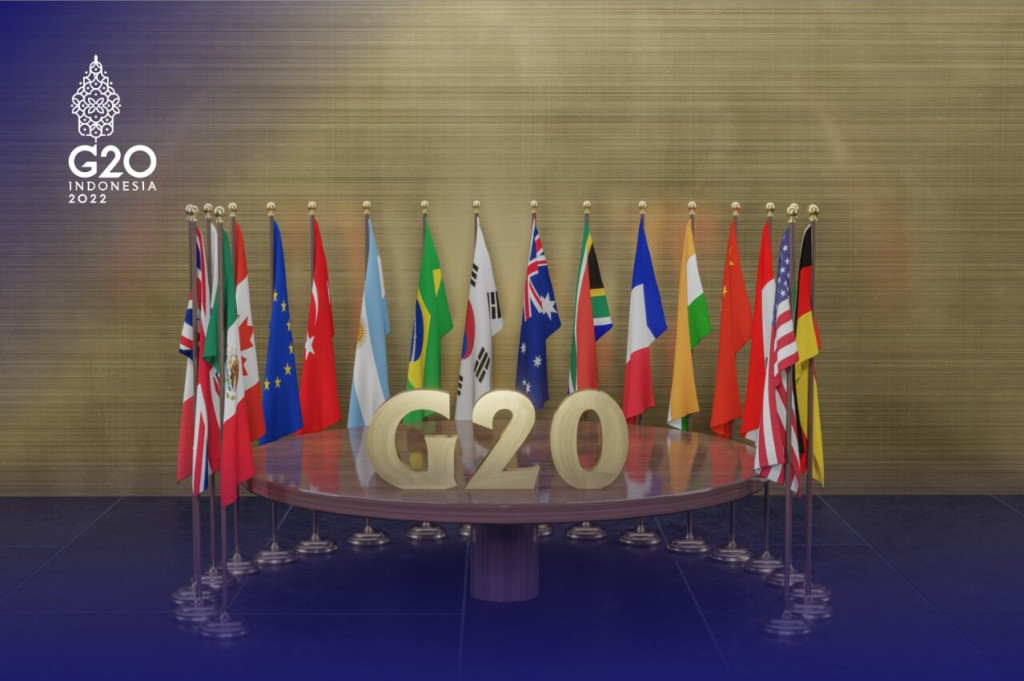
Now we can say it. The G20 summit in Bali was a success. The Indonesian rotating presidency had to deal with the most complicated year in recent times. With the world still grappling with the tail end of the Covid-19 pandemic, the war in Ukraine further complicated the plans of world economies. Not only that, it has also exacerbated the climate between Russia and the West, but also between the United States and China. With these premises, the risk that the summit would turn out to be a flop was high. Instead, it did not. It is true that the discussion was largely dominated by conflict, but it is equally true that everyone present was ready and willing to engage in dialogue. After the preamble of the bilateral between Joe Biden and Xi Jinping, it kind of all came cascading down, with the Chinese president meeting with all the various European leaders. The Indonesian rotating presidency secured the signing of a joint statement in which leaders of the major economies hoped for cooperation to address the various challenges posed by the Covid-19 pandemic and exacerbated by the war in Ukraine, pledging to provide necessary support to the world's most vulnerable countries. Jakarta celebrated three "concrete outcomes" of the summit. The first: the creation of a health fund, which will help countries prepare for future pandemics. The fund has received pledges totaling $1.5 billion from member countries and international organizations. The second, welcomed by the entire ASEAN bloc: the creation of a trust fund to help low-income, small states and vulnerable middle-income countries deal with macroeconomic problems, including those caused by pandemic and climate change. The third, more domestic: the commitment of $20 billion in public and private funding from the United States and Japan over the next five years to help Indonesia accelerate its transition to renewable energy. The final declaration marks an important step of cooperation by the entire G20, including China and India, and perhaps opens a window of dialogue with Russia, which welcomed the "balance" of the summit's conclusions. Southeast Asia is confirmed as an indispensable platform for advancing global diplomacy.

Malaysian elections, youth vote will be decisive

For around six million people in Malaysia, the early elections on 19 November represent their first time at the ballot box. A constitutional reform in 2019 lowered the voting age from 21 to 18. But a younger electorate does not automatically translate into progressive opinions

Six million new voters and electors will be called to the polls in the upcoming general election in Malaysia on 19 November. Indeed, thanks to a constitutional reform in 2019, the Malaysian parliament lowered the voting age from 21 to 18, as well as included an automated registration system that further extends the electoral pool. Since Asian youth movements are often iconically associated with the fight against authoritarianism, there is a tendency to consider young people as 'natural liberals' and to assume that they will opt for more progressive policies than their older fellow citizens. But the preferences of the younger electorate in Malaysia are an unknown for everyone.

The next general election was supposed to be held in 2023. Instead, Prime Minister Ismail Sabri Yaakob, of the conservative United Malays National Organisation (UMNO) party, called early elections because he believes that the challenges of the Malaysian economy make the future of the coalition he heads, the Barisal Nasional (National Front), uncertain. The Russian-Ukrainian conflict, the slowdown of the Chinese economy, and the unresolved controversy over the 1MDB scandal are the perfect storm that is shaking the National Front's consensus again.

As the Guardian points out, no party in Malaysia has ever managed to govern alone. In the next general election, the main coalitions will be the Barisan Nasional, the Perikatan Nasional and Pakatan Harapan (Alliance of Hope), which ruled from 2018 until the political crisis of 2020. It was the Alliance, in a constitutional reform in 2019, that expanded the national electoral pool by lowering the voting age from 21 to 18. The amendment also included an automated registration system that also streamlines the Malaysian bureaucratic system for registering new voters. Thus, the national electorate increased from 14.9 million in 2018 to 21 million in the upcoming general election on 19 November. Social movements such as Undi18 fought for the passage of the law, reflecting the desire of Malaysia's young men and women to participate in the decision-making process of Asian parliamentary democracy. The Malaysian United Democratic Alliance (MUDA) would like to position itself as a catalyst for the demands of this demographic. People between the ages of 15 and 39 amount to about 45% of the population, but this is still an underrepresented sample in Malaysian politics. About 70% of the legislators are over 50 years old.

But which issues will stir the young electorate's spirits? Professor James Chin, director of the Asia Institute at the University of Tasmania, said that it is not certain that MUDA will be able to capture all the demands of the newly eligible voters. The leader of the movement, Syed Saddiq, said that the movement will focus on issues such as the cost of living, education, access to public transport and job opportunities. But in reality 'we don't know (...) how young people vote', Chin told The Diplomat, 'because there is no voting history'. It is not necessarily the case that the young electorate in Malaysia is oriented towards progressive policies, for a number of reasons. First, while ensuring greater democratic participation, the law to lower the voting age exacerbates the problems of 'malapportionment' in Malaysian constituencies. This mismatch dampens the impact of newcomers on political participation, as the majority of new voters between the ages of 18 and 20 are in urban areas. The electoral law, however, is centred on the majority principle of 'first past the post'. There is no proportional correspondence between seat allocation and population, so the high concentration of people living in urban constituencies - including young people - is underrepresented. Secondly, young people are not necessarily more oriented towards the multiracial and inclusive 'new politics' advocated by MUDA, because birth rates vary according to demographic composition. The new young voters mostly belong to Malay and indigenous groups, which often support the National Front's identity-nationalism inspired policies.

Malaysia on the ballot

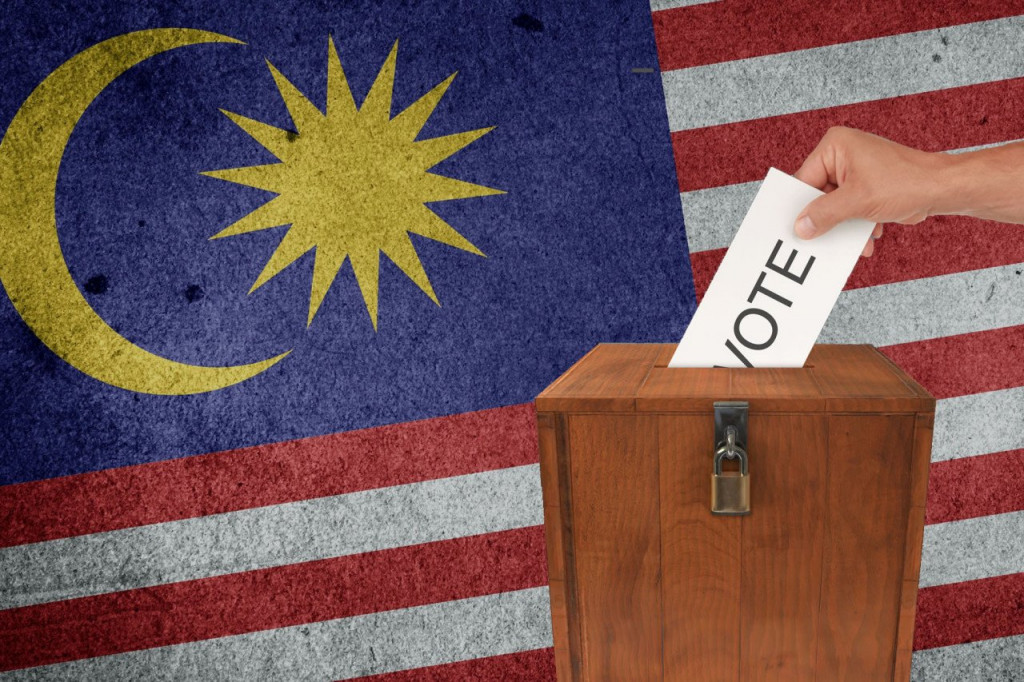
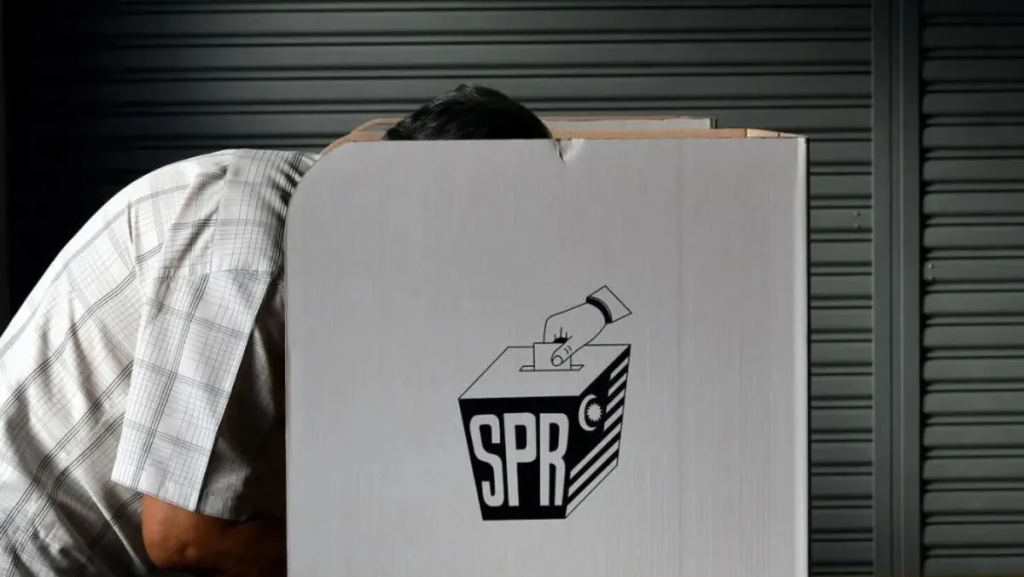
Malaysians are preparing to vote in what could be decisive elections to get the country back on track. But instability is just around the corner

Everything is set for the vote on 19 November, when over 21 million Malaysians will be able to choose their representatives. This will be the 15th general election in the history of the former British colony and perhaps one of the most turbulent in recent years. Certainly, analysts say, the one with the most difficult results to predict. Because in Malaysian politics everything seemed to be going smoothly, until 2018. The United Malays National Organisation (UMNO), the majority party, dominated the political scene with very few changes in leadership while the long-standing issues of inter-ethnic representation remained unresolved (only 50 per cent of citizens are Malays, with the remainder made up of Sinodescendants, Indians and other groups - some of which are considered indigenous). Then came the financial scandals (the most egregious was the one related to the state fund 1MDB) and government crises.

The new political landscape

After almost sixty years of stability, Malaysia has seen three governments change within four years, and two prime ministers in less than 20 months. The Pandora's box of Malaysian politics opened wide in 2020, when a number of leading politicians switched coalitions, causing the majority to collapse. The instability continued with new local elections called in the states of Malacca, Sarawak and Johor, while in October the fall of the government was announced and general elections were called. Thirty parties competed in this round, more than half of them merged into four of the existing coalitions. For the first time, the distribution of preferences could come out of the coalition that brings together some historic majority parties (Barisan Nasional, BN) against the opposition that had won the 2018 elections (Pakatan Harapan, PH).

The 2022 elections will be significant for the new political environment that is forming in the country. The crisis has exposed the limitations of the Malaysian electoral system, ranging from the weight of its 222 constituencies to gender parity. Constituencies, for example, have changed over time for various reasons, such as favouring the ethnic majority or maintaining the status quo. The changes that occurred at the dawn of the 2018 elections then redefined the boundaries in the name of 'representation on a local basis' and redistributing the number of registered voters into numerically similar groups. Where gerrymandering - the practice of redrawing the distribution of seats to gain political advantage - does not arrive, accusations of electoral fraud remain: it happens that people with the same personal data are registered on different lists, or names of deceased and non-citizens appear.

Mindful of what has happened over the past five years, MPs passed a law against 'party-hopping', which came into force on 5 October. The legislation prohibits politicians from changing parties once they have been elected by the citizens - an attempt to prevent a repeat of a government crisis premeditated by factions intent on dismantling the majority.

The voting factors

In this context, there is a momentous innovation: the lowering of the voting age from 21 to 18. With this manoeuvre, which took effect at the end of 2021, some 6.2 million new voters were added. With this manoeuvre the under-40s became the most important voting bloc, the one that will determine the course of the elections. An element that has not gone unnoticed by the parties, who have tried to introduce younger figures and have made big promises on the issues of work and economic stability. All this amidst attempts at communication straddling traditional rallies and the use of social platforms (especially Facebook and TikTok).

Nevertheless, 'there is a lot of uncertainty,' William Case, professor of history and international relations at Nottingham University in Kuala Lumpur, told The Guardian. 'This massive influx of young people will increase the size of the electorate but will not significantly change the results'. The low expectations of younger people seem consistent with what is perceived as a more general disillusionment of Malaysian citizens with politics. "[...] In the absence of good and sustainable policies for all the problems we collectively face, it will be my generation that will face the consequences of inaction and identity politics. However, I am not sure that these issues are priorities for the people I am supposed to vote for,' comments 20-year-old Rifqi Faisal.

Justifying this narrative is the idea that UMNO's impregnable position at the top of the government has always made elections a de facto empty exercise of the right to vote. Nevertheless, since the thirteenth general election (conventionally General Elections 13, GE13), turnout has increased significantly, reaching 82.32% in 2018. But the low election turnout in Johor (54%), for example, is dampening expectations.

No less important - to the extent that they have often polarised and monopolised public opinion - are ethnic and religious issues. A survey of Sinodescendants shows a strong focus on the candidates, with 9 out of 10 advocating voting for the coalition closest to the ideal of a multi-ethnic Malaysia.

The issues

The mismatch between politics and citizenship is not just a perception of young voters. Even politicians this year have to deal with a plethora of issues to prioritise. For several years, the theme of corruption seemed to permeate the political discourse, with the different parties ready to accuse each other of real or alleged involvement in the financial scandals that have emerged in recent years (such as the aforementioned 1MDB one). But even this narrative seems to be faltering, as reported by the news site SAYS citing Malaysia's progress in the Corruption Perception Index: the fact that the latest scandals have emerged, and the alleged culprits identified and sanctioned, would have reduced the presence of this issue in public opinion.

Most analysts seem to converge on a macro-issue common to countries in the region at this time: the economy. The rising cost of living, real estate prices, and the strengthening of welfare are just some of the problems that are emerging in post-pandemic Malaysia. Young Malaysians also have to contend with a labour market that is less and less aligned to their skills and where wages are no longer sustainable. 

However, the economic data for 2022, as Bloomberg points out, appear almost contradictory: Malaysia's GDP growth was among the strongest in the region (+14.2% in Q3). Unemployment rates also seem to have returned to pre-pandemic levels, but with interesting differences between ethnic groups (there are more unemployed among Malaysians, 4.2%, than among Sinhalese, 2.7%) and states (in Sabah, in the north, the unemployment rate is 8.2%, while in neighbouring Sarawak it is 3%). Inflation has doubled since the beginning of 2022, while during the summer there was a record spike in fuel and food prices. One of the many factors driving this trend was a drop in the ringgit exchange rate, which favoured exports but raised import costs. Still to be seen are the results of the outgoing government's latest manoeuvre, which in June was to allocate at least USD 17 billion to an aid plan for citizens and businesses - a record figure in the country's history.

The climate factor

The resignation of the government in October raised a number of controversies, first and foremost the climate issue. Deciding to hold elections in the autumn in Malaysia means dealing with the monsoon season, a phenomenon that is becoming less and less controllable due to climate change. Many rallies have been cancelled due to heavy rain and gusts of wind, while there are fears of a drop in voter turnout caused by flooding. To deal with the problem, a network of civil society associations, Undibanjir (from undi, vote, and banjir, floods) has been set up with the aim of organising rescue teams and facilitating the relocation of voters to their constituencies.

On the climate issue, young Malaysians also seem more attentive than past generations. Ninety-two per cent of them say climate change is a crisis that concerns them closely, according to the results of the National Youth Climate Change Survey by UNICEF and UNDP. Climate change has also entered the political debate in this election, and could draw a percentage of the vote towards the names that are more outspoken in favour of the environmental cause, as an in-depth report by Malaymail points out.

Not only G20, great expectations also for the APEC summit

The 21 Asia-Pacific economies will gather in Bangkok on Friday and Saturday for another crucial multilateral event

Article by Francesco Mattogno

Southeast Asia: Round 2. After the ASEAN summit in Phnom Penh, the month of diplomatic appointments in the region comes into full swing. Opening and closing the second week of summits will be the Asia-Pacific Economic Cooperation (APEC) leaders' meeting in Bangkok, Thailand, from 14 to 19 November. A series of meetings that for two days will coincide with the G20 in Indonesia (15-16 November).

In an armoured Bangkok, the world's greats will try to leave politics aside to focus on 'free and open' trade and investment. That is, the glue that holds together the 21 economies of APEC, which includes China, the United States and Russia, among others. All members aggregated together are worth about 60 per cent of GDP and 50 per cent of world trade.

That politics should stay out of the summit, however, is unrealistic. The fine resolutions for mutually beneficial regional economic integration and cooperation (to which the birth of APEC in 1989 is owed) have been cracking for some time now, cracked mainly by threats of decoupling between Washington and Beijing. The war in Ukraine only threatens to give them the coup de grace. Thailand's 2022 presidency, which started out with slogans of openness and connection on a Bio-Circular-Green (BCG) economic model, has been particularly affected. When Moscow invaded Kiev.

At the APEC trade ministers' summit in May, representatives of the US, Japan, Australia, Canada and New Zealand left the room in protest once Russian Economy Minister Maxim Reshetnikov took the floor. The meeting ended without a joint statement and the same fate befell the October finance ministers' meeting. At the end of the summit, the five countries - joined by South Korea and Chile - expressed 'grave concerns about the war in Ukraine'.

The political language, unusual for an economic summit, caused some internal unease within the group. Thai Prime Minister Prayut Chan-o-cha spoke of a 'critical juncture' for APEC, not unjustly. To the focus on supply chains, resumption of post-covid inter-regional travel and food security that Bangkok wanted to focus on, the pressing issues of inflation and energy security were added to the top of the list.

So much so that external invitees to the summit (besides Macron, for example) include Mohammad bin Salman, Crown Prince of Saudi Arabia. His presence makes it likely that oil ties between South-East Asia and Riyadh will be strengthened, much to the chagrin of BCG and environmental sustainability. As for the chief guests, however, seven of the 21 APEC economies will not be represented by their leaders. And two are particularly conspicuous absences.

Both US President Joe Biden and Russian President Vladimir Putin chose to skip the summit. But if Putin is engaged in a war that is not going as he would have imagined, Biden will fly from the G20 in Bali directly to the White House for his niece's wedding. An explanation that has somewhat embarrassed both Thailand and the US itself, which will send Vice President Kamala Harris in his place. Also missing will be the number ones from Mexico, Malaysia, South Korea and Taiwan (for which TSMC founder Morris Chang will attend). Taipei, as well as Hong Kong, can be part of APEC without irritating Beijing precisely because the group encompasses 'economies' and not 'states'.

Chinese President Xi Jinping, who is visiting Thailand from 17 to 19 November, is ready to take advantage of the vacuum left by Biden. The absence of an American counterweight will guarantee him an exclusive welcome. According to the Bangkok Post, Prayut changed the schedule of the event only to schedule an official dinner between the two and allow Xi to attend the royal audience of leaders. From a practical point of view, the general secretary of the CCP is likely to reassure business partners that the People's Republic is still open for business - as reiterated during a forum in Beijing on 2 November -, trying to dispel concerns about the low growth rate of the Chinese economy. A face-to-face meeting with Japanese Prime Minister Fumio Kishida is also possible.

One wonders then how much influence Kamala Harris will have. The willingness to 'deepen ties with APEC countries' expressed by Biden at the 2021 summit was followed by the launch in May of the Indo-Pacific Economic Initiative (IPEF, criticised for its vagueness) and the announcement that the US will hold the 2023 APEC chairmanship. In October, US Deputy Treasury Secretary Wally Adeyemo met with some of the group's finance ministers in order to demonstrate that the region is indeed a 'top priority' for Washington. But these efforts are likely to prove ineffective. The president's absence from the summit alone could be enough to deem the US economic commitment to the area still insufficient.

For Bangkok, which has also been hit by internal political turmoil related to Prayut (speculation says that parliament may be dissolved at the end of the summit), balancing differences and easing tensions will not be easy. The minimum objective is that the events of May are not repeated and that a joint final declaration is reached: thus, avoiding a failure of the summit. Then Thailand will pass the APEC ball to the United States, bringing the curtain down on the month that put South-East Asia at the centre of international relations.

Concorso per un premio di laurea su argomenti legati all’ASEAN

Bando di concorso per l’attribuzione di un (1) premio di laurea su argomento legato all’Associazione delle Nazioni del Sud-Est Asiatico (ASEAN) ed ai suoi Paesi membri.

L’Associazione Italia-ASEAN, nell’ambito delle sue iniziative atte a favorire lo sviluppo ed approfondimento dei rapporti e delle relazioni tra l’Italia e i Paesi facenti parte dell’ASEAN nei settori economici, politici, culturali, scientifici ed artistici, promuove e finanzia l’istituzione del primo premio di laurea su tematiche legate all’Associazione delle Nazioni del Sud-est Asiatico (ASEAN) ed ai suoi paesi membri.

Requisiti per la partecipazione al concorso:

Sono ammessi a partecipare al concorso laureati dei corsi di laurea magistrale di istituzioni universitarie italiane, statali e non statali legalmente riconosciute, che nell’anno accademico 2021-2022 abbiano discusso una tesi di laurea su tematiche economiche, giuridiche, sociali o culturali relative all’ASEAN o ai suoi Paesi membri, conseguendo una votazione non inferiore a 105/110.

I candidati dovranno aver conseguito il titolo di studio entro il 31 maggio del 2023. La tesi presentata dovrà essere un lavoro originale inedito. Non sono ammesse tesi che siano già state pubblicate integralmente o parzialmente in forma cartacea o digitale.

Termini e modalità di presentazione della domanda:

La domanda di partecipazione dovrà essere inviata entro e non oltre il 31 maggio 2023 all’indirizzo di posta elettronica info@itasean.org indicando nell’oggetto “premio di laurea sui paesi ASEAN”.

I partecipanti dovranno allegare alla domanda di partecipazione i seguenti documenti:

• Copia della tesi di laurea magistrale;

• Copia del certificato di laurea magistrale;

• Sintesi del lavoro (max 2 cartelle);

• Autocertificazione con la quale si dichiara che la documentazione presentata in copia è conforme all’originale;

• Curriculum vitae;

• Autorizzazione per il trattamento dei dati personali;

• Copia di un documento di identità personale.

Importo del premio:

L’Associazione Italia-ASEAN per il premio di laurea oggetto di questo bando prevede l’assegnazione di una somma pari ad euro 5000 (cinquemila) per una tesi di laurea magistrale.

Commissione di valutazione:

L’attribuzione del premio avverrà sulla base della valutazione di una Commissione appositamente designata dall’Associazione, con membri scelti tra i componenti del Comitato Scientifico della Associazione Italia-ASEAN che, dopo aver verificato la conformità della domanda ai requisiti e termini previsti, procederà alla valutazione delle domande ammesse.

Il giudizio della Commissione è inappellabile.

Conferimento del premio:

L’Associazione Italia-ASEAN, vista la valutazione della Commissione, provvederà a designare il vincitore.

Con la comunicazione del conferimento del premio, l’Associazione Italia-ASEAN provvederà a comunicare al vincitore luogo e data per la cerimonia di premiazione.

Il premio verrà accreditato attraverso bonifico bancario sul conto corrente del vincitore.

ASEAN center of global diplomacy

From the bloc's summit in Cambodia to the G20 summits in Indonesia and APEC in Thailand. With elections in Malaysia in the background. Busy agenda with Southeast Asia at the center

Editorial by Alessio Piazza

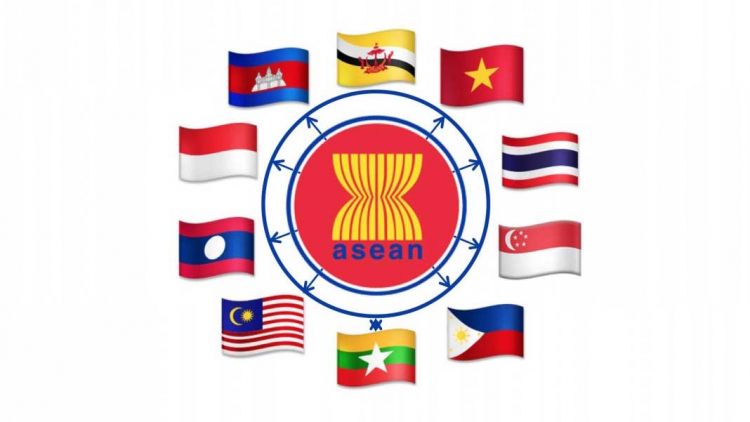
When we say that ASEAN and Southeast Asia are at the center of the world, never will it be more clearly demonstrated than in these weeks. This is a November in which not only regional leaders but those from around the world are meeting in the area. Among Phnom Penh, Jakarta and Bangkok there is a rapid and crucial succession of appointments and summits that may outline diplomatic scenarios of global importance. At a time when the world is watching with apprehension the war in Ukraine and tensions in East Asia, as well as rising inflation and intensifying competition between powers, Southeast Asia can become the platform from which to start with more comforting prospects for the future. The busy schedule of events includes meetings within ASEAN, including the East Asia Summit scheduled for Nov. 8-13 in Phnom Penh, with Cambodia holding a rotating chairmanship that will pass to Indonesia in 2023. It is precisely in Indonesia, in Bali to be exact, that the G20 summit takes place on November 15 and 16. Just two days later, however, the Asia-Pacific Economic Cooperation (APEC) forum will open its doors in Bangkok on Nov. 18 and 19. These meetings will attract leaders from the United States, China, Japan, Russia, India and many other regionally and globally important countries. Italy included. It is rare that so many international fora of this level are scheduled in the same month in the same region. There is great anticipation for the possible bilateral between Joe Biden and Xi Jinping on the sidelines of the G20. While the G20 and APEC meetings will focus on economic cooperation, the ASEAN summits will also deal with politics and security, namely Ukraine and tensions in the East China Sea and South China Sea. Indonesian President Joko Widodo also aims to achieve results on soaring energy and food prices, which are hampering global economic recovery after the halt caused by the Covid-19 pandemic. Key word: multilateralism. ASEAN and Southeast Asia can become the driving force behind not only economic but also diplomatic restart.

Summit in Phnom Penh opens Southeast month

The annual ASEAN summit is being held in Cambodia until 13 November. It is the first of three major events in November, together with APEC and G20, which will see the area at the centre of the international political scene. Between divisions and major issues, here is the agenda of the regional bloc's summit

Article by Francesco Mattogno

A month at the centre of world diplomacy. Home to three major international events, for much of November South-East Asia is a compulsory stop on the agendas of the leaders of the major powers. The first event is the 40th and 41st annual summits of the Association of Southeast Asia (ASEAN) taking place in Phnom Penh, the capital of Cambodia, until 13 November. The term 'summit' is reductive. It is six days of non-stop bilateral and multilateral meetings, from the Business and Investment Summit (ABIS) to the 25th ASEAN-China Summit and 10th ASEAN-US Summit. Many guests have also chosen to join the heads of state or government of the Association's member countries, including senior international officials such as UN Secretary General Antonio Guterres and European Council President Charles Michel.

As for the ASEAN countries, Min Aung Hlaing is not present. This is the second year in a row that the general and coup prime minister of Myanmar has not been invited to the summit, a consequence of the civil war unleashed following the military coup on 1 February 2021. As for China, no trip to Cambodia for Xi Jinping: in his place Chinese Premier Li Keqiang. Li arrived early to meet both Cambodian King Norodom Sihamoni and Prime Minister Hun Sen. Joe Biden is instead expected to attend the meetings on 12 and 13 November. This is the first trip to Cambodia by a US President since 2012, when Barack Obama visited the country at the very last ASEAN summit chaired by Hun Sen before that.  

The non-decisions on Myanmar have highlighted gaps in the ASEAN decision-making process and reignited the debate on overcoming the 'consensus principle', whereby every member state must agree at the time of a resolution. All material for the Phnom Penh summit, where issues such as the environment, energy and post-covid recovery will probably only frame questions on politics and security. So much so that Hun Sen himself had tried, unsuccessfully, to make the summit the venue for peace talks between Russia and Ukraine. 

And politics is always at the heart of the American and Chinese presence at the summit. China winked at ASEAN by concluding a series of agreements with Vietnam and Singapore just a few days before the summit (the Secretary General of the Vietnamese Communist Party, Nguyen Phu Trong, was the first to meet Xi Jinping after the 20th Congress). On 26 October, Chinese Foreign Minister Wang Yi also received ASEAN diplomats in Beijing, saying he hoped the Association would remain 'independent' in the future.

In turn, Biden had invited the bloc's leaders to Washington last May, ushering in a 'new era' of US-ASEAN relations. For this reason, the US President could focus on emphasising the benefits of cooperation in the fields of economic, digital, and environmental development, trying to show himself as an alternative to the People's Republic. Indeed, the US and ASEAN could establish a Global Strategic Partnership, the same one signed at last year's summit between the Association and its main trading partner: China. It is somewhat the state of normality in South-East Asia, pulled to either side. The region's aim is to remain in balance between the great powers, just as they are all knocking at its door.

Recently active members
Foto del profilo di Alessio
Foto del profilo di Monika
Foto del profilo di Gabriel
Foto del profilo di Elena
Foto del profilo di Lorenzo
Foto del profilo di Alessandro
Foto del profilo di Cristina
Foto del profilo di Rocco
Foto del profilo di Clara Lomonaco
Foto del profilo di Redazione
Foto del profilo di Davide Gugliuzza
Foto del profilo di Anna Affranio
Foto del profilo di Ilaria Canali
Foto del profilo di Nicolò
Foto del profilo di Angelo Cangero
Who is online
There are no users currently online
Members
  • Foto del profilo di Alessio
    Active 7 ore, 58 minuti fa
  • Foto del profilo di Monika
    Active 3 giorni, 21 ore fa
  • Foto del profilo di Gabriel
    Active 3 settimane, 4 giorni fa
  • Foto del profilo di Elena
    Active 1 anno, 4 mesi fa
  • Foto del profilo di Lorenzo
    Active 2 years, 6 mesi fa