Nguyen Thi Phuong Thao, the richest businesswoman in Vietnam

Among the “100 Most Powerful Women in the World”, Nguyen Thi Phuong Thao revolutionized the air travel industry in Vietnam.

Nguyen Thi Phuong Thao is Chairwoman of Sovico Group, Standing Vice Chairwoman of HD Bank, Founder and CEO of VietJet Air. She made history in a traditional male-dominated business, becoming the only Vietnamese woman to have started and run a low-cost airline.

VietJet – selling flights for under $ 50 – is the reason why millions of Vietnamese have boarded a plane for the first time in the past decade, forever revolutionizing the aviation industry in Vietnam. With this success, she became Vietnam's first billionaire and Southeast Asia's richest self-made woman. Forbes sets her wealth at $ 2.5 billion, which originates from real estate, beach resorts, energy projects and other Sovico holdings, in addition to the banking sector.

Thao was born in 1970 in Hanoi into a wealthy family. She grew up in the Cold War social context of the Vietnamese who moved to the old Soviet bloc, where she earned three degrees. With her distinctive rimless glasses and short bangs, Thao is defined by colleagues as a workaholic who often works until late at night. Mother of three, Madame Thao runs a business empire with her husband, always maintaining a busy schedule.

Her airline, launched in 2011, is now larger than the national airline Vietnam Airlines in terms of passengers carried. It grew up in part through a bold service: bikini-clad flight attendants for flights to beach vacation destinations. A risky stunt that resulted in a fine from the government but got VietJet free advertising all over the world and, more importantly, sold tickets.

From a handful of domestic routes at launch, VietJet has expanded to cover more than 120 destinations. Positioned from the beginning as a regional and international carrier, Thao has outlined a very precise strategy: the expansion into all ASEAN markets within a radius of 2,500 kilometres, so that it can create worldwide bases that cover half of the world population. The company would already be in talks with partners across the region to expand outside of Vietnam. Thao's goal is to make history a second time by transforming VietJet into Vietnam's first global airline. “If we establish an airline in Europe, we can fly to any country. With our aircraft, costs, handling capabilities, and providing new services, I am totally confident that we can compete in other markets, in Europe or the US,” said Thao.

In 2017, VietJet debuted on the Ho Chi Minh City Stock Exchange with a market capitalization of $ 1.4 billion. In 2018 it carried 23 million passengers, accounting for 46% of Vietnam's passenger market. Although this number represents about half of the passengers AirAsia – Asia's leading budget carrier – carried in 2018, Vietjet has grown the fastest. The company's shares have more than doubled since its 2017 IPO, reaching a market value of $ 3 billion, the second biggest in Southeast Asia, after Singapore Airlines.

In recent weeks, a donation – 155 million pounds – from the Thao holding to a college at the University of Oxford has provoked mixed reactions. After this grant, Linacre College, which specializes in postgraduate courses, will become Thao College. The MOU between the two institutions was signed during Thao's visit to the UK to coincide with the UN's COP26 climate summit. VietJet, which has an ambition to expand into Europe, also signed a $ 400 million jet engine deal with Rolls-Royce on the sidelines of the summit.

On and off social media, some Vietnamese have appreciated the charity initiative. Others have questioned the reason for donating to a country that has 14 times the average income of Vietnam, doubting on sending such a sum out of the country, which has strict capital controls. A post on the government website claimed that £ 7.5 million of the donation will fund scholarships for Vietnamese and others in the region. Voices from academia have also expressed concerns about the renaming of an entire college within the federated Oxford system, as this action could suggest what might be for sale at Oxford. Linacre College said it received little funding compared to other Oxford institutions, defining the donation - agreed as part of a memorandum of understanding with Sovico - "transformative".

Thao is well known for her various philanthropic initiatives over the years and believes in a corporate culture with strong social responsibility for sustainable development. Strongly impressed with the academic environment of the University of Oxford, Madame Thao said Oxford is the right place to make her contribution to humanity through education, training, and research. This partnership will also serve to pursue one of VietJet's most important objectives, the reduction of carbon emissions. The Sovico Group, a founding partner of VietJet, is committed to ensuring that all its subsidiaries reach net zero carbon by the end of 2050 with the support of leading Oxford academics.

Digital currencies development in ASEAN

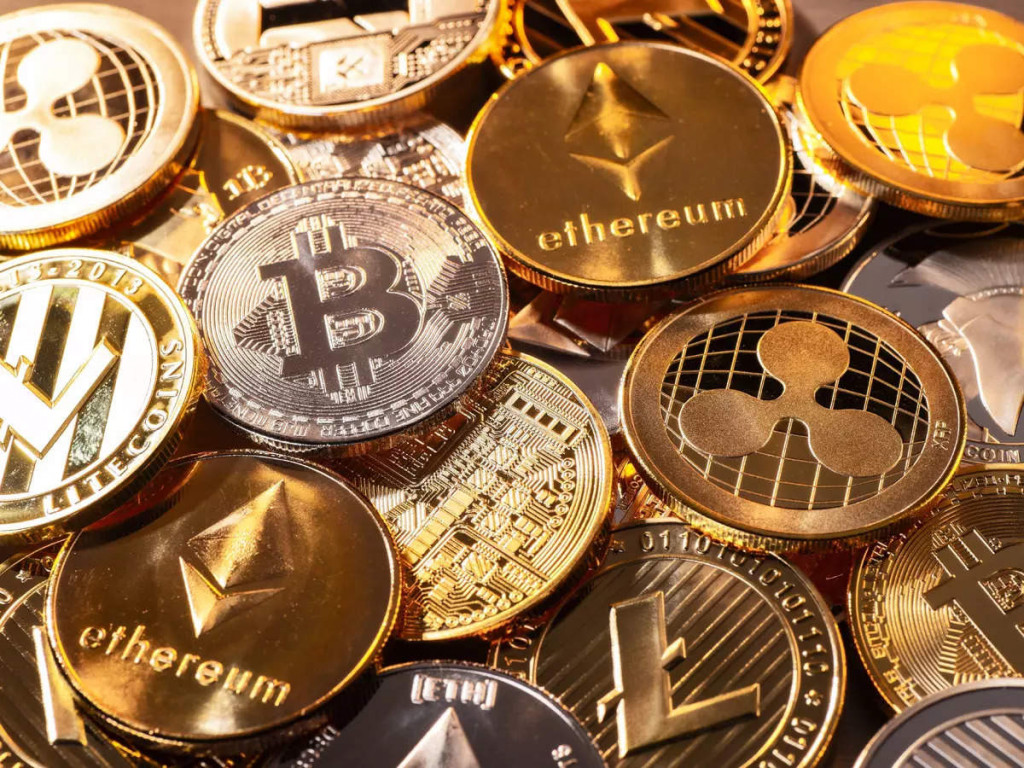
From the Cambodian e-riel to the latest Indonesian declarations of MUI: Southeast Asian countries are wondering about how to regulate the cryptocurrencies market and think about official digital currency.

Article written by Fabrizia Candido

“Cryptocurrency and Regulation of Official Digital Currency Bill” is the name of the proposed legislation that India, on November 23rd, announced it is working on. The goal would appear to be to forbid private cryptocurrencies (although it refers to some, vague, exceptions) and, at the same time, to pave the way to an official digital currency emitted by the Reserve Bank of India. This is not an entirely completely unexpected news, considering that during 2021, the Indian government had even taken into consideration the possibility to criminalize possession, emission, extraction, trade and transfer of cryptocurrencies assets. The fear, as expressed by Prime Minister Narendra Modi a few weeks ago, is that cryptocurrencies could “end up in the wrong hands, ruining the youth”. But India is not the only Asiatic country where cryptocurrencies, private and/or state-owned, are the object of discussion.

Questioning how to regulate the market, deregulated and inherently volatile, of cryptocurrencies and to imagine an official digital currency, there are also some of the ASEAN countries. 

In Indonesia, the Central Bank of the country since January 1st, 2018, has forbidden the use of cryptocurrencies, including Bitcoin, as means of payment: the rupiah is the only legal currency in the country. Nevertheless, it is allowed cryptocurrencies trading as investment option together with commodity futures, that is, future contracts in which there is an obligation to exchange a fixed quantity of goods and a fixed data, and to a certain prize set on the trade data. Last November 11th, however, the Majelis Ulama Indonesia (MUI) declared that the cryptocurrency trading is haram and not Shariah-compliant, except for those cases where it involves “clear benefits”. Although MUI’s decision does not mean that all cryptocurrency trading will be interrupted in Indonesia, it is expected that the decree will dissuade some Muslims from investing in cryptocurrencies. According to the Indonesian Ministry of Commerce, by the end of 2020 the number of traders had reached 6.5 million.

Less rigid is Malaysia, that through a statement on the Bank Negara website, since 2014, has been warning its citizens that Bitcoin is not recognized as legal currency in the country, that the Central Bank does not regulate operations and therefore it recommends caution when using this cryptocurrency. In July 2021, however, the popular platform of cryptocurrency exchange Binance was banned from the country.

Not opting for a ban, but for a strict and selective regulation that allows it at the same time to still be an active hub, there is finally Singapore. About 170 companies have asked for a license from the Monetary Authority of Singapore (MAS), bringing the total number of enterprises that try to operate in accordance with its Payment Services Act to about 400, after the entry in force of the law in January 2020. Since then, only three cryptocurrency companies have received these coveted licenses. “We do not need 160 of them to open a business here. Half of them can do it, but with very high standards, which I think is a better result” commented Ravi Menon, Director of the Monetary Authority of Singapore, during an interview with Bloomberg.

Looking instead at a digital state currency are Cambodia and Laos. Cambodia, specifically, has undertaken an ambitious project to grow its Central Bank Digital Currency (CBDC). Bakong, this is the name chosen for the Cambodian digital currency, thanks to a massive pilot project, today already counts 5,9 million users. According to Nikkei Asia, during the first semester of 2021, Bakong users made about 1.4 million transactions worth USD 500 million. The project was presented for the first time by the National Bank of Cambodia (NBC) in October, last year, based on blockchain technology developed together with Japanese fintech company Soramitsu. The main goal is the exploration of digital payments, the encouragement in the use of local currency and the reduction of the dependence on dollars, and the financial inclusion of citizens left out of the traditional banking system.

Last October, Japanese fintech Soramitsu was also hired by the Central Bank of People’s Democratic Republic of Laos, to explore the issuance of a Laotian CBDC. A digital version of kip would support authorities in the gathering of data necessary to measure the economy’s pulse, such as the amount of money in circulation. Moreover, the initiative marks an attempt by Laos to extend the reach of its currency while the digital e-yuan looms as a potentially invasive presence in the Southeast Asian Nation for which China is the second largest economic partner.

Vietnam has also decided to explore the creation of its own digital currency, with Decision 942 by the Prime Minister that aligns with the strategy to digitalize the government within 2030. The policy exhorts the State Bank of Vietnam to research, “develop and experiment the use of digital currency based on blockchain technology”. In Vietnam, the use of cryptocurrencies to make purchases is illegal, but these are still actively purchased as investment instruments: the country is among the top three globally for percentage of people that affirms to hold some form of cryptocurrency, according to a survey by Statista.

Green mobility, ASEAN bets on electric cars

ASEAN focuses on electric vehicle production to reconcile sustainability commitments and growth in its emerging economies.

In the wake of the Glasgow 2021 climate conference (COP26), Southeast Asian countries have pledged to accelerate the deployment of electric vehicles to limit emissions and meet the standards set by the Paris Agreement. According to Our World in Data, road transport is responsible for about 15% of total carbon dioxide emissions, as demand for cars is increasing worldwide, in accordance with the development of emerging economies and population growth. For these reasons, ASEAN policy makers have bet on new technologies to reconcile economic growth and sustainability imperatives. COP26 President Alok Sharma said that further acceleration in the adoption of electric vehicles (EVs) is needed if we are to make a difference for the planet: the provision that they will account for about half of new car sales by 2040, while already optimistic, is no longer a sufficient target.

In ASEAN, Thailand and Indonesia lead the turnaround for green mobility, while the Philippines and Malaysia are lagging behind. Vietnam, a fast-moving economy in Asia's emerging market landscape, also has very ambitious national plans in this regard. But the approaches of ASEAN member states are still fragmented, according to experts. As an example, the Socio-Cultural Community Blueprint 2025 on regional cooperation does not mention the need for new transportation technologies in its agenda for strengthening the Association as a regional and global player. In an interview with Nikkei Asia, Vivek Vaidya, associate partner at the consulting firm Frost & Sullivan, said that "every country has its own approach, every country has its own considerations, and therefore has its own strategies." Thus, there would be no single, consistent answer for EV promotion in the 10-nation Southeast Asian bloc.

Thailand has been identified as the "Detroit of Asia" for years, due to its undisputed leadership in global automotive value chains. In this regard, the national strategy "Thailand 4.0" is the vector of the electric turnaround undertaken by the country, which seeks to maintain its competitive advantages by aligning with environmentalist demands and international agreements. The ultimate goal for Bangkok is to allow only the sale of electric vehicles from 2035. The plan includes tax incentives to attract foreign investment to support its economic growth. As Pietro Borsano of the Turin World Affairs Institute suggests, this is a comprehensive strategy aimed at "increasing the competitiveness of the Thailand system." The Thai government's logic revolves around the role of exports as an engine of growth, so, according to experts, "any kind of investment in production that will increase exports" is welcome. This leaves room for competition among major international investors in the Southeast Asian automotive sector, including Japan, China, Korea.

New transport technologies have paved the way for another key player in the global automotive value chain: Indonesia. Already in contention to overtake Bangkok thanks to a growth in the sector that focuses more on domestic demand than on international trade, Jakarta hides an ace up its sleeve that could definitively mark the fate of its rival. It possesses, in fact, one of the largest deposits of raw nickel in the world. This is one of the key materials for the creation of lithium-ion batteries that power electric cars. The Thai government has recently banned its export to encourage foreign companies to invest in the local production of finished products, and is considering creating its own lithium battery industry through Indonesia Battery Holding.

Although policymakers often express great enthusiasm for this new electric revolution, some activists believe it is not the solution to focus on. Although the use of electric vehicles can lower the CO2 emissions attributed to road transport, there are a number of other factors to consider: the circumstances of lithium mining are often controversial, the freedom to make sustainable choices requires economic autonomy that condemns marginalized people and poorer countries to systematic exclusion from the electric mobility dream, and finally the political will is needed to coordinate efforts to respond to the labor demands of those sectors that would be replaced by the electrification of road transport.

This year the first conference on energy and environment was held, promoted by the ASEAN Center for Energy. On this occasion, expert Muhammad Rizki Kresnawan summarized the main issues of the electricity turnaround in Southeast Asia. First, the large capital requirements for infrastructure creation could further expose regional economies to the dependence on foreign investment. In addition, fossil fuels dominate regional electricity production, which could result in a reliance on imported fuel that threatens the area's energy security. Although it is widely believed that new technologies can accelerate the transition to a greener economy, intersecting political, social, and environmental challenges could make the deployment of electric vehicles less linear than ASEAN economies would have hoped.

Asian diasporas: stories of places and generations in Europe

The Asian diasporas in Europe are a phenomenon related to the events of the twentieth century, from colonialism to the Cold War passing through the First Indochina War and the Vietnam War. Asian communities have settled inside and in the outskirts of London, Milan, Berlin and Paris and continue to grow.

London is home to southeast Asian's largest diaspora on the European continent. On the banks of the Thames is where Filipino emigration is most concentrated, about 200,000 people initially fled the dictatorship of Ferdinand Marcos Sr. in the Seventies and Eighties and then arrived in the United Kingdom for economic and academic reasons. There are also about 50,000 Thais and 50,000 Vietnamese, the latter mainly as asylum seekers following the fall of Saigon in 1975.

The second Filipino community in Europe has settled in Milan and counts for the largest Southeast Asian community in Italy. The community has experienced an extraordinary growth: from the 16 Filipinos who arrived in the Lombard capital in 1970 it has reached almost 50,000 today. A relevant factor that has led many of them to choose Italy is the religious one. Affiliation to the Roman Catholic Church is vital for their community life for it represents a bridge between the two countries and an element of cohesion between the first and subsequent generations. In the shadow of the Madonnina, over 200 Filipino associations collaborate with the municipality and the new generations are shaping a solid entrepreneurial environment mostly in traditional catering and travel agencies.

Since the days of divided Germany, Berlin has been home to the country's main migration from Southeast Asia. The main ethnic group is the Hoa, Sino-Vietnamese, concentrated in Little Hanoi in the District of Lichtenberg, East Berlin. The heart of the community is the Dong Xuan Center where most of the entrepreneurial activities are located and where Vietnamese festivities are celebrated. There are also Vietnamese communities in West Berlin that, unlike most compatriots who lived in the East, were naturalized at the time of national reunification of Germany. This has meant that in addition to the 20,000 Vietnamese legally in the country, another 23,000 continue to remain in Germany illegally.

The Vietnamese community has also reached the Czech Republic, settling in the city of Prague since the country's entry into the Warsaw Pact in 1955. Little Hanoi is located in the Sapa district of the Czech capital, counting between 60-80,000 Vietnamese throughout the country, growing very rapidly and representing the third largest foreign ethnic group in the Republic. Outside of Prague, the town with the highest concentration of Vietnamese is Cheb, near the border with Germany.

In the Netherlands, the Asian migration comes mainly from the Indonesian archipelago, counting for about 352,000 people who arrived because of colonial ties and following the escape from the country due to the Indonesian War of Independence that lasted from 1945 to 1949 that led to the victory of the forces of Sukarno, the first president of the Indonesian Republic. To date, the third generation counts for about 800,000 people and gather in the main cities of the country.

The most peculiar story, made of interculturality and multiethnic, comes from France. Known in the country as "the city of the sleeping dragon", Lognes is a village in the Seine-et-Marne 20 kilometers east of Paris with the highest Asian concentration after the XIII Arrondissement of the capital. The epithet was not chosen randomly: in French, Lognes is pronounced very similar to "lóng" (龙), which means dragon in Chinese and Vietnamese. Here the migration from Southeast Asia dates back to the proclamation of the People's Republic of China on October 1st 1949. While Mao Zedong was giving his historic speech from Beijing's Zhongnanhai, they en masse fled from southern China to French Indochina and then reached Europe after the First Indochina War. Since the first generations lived in Chiang Kai-Shek's China or are descendants of Chinese who emigrated to Indochina before the communist victory in '49, ties with Taiwanese associations are very strong. In fact, community life revolves around the pagoda built by the Taiwanese association Fo Guang Shan, "the mountain of Buddha's light". The village has been experiencing a consistent demographic growth for decades: from about 250 inhabitants in the immediate post-war period to over 15,000 today, 70% of Asian origin. The growth has been enhanced by the large funding from the French government to simplify the purchase of property in the village, the construction of the A4 Eastern Highway, the so-called Francilienne, and the RER rail link with Paris and the rest of the Asian diaspora living in the capital.

Every diaspora lives its identity problems. The first generations experience the distance and detachment from the homeland and from a past from which they often fled. Following generations experience the existential doubt that leads them to wonder whether they are Asian or European. It is not uncommon for Asian European youth to choose to go to their parents' countries on journeys of rediscovery: to see the places where their parents grew up, to meet family members they never got to know, to live the experience of that place where, after all, they feel they belong. The European Asian youth thus mends those bonds of affection that seemed broken, that past that didn’t seem to belong to them but that, after all, has always been part of them.

High Level Meeting: seeds of a shared future

The “summit” between top public and private managers of ASEAN countries, Italy and the United Arab Emirates was successfully held at the Italian Pavilion of Expo Dubai 2020

On Thursday, December 9th, was held the High Level Meeting, “A Partnership for Success in Asia, the Gulf and Europe”, organized by the Italian Commissioner at Expo 2020 Dubai in collaboration with the Italy-ASEAN Association and the Chamber of Commerce of Dubai.

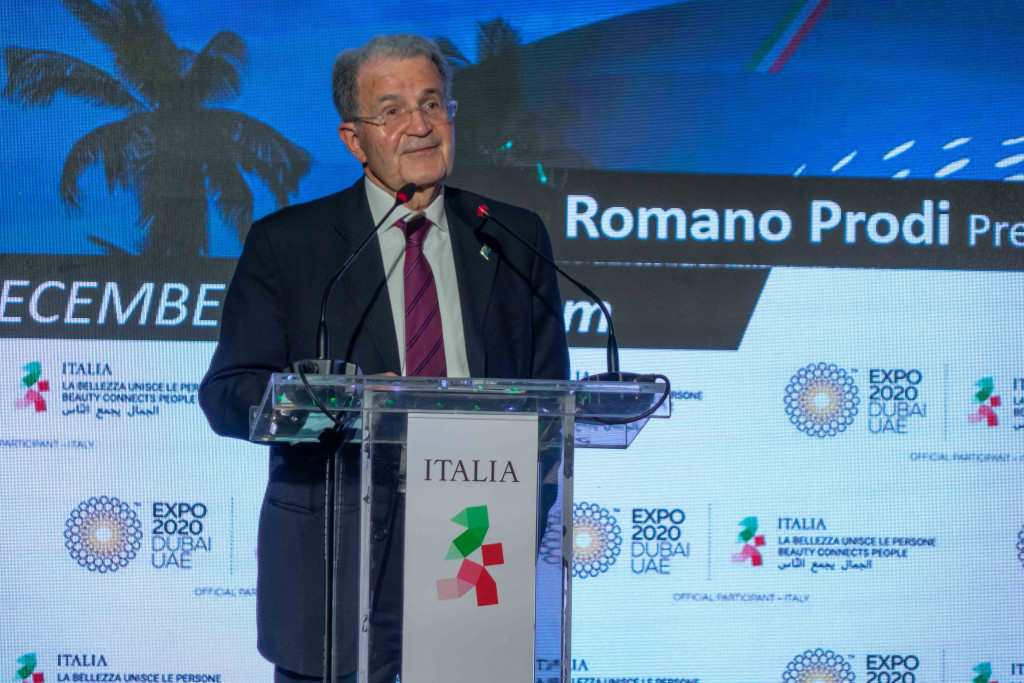
The “summit” was opened by the speech of Romano Prodi, President of the Italy-ASEAN Association and former President of the European Commission, and Lim Jock Hoi, Secretary General of ASEAN and has had the objective to define innovative models for the relaunch of economy after the health emergency through multilateral relations among countries that play a strategic role in the area of the world - from Mediterranean to Asia, passing through the Gulf - where in the next years will have the highest rates of economic, technological and financial growth, but also major issues related to climate change, energy transition and social sustainability. “Italy wants to deepen the already strong collaboration with ASEAN”, declared Prodi. “After the pandemic, sustainability is no longer just rhetoric but has become a strategic objective”, said the President of the Italy-ASEAN Association: “With environmental sustainability we are called to preserve social sustainability as well. The pandemic will not be the end of globalization, but a deep correction of it, and we need to be ready”.

Lim Jock Hoi highlighted the strength of the link between Italy and ASEAN, mentioning the circular economy sector, and underlined the trajectory of development of the region, that must “find a more sustainable way of production and consumption” based on a “safer and greener” development. Jamal Saif Al Jarwan, Secretary General of UAE International Investors Council, and Amedeo Scarpa, Director of the ICE Office of Dubai, also spoke. The event then developed with three parallel working groups dedicated to: technologies and finance for sustainability, renewable energies and sustainable agriculture.

At the end, the two Vice-Presidents of the Italy-ASEAN Association summed up the results. “This was a very productive meeting during which there were established bilateral and trilateral relations. With this event we have opened new useful links to develop follow up”, explained Ambassador Michelangelo Pipan. “The participation has been fantastic”, said Romeo Orlandi. “Everyone agrees that we need to move towards renewables, but how to do it? We tried to give some answers about wind, solar and other types of energy. Conclusions are promising and all the involved parts will stay in contact after this event”. President Prodi summed it up: “Competence, culture and heart. We are at the beginning of a fertilization process to develop ideas and proposals that were put on the table during this meeting”.

Cambodia ready for 2022 ASEAN rotating presidency

Cambodia’s last experience in the rotating presidency has been controversial, as foreign policy of the Asian kingdom particularly prefers the relation with Beijing

The rotating presidency at the ASEAN is a great opportunity for the diplomacy of Southeast Asian countries. 2022 is the Cambodia’s turn, ready to work for the creation of a “fair, strong and inclusive” regional community, under the leadership of Prime Minister Hun Sen. The head of the Cambodian government has shown that takes this commitment seriously and has declared that the Association’s “policy and security” pillar will be at the top of the agenda during his mandate at the regional organization. What awaits it in 2022 is experienced as a prestigious honor for Phnom Penh, that will use the occasion to amplify his diplomatic aura and enjoy prerogatives associated with the presidential title, as the renovated recognition from major players of the world.

But, in the international community, the enthusiasm is not as widespread. Cambodia’s last experience in the rotating presidency has been controversial, as foreign policy of the Asian kingdom particularly prefers the relation with Beijing. This historic pro-Chinese posture was also vindicated by the national government in 2019, when Prime Minister Hun Sen defined Cambodia as an “iron friend” of China. It is precisely because of this proximity that, according to analysts, we can expect a very different ASEAN compared to the one left by Brunei in 2021. According to expert voices, while most of the Southeast Asian countries distance themselves from Beijing criticizing its adversity, Phnom Penh stays loyal to the bandwagoning line: due to security and development issues, China remains a fundamental ally for the Cambodian regime, and this connection could compromise the unstable balance of the regional Association.

The most relevant files of 2022 call into question the ASEAN centrality in managing the Covid-19 health crisis and in the regional and international trust towards the most pressing political controversies. Cambodia will succeed Brunei after a year full of criticality, inheriting political and social challenges caused by two years of global pandemic, Myanmar’s political crisis and the long-standing diatribes in the South China Sea. But according to Charles Dunst of the Center for Strategic and International Studies (CSIS), Beijing’s incumbency could undermine the Cambodian freedom of maneuver on these topics, resulting in a dangerous immobilism of the Association. This could deal the deathblow to the ASEAN’s principle of centrality, already compromised by the tendency of other international players to prefer bilateral relations with countries in the area.

Regarding challenges caused by the pandemic, worsening social inequalities are likely to cause political instability everywhere in Southeast Asia. Phnom Penh will also have to deal with the increase of global interest rates that in many regional economies will cause an increase in fiscal pressure and limit expansive public policies, causing discontent and economic suffering in local communities. In this regard, the bilateral relation with China is crucial for Cambodia, which heavily relies on its big brother’s aid and infrastructure funding for its national development programs.

About Myanmar’s crisis, Cambodia has then assumed bivalent behaviors. After strongly reiterating the principle of non-interference claimed by ASEAN as the cornerstone of its paradigm of values, he then supported the Association’s decision to not want to confront except with “non-political” representatives of Myanmar. Prime Minister Hun Sen has declared in this regard: “ASEAN has not expelled Myanmar from ASEAN”. Myanmar has abandoned its right (…). Now we are in a situation of “ASEAN less one”. It is not so because of ASEAN, but because of Myanmar itself. According to Dunst, however, Cambodia does not consider it a priority to confront the Burmese regime on issues of democracy and human rights. That’s why on Myanmar, ASEAN’s next first voice may turn out to be weaker than hoped for by other member countries, such as Malaysia and Indonesia.

Instead, territorial disputes in the South China Sea are the elephant in the room for the Cambodian presidency, and it seems that the experience of the 2012 mandate could be repeated. At the time, as now, Cambodia and China have preferred to use bilateral mechanisms of dispute resolution. According to Vannarith Chheang, researcher associated at the IASEAS - Yusof Ishak Institute, the promotion of code of conduct (CoC) in the South China Sea is a way to avoid cumbersome binding measures and encourage so-called preventive diplomacy. “Cambodia is not interested in internationalizing the South China Sea issue”, the analyst notes in an article in the Turin Would Affairs Institute’s journal, “and is cautiously restricting other suitors such as Vietnam and the Philippines from using ASEAN to directly counter or challenge China”. At the annual summit of ASEAN representatives, held last November 22nd, President Xi Jinping also intervened by videoconference, reassuring those present that China would never seek hegemony in the region by taking advantage of its strength to resolve disputes. Rather, stressed the Chinese Communist Party secretary, the hope is that ASEAN will be able to cooperate with China to eliminate foreign “interference”. Xi’s words seem to prophetically welcome the arrival of Phnom Penh as president of the organization. Although ASEAN and China have already agreed on the preamble to the CoC in the summer of 2021, Cambodia could slow down its negotiation process by protecting its historic friendship with Beijing and limiting any actions or statements by the ASEAN bloc that might imply a criticism of Chinese assertiveness.

The Cambodian presidency’s approach to challenges most relevant to Southeast Asia will also affect tones and preferences of international cooperation. According to David Hutt, of The Diplomat, the fact that the kingdom is considered a “pariah for democracies” and its reputation is that of “Beijing’s lackey”, also affects the foreign policy of major international players. On the one hand, it is the goal of the Biden administration to rally its allies to maintain greater control over the regional dynamics of Indo-Pacific Asia. Think of the emergence of the AUKUS defense alliance, stipulated by the US, the UK and Australia, which is programmatically designed to curb China’s international ambitions. The infrastructure program for post-pandemic recovery, the Build Back Better World (B3W) is a clear antagonist to the global development strategy, promoted by Xi with the Belt and Road Initiative (BRI). Biden then took a more uncompromising attitude toward Cambodia itself, having sanctioned two senior officials for corruption and announced a review of preferential trade agreements last month. About the EU, Phnom Penh hosted the 13th Asia Europe Meeting (ASEM) on November 25th and 26th, demonstrating the renewed European interest in opportunities offered by Southeast Asia, reaffirming the partnership with the regional counterpart organization. Among all, the one with the Union could prove to be a strategic link for ASEAN, to weigh Cambodia’s contested pro-Chinese tendencies and devote itself to enhancing relations with another important regional player.

Always in the orbit of Chinese influence, Cambodia will conduct its mandate as president of ASEAN under the banner of “iron relations” with Beijing. Although some analysts believe that Hun Sen’s government is now less willing to accept China dictating the terms of its foreign relations, challenges facing ASEAN in 2022 all confront Cambodia with a choice: with Beijing or against Beijing. Judging from the historical bond, made all the stronger by the common colonial past and shared political culture, it seems that the direction of the Cambodian presidency at ASEAN is already marked.

The green transition will be stronger than inflation

In the long term, the demand for renewable sources will not decrease due to production costs

The costs of renewable energy production are increasing considerably. Inflation associated with the transition to a green economy - better known as "greenflation" - is a controversial topic of discussion, as it could have a significant impact on the balance sheets of governments and businesses. In recent months, the increase in demand for clean energy has plumped the boom in requests for raw materials, which have experienced a surge in costs since the use of traditional extraction methods has now been limited: the prices of Metals, such as tin, aluminum, copper, nickel and cobalt, all essential for energy transition technologies, have increased between 20% and 91% this year. A trend that could discourage the use of clean energy.

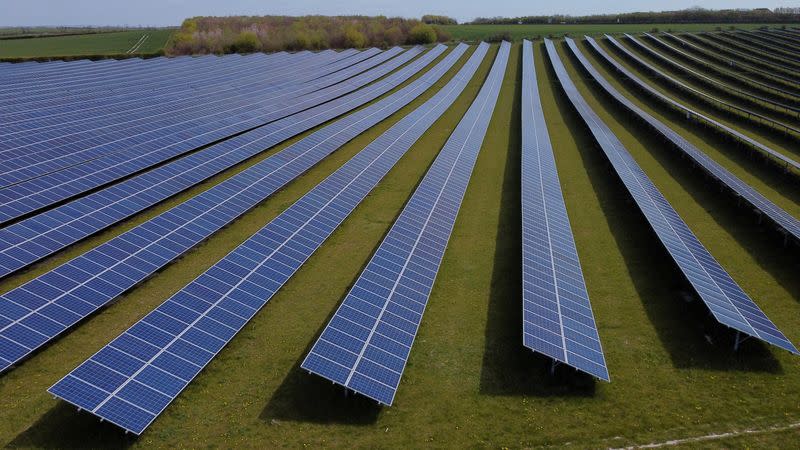
However, although the ecological transition is increasingly expensive, at least in the short term, there is no need to fear for the economic sustainability of the sector. This was stated by the Reuters Global Markets Forum. In fact, when solar panels or other necessary components of the renewable energy chain are mass-produced, production costs are reduced, generating what are called "economies of scale", facilitating the reduction of costs related to taxation, labor and advertising, allowing the sector to grow even more. "The overall costs for the green industry will tend to decline," said Harry Boyd Carpenter, the chief executive officer for green economy and climate action at the European Bank for Reconstruction and Development.

The forecasts are therefore positive: Allied Market Research expects that the global renewable energy market, now valued at over 1.2 trillion US dollars, will double in 2030, reaching almost 2 trillion dollars. Gauri Singh, Deputy Director General of the International Renewable Energy Agency, said that despite inflation and supply chain disruptions, lower financing costs contributed to the record generation of 260 gigawatts of energy from renewable sources last year. "The renewable energy market is softening - said Singh - From now on it will no longer be so easy to earn from those products that are considered harmful to the environment."

Full programme of the High Level Meeting now available

We are pleased to share with all of you the full programme of the ASEAN ⇆ UAE ⇆ ITALY High Level Meeting - a partnership for success in Asia, the Gulf and Europe to be held on 9 December 2021 at the ITALY PAVILION - Expo 2020 Dubai and also remotely.

The event programme is available on the dedicated page, where you can also register to take part in the High Level Meeting.

Indonesia leads ASEAN’s transition to sustainable agriculture

Special G20 Indonesia /

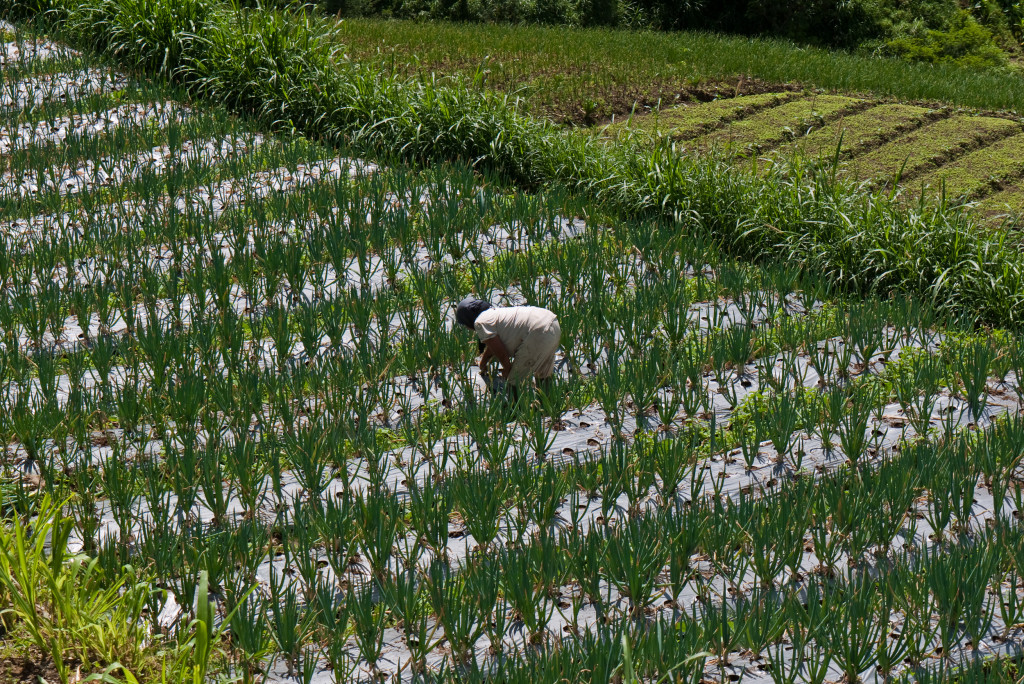
Food security is one of the challenges of our time, but ASEAN should focus on sustainable agriculture if it wants to limit the social and environmental risks caused by climate change.

Sustainable agriculture in Southeast Asia may be the key to the global fight against climate change. As U.S. journalist David Wallace-Walls points out, "the future of the planet will be determined in large part by the growth trajectory of the developing world," and the emerging economies of ASEAN are at the epicenter of this transformation. The extraordinary demographic development and rapid urbanization, the increase in incomes, consumption, and the consequent surge in energy demand make it difficult to reconcile national interests and sustainability imperatives. But Southeast Asia is also one of the regions most vulnerable to anthropogenic climate change. According to an ISEAS report, flooding, loss of biodiversity and rising sea levels are the three threats perceived as most imminent by regional communities, and for 81.1% of respondents these will have a direct impact on food supply.

Food security is one of the challenges of our time. Unfortunately, the effects of the pandemic on the agricultural sector have been devastating in Southeast Asia. Indeed, the development of sustainable agriculture is at the heart of the Comprehensive Recovery Framework, designed by ASEAN to emerge from the crisis caused by Covid-19. Member states agreed on the need to promote measures that protect food supply chains, which are essential to "mitigate the risk of major shocks, which have a major impact on society, especially on the poorest and most vulnerable people."

However, food security must be promoted at the same time as other initiatives to combat climate change. In this regard, as well as having recently provided a taxonomy which will integrate the language of all national projects aimed at sustainability, ASEAN is also focusing a great deal on international cooperation. Sustainable agriculture will be one of the items on the agenda of the High Level Meeting organized at Dubai Expo 2021, where the heads of the private and public sectors of ASEAN countries, Italy and the United Arab Emirates will meet to discuss future cooperation under the banner of sustainability. The meeting will be held on December 9 in Dubai, and has been organized by the Italian Commissariat to the Expo in collaboration with the Dubai Chamber of Commerce and the Italy-ASEAN Association. Much of the climate cooperation, however, takes place at the national level. The International Fund for Agricultural Development (IFAD), for example, is working with the Indonesian government to implement eight sustainable rural development projects. Since 44% of Indonesia's population lives in rural areas, and agriculture is its main source of income, the success of the 2030 Agenda in the country is an indicator of progress in the entire region.

Alternative agricultural production practices pioneered in Indonesia are also inspiring other ASEAN countries. Such initiatives, encouraged by the government of Joko Widodo, have often originated from below. This is because the Indonesian population is one of the most exposed to the dramatic effects of climate change, including the risk that a large part of its coastal cities will end up buried under the sea level. This condition makes them particularly motivated to think about alternative lifestyles, production and consumption practices. During the pandemic, Jakarta deployed urban agriculture, which experts say could prove to be the cause of food security, while also responding to the region's high population pressure. Tahlim Sudaryanto, president of the Indonesian Center for Agriculture Socio Economic and Policy Studies (ICASEPS) under the Indonesian Ministry of Agriculture, praised these projects. Considering that by 2050, more than two-thirds of the global population will live in cities, according to a 2018 study published in Earth's Future, urban agriculture could produce up to 180 million tons of food annually, and provide 10 percent of global production of legumes and vegetables.

Several sustainable agriculture projects have proven virtuous in the country. Indonesia is the largest economy in Southeast Asia, and three out of five Indonesians live in the countryside, but the agricultural sector is the main source of income for 64% of the population living below the poverty line. When Audria Evelinn founded Little Spoon Farm, for example, she had in mind the precarious situation in which a large part of her fellow citizens lived. Her goal was to "improve the local food system in Indonesia by reconciling the relationships between nature, farmers and consumers." Since food is a powerful force for change, empowering consumers to choose local, organic, direct and seasonal produce creates "demand that supports a sustainable local economy that gives farmers a living." That's why she launched her project on the Indonesian island of Bali, where pressures from the tourism industry sometimes diverge from environmentalist demands, creating debate about the future of the local economy. Audria Evelinn wanted to make her contribution by designing an online platform from which people can directly order fresh local crops. Her farm is also experimenting with cooperative management practices and product reuse systems to solve the problem of food waste. Little Spoon Farm's experience confirms that not only are top-down international cooperation measures necessary: the involvement of the younger generations and from bottom-up instances in the fight against climate change is essential if effective solutions are to be found for the future of the planet.

President Prodi to speak at the ASEAN Global Business Forum at Expo 2020 Dubai

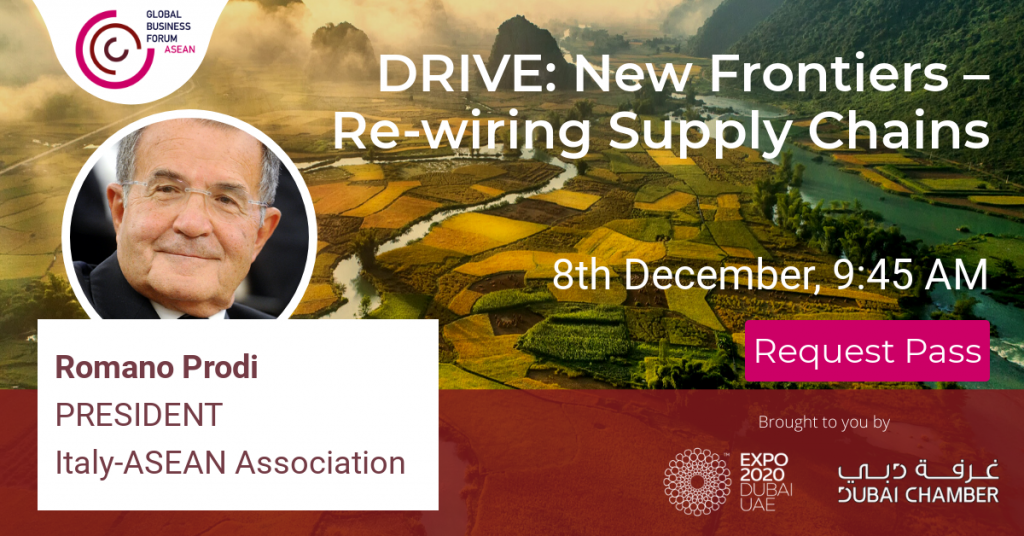
Wednesday, December 8th, at 9.45 AM (local time), Romano Prodi – President of Italy-ASEAN Association and former President of the European Commission – will speak at the Global Business Forum ASEAN. Organized within the ambit of Expo 2020 Dubai, the event will last two days with a series of meeting (here the program). In the panel where President Romani Prodi will speak, it will be discussed the rebalancing of global supply chains after Covid and after RCEP.

The following day, President Prodi will open the High Level Meeting, organized by the Italian Commissioner’s Office at Expo 2020 Dubai, in collaboration with the Italy-ASEAN Association and the Chamber of Commerce of Dubai. Given the last pandemic developments, it will be allowed to attend the event remotely.


Indonesia: COP26 and road to G20 2022

Special G20 Indonesia /

From the commitments made during the Glasgow Climate Conference to the goals of the G20 presidency: this is what the future of Jakarta can be.

This year’s COP26 summit was hosted by governments of the UK and Italy in the Scottish city of Glasgow. As every year, the COP is an important moment that brings almost all Countries with the goal of ensuring a prompt action on climate change. Despite challenges posed by the pandemic, climate change continues to generate serious environmental, social and economic consequences. This year’s summit had the difficult task of dealing with the failure of the last COP25, held in Madrid in 2019, and presented some challenges including competing interests between developing and developed countries, the issue of climate finance and unsolved rules for international coal markets that were in the article 6 of the Paris Agreement.

The conference agenda was divided into five sessions:

  1. scaling-up adaptation;
  2. keep alive 1.5 °C;
  3. loss and damage;
  4. finalization of the Paris Regulation – article 6;
  5. mobilization of finances.

Since the beginning of the Conference has emerged the strong (but mostly necessary) political will of world leaders to achieve global environmental goals, but Indonesia, given its exposition among the major contributors to global climate change, what climate efforts is it making, and what strategies is it putting in place to positively influence its internal and international environmental impact?

“Indonesia is a super powerful country in the field of climate change migration”, these were words of Alok Sharma, President designate for the 26th United Nations Conference of the Parties on Climate Change, to Indonesian Minister of environment, Siti Nurbata, during the highly anticipated meeting in Glasgow. The British government declared that the collaboration with Indonesia was one of the most important elements of Britain’s success as COP26’s host and expressed the desire of a continuity between the two parties, realized and strengthened through the joint leadership in the Forest, Agriculture and Commodity Trade (FACT) dialogue.

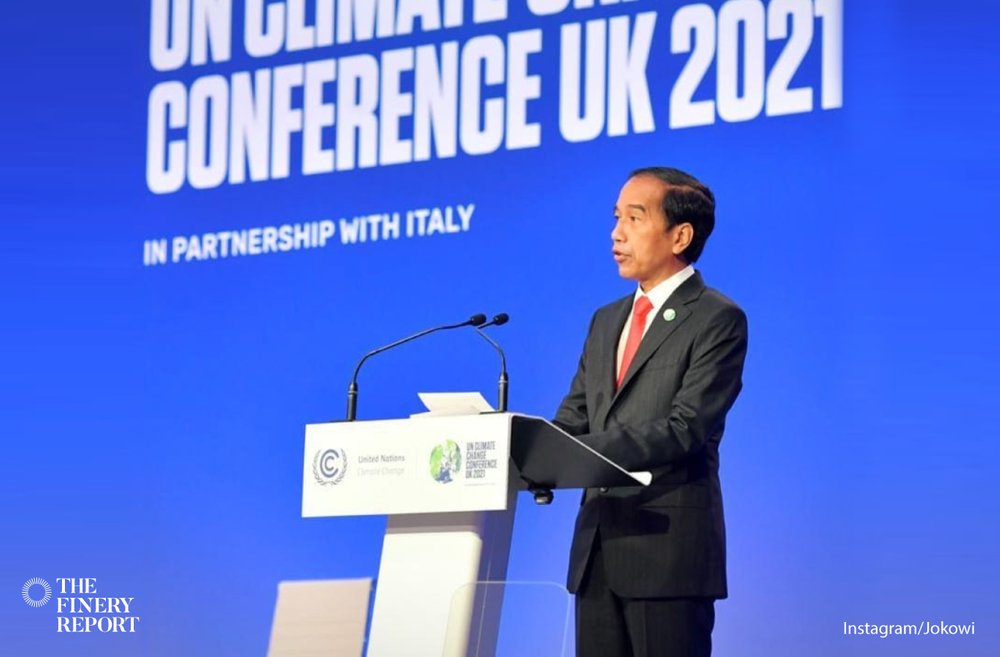
The climate summit offered Indonesian president Joko Widodo (“Jokowi”) the opportunity to voice his vision of Indonesia as “bridge builder” and global issue solver. He underlined the government’s seriousness about controlling climate change and affirmed it is among the country’s main national interests; he encouraged world leaders to promote green development and increase climate resilience, as reflected in the Nationally Determine Contribution (NDC) update presented at the United Nations Conference in July this year.

To date, Indonesia has submitted several papers to the United Nations Framework Convention on Climate Change (UNFCCC), 8 in all, ranging from those related to adaptation to those pertaining to financing nature-based solutions. In each of these documents, the Indonesian government reiterated its commitment to reduce emissions by 29% compared to the Business As Usual (BAU) scenario in 2030. At the Conference, Indonesian Minister for the environment, Siti Nurbaya Bakar, added that with international help, it could be achieved a more ambitious scenario, reaching a reduction of 41% of emissions and, in this way, comply with the Low Carbon Compatible with Paris Agreement (LCCP). Within 2030, Indonesia will approach the status of being a net carbon sink in the sector of silviculture and in land use: the government plans to gradually reduce the use of coal to 60% by 2050 and will move towards a net-zero emissions status by 2070.

As head of the Republic of Indonesia’s delegation to COP26, at the Conference, Minister Siti introduced the government’s Road Map for Climate Change Adaptation until 2030. This new path has foreseen (and foresees for the future) several initiatives: the first one has seen the active involvement of the community through the Climate Village Program (ProKlim), Ecoriparian: a program that aims to restore the mangrove ecosystem and agro-social forestry as a phase of work for climate adaptation. The program also involved and integrated the work programs of Ministries and Agencies, local governments, the private sector, and local community leaders.

The second initiative in climate change control action is “Indonesia FoLU Net-Sink 2030”. This ambitious goal will be accompanied by an operation manual, whose completion is expected by the end of 2021, with supervision and control purposes. The Indonesian action on climate change in the energy sector aims at phasing out coal-fired power plants, to the implementation of waste-to-energy plants, the development of energy from biomass, hydropower, solar and photovoltaic energy, geothermal energy and the conversion of high-cost diesel power plants with gas and NRE.

In the session devoted to “Finalising the Paris Rulebook – Article 6”, Indonesian Deputy Minister Alue presented a proposal to find a common solution to implement Article 6 of the Paris Agreement:

  • increase the ambition and implementation of results of the NDC (Nationally Determined Contribution) through a cooperative approach and financial support among member states while continuing to ensure the achievement of environmental integrity from the mitigation actions carried out;
  • to avoid a double claim in emission reduction, Indonesia proposes to use the best methodology in preparing the baseline, transparent in reporting and base on national circumstance;
  • in terms of disbursement of funds for adaptation activities may be made by prior agreement of the two cooperating parties;
  • Indonesia also encourages the adoption of Article 6 of the Paris Agreement at COP 26 in Glasgow, considering its importance in supporting the increased ambition and implementation of the NDCs to achieve the long-term goal of reducing global temperatures to 1.5°C.

COP26 in Glasgow was also the starting point for the discussion of the New Collective Quantified Goal (NCQG). For Indonesia, the NCQG must reflect real need and ensure that finances effectively flow to developing countries. The NCQG discussion process can be initiated from a political and technical perspective. Multilateral or bilateral formal and informal meetings can be used to obtain input and opinions from parties who may be part of the process. The entire process must be inclusive and transparent. The NCQG also needs to be more ambitious and understandable to both developed and developing countries and more balanced in terms of the use of climate finance for mitigation and adaptation.

Minister Siti Nurbaya Bakar paid special attention and emphasis on the economic and financial aspect encouraging developed countries to take the lead in providing to developing countries with financial resources needed to implement climate programs. The trade-off between economy and environment is a real issue. The coordination between central government and local leaders is another challenge that Indonesia must resolve to reach its climate goals. As a big developing country, with the fourth-largest global population, Indonesia will need USD 5.7 billion every year to finance its transition to green energy. The challenge is not in drafting or signing agreements and decrees, but in the coordination and execution needed to implement them efficiently. Climate actions require strategic policies and financial cooperation among interested parties at national and global levels. Hence, the Indonesian government's hope is to continue pushing for a support for increased climate finance, including through a fiscal policy and increased access to global finance.

Minister Siti concluded his speech with a positive note referring to young generations that have great concerns for the environment and push the Indonesian government to take climate change more seriously. A 2020 Indonesia Bright Foundation survey revealed that 97% of Indonesian millennials see that impacts on climate change are equally or more dangerous of the COVID-19 pandemic. 63% of interviewees affirmed that government performances were the main obstacle to climate efforts. Even the Indonesian leading foreign policy group, the Foreign Policy Community of Indonesia, has recently issued a strong call to the government to protect the nation on the golden centenary (2045) from the threat of climate crisis. The awareness of climate change in Indonesia is growing and could support a more robust government effort.

Indonesia to the G20 presidency of 2022

For the first time since the founding of G20 in 1999, Indonesia has been nominated to assume the G20 presidency from December 1st, 2021, to November 30th, 2022. The modus operandi that the Country will adopt for next year’s Summit will be to focus the international dialogue on efforts to achieve a sustainable, stable and balanced economic recovery in the post-pandemic world.

The Indonesian Foreign Minister, Retno Marsudi, has anticipated that next year’s Summit will be hosted on the island of Bali with strict health protocols and will be entitled: “Recover Together, Recover Stronger”.

The chosen topic has the goal to encourage joint efforts for global economic recovery. An inclusive people-centered growth, environmentally friendly and sustainable growth is Indonesia's main commitment as chair of the G20. “These efforts must be advanced through a stronger global collaboration and an incessant innovation. The G20 must be the driving force of the ecosystem development that leads to collaboration and innovation”, added President Widodo.

At the time of the G20 creation, the Asian financial crisis of 1997-98 had strong consequences for Indonesia: the drop in GDP (-13.1% in 1998) and the increasingly strong popular protests led to the fall of the Suharto regime. Under the leadership of his successor, Habibie, the Country embarked on a path of democratization and economic reforms that have led it to become one of the most dynamic economies of Southeast Asia. Together with Saudi Arabia and Turkey, Jakarta is a G20 member with an Islamic majority, but it brings forward quite different demands from the other two mentioned entities. In fact, since the beginning, Jakarta had assigned itself the role of intermediary within the Group of 20 between western economies and BRICS Countries (Brazil, Russia, India, China, South Africa). Indonesian mediation has also been important in raising awareness of emerging countries issues and external economies of the Group of 20. The Indonesian experience has allowed Jakarta to provide to G20 a point of view of a rising Country and to identify a support scheme for nations that, as often occur regarding developing economies, have a reduced margin of fiscal measure.

In addition to its role as an intermediary, Indonesia in the G20 performed the key function of representing of ASEAN within the Group. In fact, Jakarta is the only G20 member belonging to the economic union that also includes Brunei, Cambodia, Thailand, Laos, the Philippines, Vietnam, Malaysia and Myanmar. Therefore, Indonesia has always participated in the G20 and has always been the bearer of ASEAN positions. The presence of Indonesia within the G20 is due to the economic and demographic weight of Jakarta, but also to the need to include in the Group of Twenty a representative of a region of growing importance in global trade.

Jakarta has always seen the G20 as an opportunity to bring Southeast Asia’s demands on a global level, particularly the preservation of a stable regional architecture and the integration of the region into the global economy.

Now you can also participate online at the ASEAN-UAE-ITALY High Level Meeting

The High Level Meeting "A Partnership for Success in Asia, The Gulf and Europe" is approaching. Temporally but also physically. Top public and private managers from ASEAN countries, Italy and the United Arab Emirates will meet for the first time on December 9th in Dubai to explore objectives and concrete ways of bi and trilateral collaborations in the field of sustainable development through the use of innovative technological and financial resources.

But, given the latest health developments related to the Covid-19 pandemic, it has been decided that remote participation will be allowed. Everyone will therefore be allowed to follow the event, no matter where they are.

The "summit", organized by the Commissariat of Italy at Expo 2020 Dubai in collaboration with the Italy-ASEAN Association and the Dubai Chamber of Commerce, will be opened by Romano Prodi, President of the Italy-ASEAN Association and former President of the European Commission, Lim Jock Hoi, Secretary General of ASEAN, and a representative of the United Arab Emirates government.

The High-Level Meeting, “A Partnership for Success in Asia, The Gulf and Europe”, will have the objective to define innovative models for the relaunch of the economy - in the aftermath of the pandemic - through multilateral collaborations between countries that play a strategic role in the area of the world – from the Mediterranean to Asia through the Gulf – where the major economic, technological and financial growth rates are likely to occur over the next few years, together with some of the major problems related to climate change, energy transition and social sustainability.

In the aim to set the pace for new trilateral and bilateral partnerships between public and private players of the area, the proceedings will focus on the issues of technologies and finances for sustainability, renewable energy and sustainable agriculture. These topics will be dealt with in three separate working groups, led by the Vice-Presidents of the Italy-ASEAN Association, Ambassador Michelangelo Pipan and Prof. Romeo Orlandi, and the Deputy Commissioner for the Dubai Expo Marcello Fondi. The moderators will be flanked by representatives of the authoritative specialized institutions that provided the background documentation: ERIA (Economic Research Institute for ASEAN and East Asia), Irena (international renewable energies agency), Confagricoltura with a board member.

See all the details and register from this page.

Recently active members
Foto del profilo di Alessio
Foto del profilo di Monika
Foto del profilo di Gabriel
Foto del profilo di Elena
Foto del profilo di Lorenzo
Foto del profilo di Alessandro
Foto del profilo di Cristina
Foto del profilo di Rocco
Foto del profilo di Clara Lomonaco
Foto del profilo di Redazione
Foto del profilo di Davide Gugliuzza
Foto del profilo di Anna Affranio
Foto del profilo di Ilaria Canali
Foto del profilo di Nicolò
Foto del profilo di Angelo Cangero
Who is online
There are no users currently online
Members
  • Foto del profilo di Alessio
    Active 8 ore, 12 minuti fa
  • Foto del profilo di Monika
    Active 3 giorni, 21 ore fa
  • Foto del profilo di Gabriel
    Active 3 settimane, 4 giorni fa
  • Foto del profilo di Elena
    Active 1 anno, 4 mesi fa
  • Foto del profilo di Lorenzo
    Active 2 years, 6 mesi fa