Le Connector Economies – Il Vietnam

Hanoi è riuscita a ritagliarsi un ruolo fondamentale per l’economia globale, sfruttando la sua posizione unica tra Cina, Sud-Est asiatico e Occidente

By Francesca Leva

Nell’attuale momento di frammentazione geopolitica, siamo portati a concepire gli assetti economici in un’ottica binaria e mutualmente esclusiva: o alleati di Pechino, o alleati di Washington. In questo contesto, uno Stato che intrattiene rapporti economici con uno che segue una traiettoria politica divergente, è uno stato a rischio. 

Non deve essere necessariamente così. Vi sono infatti Paesi che sono stati negli ultimi anni in grado di navigare le fratture geopolitiche e beneficiare della possibilità di commerciare con plurimi partners: questo approccio li ha anzi resi resilienti vis-a ’-vis le ostilità politiche e commerciali, rendendoli beneficiari di flussi di investimenti diversificati. Questi Paesi vengono chiamati “connector economies”, e tra i più prominenti figurano Vietnam, Indonesia, Polonia, Messico e Marocco. Le connector economies a loro volta si suddividono lungo due linee: “connectors” tra diversi Paesi – quali il Vietnam, che si posiziona come interlocutore sia di Cina che di Stati Uniti – e connettori tra diversi tipi di transazioni economiche – il Messico -. 

Il successo delle connector economies in un periodo così turbolento sta nella capacità mantenere una politica estera bilanciata rispetto alle politiche di friendshoring e reshoring cinesi e statunitensi, al contempo sviluppando le capacità economiche e le infrastrutture necessarie per attrarre investimenti di tipo greenfield, beni e servizi e tradurli in capacità di export. Gli allineamenti geopolitici hanno infatti fortemente contribuito alla riconfigurazione dei flussi di investimenti globali: nel 2000 gli FDI – foreign direct investments, o IDE – contribuivano al 3,3% del PIL globale, negli ultimi cinque anni solo al 1,3%. In termini assoluti, gli investimenti diretti esteri sono aumentati modestamente: nel 2023 i flussi globali di IDE hanno raggiunto un valore stimato di 1,3 trilioni di dollari, il 3% in più rispetto al 2022. La frenata degli IDE ha però colpito in modo sproporzionato i paesi emergenti e in via di sviluppo: flussi di IDE verso i paesi sviluppati sono aumentati del 29%, raggiungendo i 524 miliardi di dollari, mentre i flussi verso i paesi in via di sviluppo sono diminuiti del 9%, arrivando a 841 miliardi di dollari. A titolo esemplificativo, tra il 2019 e il 2023, gli FDI dagli Stati Uniti verso la Cina sono scesi da una quota del 5,2% del totale, al 1,8%. Al contrario, le quote di FDI statunitensi verso paesi più allineati dal punto di vista geopolitico sono aumentate: di quattro punti percentuali verso l’India; di 3,4 punti percentuali verso gli Emirati Arabi Uniti; di 2,2 punti percentuali verso il Messico; e di circa un punto percentuale verso diversi Paesi del Sud-Est asiatico come la Malaysia, le Filippine e il Vietnam. Similmente, anche gli FDI provenienti dalla Cina verso i Paesi occidentali sono diminuiti da un picco di 196 miliardi di dollari – 1,9% del PIL – nel 2016 a 146 miliardi di dollari – 0,8% del PIL – nel 2022 e hanno sempre maggiormente favorito le nazioni Asiatiche e sud-est Asiatiche, peraltro beneficiarie degli investimenti facenti capo alla Belt and Road Initiative. 

In questo contesto di riconfigurazione dei rapporti commerciali, basti pensare che le connector economies rappresentano il 4% del prodotto interno lordo globale, eppure hanno attratto più del 10%, ovvero 550 miliardi di dollari, di tutti gli investimenti greenfield dal 2017. Se è vero che questo ci permette di guardare al decoupling tra Pechino e Washington sotto una nuova ottica, è altresì vero che l’allungamento e la frammentazione delle supply chains porterà comunque a un aumento dei costi dei beni e a una continua inflazione, con un impatto maggiore sui Paesi più poveri.

In questo contesto, il Vietnam è un esempio virtuoso di come un Paese sia stato in grado di posizionarsi strategicamente in un’area caratterizzata da intensa competizione economica, dispute territoriali, nonché la presenza di un vicino con un enorme leverage politico ed economico, la Cina. Già destinazione di numerosi investimenti globali nell’ambito della China Plus One Strategy – sviluppata nei primi anni 2000 dai Paesi minacciati dai competitivi costi del lavoro cinesi e volta alla diversificazione delle strutture delle supply chains globali -, nel 2023 Hanoi ha accolto $8.2 miliardi di investimenti dalla Cina e $500 milioni dagli Stati Uniti, principalmente nel settore dell’elettronica. Attualmente, gli Stati Uniti sono la destinazione di circa un terzo delle esportazioni del Vietnam, mentre la Cina è anche il principale partner commerciale del Vietnam, e il commercio bilaterale è caratterizzato da una vasta gamma di beni, tra cui elettronica, macchinari, tessuti e prodotti agricoli. Il commercio tra Vietnam e Cina nel primo semestre del 2024 ha raggiunto i 123 miliardi di dollari, con 77 miliardi di dollari di esportazioni dalla Cina e 46 miliardi di dollari importati dal Vietnam verso il continente cinese. Il Vietnam commercia con gli Stati Uniti nell’ambito di una Comprehensive Strategic Partnership, stipulata proprio nel 2023, e con la Cina nell’ambito dell’RCEP e dell’ASEAN-China Free Trade Agreement.

Il rapporto commerciale molto stretto tra Hanoi e Pechino potrebbe tuttavia portare al deterioramento dell’economia locale, che si protegge invece tramite tre principali strategie. In primo luogo, il Vietnam è in grado di salvaguardare il sistema di produzione nazionale grazie alle rules of origins che impongono che, se il 30% o più del valore di un bene è generato  localmente, deve essere etichettato come “Made in Vietnam”. In secondo luogo, il Vietnam intrattiene forti relazioni commerciali con vari partners: se la Cina rappresenta infatti il 39% degli import di materiali elettronici del Vietnam – che si traducono in un 30% degli import statunitensi nello stesso settore -, Pechino pesa solo per il 33.21% sugli import totali del Paese, che ha infatti forti partnerships commerciali anche con Corea del Sud, Giappone e Taiwan. Infine, Hanoi è in grado di posizionarsi come partner commerciale internazionale non unicamente focalizzato sulla manifattura a basso costo, ma altresì sull’attrazione di investimenti e lo sviluppo di servizi ed industrie ad alto valore aggiunto. Esempi recenti includono l’adesione di Hanoi alla Comprehensive and Progressive Agreement for Trans-Pacific Partnership (“CPTPP”) e all’ EU-Vietnam Free Trade Agreement (“EVFTA”).

Come sarà la presidenza ASEAN della Malesia

Di fronte alle difficoltà interne, il primo ministro malese Anwar Ibrahim guarda all’esterno per rafforzare la propria legittimità. Sotto la sua guida, Kuala Lumpur è diventata un alfiere dirompente della causa del “Sud Globale”. La sfida della presidenza ASEAN potrebbe richiedere un approccio diverso

Article by Pierfrancesco Mattiolo 

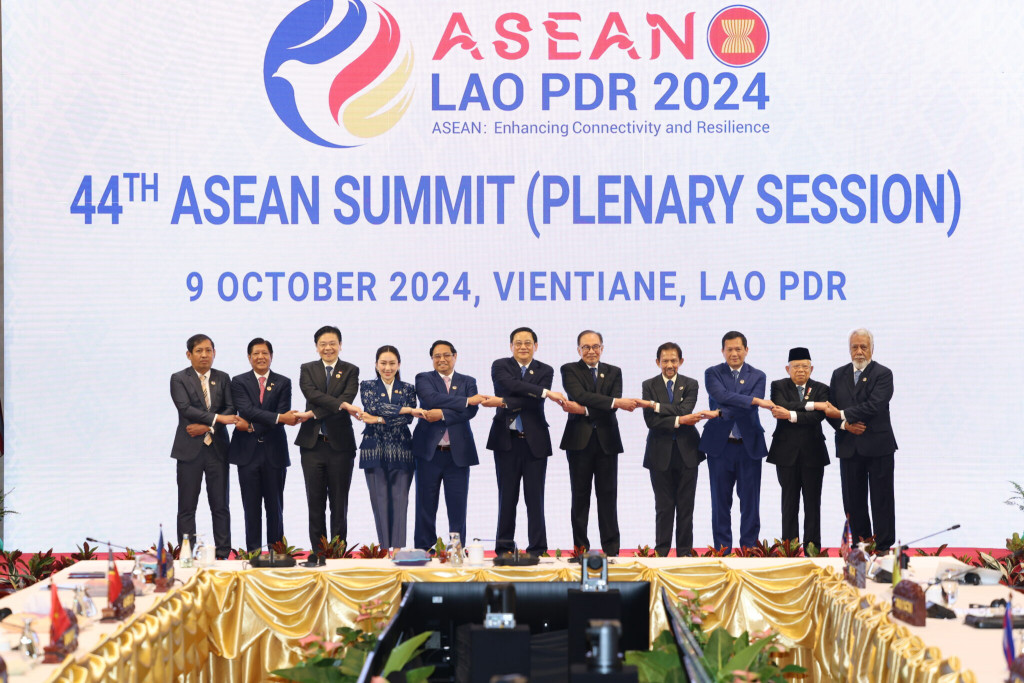
Lo scorso 11 ottobre, il primo ministro malese Anwar Ibrahim ha ricevuto dal suo omologo del Laos, Sonexay Siphandone, il martelletto simbolo della presidenza di turno dell’ASEAN. La presidenza ASEAN è annuale e ruota per ordine alfabetico tra i suoi membri. Lo Stato presidente ha poteri tutto sommato limitati, dato che l’Organizzazione prende decisioni per consenso, ma può influenzare i rapporti diplomatici tra i membri e l’esterno. Kuala Lumpur sembra intenzionata a interpretare questo ruolo con decisione, in linea con il protagonismo di Anwar in politica estera. Tale protagonismo può essere spiegato dalla fame di successi di fronte alle difficoltà a livello interno. Eletto nel 2022 come candidato del Pakatan Harapan (“Alleanza della Speranza”), la coalizione progressista, Anwar è ora accusato dai riformisti malesi di non aver realizzato le sue promesse e non fare abbastanza per risollevare l’economia e combattere la corruzione. La politica malese non è facile da navigare, ma non è detto che quella internazionale sia più agibile per Anwar. Quali sono le ambizioni del leader per il suo Paese e per l’ASEAN?

Lo scorso luglio, Anwar ha annunciato che la Malesia aveva presentato la sua candidatura ad entrare nel gruppo BRICS alla Russia, nella sua veste di presidente del raggruppamento. L’interesse ad approfondire il legame con questi Paesi è in linea con le sue posizioni sulla contrapposizione tra “Nord e Sud globali”. Anwar è noto anche per il suo sostegno alla causa palestinese, il quale può essere spiegato sia per la comune fede islamica, sia per la sua visione del mondo  – diviso appunto tra Nord e Sud. Per l’attuale governo malese, i Paesi del Sud globale devono cooperare per difendere un ordine internazionale “basato sulle regole” e confutare la “doppia morale occidentale”. La politica si intreccia, come al solito, con l’economia. I BRICS offrono ottime opportunità per le aziende malesi, alla ricerca di nuovi mercati per le loro esportazioni di olio di palma, gomma ed elettronica. Questo ultimo settore si sta espandendo vivacemente, soprattutto nella regione del Penang, rendendo la Malesia un potenziale partner strategico per chi ne voglia essere alleato, anche se i produttori locali potrebbero dover fare i conti con le richieste degli Stati Uniti, poco propensi a lasciar arrivare i preziosi semiconduttori ai loro avversari. Se la maggior parte dei Paesi ASEAN cerca di mantenere un’equa distanza tra Washington e Pechino, con l’obiettivo di ottenere i vantaggi offerti da entrambi, Anwar si è concentrato ultimamente soprattutto sui rapporti con quest’ultima e la Russia

Questa tendenza potrebbe creare delle difficoltà per Kuala Lumpur durante la presidenza ASEAN, dato che uno dei dossier più delicati è quello della disputa tra alcuni membri, Malesia inclusa, e Pechino sul Mar Cinese Meridionale. In particolare, Vietnam e Filippine difendono con vigore le proprie rivendicazioni sulle acque contese. I malesi dovranno trovare una mediazione tra queste richieste, la propria linea più conciliante e l’assertività cinese, nella speranza di concludere i negoziati sul Codice di Condotta nel Mar Cinese Meridionale entro la fine del 2025. Un altro dossier caldo della presidenza di turno sarà, ancora una volta, Myanmar. Anwar ha indicato che adotterà una linea più dura nei confronti del regime del Tatmadaw, in discontinuità con la presidenza uscente del Laos. La Malesia è stata una delle voci più critiche rispetto all’inefficace risposta dell’Organizzazione di fronte al genocidio condotto contro i Rohingya, una minoranza di fede islamica, dal 2017 e potrebbe continuare su questa linea, sollecitando un intervento più deciso nella crisi che ha seguito l’ultimo colpo di stato.

L’agenda della presidenza malese include anche obiettivi economici, come la piena implementazione del Regional Comprehensive Economic Partnership (RCEP), un accordo commerciale che coinvolge 15 Paesi nell’Asia-Pacifico, per un PIL combinato di quasi 30 trilioni di dollari. A inizio Ottobre, Anwar ha indicato tre priorità economiche per l’ASEAN: rafforzare le catene di approvvigionamento, consolidare i settori fondamentali per l’economia di ciascuno Stato e rimodellare l’economia regionale sfruttando le sinergie tra Paesi. L’obiettivo di lungo periodo di questa strategia sembra essere la riduzione delle disuguaglianze in termini di sviluppo tra i membri ASEAN, alla base della scarsa coesione e resilienza economica del blocco. 

Non sarà facile tenere insieme l’Organizzazione, date le divergenze politiche, oltre che economiche. Un recente studio dell’ISEAS-Yusof Ishak Institute di Singapore ha rilevato che l’ASEAN è spaccata sulla questione “Stati Uniti o Cina” quale partner strategico fondamentale. Gli intervistati in Vietnam, Filippine e Singapore preferiscono Washington, mentre il campione in Malesia, Indonesia, Brunei, Cambogia, Myanmar e Laos preferisce Pechino. La Malesia dovrà muoversi con cautela tra le due potenze e i loro alleati nell’Organizzazione per non approfondirne le divisioni. Il 2025 ci rivelerà se Kuala Lumpur alzerà il volume della sua campagna come voce emergente, e dirompente, del Sud Globale o se preferirà un approccio più moderato, nella speranza di coinvolgere gli altri membri dell’ASEAN.

Petronas and Pertamina, the pillars of ASEAN energy

Comparative analysis of two of Southeast Asia's energy giants

By Luca Menghini

Petronas, Malaysia's state-owned oil company, and Pertamina, its Indonesian counterpart, represent two of the most significant players in Southeast Asia's energy sector. These companies have been instrumental in driving economic growth and managing their countries' energy resources. Despite their shared role as national energy champions, their strategies, operational priorities, and approaches to the global energy transition differ significantly, shaped by distinct domestic realities and geopolitical considerations. While Petronas has pursued an export-oriented strategy to establish itself as a global leader in the energy sector, Pertamina has focused on addressing Indonesia’s vast domestic energy needs, often prioritizing affordability over profitability.

Founded in 1974, Petronas emerged as a strategic initiative by Malaysia to take control of its natural resources and reduce reliance on foreign oil companies. The company quickly transitioned from managing domestic oil fields to building a strong international presence, with over 70% of its revenue now derived from exports and overseas operations. Landmark projects like the RAPID complex in Johor exemplify Petronas' ambition to integrate downstream activities with global market demands, leveraging advanced technologies to enhance efficiency and sustainability. By contrast, Pertamina, established in 1957, has operated as a pillar of Indonesia’s energy security. Its primary focus has been the domestic market, which accounts for the majority of its revenue, reflecting its role in ensuring affordable energy access for Indonesia’s large and growing population. Subsidies and price controls have historically limited Pertamina's financial performance but have also cemented its position as a key tool of government policy.

The global energy transition has presented unique challenges and opportunities for both companies. Petronas has embraced the shift towards cleaner energy with a clear strategy to achieve net-zero carbon emissions by 2050. Its initiatives include significant investments in renewable energy, hydrogen, and carbon capture technologies. Notable projects such as the Kasawari carbon capture and storage facility and the biorefinery collaboration with Eni and Euglena demonstrate Petronas’ commitment to innovation and sustainability. Pertamina, while also engaging in renewable energy development, has adopted a more resource-driven approach. Leveraging Indonesia's rich geothermal reserves, the company has prioritized projects like geothermal energy expansion, biofuel production, and green hydrogen exploration. Pertamina’s Sustainable Finance Framework underscores its long-term commitment to environmental and social governance principles, aligning its investment strategy with Indonesia’s net-zero emission target for 2060.

Geopolitical dynamics further distinguish the trajectories of these two energy giants. Petronas operates in a complex environment marked by territorial disputes in the South China Sea. Its exploration activities in contested waters, such as the Kasawari gas field, highlight the intersection of energy security and regional diplomacy. While Malaysia has maintained strong trade relations with China, the tensions surrounding these operations require careful navigation to ensure the stability of Petronas’ revenue streams and the broader energy market. Pertamina, less entangled in such international disputes, has focused on national priorities, such as energy self-sufficiency and infrastructure development. However, Indonesia’s participation in global climate forums and its increasing emphasis on sustainability signal Pertamina’s growing role in international energy diplomacy.

Despite these differences, both companies face shared challenges in adapting to a rapidly evolving energy landscape. Reports suggest that their high-cost oil production structures could pose fiscal risks as the world transitions towards renewable energy and reduced fossil fuel dependence. For Petronas, the shift requires balancing its role as a global energy leader with its responsibility to contribute to Malaysia’s economy through dividends and taxes. Pertamina, on the other hand, must reconcile its role as a domestic energy provider with its ambition to become a regional leader in renewables and low-carbon technologies.

Petronas’ export-driven model has enabled it to reinvest profits into technological innovation and global expansion, positioning the company as a forward-looking player in the energy transition. Its subsidiary, Gentari, exemplifies this approach, focusing on renewables and hydrogen development. Pertamina, while constrained by its domestic mandate, has made significant strides in aligning its operations with global sustainability goals. Initiatives such as biofuel development and geothermal energy projects reflect its commitment to reducing carbon emissions while meeting Indonesia’s growing energy demands. Both companies have also embraced partnerships to enhance their capabilities, with Petronas collaborating on international projects and Pertamina forming alliances with firms like Hitachi Energy and Genvia to advance renewable energy technologies.

The comparison between Petronas and Pertamina reveals the broader economic and political dynamics of Southeast Asia. Malaysia’s smaller domestic market has allowed Petronas to focus on exports and international growth, creating a model that emphasizes profitability and innovation. Indonesia’s larger population and energy needs have positioned Pertamina as a vital instrument of social policy, prioritizing affordability and accessibility. These differing approaches highlight the complexity of managing state-owned enterprises in a region where energy demands, environmental challenges, and geopolitical pressures intersect.

More and more ASEAN development partners

Italy confirms its partnership role with a new mission to Indonesia

The Italian Agency for Development Cooperation, AICS, Hanoi Office delegation, composed of Margherita Lulli, Head of Development Cooperation, Michele Boario, Program Coordinator and Luciana Andreini, Italy-ASEAN Partnership Coordinator, took part in the fourth meeting of the Steering Committee at the ASEAN Secretariat in Jakarta, Indonesia, together with the Italian Ambassador to Jakarta, Benedetto Latteri and the Counselor Ruben Caruccio held on November 28. During the meeting, both institutions renewed their commitments to the Partnership, which sees Italy as a supportive development partner in Cooperation for politics and security, economic and socio-cultural, for the promotion of connectivity, and the reduction of the development gap. “This Committee for Italy is a useful tool for sharing experiences and projects of mutual interest for common economic and social growth. The Committee is also an instrument for supporting ASEAN and its centrality in the Indo-Pacific, as reiterated during the outreach session for the Indo-Pacific of the G7 just held in Fiuggi,” declared Ambassador Latteri. The AICS Hanoi Office, with the recent opening of Jakarta’s project office, as a technical and operational unit, is a driving force for innovative Cooperation in the Region, especially regarding environmental issues. “Italian Cooperation looks to ASEAN as an engine of sustainable and equitable development for the entire Region, particularly exposed to the effects of climate change and natural disasters. In this context, the contribution of the Italian Agency for Development Cooperation is part of the ASEAN Net Zero Agenda and the development of a low-emission and inclusive economy through the implementation of initiatives for the benefit of the entire population in the area” said Margherita Lulli on the sidelines of the meeting. Currently, AICS Hanoi has three active development cooperation initiatives with ASEAN, specifically in combating climate change, health, food security, and sustainable rural development, including fisheries and aquaculture. The presence of the AICS Hanoi office in Jakarta was also an opportunity to confirm the commitment to a wider integration within the area by reducing development gaps between ASEAN Member States and by sharing a cooperation model focused on measurable change, transparency and sustainability through the Results-Based Management approach and Theory of Change in the definition and implementation of initiatives of common interest.

Laos's legacy on the Burma crisis

The ASEAN chairmanship in Vientiane has made significant progress on the Myanmar dossier. The softer language is likely aimed at “wooing” the junta, with the aim of not alienating it from dialogue forums, but also to empower the rebels

By Francesco Mattogno

For the past few years, ASEAN, which was created to foster economic integration among regional states, has been forced to deal with more than just economics, investment and trade. The decades-old tensions over the South China Sea between China and various member countries (Philippines, Vietnam, Malaysia, Brunei, Indonesia) have been compounded by the civil war in Myanmar, which has been the real hot dossier of every ministerial and summit of the association since 2021. This was also the case in Vientiane.

Although several observers and analysts feared that Laos's reduced diplomatic clout could undermine the group's efforts to find a solution to the Burma crisis, the Laotian chairmanship was instead the most significant in this regard, though not only on Vientiane's merits. For the first time in more than three years, a non-political representative of the Burmese military junta (i.e., Foreign Ministry permanent secretary Aung Kyaw Moe) attended an ASEAN summit, at least ideally opening up the prospect of a regional dialogue aimed at fostering a return of peace in Myanmar.

Aung Kyaw Moe's presence in Vientiane should be recorded within a process that has been ongoing for several months. Following huge territorial losses over the past year, the Burmese junta, seeking international legitimacy, has taken a more open and dialogical attitude toward the association. In April 2021, two months after the coup, the military had signed a document (the “5-Point Consensus”) with ASEAN in which it pledged to stop the violence and engage in dialogue with all forces opposing the regime, only to violate every term of the agreement. For the past three years, the junta has been regularly bombing civilians and referring to resistance forces as “terrorists”-not exactly a sign of much inclination toward peace talks.

As a consequence of the failure to comply with the 5-Point Consensus, ASEAN has banned the Burmese military from attending every meeting of the association, allowing the regime to send only “non-political representatives,” i.e., secretaries and members of the administration. For nearly three years Naypyidaw refused to do so, deeming it an affront, before changing its mind last January in light of the rebels' advance in much of the country's suburbs. With the presidency of Laos-whose leadership maintains ambiguous relations with the Burmese regime-a gradual reintegration of Myanmar into the mechanisms of the bloc has thus begun, and the first (small) diplomatic results have also arrived.

Something began to move as early as the eve of the Vientiane meetings (Oct. 6-11). The week before the summit, Indonesia hosted representatives of ASEAN countries, along with representatives of the European Union, the United States, the United Nations, India, Japan, and representatives of resistance groups in Myanmar to talk about the Burmese crisis (neither the junta, which reportedly declined the invitation, nor China were present). Details of the meeting were not disclosed, but a few days later the Thai prime minister, Paetongtarn Shinawatra, agreed to host representatives of ASEAN countries in Bangkok for the purpose of presenting new peace proposals for Myanmar. The association has agreed, and talks will be held in December.

As Sebastian Strangio wrote in the Diplomat, ASEAN seems to have realized that it needs to take a more creative and flexible approach to the Burma crisis. This was also admitted by Philippine President Ferdinand Marcos Jr, who spoke of the need to find “new strategies.” The evolving situation on the ground, with the advance of the rebels, has made obsolete the 5-Point Consensus based on the central role of the military, which now no longer de facto controls large portions of Burma's territory. The risk then is that Myanmar's neighbors outside the association (China, India, Bangladesh) will become more influential and effective than ASEAN in finding a solution to the conflict. India, for example, has invited various rebel groups to participate in a conference on federalism to be held in November in New Delhi.

ASEAN would thus be beginning to accept the legitimacy of Burma's resistance forces, from the ethnic armed militias (EAO) to the People's Defense Forces (PDF) that refer to the democratic government-in-exile. This would also be noted in the joint statement on Myanmar released this week. The document is less harsh than that of 2023, in which member countries explicitly stated that the Burmese military was the main actor responsible for attacks on civilians, and urges “all armed forces” to reduce the level of violence.

While the softer language is likely aimed at “wooing” the junta, with the aim of not alienating it from dialogue forums, it could also be aimed at empowering the rebels by recognizing their important role in the logic of the peace process. Possibilities that the state-centric approach of the 5-point Consensus did not take into consideration. It is also true that many resistance groups now seem reluctant to dialogue. On the strength of their many victories on the ground, more and more EAOs aspire to revolution and do not want to hear about peace talks. Or alternatively, they demand as a condition of departure the total surrender of the junta, with attached war crimes and crimes against humanity trials of the regular army leadership and soldiers. A prospect the military is unwilling to accept.

The Agrifood Sector in ASEAN

Navigating the Challenges of Climate and Technology in a Key Economic Driver

Article by Luca Menghini

The agrifood sector plays an essential role in the ASEAN economy, both as a pillar of food security and as a crucial source of employment, particularly in rural areas. In a region where staple crops like rice, palm oil, seafood, and fruits are central to daily life, agriculture supports millions of people and remains a key component of GDP in countries such as Myanmar, Cambodia, and Laos. However, as climate change accelerates, environmental pressures are threatening these vital resources, posing significant challenges to both regional stability and economic growth. The ASEAN agrifood landscape, which has long been the backbone of food supply in Southeast Asia, is facing unprecedented pressures from climate change, deforestation, and biodiversity loss.

Southeast Asia has always been susceptible to extreme weather. Today, there are increasingly erratic weather patterns, such as floods, heatwaves, and droughts, which disrupt crops and make food production less predictable. Rice, a staple food for millions, is particularly vulnerable to temperature fluctuations and water shortages, putting both livelihoods and food security at risk. It should be noted that agriculture is a major contributor to greenhouse gas emissions, particularly through rice paddies, livestock farming, and land clearing for plantations. Rice cultivation, for example, produces significant methane emissions, while the expansion of palm oil and other plantations often results in deforestation and biodiversity loss. Balancing the need to feed a growing population with the need to reduce environmental impact is a complex challenge that highlights the necessity for strategic action by ASEAN member states.

ASEAN countries are beginning to recognize these issues, as highlighted by initiatives like the ASEAN Vision and Strategic Plan of Action for Food, Agriculture, and Forestry, which aims to address climate and food security challenges. On an individual level, countries are implementing their national programs, such as Vietnam's 'One Million Hectare Low Emission Rice' project. Through this initiative, Vietnam aims to reduce greenhouse gas emissions from rice production by 30% by 2030, demonstrating how targeted agricultural reforms can contribute to both climate goals and food security. However, the scale and urgency of these efforts underscore the need for greater collaboration among ASEAN countries to effectively mitigate environmental impacts.

To address these challenges, the adoption of new technologies is increasingly recognized as a viable solution for enhancing productivity while simultaneously reducing agriculture’s environmental impact. Innovative tools, such as drones and Internet of Things (IoT) sensors, allow farmers to monitor crop health, soil conditions, and water levels with unprecedented precision. Data analytics and machine learning also provide valuable insights for optimizing fertilizer and water usage, thereby enhancing yields and reducing environmental strain. This transition toward 'smart farming' enables more efficient resource allocation and reduces the ecological footprint of agrifood production. Through precise application of water and nutrients, these tools help to stabilize yields even in volatile climates, thus strengthening food security. The private sector’s role in driving this shift, from developing technology to offering training, is crucial to ensuring that smallholder farmers across the region can access and implement these advancements.

ASEAN has laid a foundation for collaborative responses to these challenges. Programs such as the ASEAN Integrated Food Security Framework and the ASEAN Climate Resilient Network support shared agricultural standards and practices, fostering resilience across national borders. Cross-border cooperation allows for the pooling of resources, dissemination of sustainable farming techniques, and implementation of early warning systems, which are essential for building adaptive capacity across the region. For example, Singapore’s Centre for Climate Research has offered to share climate data with neighboring countries, aiming to enhance agricultural planning and resilience. Such collaborative initiatives demonstrate how regional integration can enhance resilience and optimize resource use.

Moving forward, ASEAN’s agrifood strategies beyond 2025 must prioritize sustainable farming practices and technological adoption. Governments can build on current initiatives by creating policies that support the scaling of technologies, such as IoT-enabled smart farming, which will reduce waste and increase crop efficiency. In addition, expanding initiatives like Vietnam’s low-emission rice project to other member countries would be a strong step toward regional sustainability. A post-2025 framework that includes public-private partnerships will be vital for realizing the agrifood sector’s climate goals. Collaborative projects between governments and the private sector can also provide financial and technical support to smallholder farmers, helping them to adopt resource-efficient practices and participate in environmentally responsible markets. Enhanced regional coordination and information-sharing mechanisms, such as the ASEAN Food Security Information System, would further support these efforts by providing timely data on food supplies and weather conditions.

As ASEAN’s agrifood landscape faces these complex challenges, maintaining a balance between agricultural productivity and climate resilience is essential for sustainable development. Technology adoption and regional cooperation offer pathways to achieve this balance, but success will require concerted efforts from all ASEAN member states. With ongoing investments in sustainable practices and a shared commitment to climate action, ASEAN’s agrifood sector can continue to provide food security, employment, and economic stability for millions across the region. In the face of climate and environmental challenges, ASEAN must strengthen its collective action and foster a resilient, adaptable agrifood system to safeguard the well-being of its populations and ensure sustainable growth in the years ahead.

Business, prosperity and peace on the Pacific

Indonesian President Prabowo Subianto's speech at the Asia-Pacific Economic Cooperation (APEC) summit in Lima

As we all know, peace and prosperity are driven by economic activity, the role of the business community, the role of entrepreneurs, and the role of industry. Without the dynamic participation of the business sector, fundamentally we cannot have growth and prosperity. Without growth, we cannot alleviate poverty, we cannot create employment. The Pacific region is one of the most dynamic areas in the world. Economic growth, potential technological achievements, demographics, and available resources portend a bright economic future for all. At the moment there are geopolitical tensions, but I am an optimist in the interest of humanity. I believe that the leaders of the world's great powers will always ultimately opt for the common good. Rivalry is historic, it will always be there, but our planet has become smaller. Huge technological breakthroughs require leaders to be wiser, more patient, more accommodating, because the power of technology can bring significant progress to human life, but the power of technology can also destroy human life very quickly. Therefore, I always choose the path of collaboration, engagement, communication, negotiation. Of course, we must respect and live by common laws, international rules, but we must also have a common understanding of everyone's interests. I come from a country, Indonesia , which is one of the largest countries in the world, the fourth largest in terms of population. Our territory, from west to east, is almost as long as Europe. Europe has 27 countries or more, we are one country. We have our own major challenges, but we are blessed with abundant resources and we are fortunate to be able to be completely energy self-sufficient in a few years. We will be perhaps one of the few countries that can achieve 100% renewable energy within a few years. We can replace fossil fuels with renewable energy. We have the greatest geothermal and solar energy potential, but our main strength will come from bioenergy, plant-based fuel that we can produce. Indonesia is open for business. I am determined to protect all investments, to create a favorable economic condition, to participate in the world's leading economic organizations, and to work together with all of you to create mutual prosperity. I believe that prosperity can only come from peace. Peace comes from understanding. Understanding comes from engagement and negotiation. I call for cooperation among all of you, the Pacific private sector, to achieve prosperity together. Prosperity that ultimately guarantees peace and stability.

ASEAN's initiatives on cyberspace

The particularity of ASEAN's cybersecurity activism is related to its close collaboration with international organizations and especially INTERPOL

By Emanuele Ballestracci

Cyberspace is a global digital network that is embedded in every aspect of modern daily life. It includes not only the Internet, but also the critical infrastructures that support modern societies, such as power grids, water supply systems, banking transactions, and transportation systems. Over the past two decades, the rapid evolution of cyberspace has affected the way societies communicate and interact in the political, economic and social spheres. Since 1988 with the creation of ICANN, therefore, the first attempts to create a global Internet governance system, initially focused on managing technical aspects, have emerged. As cyberspace has expanded, especially since the beginning of the new millennium, attempts to regulate this “new” dimension of public and private life have increased exponentially.

Today there is a constellation of public and private initiatives for the multilateral management of cyberspace, the promotion of cooperation among various stakeholders and the protection of individual users. In recent years, particular attention has been given to the issue of cybersecurity, and almost all regional organizations have launched initiatives in this regard. However, the initiatives of the various G7, NATO, BRICS, Arab League and Eurasian Union have in common the defect of limited collaboration with international organizations, despite their great activism on the subject. Indeed, the United Nations has over the years launched a long series of working groups and conferences to revitalize global governance in this field. INTERPOL through its Global Cybersecurity Program also aims to be an effective partner in fighting crime in cyberspace. However, all these initiatives are not being adequately leveraged by states and regional organizations, with the only exception of ASEAN. 

In 2016, ASEAN launched its first cybersecurity initiative: the ASEAN Cyber Capacity Program. The Program focuses on building the technical, legal, and institutional capacity of member countries to address cybersecurity challenges. It also provides training, knowledge sharing, and resources to support regional cooperation and coordination in addressing cyber threats. In 2017, the Program was followed by the publication by the ASEAN Cybersecurity Cooperation Strategy, which is four years in duration and renewed in 2021. The first Strategy focused on strengthening the cooperation and capacity building of national CERTs (Emergency Cyber Response Teams) and coordinating regional cybersecurity cooperation initiatives. The goal was to increase regional cyber capabilities against evolving and increasingly sophisticated cyber threats while avoiding duplication of resources. A regional CERT reporting directly to ASEAN was also established. The second Strategy, in continuity with the first, focuses on five main dimensions: promoting cooperation on cyber readiness; strengthening regional policy coordination; building trust in cyberspace; regional capacity building; and international cooperation.

However, as mentioned earlier, the particularity of ASEAN's cybersecurity activism is related to its close cooperation with international organizations and especially INTERPOL. The latter provides support to global law enforcement agencies in preventing and combating cybercrime through the promotion of greater cooperation and training of local officers. Thus, in 2018 INTERPOL established the ASEAN Cybercrime Operations Desk in order to address the growing cyber threats in the region. The ASEAN Desk is the regional hub for information and intelligence exchange on cybercrime. Through the capacity of INTERPOL's Cyber Fusion Centre and public-private partnerships it provides a range of strategic analysis products that enable ASEAN authorities to make effective decisions on preventing and combating crime in cyberspace. Also launched in 2020 is the ASEAN Cybercrime Knowledge Exchange Workspace, which enables law enforcement agencies to share nonoperational information such as best practices and open source information on threats in the region. Finally, also since 2020, the ASEAN Cyber Threat Assessment has been published annually. The report offers analysis and insights into the current cybersecurity risk landscape, as well as policy recommendations for future action.

ASEAN at COP29

ASEAN's approved policy paper on combating climate change, a pathfinder for participation in the ongoing summit in Baku

ASEAN member countries express deep concern about the continued rise in global greenhouse gas emissions and the consequence of increased climate risks and impacts on natural and human systems, which remains a significant threat to ecological diversity in the ASEAN region and, in general, to the sustainability of the development gains we have achieved to date. We want to draw attention to the cost of climate change to ASEAN economies, which represents an estimated economic loss of $97.3 billion between 2009-2020 and an estimated adaptation cost of $422 billion through 2030 for the region. We want to highlight the significant progress and new opportunities provided by COP28 and the UAE Consensus to ensure a stable climate, which is an important basis for sustaining development gains in the ASEAN region, taking into account the common but differentiated responsibilities of ASEAN States Parties. For this reason, we call for accelerated implementation of climate action and financial mechanisms under the UNFCCC as evidence of commitment to climate action and rapid and equitable energy transition. We call for recognition of persistent gaps in the implementation of ambitious agreed climate actions, including mitigation, adaptation and finance. And we look forward to the fulfillment of the means of implementation as committed by developed countries, namely finance, technology development and transfer, and capacity building, including the development and implementation of low-emission technologies and enabling infrastructure, which are critical to our transition to a regional low-carbon economy and to ensuring the ability of ASEAN and developing countries to access climate finance. We also look forward to the implementation of decisions taken at previous COPs to strengthen financial support for climate action in developing countries. We also call for recognition of the potential contributions of ASEAN member states through emission avoidance, emission reductions, emission removals, and carbon stock enhancement, depending on scientific and technological advances, international cooperation, and increased support from developed countries, including relevant initiatives related to carbon markets by ASEAN member states to serve as a model for an integrated approach to sustainable development and climate resilience in the region.

The growth of the emerging tech sector in the Philippines

From semiconductors to a new era of innovation: Manila is becoming a key actor

By Luca Menghini

In recent years, the Philippines has undergone a significant technological transformation, establishing itself as an emerging leader in the Southeast Asian innovation landscape. A key driver of this shift is the growing semiconductor industry, which is elevating the country's economy to a new level, positioning the Philippines for further technological advancement. From government initiatives to private sector investments, the Philippines is capitalizing on strategic developments to become a regional hub for advanced technologies such as semiconductors, nanotechnology, and artificial intelligence. As global demand for semiconductors and related technologies skyrockets, the Philippines is positioning itself to play a crucial role in shaping the future of the region's tech sector.

The semiconductor sector in the Philippines has experienced a significant boom, with an expected annual growth forecast of 10-15% from 2024 to 2027. This growth aligns with global trends as demand for semiconductors continues to rise, driven by advancements in artificial intelligence, 5G, and electric vehicles. As industries worldwide increasingly rely on advanced chips and their components, the Philippines is emerging as a vital player in the global semiconductor manufacturing and services landscape.

One of the primary factors contributing to the Philippines' growth in this sector is its role in the global supply chain. Its geographic proximity to major semiconductor producers such as Taiwan, China, and Japan provides a strategic advantage. As companies worldwide seek to diversify their supply chains and reduce reliance on a single source, the Philippines is seen as a reliable alternative. Its location in the Asia-Pacific region, combined with its advanced infrastructure, access to maritime trade routes, and developed air cargo capacity, enhances its attractiveness as a semiconductor hub.

The Philippines has long been part of the global supply chain for electronic components, excelling particularly in semiconductors with strong capabilities in assembly, testing, and packaging. Over 500 electronics and semiconductor companies operate in the country, including global giants like Texas Instruments, Philips, and Toshiba. The sector plays a vital role in the national economy, accounting for approximately 60% of the country’s total exports, with semiconductors being a significant part of this contribution. The Philippines is well-positioned to meet the rising global demand for semiconductor components.

One of the main drivers of this industry's growth is government support. The Philippines has made strategic moves to align with industrial policies that follow the global shift toward advanced technologies. The government's Inclusive Innovation Industrial Strategy (I3S) has been instrumental in boosting innovation and attracting investment in the high-tech sector, including semiconductors. This strategy aims to develop globally competitive industries by integrating Industry 4.0 technologies, such as automation, robotics, and artificial intelligence, into the manufacturing process.

Additional initiatives aimed at boosting the semiconductor sector include the Philippines' involvement in international efforts like the U.S. CHIPS and Science Act of 2022. Thanks to this Act, the Philippines has been selected as one of seven partner countries to benefit from a $500 million fund that will be used to support the development of the semiconductor industry. This partnership highlights the strategic importance of the Philippines in the global semiconductor ecosystem and strengthens its ties with major tech players. As part of this initiative, the Philippines has set an ambitious goal of training 128,000 engineers by 2028 to support the growing semiconductor industry, ensuring a steady supply of skilled workers to meet the sector's demand.

Despite its rapid growth, the Philippine semiconductor industry is facing challenges that must be addressed to maintain its competitive edge. The country still lags behind some of its regional competitors in terms of infrastructure and ease of doing business. There is a recognized need to improve transportation networks, power reliability, and regulatory frameworks to attract more foreign investment. Additionally, the industry faces a shortage of highly specialized talent in areas such as chip design and fabrication. Although the government and private sector are working together to upskill the workforce through initiatives like the Advanced Manufacturing Workforce Development (AMDev) program, the country must continue to invest in education and training to close the skills gap.

The success of the semiconductor industry is part of a broader trend of technological advancement in the Philippines. The country is expanding into other emerging technologies, including nanotechnology, robotics, and data science. The Department of Science and Technology (DOST) has been at the forefront of these efforts, launching initiatives aimed at increasing innovation across various sectors considered strategic. For example, the creation of an Advanced Manufacturing Center (AMCen) has allowed local industries to explore the 3D printing industry and additive manufacturing technologies, fostering innovation in sectors like aerospace, healthcare, and automotive.

In addition, the Philippines is investing in environmentally sustainable technologies. The DOST's Green Packaging Laboratory is developing environmentally friendly packaging materials, while the Metrology in Chemistry Laboratory supports local production and food safety standards by providing accurate measurements for quality control. These initiatives demonstrate the country's commitment to harnessing technology not only for economic growth, but also for environmental sustainability and public welfare.

As the Philippines continues to advance in the semiconductor industry and other technological fields, its impact on the Southeast Asian tech landscape is becoming increasingly evident. ASEAN countries, known for their policies of non-interference and consensus, are closely watching the Philippines' technological progress. The country's ability to establish itself as a hub for semiconductors has the potential to reshape the regional supply chain and boost the overall competitiveness of Southeast Asian markets in the global arena.

The strategic importance of the Philippines extends beyond its geographic location. The country’s young, well-educated, and English-proficient workforce, combined with its adherence to international labor standards, makes it an attractive destination for foreign investors. These factors, along with the government's commitment to fostering innovation through supportive policies and initiatives, position the Philippines as a rising star in the global technology sector.

In conclusion, the Philippines is at the forefront of a technological advancement in Southeast Asia, driven by the growth of its semiconductor industry and increasing investments in emerging technologies. While there are certainly numerous challenges to overcome, the country’s strategic position, government support, and international partnerships provide a solid foundation for sustainable growth. As the Philippines strengthens its role as a semiconductor hub, it will not only contribute to the global supply chain but also reshape the future of technological innovation in the region. The country's progress in these sectors signals a bright future for its economy and a stronger, more resilient position in the global marketplace.

Italy and Singapore, a common vision

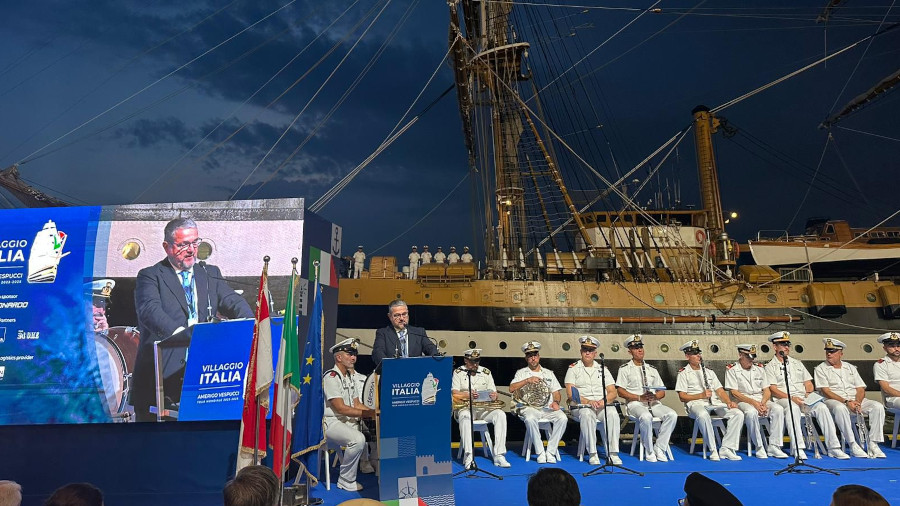
The speech of the Deputy Minister of Business and Made in Italy, Valentino Valentini, at the Italy Village in Singapore during the visit of the Amerigo Vespucci ship

Singapore is one of the most important ports in all of Asia, one of the most important financial centers, and here we not only bring Italy and what it represents but with the Italy Village we bring the Italian experience. This serves not only as a message of friendship and cooperation but also to increasingly encourage the mutual investments that are taking place on both sides of the oceans right now. The arrival of the Amerigo Vespucci in this extraordinary port symbolizes the coming together of two nations with rich and intertwined histories. Italy and Singapore are geographically distant but close in their vision of progress and sustainable development. The importance of free trade and international commerce remains fundamental to the prosperity of our nations. In a rapidly changing, or rather dangerously regressing world, Italy and Singapore represent privileged gateways to Asia, and to 'Europe and across the Mediterranean to the African continent, facilitating not only the exchange of goods, but also of ideas, technologies vectors of peace and stability. Italy and Singapore intend to represent a model for international trade that is both dynamic yet fair, responsible and future-oriented. In the coming days, through a series of targeted events, we will explore the many opportunities for cooperation in the areas of the blue economy, space, advanced technologies and sustainable innovation. Our economies, characterized by a fabric of dynamic and innovative small and medium-sized enterprises, find in this collaboration an ideal ground to grow and prosper. The exchange of knowledge, technologies and human capital between our countries can catalyze innovation and open new frontiers in strategic sectors such as digitization, life sciences and clean technologies. Italy, with its rich manufacturing tradition, cultural heritage and creativity in design combines harmoniously with Singapore, a global hub of innovation, finance and technology. This synergy offers unique opportunities for both countries to expand their economic and cultural horizons.

The framework of Italy-ASEAN economic relations

In recent years, bilateral trade and direct investment have increased exponentially, thanks in part to the HLD. Now there is room for further growth

Economic relations between Italy and ASEAN are continuously deepening. The High Level DIalogue on ASEAN Italy Economic Relations 2024, which took place on November 5 and 6 in Manila, was an opportunity to highlight the current state of relations and discuss how to further strengthen them. As shown in the position paper published by The European House Ambrosetti at the event, the ASEAN-Italy trade interchange is worth more than $20 billion, of which $9.7 billion is represented by Italian exports to ASEAN and $12 billion refers to ASEAN exports to Italy. In the past six years, the total trade interchange between Italy and ASEAN has grown by 38 percent, more than the United Kingdom, Germany and France, highlighting the great dynamism of Italy-ASEAN economic relations.

The instruments of economic cooperation between ASEAN and Italy are diverse and multifaceted. They include trade agreements, investment treaties, joint ventures and economic and technical cooperation programs. These instruments aim to reduce trade barriers, promote investment, foster technology transfer and strengthen economic ties between the two regions. Together, they build resilient and mutually beneficial economic partnerships. To date, Italian FDI in ASEAN is worth 7.7 billion euros, while ASEAN FDI amounts to more than 800 million euros. These are exponential increases since the HLD editions began and since the Italy-ASEAN Association was founded. 

As Lorenzo Tavazzi, Senior Partner and Board Member of The European House Ambrosetti, points out in his position paper, the concrete results achieved in recent years are remarkable. A few examples? The opening of production units, design and service centers in Vietnam, Thailand and Indonesia by an Italian company operating in the metallurgical sector; the opening of a production plant by 2 Italian motorcycle manufacturers in Thailand and Indonesia; the inauguration of a new tire production plant in Thailand; the acquisition of a minority stake in an Italian cosmetics manufacturer by a sovereign wealth fund owned by the Singapore government; the increase in exports of Made in Italy products to ASEAN, particularly to Singapore, Malaysia, Thailand and Vietnam; and the introduction of training and business courses for access to the ASEAN market offered by Italian government agencies.

There is enormous potential for growth in some areas. For example on digital. ASEAN today has different levels of digital and environmental preparedness and is prioritizing green growth and technology adoption, with the goal of improving regional competitiveness, especially through the deployment of artificial intelligence, a robust startup ecosystem, and 5G infrastructure. Italy, with its strong industrial base and advanced technologies, is focusing on clean energy, sustainable practices and digitization to boost economic growth and resilience and can help increase ASEAN competitiveness. As ASEAN countries continue to prioritize resilience and innovation, high-tech sectors such as space offer critical support to ensure business continuity, regional stability, and cooperation in a highly strategic sector. Italy, renowned for its expertise in advanced technology and research, has much to contribute to ASEAN's growth in these areas. The potential for joint projects, technology transfer and knowledge sharing is significant and offers both regions unique advantages of collaboration. Not surprisingly, just in the past few weeks the ASEAN-Italy Cooperation Initiative on Space and Smart Technologies project was concluded with an event at the headquarters of the Italian Space Agency (ASI) in Rome. The initiative, financed by the Ministry of Foreign Affairs and International Cooperation, Directorate General for Globalization and Global Issues, is part of the formal framework of the partnership stipulated between MAECI and the ASEAN Secretariat and called ASEAN-Italy Development Partnership (2022-2026). And it aims among other things to create business opportunities, increase international presence, and improve scientific knowledge based on shared experiences, best practices and lessons learned.

Recently active members
Foto del profilo di Alessio
Foto del profilo di Monika
Foto del profilo di Gabriel
Foto del profilo di Elena
Foto del profilo di Lorenzo
Foto del profilo di Alessandro
Foto del profilo di Cristina
Foto del profilo di Rocco
Foto del profilo di Clara Lomonaco
Foto del profilo di Redazione
Foto del profilo di Davide Gugliuzza
Foto del profilo di Anna Affranio
Foto del profilo di Ilaria Canali
Foto del profilo di Nicolò
Foto del profilo di Angelo Cangero
Who is online
There are no users currently online
Members
  • Foto del profilo di Alessio
    Active 4 ore, 29 minuti fa
  • Foto del profilo di Monika
    Active 3 giorni, 12 ore fa
  • Foto del profilo di Gabriel
    Active 3 settimane, 4 giorni fa
  • Foto del profilo di Elena
    Active 1 anno, 4 mesi fa
  • Foto del profilo di Lorenzo
    Active 2 years, 6 mesi fa