Asean

The importance of the Pan-Asia Railway Network for Southeast Asia

La rete ferroviaria ad alta velocità che collegherà Kunming a Singapore contribuirà ad aumentare l’integrazione economica in Asia orientale

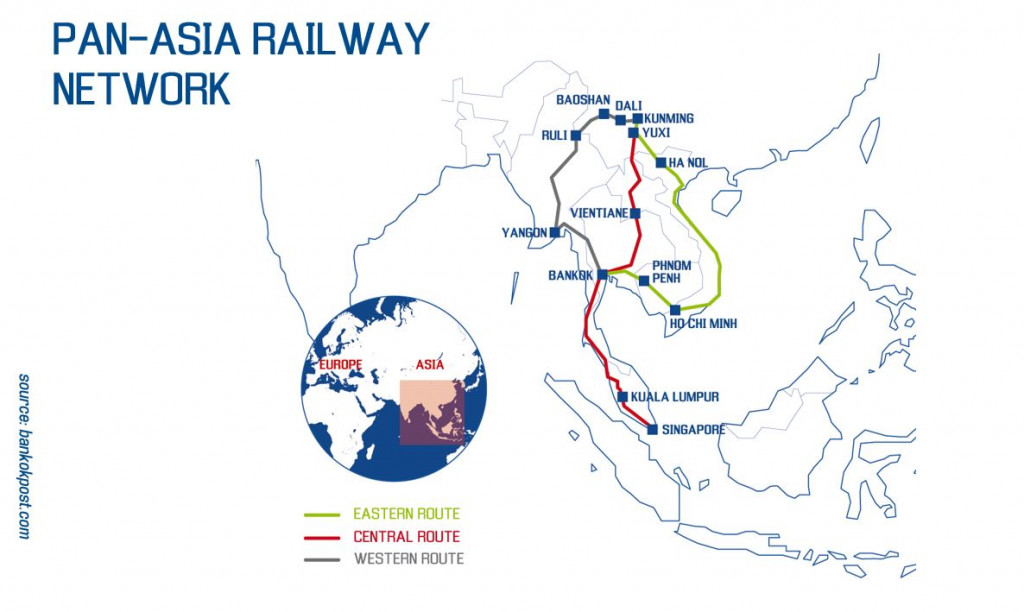
The Kunming-Singapore railway, also known as Pan-Asia Railway Network, is one of the most ambitious infrastructure projects currently under construction in Asia and it was designed with the aim of connecting Southeast Asia to the southern provinces of China. Consisting of a huge network of railway lines, with some of them already operational, once completed the Pan-Asia Railway Network will connect the city of Kunming, capital of the Yunnan province and the economic center of Southern China, to Singapore, passing through Thailand, Cambodia, Vietnam, Laos and Myanmar.

The project’s foundation dates back at the end of the 19th century, when French and British colonial powers agreed on a joint development transport network in order to connect southwestern China to the Indochinese peninsula. The goal was to facilitate the European’s export of goods and manufactured products to the region, as well as to exploit the huge mineral resources of Yunnan; however, the many conflicts that occurred over the next century dealt a severe blow to European commercial ambitions. After the Second World War, the newborn countries in the area were too busy to achieve their independence processes instead of building a functional transport system. Also due to the low economic importance of Southeast Asia which did not justify such a huge investment, the project was delayed for decades.

At the very beginning of the 21th century, China has emerged as the new superpower in the continent. All the countries in the area have benefited from its impetuous economic growth, so much so that in the early 2000s both ASEAN and China realized it was time to improve regional infrastructures. With the launch of the “Belt and Road Initiative” in 2013, the strategic relevance of Kunming-Singapore has further increased. The Chinese government has invested significant amounts of money with the ambition to connect the whole continent: Beijing is focusing strongly on Southeast Asia, directing almost a third of the total investments of the BRI towards ASEAN countries.

Several projects have been proposed to complete the Pan-Asia Railway Network, which today sees three giant routes under construction: the main section will link Kunming to Singapore via Bangkok; the eastern route from Kunming to Ho Chi Minh City via Hanoi; and the western route, from Kunming to Yangon in Myanmar, still in its planning stage.

The Pan-Asia Railway Network will have a significant geopolitical impact for the ASEAN countries located in the Indochinese peninsula: a project of this magnitude represents a unique opportunity to strengthen their economic ties within the region and with the rest of the international community. The approximately 5,500 km of future railway lines will contribute to increasing circulation of goods, people and ideas in East Asia in the next decades, generating a positive outcome for all the parts involved.

However, such a huge project doesn’t come without any significant drawbacks. In many cases there was no lack of delays or postponements in the implementation phase due to various structural difficulties. For instance, the complex geomorphology in Myanmar and Laos’s territory is causing a lot of difficulties for local engineers and, on the other hand, various ethnic groups living along the route of the new railways are protesting against the impact that construction sites will bring in their communities. In addition, existing rail networks in Thailand, Vietnam, Malaysia and Cambodia are still unable to ensure the functioning of a high-speed trains, partly because many railways are single-track and partly because they are poorly maintained. Cambodia in particular has the widest infrastructural gap, with much of the infrastructure built by the French colonial authority out of use for decades.

Also, the main concern for some Southeast Asian governments is that China may leverage investments to gain financial and political influence in addition to operational control. In fact, Beijing does not provide grants but loans to third countries, and it can therefore take over the project whether the receiving country is unable to repay its debt. United States are also concerned about a weakening of its relations with the ASEAN countries and in particular with Singapore, which is Washington's most faithful ally in the region and the one with the greatest strategic importance. The possibility of directly connecting Singapore to the People's Republic assigns to the project a strong geopolitical importance, because if Beijing succeeds in bringing the city-state into its orbit, it would weaken the American strategic primacy and it would have more opportunities to operate within the Indo-Pacific region.

Despite these concerns, Chinese infrastructure projects will continue to have great importance for the ASEAN countries, because they still rely on Beijing's investments and on the opportunities that the huge Chinese market can guarantee them. The Chinese giant’s firepower will be key to further developing infrastructure in the East Asian region, however Southeast Asian nations must balance their relations with China in order to avoid losing geopolitical weight while taking advantage of the economic opportunities arising from the relationship with Beijing.

By Diego Mastromatteo

RCEP: the agreement that will change the global balance of power

The signing of the free trade agreement, expected by the end of 2020, could boost confidence in international cooperation 

The idea of giving life to a mega regional trade agreement emerged, capable of bringing together almost all the actors in East Asia, emerged in 2012. The ASEAN members gathered at the 21st ASEAN summit in Cambodia outlined at the time a strategy based on commercial convergence to be adopted in the years to come, and which would end up with the negotiation of the Regional Comprehensive Economic Partnership (RCEP), a free trade agreement of massive dimensions and global importance, which is expected to be concluded by the end of 2020. 

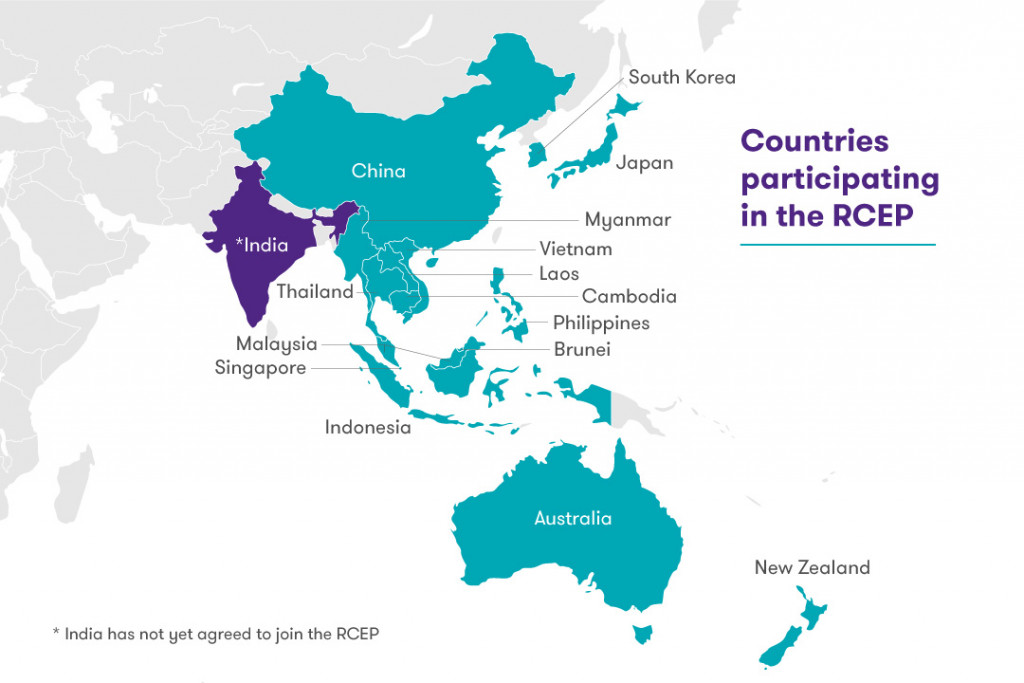
Initially 16 nations were supposed to take part in the deal, but India decided to abandon the project due to conditions relating to the progressive reduction of customs tariffs. According to the Indian authorities, the new rules would have made the access to the domestic market for items of Chinese and Australian origin much easier, damaging local producers and leading to considerable economic imbalances. Thus, the adhering nations have been reduced to the 10 ASEAN members (Brunei, Cambodia, Indonesia, Laos, Malaysia, Burma, Philippines, Singapore, Thailand and Vietnam) plus China, Japan, South Korea, Australia and New Zealand.

Despite New Delhi’s bail out, the RCEP is set to become the largest free trade agreement in the world. Indeed, the 15 participants of the partnership are among the major developing countries and they cover collectively about 30% of the world's GDP and population. At the same time, the RCEP is arranged as a broad and comprehensive agreement, capable of observing the different facets of economic action, including forms of cooperation between members and dispute resolution mechanisms in addition to mere commercial provisions. It aims, on one hand, to incorporate the commitments established by the World Trade Organization (WTO) for a deeper reduction of tariff barriers and, on the other, to integrate provisions beyond the WTO, expected to address other regulatory issues. Among these, are to be mentioned the chapters dedicated to small and medium-sized enterprises, e-commerce, dispute resolution mechanisms, intellectual property and the definition of procedures for interstate economic and technical cooperation.

From a political-economic point of view, the RCEP has all the potential to become a reference for commercial standards related to new free trade agreements in Asia and beyond. It is going to set a legal precedent for future regional and international relations. Beyond numbers and statistics, the conclusion of an agreement of this extent occurs at a crucial moment for global economic governance, in which multilateralism is increasingly giving way to nationalists and, occasionally, unilateral policies. The economic recession caused by the Covid-19 pandemic has, indeed, consolidated a trend that has shown itself to be growing in recent years, especially with regard to the United States, a still dominant player on the world scene. Just as the Trump presidency erects tariff barriers and reduces foreign trade in the name of "America First", part of the Asian continent is moving in a different direction, in support of multilateralism in line with an international economic order based on precise rules. 

Con la ratifica del RCEP, in aggiunta al Comprehensive and Progressive Agreement for Trans-Pacific Partnership, l’Asia orientale potrà fare affidamento su due giganteschi accordi commerciali che hanno il pregio di promuovere l’integrazione e la stabilità regionale e di rafforzare la centralità dell’ASEAN, tanto nell’Indopacifico, quanto nel panorama internazionale. Tali accordi combinati plasmeranno il più grande blocco commerciale del mondo, coprendo più di un terzo del PIL globale, e contribuendo a questo per circa 137 miliardi di dollari USA nel lungo periodo.

Nel contesto delle controversie commerciali tra Stati Uniti e Cina, il RCEP invia un forte segnale al mondo, manifestando a gran voce la volontà di apertura del continente asiatico. Non a caso, dopo la crisi finanziaria del 1997, la risposta dell’ASEAN alle turbolenze politiche e monetarie è stata quella di raddoppiare i suoi sforzi per un’integrazione economica sempre più inclusiva. La conseguenza finale potrebbe essere uno slittamento degli equilibri mondiali a favore dell’emisfero asiatico, rendendo il RCEP un’importante opportunità di cooperazione con Paesi finora ritenuti quasi secondari e un’occasione di ristabilire la fiducia collettiva nonostante la crescente instabilità del sistema globale. 

By Emilia Leban

The strategic partnership between EU and ASEAN

Deepening cooperation between the two regions will be beneficial to address common global challenges

The EU-ASEAN partnership dates back to 1972, when the European Economic Community became ASEAN’s first formal dialogue partner. Over the past 48 years, cooperation between the two actors has notably flourished with a view to encompass ever more strategic areas and to foster dialogue on economic, political, security, and socio-cultural issues.

These topics have become increasingly important in EU-ASEAN relations. Hence, in order to address them, the two regions promoted several initiatives to enhance coordination and cooperation based on common interests and values, among which technical level meetings periodical ministerial meetings, and major events, such as the High-Level Dialogues. 

Economic cooperation in particular has become relevant, as it is generating significant mutual benefits for both actors. Inter-regional trade and investment have significantly intensified in the last decades. To date, the EU is ASEAN’s second largest trading partner and ASEAN is the EU’s third largest trading partner. In 2018 the total merchandise trade was €237 billion, double the figure from 2008, while trade in services - €88.3 - was more than twice in 2017 compared to 2007. The EU remains the biggest provider of foreign direct investment in ASEAN with a value of €330 billion, based on 2017 figures. Furthermore, half of the EU cooperation funding to ASEAN for the 2014-2020 period has been allocated towards Southeast Asia’s economic integration and the ASEAN Economic Community, with specific projects aimed at promoting dialogue and cooperation in the economic and commercial domains. Singapore and Vietnam have already signed a comprehensive free trade agreement with the EU and negotiations are gradually evolving with several other ASEAN member states in view of the possible definition of a region to region EU-ASEAN commercial agreement. Despite the impact of the global pandemic, both organizations appear to be determined to continue investing in economic cooperation in order to strengthen the resilience of the global system. 

On security issues, although coordination between the two actors has increased in the past years, significant progress still has to be achieved. The first relatively successful European Security and Defence Policy mission in Southeast Asia – the Aceh Monitoring Mission, focused on the peace process in Aceh, Indonesia – lacked adequate follow-up steps and wasn’t able to produce concrete results. However, the EU-ASEAN security cooperation has considerably expanded in the field of non-traditional security matters among which cybersecurity, de-radicalization, chemical, biological, radiological and nuclear threats. In this regard, the EU Chemical, Biological, Radiological and Nuclear (CBRN) Risk Mitigation Centers of Excellence initiative was set up with the purpose of strengthening coordination with partner countries, among which ASEAN members states, and reducing CBRN related risks at the national, regional and international level. For the future, a comprehensive EU-ASEAN partnership also emphasizing capacity building in security matters will be curial to enhance the interests of both actors in the Pacific region. 

Moreover, the two regions are working together to improve cooperation also in other fields, among which culture, education and innovation. Indeed, EU-ASEAN cooperation aims to build societies where emphasis is given to common well-being and social welfare. Amidst several initiatives, increased emphasis was posed to higher education, as one key thematic area of EU-ASEAN cooperation. Since 2014, over 5500 students and staff from Southeast Asian universities have travelled to Europe, funded by the EU and its member states, and nearly 3000 European students and staff have worked or studied in ASEAN under the Erasmus+ program. Academic cooperation also includes the Horizon 2020 program, which supports research and innovation with collaborative projects in the ASEAN region, covering areas that include health, food, environment and nanotechnology. 

As the two major regional integration projects in the world, ASEAN and the European Union appear to be natural partners, bonded by shared values and interests in enhancing peace, stability and prosperity for their citizens. Both are committed to address the emerging challenges with a multilateral approach focused on dialogue and cooperation. On January 22nd, 2019, the EU-ASEAN meeting of Foreign Ministers agreed to upgrade EU-ASEAN relations to the Strategic Partnership level, recognizing the impressive progress made in the implementation of the EU-ASEAN Plan of Action for 2018-2022. This will allow increased engagement on key regional issues as well as on the most pressing global challenges of this century, including responding to the climate emergency and the promotion of peace and security. Further effort will be needed in this delicate phase characterized by the global pandemic, in order to strengthen relations between the two regions and achieve concrete results in adjusting the globalization process to benefit as many citizens as possible while respecting the environment and protecting the most vulnerable.

By Ngoc lien Tran 

Agri-food and Made in Italy at the core of trade with ASEAN

Italian excellences attract new consumers in South-East Asia

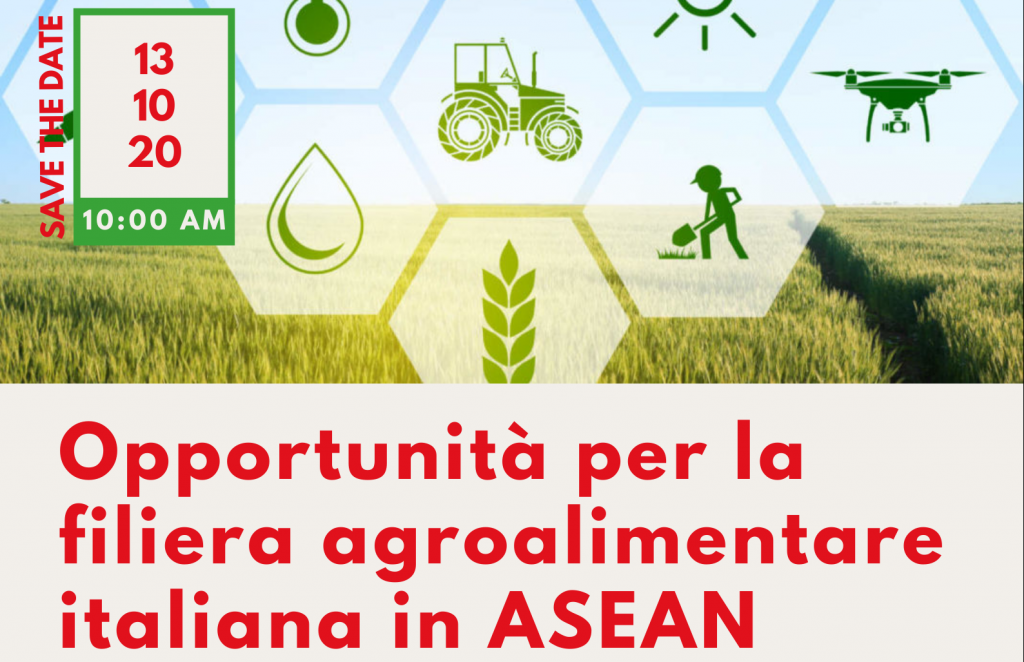
On 13 October, following the meeting regarding the new opportunities for the agri-food supply chain of Emilia-Romagna in ASEAN, it emerged with a certain degree of consensus how much the countries of the region are fascinated by the brand "Made in Italy" and by our nation.  

The new Free Trade Agreement (FTA) with Vietnam, which entered into force on the 1° of August, promotes new opportunities for trade interactions between the two regions and underlines the increased attention that the country has shown towards Italian products. In this regard, the creation of an FTA between the EU and ASEAN would be useful to eliminate phenomena of Italian Sounding. The latter is an unfair widespread practice by foreign companies that offer reproductions of Italian food and wine excellences with the aim of attracting new consumers. 

Ms Formentini, a member of the ASEAN Desk at the European Commission, explained how to recognize these products by paying particular attention to means of identification such as PGI (Protected Geographical Indication) and PDO (Protected Designation of Origin). Italy is the European country with the largest number of agri-food products with Protected Designation of Origin and Protected Geographical Indication recognized by the European Union, comprising 299 products. Even today, there are products that continue to receive the coveted awards, among which the Lucan Oil that brings up to 18 products of excellence from Basilicata.

The ASEAN countries are not unresponsive to these goals and show great interest in agri-food products of Italian origin on grounds of their renowned international reputation. However, the risks of free trade in substitute goods should not be underestimated. Opening up barriers and increasing imports of goods may have negative consequences for indigenous products belonging to the same production chains. Just think about the opinions that circulated in 2017 about the consequences of the export of buffalo mozzarella from Italy on the trade of fresh cheeses in Canada or the possible imitation of the famous dairy from Campania after the entry into force of CETA. These safeguards must also be guaranteed for PGI and PDO products from Emilia-Romagna. For instance, after the crisis triggered by the Covid-19 pandemic, the region has shown great interest in seizing the opportunities arising from any free trade agreement in order to expand its network of commercial contacts and ensure an agile recovery for companies. Entrepreneurs are displaying great capacity in reaction to this critical moment and a strong sense of openness to a constantly developing region of the world.

ASEAN is one of the few areas in the world to have shown readiness to manage the health emergency and is similarly willing to contact new interlocutors. At this regard, it was held on 9 August in Thailand the fair "Food and Hotel" organized by Bellavita Expo with the participation of the Italian-Thai Chamber of Commerce. It is the main trade fair in the hospitality and gastronomy sectors in Thailand and Southeast Asia, during which the best Italian food and beverage products were described and advertised for over 29,000 professionals. The event wanted to give a decisive boost to signal the growth of the food and hospitality sector in Thailand, with the hope of offering exceptional opportunities to Italian companies to enrich their knowledge with professionals in the sector by promoting their businesses on the ground.

Therefore, the latest developments create optimistic forecasts of the popularity of products of Italian origin and provide hope for the progress of trade relations between the EU and Southeast Asia, as well as the spread of Italian food and wine excellences in the world.

By Hania Hashim 

Off on the Phad Thai foot

Southeast Asia is increasingly establishing itself in Italy and Europe thanks to its rich culinary offer.

“Don't eat anything your great-great grandmother wouldn't recognize as food” said the American writer Michael Pollan. Who better than Italians, always ready to criticize any foreign dish, to agree? And yet, in the latest years Southeast Asian cuisine is overcoming geographical boundaries and winning over even the most sceptical hearts. Not only are countless Thai and Vietnamese restaurants opening all around Italy, but even new TV series are being made to portray the scents, taste, and colours of Asian dishes. But which are the most popular in Europe and Italy today, that even your great-great grandmother would be fond of?

One could fill lots of book trying to illustrate the richness and variety of ingredients in Vietnamese cuisine, and it still wouldn’t be enough. When France colonised Vietnam and its neighbours in 1887, it formed the Indochinese Union and heavily influenced this region’s cuisine. But before that, the culinary heritage of Vietnam was influenced by China, which provided a fundamental contribution to the birth of Vietnamese popular dishes. Wontons, wheat noodles, chili peppers and corn can be found in both countries’ culinary heritage. When the French arrived, the ingredients list expanded to include potatoes, asparagus, onions, coffee, and many others. And today, two of the most beloved typical Vietnamese dishes both by locals and Europeans are the outcome of French influence!

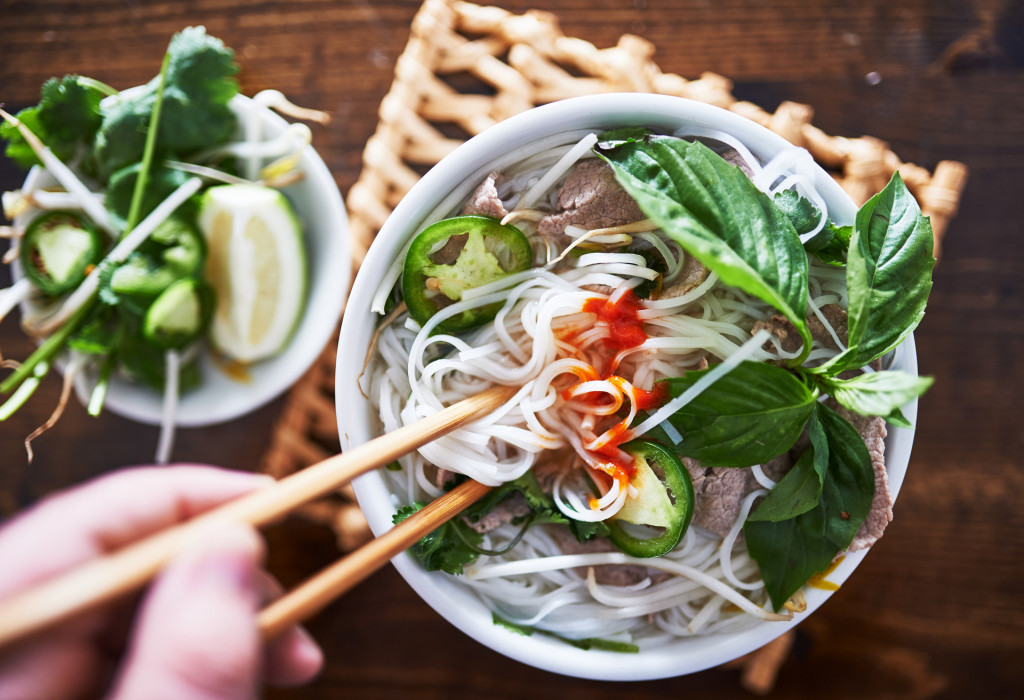
The first one is Bánh mì, a delicious baguette-shaped bread made with rice flour instead of wheat flour. Fillings can be very fancy, but the most cherished one is a combination of grilled meat, coriander, pickled vegetables and sauces. The second dish is the world-renowned Pho: a soup of Vietnamese rice noodles and meat broths. It is common belief that the word Pho (pronounced fuh) derives from the French pot au feu (stew). The presence of beef meat, rarely seen in other typical Asian dishes, is further evidence of the influence left by the French colonisation.

As far as Thai cuisine is concerned, the birth of new Thai restaurants everywhere in Italy (not only in Rome and Milan) is a clear sign of its increasing success. Besides the classic Phad Thai (stir-fried rice noodles with vegetables, eggs, roasted peanuts, fish sauce, tamarind juice, garlic, chilli pepper, lime and palm sugar), there are many more creative combinations of flavours that are winning hearts in the West to the extent that Thai Massaman curry, the “king of curry”, was awarded first place in the CNN’s “The world's 50 best foods” list. The reason? “Even the packet sauce you buy from the supermarket can make the most delinquent of cooks look like a Michelin potential”.

While it is still hard to find Indonesian or Singaporean restaurants in Italy, the interest toward Southeast Asian countries’ cuisine seems to be a fast-growing trend. Suffice it to say that many other dishes in the aforementioned list come from ASEAN countries. Even Netflix, the media giant always very careful about its viewers’ needs, own two series that frequently portrait the cuisine in Bali, Yogyakarta, Cebu, and other Southeast Asian locations: Street Food Asia and Chef’s Table.

All encouraging signs that show once again the increasing interest in ASEAN countries’ history, traditions, and rich culinary offer in Europe and worldwide.

By Valentina Beomonte Zobel

Regional security in ASEAN

In order to tackle the emerging geopolitical challenges, ASEAN should move towards deeper forms of cooperation in defence and security 

The Bangkok declaration, founding document of the Association of South-East Asian Nations, states that regional peace and stability are among the two main goals of the organization. However, the structure of the Association itself somehow hampers the process of advancing significantly towards a common security and defence community. 

ASEAN was born from the union of a series of cardinal principles on which the trust among member states was built. This approach - called The ASEAN Way – is founded on the recognition and adherence to the principle of national sovereignty, which entails non-interference in internal affairs, abstention from the use of force to settle disputes and unanimity in the decision-making processes. Security and common defense have thus always been sensitive issues in the region, and progress in these directions tended to be modest.

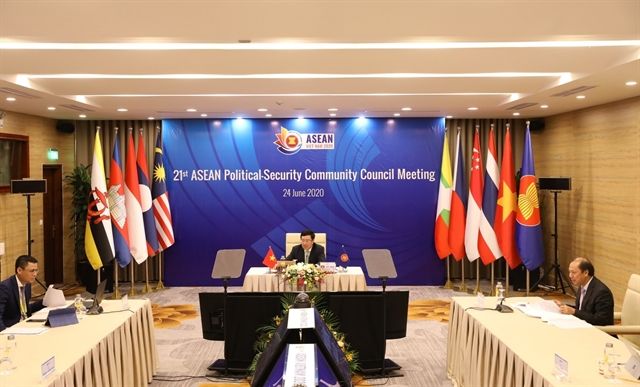
In the last decades, Indonesia has been one of the main actors advocating for accelerating the integration process in this field. In 2003, at the 9th ASEAN Summit in Bali, the Indonesian government reached its goal of including the ASEAN Security Community among the three founding pillars of the organization. The ASEAN Political-Security Community – as it is named since 2015 - represents a notable step towards for member states, establishing a useful platform to solve disputes and to encourage dialogue and cooperation in defense and foreign policy. Since 2010 then, meetings between ASEAN Defence Ministers with the counterparts of different international partners, among which China, US, Japan and Australia, have acquired always more importance and centrality. 

Despite these last years’ progresses, ASEAN still struggles to push forward a concrete agenda in strengthening regional cooperation in defense. As for the European Union, also ASEAN member states are skeptical about deeper forms of integration in the military sector. The current level of cooperation involves consultation with partners and dialogue, yet member states are still reluctant to the formulation of a common long-term strategy. On the delicate issue of the South China Sea, which involves several ASEAN nations including Indonesia, Malaysia, the Philippines and Vietnam, the long-term common strategy that would be necessary to meet the challenge is struggling to emerge. 

Today, in an evolving and uncertain geopolitical context, ASEAN countries need to deepen and intensify their internal discussions on common security. The role of the US in the Pacific is rapidly changing, China is moving in the South China Sea and the Covid-19 pandemic has disrupted the regional and global equilibrium. The economic and geopolitical dimensions are always more interrelated, and it is thus time for ASEAN to also invest in the common security and defense sector. 

Despite the outbreak of the global pandemic, 2020 presents particularly interesting opportunities in terms of defence for South-East Asian countries. Two ASEAN’s countries, Indonesia and Vietnam, are members of the UN Security Council, which represents a unique opportunity to advance the priorities of the region in the most influential diplomatic arenas. The South-East Asia region is acquiring increasingly more economic and commercial relevance at the global level, and needs now to start building common geopolitical instruments to tackle the increasing challenges. It will be therefore essential for ASEAN to continue its course towards the establishment of a concrete defense and security community, with the goal of guaranteeing the principles of peace and stability that underlie the Association itself. 

By Tullio Ambrosone and Luca Menghini

2nd Digital Round Table on economic relations between Italy and ASEAN

At the center of the discussion technology and innovation, with a focus on investment opportunities in ASEAN Countries

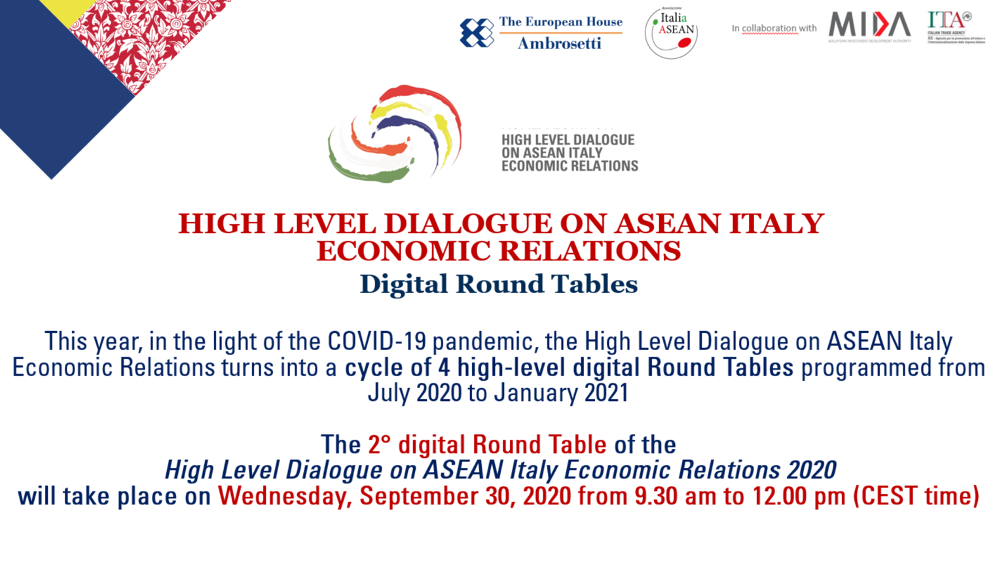
On Wednesday 30th September, the 2nd round table of the Digital High Level Dialogue on the relations between Italy and ASEAN took place, organized by The European House Ambrosetti in collaboration with the Italy ASEAN Association. Now that Italy has officially become an ASEAN Development Partner, the importance of the South-East Asian region for Italian trade and exports is growing. In particular in the fields of manufacturing, technology and connectivity, Italy and ASEAN now have a unique opportunity to advance relations and achieve important common goals. 

Preponderant since the outbreak of the pandemic has been the theme of the digital revolution. During the most acute phases of the crisis, the role of connectivity has been fundamental to uphold a resilient approach, allowing to not interrupt the production cycle and pushing companies to rethink their development models. Despite the overall decline in economic activity, the digital sector grew significantly during the pandemic and is now one of the most dynamic sectors, especially in Southeast Asia. More and more companies are aiming to expand the offer of digital services in the region, investing in artificial intelligence and big data, and ASEAN governments seem willing to support this process to reap the benefits of the digital revolution. In the post-pandemic phase, it will therefore be essential to increase investments in the digital sector in order to foster the economic recovery. 

In particular, during the event, several speakers highlighted the need to diversify investments in technology to exploit all the possibilities that this sector can offer. Particularly interesting was the theme of smart-cities and the technological development of urban centers. As densely populated countries, several members of ASEAN find it very difficult to manage the increasingly chaotic and dynamic megalopolises of the region. In this sense, technology offers extremely interesting tools, from mobility management to infrastructure, energy supply and the food sector. According to several experts who intervened, more investment in digitization will be crucial to increase the competitiveness and productivity of companies, and to create more innovative and sustainable social ecosystems. The space to intervene is vast, and Italian companies should also focus on the rich markets of Southeast Asia to diversify investments and ride the growth wave of ASEAN countries. 

Finally, particular attention has been paid to the situation of the aviation sector, one of the most affected by the consequences of the pandemic. The entry bans for foreign citizens imposed in many countries during the most serious phase of the health emergency, together with the restrictive measures still in place to contain the spread of the virus, have put a strain on the airlines and therefore the entire aviation sector. Among the speakers, Emanuele Lourier, Sales Manager of Leonardo, presented two possible scenarios for the near future of this sector. The first would see a recovery of air traffic starting from 2022, with a gradual return to 2019 levels; the second, more pessimistic, foresees a recovery of the sector in 2023, with a return to effective growth only in 2024. However, despite the difficulties of recent months and the challenges of the coming years, air traffic in Southeast Asia is expected to grow by several percentage points over the next ten years, in line with population growth. This sector, too, can therefore still offer interesting opportunities for companies that are willing to focus on the long term. 

Despite the pandemic is complicating international relations, Italy and ASEAN continue to focus on multilateralism and free trade to get out of this crisis. Only through greater forms of cooperation the two regions can relaunch growth and build an innovative and sustainable economic model. The next years will be fundamental in this sense, it will be up to governments and companies to lay the foundations for recovery, aware of the potential that cooperation between Italy and ASEAN can offer.

 Article edited by editorial Staff 

Italy, Asia and botany: a long history

The year 2020 marks the centenary of the death of Odoardo Beccari, a scientist who has remarkably contributed to the South East Asia’s knowledge of biodiversity 

The 2020 marks two important events which connect Italy and South East Asia. The 500 years from the circumnavigation of the globe by the Portuguese Ferdinando Magellano, with the report by the Italian Antonio Pigafetta. The diary documented the cities, people and costumes of South East Asia. Moreover 2020 marks the death of the Italian Botanist Odoardo Beccari.

Odoardo Beccari is not particularly known outside the scientific circle, however his articles on the description of new plant species made him one of the most relevant tropical botanists between the nineteenth and twentieth century. His reports and articles have inspired the milieu, names, and adventures of the pirate Sandokan, written by Emilio Salgari.

Originally from Tuscany, with the Marchese Giacomo Doria, organized their first trip to explore the land of Sarawak (Borneo). In the journey they stop in Sri Lanka, Singapore, and arrived in Kuching, capital of Sarawak, on the 19th June 1865, as guests of the Raja James Brooke. The two explorers moved to mount Battang, approximately 300 m asl, starting their collections. Other explorations followed in South East Asia and Africa, with other important Italian scientists. The Beccari collection are today deposited at the National Herbarium in Florence while the zoological and anthropological collections are exhibited at the Genoa Museum.

For the centenary of his death, several events will be held. The National Herbarium, in Florence, will inaugurate an exposition on the life and works of Beccari (25 October 2020 - 28 February 2021). The Italian version of most famous Beccari Book Nelle foreste di Borneo, has been reprinted. Nelle foreste di Borneo

Kuching (Sarawak) where the twenty-year-old Beccari arrived to start his work in the tropical forest, has planned four events to commemorate the botanist. The 25th of July the Minister of Culture, Art and Tourism of Sarawak has inaugurated the Beccari Discovery trail, 3.2 km on the Batang Mountain, where Beccari built his base camp (Villa Vallombrosa). In September the ‘Hidden Valley of the Rattans’ in Kubah National Park will be inaugurated, in collaboration with the Sarawak Forestry Department. For 2021 (some events have been postponed due to the pandemic) a conference in honour of Odoardo Beccari titled ‘Wandering in the forest of Borneo’ has been organized in collaboration with Sarawak Biodiversity Centre.

Beccari described his travels and observations in the book ‘Wanderings in the Great Forest of Borneo’, which became the only scientific italian best-seller known abroad. In that book, Beccari wrote that in the future, with economic development in Malaysia, those forests would have been studied by local botanists. Today, local botanists are celebrating the Italian botanist for his great contribution on the understanding of Borneo biodiversity.

Article written by Daniele Cicuzza 

The flourishing relation between Italy and ASEAN

After Germany, also Italy (and France) becomes ASEAN's Development Partner, highlighting the increasing interest for Southeast Asia in the European continent

The trade war between the United States and China, together with the severe consequences of the pandemic, are redesigning the global trade and geopolitical landscape. In Europe as well as in Asia, political elites are looking for new commercial partnerships with the aim of dealing with the upheavals in the global economic system of recent years. In this regard, Italy and Europe are looking with increasing interest at the Indo-Pacific region, considered a young, dynamic and appealing region. 

Since the first visit of President of the Italian Republic Sergio Mattarella to the ASEAN Secretariat in 2015, Italy has been committed to strengthen relations with the region. Through the organization of meetings and events, representatives of Italian and ASEAN institutions have worked hard to foster dialogue and trade exchanges between the two parties. On September 9th of this year, Italy officially became ASEAN's Development Partner, crowning a process of rapprochement successfully carried out in recent years. In addition, the recent entry into force of the EU-Vietnam Free Trade Agreement (after the agreement with Singapore in 2019) represents a further positive factor that signals the ongoing process of cooperation between Italy, Europe and South-East Asia. 

Also from the commercial point of view, relations between Italy and ASEAN have grown in recent years. According to data from the ASEAN General Secretariat, in the period between 2009 and 2019 Italian exports to ASEAN countries have increased from 7.14 to 13.29 billion dollars, while imports have increased from 5.27 to 9.65 billion dollars. Among the main Italian goods exported, machinery, equipment and chemical products, while ASEAN countries mainly exported to Italy computers, electronic and agri-food products. However, it is worth noting that the volume of trade between Italy and ASEAN is still quite low, especially in relation to other European countries. The ASEAN bloc is Italy's 14th trading partner in terms of exports, imports and foreign direct investments, while Italy is more than 20th among ASEAN partners, well behind Germany, France, the United Kingdom and even the Netherlands and Switzerland. 

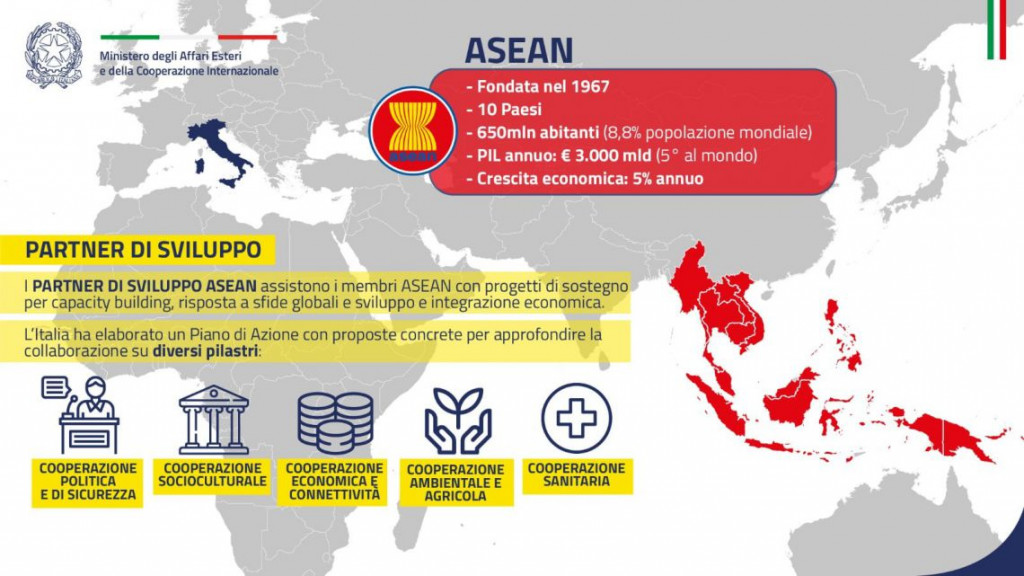
In light of these data, it is clear that the news of the partnership between Italy and ASEAN signals the intention of the Italian political establishment to catch up with its European partners and global competitors. After all, ASEAN is one of the most dynamic regions in the world, with a population of over 600 million inhabitants, the fifth largest economy in the world and an average growth rate of around 5% of total GDP in the last 10 years. 

This newborn partnership is therefore not a point of arrival, but a starting point for improving and deepening the political, economic and cultural relations between Italy and Southeast Asian countries. In the coming months, it will be necessary to monitor and evaluate progresses in order to understand the scope of this process and to seize the countless opportunities that will emerge. 

Italy becomes ASEAN’s Development Partner

After Berlin, also Rome and Paris start looking to South-East Asia for its’ immense potential

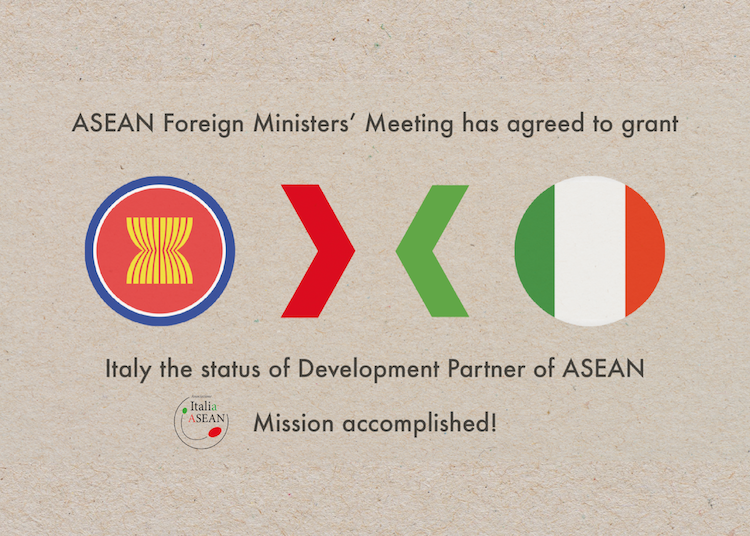
The Association of Southeast Asian Nations (ASEAN) granted Italy the status of Development Partner of the organization on the 9th of September.

In a letter to the Minister of Foreign Affairs Luigi di Maio, ASEAN Secretary General Dato Lim Jock Hoi announced that, being close to the 53rd ASEAN Foreign Ministers' Meeting, Italy has been granted the status of Development Partner. During the meeting, also France obtained the role of Development Partner. Rome and Paris follow Berlin in deepening their relations with the Association.

Enrico Letta, President of the Italy-ASEAN Association, comments on this important achievement: "It is a crucial moment for relations between ASEAN and our country. The news highlights the great work done in recent years by the entire country system to deepen the link between two areas that are geographically and culturally distant, but which share fundamental values such as free trade and multilateralism. Congratulations to the Foreign Ministry, to the Minister of Foreign Affairs and to President Mattarella, the first G7 Head of State to visit the General Secretariat of ASEAN in 2015. Today, ASEAN is already the fifth largest global economic power and the projections clearly display that by 2050 it will reach the fourth place, following China, India and the United States."

The Development Partnership is a special relationship that aims at strengthening the cooperation between Italy and ASEAN, and enhance the coordination of joint projects aimed at enhancing the potential of the two regions. As Development Partners, the ASEAN Secretariat and the Ministry of Foreign Affairs will work together in areas such as connectivity, fight against climate change and sustainable development, management of natural disasters, protection of cultural heritage, strengthening the role of women, peacekeeping and combatting Covid-19.

Alessia Mosca, Secretary General of the Italy-ASEAN Association, underlines the importance of creating new alliances for Italy and the European economic system: "The new global scenario gives even more value to the relationship between Italy and ASEAN, which was strengthened considerably in recent years. Thanks to this recognition and thanks to the results achieved by the European trade policy negotiations, Italian companies can now compete better in one of the most dynamic areas of the planet."

In the coming months, the Italian Embassy in Jakarta will have the task of coordinating with the ASEAN Secretariat to follow up the efforts made so far and further develop the partnership.

Article edited by editorial Staff

Germany pushes the EU towards South-East Asia

By adopting new foreign policy guidelines, Germany displays its strategy toward Asia: less reliance on China and greater attention to the countries of the Indo-Pacific region.a

The German Chancellor Angela Merkel made it clear: Europe should reduce its reliance on Chinese supply chains and strengthen its ties with Indo-Pacific countries to relaunch free trade and multilateralism at the global level. Following France, the German government has approved new foreign policy guidelines that give priority to partnerships with countries in the Indo-Pacific region.

This is nothing new. Trump’s administration as well is trying to bring froward similar foreign policy maneuvers in order to face Chinese ambitions in the context of the ongoing political and economic confrontation between the two superpowers. However, if the attention of the United States of Trump is centered on security and unilateralism with a quasi-mercantilist approach, on the other hand, Merkel’s Germany aims to relaunch multilateralism and free trade by strengthening relations with ASEAN and other countries of the region, among which Japan, South Korea and Australia.

The idea of the German Government, which has become increasingly popular among European governments and institutions, is that it will be essential to draw up a coherent common foreign policy, focused on the centrality of multilateralism and free trade, as opposed to Trump’s unilateralism in the United States or China’s hegemonic ambitions. In order to do this, it will be necessary to invest in relations with international organizations such as ASEAN or with free-trade-oriented Asian countries such as Japan, South Korea or Indonesia.

The idea of the German Government, which has become increasingly popular among European governments and institutions, is that it will be essential to draw up a coherent common foreign policy, focused on the centrality of multilateralism and free trade, as opposed to Trump’s unilateralism in the United States or China’s hegemonic ambitions. In order to do this, it will be necessary to invest in relations with international organizations such as ASEAN or with free-trade-oriented Asian countries such as Japan, South Korea or Indonesia.

Greater openness towards the Indo-Pacific region could therefore contribute to reinvigorate the potential of the European Union. The German Government will try to encourage European partners to place greater emphasis on the geopolitical dimension of the EU, assigning a pivotal role to the Indo-Pacific region and to ASEAN in particular. Therefore, in the new and complex international scenario, it once again appears that East Asian countries will assume an increasing weight and become an always greater geopolitical and commercial focal point. 

Article written by Tullio Ambrosone e Hania Hashim

The potential of the digital economy in South-East Asia:a focus on Grab and GoJek

Starting with ride-hailing, the two companies now aim to monopolize the digital market by expanding their services

Restrictive measures imposed to counter the consequences of the Covid-19 pandemic are fostering the potential of the digital economy at the global level in all areas of consumption. In South-East Asia, this dynamic is further reinforced by the remarkable increase of digital consumers in recent years, achieved through a more widespread access to the internet across the different countries of the region. Today, big local companies are fully aware of this evolution and are actively investing in the digital market, which is expected to be worth around $200 billion over the next five years. 

Particularly interesting are the cases of Grab and Gojek, tech start-up leaders of the ride-hailing sector. Born in 2010 in Jakarta offering support services for motorcyclists, Gojek has then expanded its range of services reaching to date a value of $12.5 billion. Grab, founded in Malaysia in June 2012, has grown rapidly throughout South-East Asia, with a current valuation of nearly $14 billion. Both started out in the mobility sector, but then they gradually expanded their service network from car-sharing and home delivery to financial and insurance services. The goal of both companies is to become the first everyday super app by developing an ecosystem of entrepreneurs, drivers and customers connected through the app, in order to meet all the needs of everyday life.

In particular, Grab is developing digital cash-less payment tools such as GrabPay, which allows to make payments using internal credits of the app. In addition the company also offers services such as GrabFood and GrabFresh, that allow to order groceries online. Grab has also begun working with governments and small businesses locally to digitize traditionally offline segments of the agri-food ecosystem, bringing them on its platform. The company recently launched GrabMart, GrabFood, GrabExpress and GrabAssistant, establishing relationships with over 78,000 retailers and 115,000 drivers and riders in March and April 2020. In the last twelve months, Grab has achieved a 21% increase in online revenue and contributed approximately $8.5 billion to the ASEAN economy.

Also GoJek is expanding its business into several consumer sectors, leveraging the exponential growth of the digital sector. GoFood, GoClean, GoAuto, GoLaudry and GoGlam are just some of the services launched in recent years, from food delivery to laundry services. In addition, the company is heavily investing to offer training courses in business management, finance and information technology to over 35,000 entrepreneurs with the aim of supporting the digital transformation also within civil society.

Both companies therefore represent concrete examples of one of the most significant trends that is characterizing the South-East Asian market. With a young and dynamic population, the region is expected to observe a considerable increase in demand for digital services, creating space for the proactivity of innovative tech companies able to ride the wave of digitalization.

Article written by Tullio Ambrosone e Gabriel Zurlo Sconosciuto