ASEAN moves closer to Africa

Not only Europe, the Americas and the Gulf. Southeast Asia also strengthens ties with the African continent

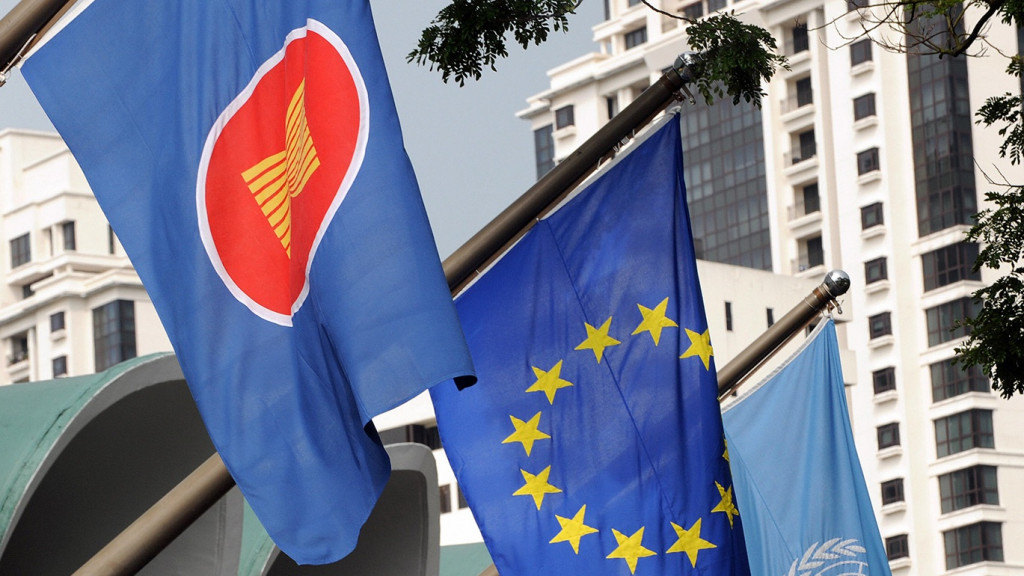
ASEAN and South Africa held the inaugural meeting of the ASEAN-South Africa Joint Sectoral Cooperation Committee (ASA-JSCC) at ASEAN headquarters on Nov. 30. The meeting marked the launch of the first formal sectoral dialogue partnership on the African continent and thus realizes the expansion of ASEAN's external relations to all continents of the world. ASEAN foreign ministers conferred sector dialogue partner status on South Africa at the 56th Foreign Ministers' Meeting last July in Jakarta. Last week's meeting adopted the ASA-JSCC mandate and deliberated on several areas of future cooperation. On the economic front, the meeting encouraged South Africa to explore practical cooperation in areas of mutual interest and benefit, including trade and investment, public-private partnership, strengthening micro, small and medium enterprises, tourism, transport, energy the critical minerals and mineral resources sector, information and communication technologies, food security, halal industry, sustainable agriculture, blue economy, digital economy, fisheries, aquaculture and forestry, research and innovation, and science and technology. The meeting also noted the four key priorities of the economic partnership that ASEAN would like to pursue with South Africa, namely (1) strengthening ASEAN market integration; (2) sustainability and decarbonization; (3) digital transformation; and (4) inclusiveness of economic systems and people-to-people exchanges. Regarding the socio-cultural sphere, it is intended to explore cooperation in the areas of health, women's empowerment, education and climate change, but also to intensify efforts to improve people-to-people contacts through exchange programs involving youth, students, media and artists, as well as scholarship programs. Both sides also agreed to develop the ASEAN-South Africa Areas of Practical Cooperation, which will serve as a framework for achieving shared goals and related priorities in the coming years. The development is very significant because it testifies to the strengthened interconnection between ASEAN and several areas of the world with broad growth potential, including Africa.

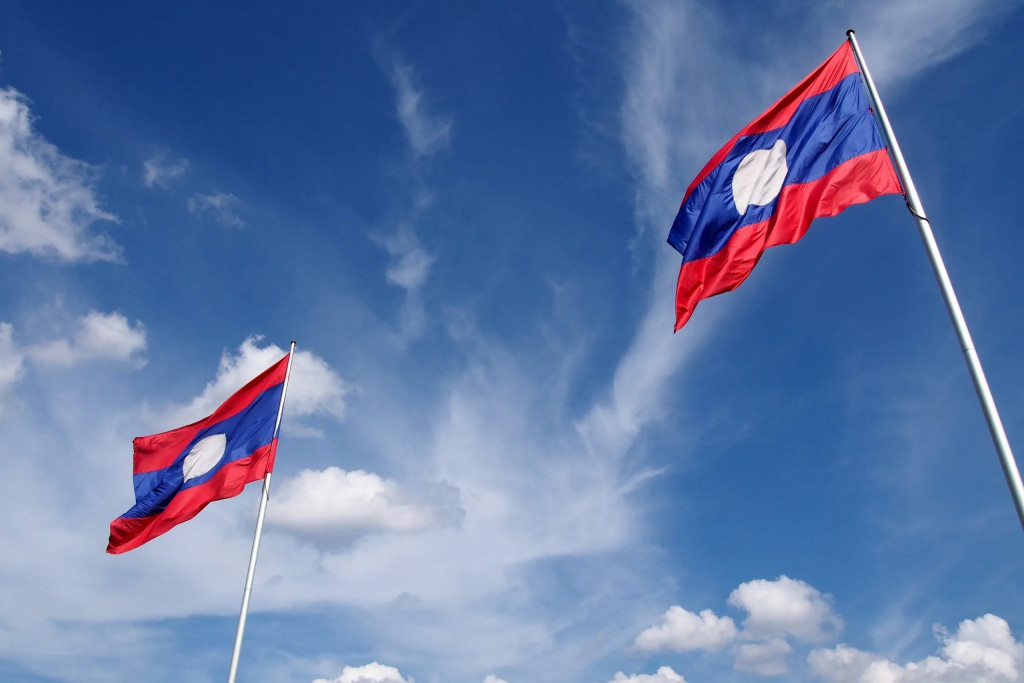
Il Laos assume la presidenza ASEAN

Vientiane guida il blocco dei Paesi del Sud-Est asiatico per il 2024. Il governo laotiano punta su connettività e resilienza ed è chiamato ad alcune sfide interne ed esterne importanti, a partire dalla questione Myanmar

Il Laos si sta preparando a guidare l’ASEAN nel 2024, succedendo all’Indonesia nella presidenza di turno dell’organizzazione. Il Paese, che si chiama ufficialmente Repubblica Popolare Democratica del Laos, è uno Stato socialista a partito unico dal 1975, anno in cui il Pathet Lao prende il potere grazie al supporto determinante del Vietnam comunista. I rivoluzionari Lao avevano profondi legami militari, culturali e anche personali con i loro compagni vietnamiti, dato che erano stati tutti membri dello stesso movimento durante la lotta contro il dominio coloniale francese. I due Paesi, insieme alla Cambogia, erano parte dell’Indocina francese, il cui centro amministrativo e culturale era Hanoi. Dopo la comune lotta per l’indipendenza prima e contro le forze anticomuniste poi, i comunisti lao e vietnamiti hanno mantenuto un legame profondo. Con una differenza: Vientiane ha rapporti strettissimi (e moltissimi debiti) con Pechino; a differenza di Hanoi, che talvolta guarda con preoccupazione alle mosse cinesi. L’influenza cinese sul Laos potrebbe secondo i più pessimisti indebolire la capacità del Paese di guidare l’ASEAN, in particolare sui dossier delicati dove la maggioranza dell’organizzazione ha posizioni opposte a quelle di Pechino, come le dispute sul Mar Cinese Meridionale.

I rapporti con il Tatmadaw, le forze armate birmane, di nuovo al potere a Yangon, da un lato, e con il governo democratico in esilio, dall’altro, sono il tema più delicato e importante al momento per l’ASEAN. Sulla carta, l’organizzazione e i golpisti hanno trovato un compromesso, noto anche come Five-Point Consensus, che prevederebbe l’immediata cessazione delle violenze nel Paese, l’avvio di un dialogo tra le parti in lotta facilitato da un inviato speciale ASEAN e assistenza umanitaria dagli altri Paesi del blocco. In concreto però, l’accordo è considerato un fallimento da autorevoli ONG come Human Rights Watch, dato che il Tatmadaw continua a reprimere violentemente l’opposizione e a condurre le operazioni di pulizia etnica contro le minoranze del Paese. La posizione collettiva dell’organizzazione è stata ulteriormente minata dalla Thailandia. Bangkok ha avviato un dialogo parallelo con i militari birmani, soprannominato Track 1.5, a cui la maggioranza dei Paesi ASEAN non partecipa, con l’eccezione di Laos, Vietnam e Cambogia. Una mossa che ha irritato la Presidenza di turno indonesiana.

Giacarta ha preteso che la gestione del dossier Myanmar fosse affidata a una troika composta dalla presidenza uscente, da quella incipiente e dalla successiva, quindi da se stessa, Laos e Malesia, rispettivamente. Singapore, esclusa dalla troika, si è affrettata a ricordare che si tratta di un meccanismo informale che non deve sostituire gli organi ASEAN. La vicenda dimostra quanto la questione birmana stia mettendo a dura prova l’ASEAN sul piano politico e istituzionale: le divisioni tra i membri rendono difficile elaborare una strategia comune e l’efficacia dell’organizzazione dipende molto dalla posizione del Paese che detiene la presidenza di turno. Negli spazi lasciati liberi dall’ASEAN si inseriscono gli altri attori regionali, come Cina e Giappone, che stanno partecipando al Track 1.5. Il Laos ha legami stretti con entrambi – abbiamo già menzionato Pechino, ma anche Tokyo è un partner essenziale sia per investimenti che per cooperazione allo sviluppo – e ha la necessità di mantenere buoni rapporti con chiunque sia al potere a Yangon. Entrambi i Paesi devono affrontare la criminalità organizzata, molto forte lungo il confine tra la provincia lao del Bokeo e lo Stato Shan birmano.

In attesa di iniziare ufficialmente il suo mandato, Vientiane ha indicato i suoi obiettivi, riassunti nel titolo “Rafforzare connettività e resilienza”. Il primo ministro Sonexay Siphandone ha declinato la resilienza in una dimensione politica, ossia la “costruzione di un’architettura per la pace, la stabilità e lo sviluppo nella regione” basata sul potenziamento dell’ASEAN e delle sue relazioni esterne. La connettività poi è un tema caro al Laos, visto che si tratta dell’unico membro dell’Organizzazione senza uno sbocco sul mare (la principale via di comunicazione naturale è il fiume Mekong) e che le esportazioni sono una voce importante dell’economia nazionale. Oltre ai prodotti agricoli e tessili, il Paese esporta verso i suoi vicini soprattutto minerali, come rame e oro, ed energia elettrica, prodotta prevalentemente da fonti rinnovabili come i corsi d’acqua e il vento. Vientiane intende promuovere la neutralità carbonica durante la sua presidenza e ha le credenziali giuste per farlo, anche se alcuni osservatori sollevano dubbi sul fatto che l’energia idroelettrica nazionale sia ad impatto ambientale zero, a causa dei metodi di costruzione delle dighe, molto invasive rispetto agli ecosistemi fluviali. Per il Governo lao, dotato di modeste risorse, un’opportunità nasconde spesso anche una sfida non facile da affrontare.Il Paese non ha avuto infatti la stessa fortuna di altri suoi vicini. Nonostante il Laos abbia sempre imitato le politiche dei vicini vietnamiti, per esempio liberalizzando a sua volta l’economia quando ad Hanoi iniziava il Doi Moi, i risultati economici non sono comparabili. Anche la portata della sua politica estera è meno ambiziosa rispetto alle altre cancellerie ASEAN, limitata alla regione e a pochi senior partner come Cina, Giappone e Russia. La presidenza ASEAN potrebbe costituire un’opportunità di apertura internazionale per il Laos, a patto che smentisca i dubbi sul fatto di essere un proxy di Pechino nell’organizzazione, dubbi erano stati già sollevati in occasione del suo precedente mandato nel 2016. L’Unione Europea potrebbe cogliere l’occasione per offrire la sua cooperazione a Vientiane e avviare un dialogo su Myanmar, rispetto dei diritti umani e scambi commerciali. Rompere l’isolamento diplomatico ed economico della “Terra da un milione di elefanti” potrebbe aiutare il Laos ad essere più autonomo da Pechino.

Toward an Italian strategy for the Indo-Pacific

Italy moves to formalize its engagement in the region

Editorial by Gabriele Abbondanza, University of Madrid and University of Sydney

Italy is getting closer to the Indo-Pacific. In spite of geographic distance and important challenges close to its borders, Rome could formulate an Italian strategy for the Indo-Pacific, thereby strengthening ties with this macro-region.

As highlighted by the most recent research, Italy has been approaching the Indo-Pacific for about 20 years. In the meantime, much has changed: the region’s economies are growing at an enviable pace, territorial disputes have risen in many regions - the South China Sea is emblematic - and the economic crisis and the COVID-19 pandemic have underscored the fragilities of the international community.

Nevertheless, Italy has continued to pursue its own “informal approach” to the Indo-Pacific. Trade interchanges have increased by more than one-sixth in the last 10 years, and defense-related interchanges by nearly 45%. The strategic collaboration has strengthened joint training, defense of navigation and overflight rights, interoperability, and strategic projects ( see IPO,GCAP, and IMEC, among other examples). Finally, Rome has formed partnerships with many key players in the region, including PIF, Vietnam, Korea, IORA, ASEAN, UAE, Japan and India.

Given the undoubtedly ripe time, Italy is moving to formalize its commitment. Such a potential strategy, currently under discussion, would rationalize the Italian approach, formalizing it for the benefit of European and North American allies and Indo-Pacific partners, and ensure the constancy of such engagement well into the future.

This journey began with the creation of an Indo-Pacific Committee at the Foreign Affairs Committee of the Chamber of Deputies, thanks to the efforts of Hon. Paolo Formentini, who was also supported in this area by opposition representatives such as Hon. Lia Quartapelle Procopio. The Committee’s activities -which I had the pleasure of contributing to with the inaugural hearing - will ensure expert advice to support parliamentary debates.

Other events in support of an Italian strategy - which is inclusive and multilateral in nature, and respectful of the many existing sensitivities - included a conference at the Senate that saw Sen. Francesco Giacobbe, Hon.Formentini, myself, Dr. Karolina Muti and Dr. Alessio Piazza explain the benefits of such an objective to an audience of experts. The ambassadors present, in particular, have emphasized the importance of an Italian strategy with these characteristics for Indo-Pacific relations.

There still is a long way to go and there are several developments that could distract the attention of the government which always has the last word on the subject, however, the conditions are favorable and it is therefore with guarded optimism that we can look to the future of Italy’s relations with the Indo-Pacific.

ASEAN SMEs in the circular economy

Considering that SMEs are the backbone of ASEAN economies, constituting 85 percent of employment and contributing 44.5 percent of the region's GDP, their role is crucial to the energy transition

By Sibeles Chiari

More than just a production model, the circular economy could present itself as a survival strategy aimed at curbing the destructive drift of the Earth's ecosystem. It is an alternative production system to take-make-dispose in that it is based on the concepts of reducing, reusing and recycling the resources used in the product life cycle. Thus, that the future of business must be circular is a sine qua non for keeping the planet livable. Associated with the benefits to the environment and human health, the shift to the circular economy also presents a number of economic opportunities, from job creation, to developing sustainable industries and stimulating entrepreneurship. Considering that SMEs are the backbone of ASEAN economies, constituting 85 percent of employment and contributing 44.5 percent of the region's GDP, their role is crucial to the transition to the "3 R" economy. By involving SMEs in national strategies, these countries can address environmental challenges, foster economic growth and competitiveness in an increasingly sustainability-conscious global market. For this transition to succeed, SMEs will increasingly need to focus on the development of new products or services that contribute to climate mitigation and adaptation and the reduction of waste generated. Precisely because of the fact that SMEs are a vital agent toward decarbonization, some ASEAN countries such as Cambodia, Malaysia, and Myanmar, have already established qualitative targets aimed at providing information, capacity building, and financial and technological support for the adoption of green industrial practices and technologies. It is worth mentioning that, the geographic area in question holds an important position in international dynamics, especially following the changes in geo-economic balances in recent times, being the third most populous area in the world with a GDP increasing by 4-5% annually and with an increasingly significant role in the global supply chain. Indeed, in addition to the environmental and economic aspects, the shift to a circular economy in ASEAN countries is driven by a combination of geopolitical, political factors and recognition of the global trend toward sustainability. This trend is embodied in the Global Circular Economy Forum (WCEF), which is one of the world's leading events dedicated to advancing circularity that brings together business leaders, policymakers, and experts to present the world's best circular economy solutions aimed at addressing planetary crises. At the regional level, ASEAN has taken significant steps to promote collaboration on the transition to the circular economy. Examples include the following initiatives: the Circular Economy Framework for the ASEAN Economic Community (2021), complemented by an Implementation Plan and Work Program; the ASEAN Sustainable Consumption and Production Framework (2022); the Circular Economy Stakeholder Platform (2023); and finally, the Climate Change Guidelines for SMEs (2023). Defining solutions that will increase SMEs' resilience to climate change and accelerate the transition to sustainable growth are the basis of efforts at the regional level, as emphasized by the first ASEAN Forum on the Circular Economy held on November 8-9, 2023 in Jakarta that brought together representatives from policy, business, academia, and the third sector. As can be seen, these are somewhat recent initiatives toward which joint efforts of various stakeholders are being focused to push the transition to the circular economy and create synergies between them. Attempts to innovate the entire production process are also coming from below. In fact, a number of social enterprises have sprung up in recent times, such as Bambuhay (Philippines), which produces straws and toothbrushes from bamboo to replace plastic products, or CoFarm (Laos) an agricultural platform that connects urban farmers directly with restaurants, revolutionizing the supply chain for fresh vegetables. Or Rubysh (Indonesia), which has used hundreds of kilograms of waste as replacement material for jewelry. Finally, to list one more company out of the many that exist, MoreLoop (Thailand) sells surplus textiles that would otherwise go to waste and, through upcycling, takes surplus textiles and turns them into new products, giving them a second life thus reducing environmental impact. In conclusion, what perhaps gives the most hope and optimism, beyond all the political initiatives, is precisely the strong rise of a new generation of entrepreneurs who are passionate and oriented to green principles, and seriously intent on changing the course of the world economy, thus the fate of our planet.

The World's Oldest Pyramid? In Indonesia

A team of researchers found that Gunung Padang was built primarily by human hands and found evidence that the structure was built in multiple phases, thousands of years apart

By Tommaso Magrini

A hidden pyramid on a hill on the island of West Java, Indonesia, may be the oldest in the world. This was revealed by an interdisciplinary team of archaeologists, geophysicists, and geologists in an article published in the interdisciplinary archaeological journal Archaeological Prospection. Gunung Padang, also known as the "mountain of enlightenment," is located atop an extinct volcano and is considered a sacred site by the local population. In 1998, Gunung Padang was declared a national cultural heritage. Over the years, there have been divergent opinions among scholars about the nature of the hill. Some argued that it was a man-made pyramid, while others claimed it was a natural geological formation. The research team discovered that Gunung Padang was primarily built by human hands and found evidence that the structure was constructed in multiple phases, thousands of years apart. According to the team, the oldest construction of the pyramid "likely started as a natural hill of volcanic ash before being carved and then architecturally wrapped" between 25,000 BC and 14,000 BC. This means that Gunung Padang is at least 16,000 years old. According to the study, the pyramid was completed between 2000 BC and 1100 BC. The team, which documented the site study, drilled into the mound's center, excavated trenches, and collected soil samples, among other things. This helped researchers dig into the early layers of Gunung Padang, more than 30 meters below its surface. "This study strongly suggests that Gunung Padang is not a natural hill but a pyramidal construction," the researchers state in the document. The team also found evidence of "a large cavity," possibly a hidden chamber, within the pyramid.

Italy and ASEAN, Partnership growing stronger

At the Farnesina, a new high-level meeting with the leadership of the bloc of Southeast Asian countries

Editorial by Maria Tripodi, Undersecretary of State for Foreign Affairs and International Cooperation

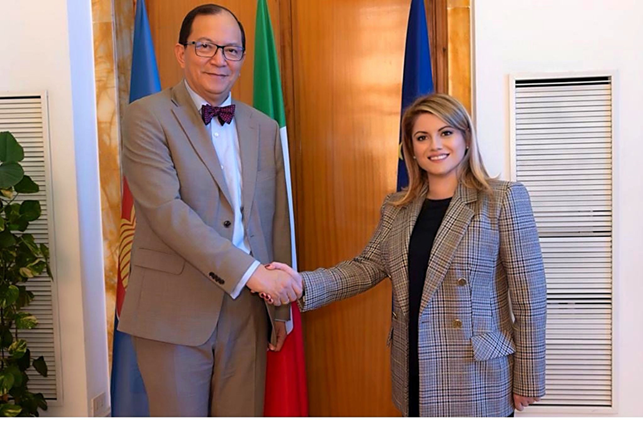
On December 7, I received the Deputy Secretary General of ASEAN, Michael Tene, at the Farnesina. The meeting was part of our country's ongoing collaboration with ASEAN to implement the Development Partnership launched in late 2020. In a little more than three years, our Partnership with ASEAN has achieved significant results, enabling the implementation of multiple training initiatives for the benefit of Southeast Asian countries in a wide range of strategic areas: from security to the environment, and from the protection of cultural heritage to sustainable development. With Deputy Secretary General Tene, I renewed our common commitment to enriching the Partnership with new projects-many of which are already under negotiation with the Secretariat and member states-with a shared mode of ownership and in areas of common interest. These include many fields that are essential for the stability and security of states in contemporary reality: cybercrime, combating transnational crime, promoting legality, space, food security, energy transition, and prevention and management of natural disasters. This is in the knowledge that only together can the growing threats to peace, the protection of the rules-based international order, and sustainable development, which are also fueled by the multiplication of crisis theaters around the world, be effectively addressed. Indeed, ASEAN represents a model of regional integration in a key geo-strategic position for maintaining peace and shared prosperity in the Indo-Pacific. In this context, Italy stands ready to collaborate with the incoming Laotian Chairmanship of ASEAN, focusing on the issues of connectivity and resilience, with the hope that the country can build on the important achievements of the current Indonesian Chairmanship, especially in the areas of regional integration and investment. We trust that Laos will also ensure continuity in Indonesia's efforts to manage the serious crisis that has plagued Myanmar for nearly three years, following the February 1, 2021 coup d'état, with possible repercussions for stability in the area.

ASEAN and the strategic advantage of rare earths

Southeast Asia is rich in components needed for the energy transition, including nickel, copper, and tin. International attention to the sector is growing

By Tommaso Magrini

Not just China. Southeast Asia also has a major strategic advantage on its side: the possession of a large amount of rare earth and mineral resources. These are necessary components for the global energy transition, including nickel, copper and tin, but the ASEAN area has high potential to produce more. Not only that. The rare earths in which the area is rich are also crucial for the production of batteries for electric vehicles, one of the most sensitive areas of contention in the near future.

Just think of one figure. In 2022, Indonesia's mines produced about 1.6 million tons of nickel. This figure makes the vast Southeast Asian archipelago the leading producer of nickel from mines around the world. So much so that those resources are particularly coveted by major powers such as China and the United States, which as evidenced by President Joko Widodo's recent reception at the White House are trying to reach a mining agreement.

Chinese companies are estimated to have invested something like $30 billion in Indonesia's nickel supply chain. All within a decade. On the Indonesian islands of Sulawesi and Halmahera, Beijing companies have built refineries, smelters, a new metallurgy school and even a nickel museum. A diversification of the source of investment would be functional for Jakarta, and the United States has decided to shorten the distance, but some say it may already be too late.

In an effort to increase investment in the mining sector, ASEAN mining ministers adopted an Action Plan for ASEAN Mining Cooperation for 2021-2025 (AMCAP-III) in October 2021. The goal is to "create a vibrant and competitive ASEAN mining sector for the welfare of ASEAN peoples." The AMCAP-III sets out how the ten ASEAN countries will work together to build sustainable mining development, mining investment promotion, and human and institutional capacity. AMCAP-III was implemented in recognition of the critical role of minerals of all types in ASEAN economies and sustainable development, as well as in stimulating and enhancing trade integration in ASEAN.

As a report by the Lowy Institute explains, Australia is also particularly interested in deepening relations on the subject with Southeast Asia. A new program, Australia ASEAN Futures Initiative, whose first subprogram is "Economic and Connectivity (ECON)," was launched in mid-2022. Australian companies are the largest investor in mineral exploration in Southeast Asia and the Pacific. In 2022, ASX-listed companies spent about $100 million on mineral exploration, accounting for 28 percent of all exploration investment in the region. In Southeast Asia alone, Australian companies have identified $220 billion worth of mineral reserves and invested $2.6 billion worth of capital in mining, according to an analysis based on S&P Global's mining database.

In addition to long-standing ASEAN development initiatives, Australia is implementing economic development cooperation commitments with Indonesia and other Southeast Asian countries under two trade and investment agreements. Both the Indonesia-Australia Comprehensive Economic Partnership Agreement (IA-CEPA) and the Regional Comprehensive Economic Partnership (RCEP) contain entire chapters on "economic cooperation" to help build capacity for trade and investment.

Meanwhile, Canada, Germany, Japan, Korea, the United States and China are already assisting ASEAN and its member states in implementing the Minerals Action Plan and Information System, as well as building critical minerals supply chains. For Southeast Asia, an opportunity to capitalize on an important strategic advantage.

No decoupling between Southeast and China

Despite political tensions, no one wants to do without trade relations with Beijing

By Tommaso Magrini

A new survey released by HSBC showed that nearly half, 45 percent to be precise, of Southeast Asian companies plan to expand their supply chain to China in the next 12 months. Ninety-two percent of Indonesian companies expressed interest in expanding their supplier network in China in the next three years, a figure slightly higher than 89 percent of Vietnamese companies and 87 percent of Philippine companies. 

The survey results were released in conjunction with the China International Import Expo (CIIE) in Shanghai, which was attended by large delegations from Southeast Asian countries but also the largest U.S. shipment since the event's launch. This sixth edition of the survey was the first to be conducted since the lifting of Covid-19 restrictions in China in January this year, with the participation of more than 3,300 companies from 16 countries including the United States, South Korea, Canada, the United Kingdom, France and Germany. Overall, about three-quarters (73 percent) of respondents expect to increase their supply chain footprint in China in the next three years, and about 25 percent indicate that the increase will be "significant." HSBC said the survey results suggest that many of China's long-standing fundamentals, including its deeply integrated supply chain networks, continue to attract international companies. China's imports and exports to ASEAN reached 6.52 trillion yuan ($970 billion) in 2022, a significant 15 percent increase. Of these, exports accounted for 3.79 trillion yuan, an increase of 21.7 percent, and imports 2.73 trillion yuan, an increase of 6.8 percent. The data show that China's cumulative investment in South Asia reached nearly $15 billion.

EU and ASEAN: navigating the turbulence between the US and China

In the new international context marked by the confrontation between the USA and China, ASEAN and the EU can play a crucial role in avoiding conflict and promoting global cooperation

The current international landscape is heavily influenced by the growing competition between the US and China. This rivalry extends beyond trade and economics into areas of technology, military prowess, and geopolitical influence.

The recent summit in California showcased the deep-rooted and complex nature of US-China relations. Presidents Xi and Biden, representing the world's two largest economies, engaged in extensive discussions on a range of contentious issues. However, the summit concluded with several key disputes unresolved, highlighting the persistent friction between the two nations especially on trade and geopolitical issues, with reference to the situation in Taiwan and in the South China Sea.

The rivalry between the US and China occurs against a backdrop of global instability marked by conflicts like the war in Ukraine and in the Middle East. This environment has led to a decline in international trust and cooperation, raising concerns about a potential return to Cold War-era bloc politics. Such a division into spheres of influence would be detrimental, particularly for the EU and ASEAN, which have thrived in a more open and cooperative international system.

The EU and ASEAN, with significant differences in terms of history and socio-political context, share a core objective: promoting regional market integration to achieve peace, stability, and prosperity. However, the integrative model they champion is now under threat from global tensions that challenge the integrity of common markets and the cohesion of the development model of these organizations. The ongoing US-China trade war, marked by the imposition of tariffs and trade barriers, serves as a prime example of how external geopolitical tensions can significantly disrupt internal market dynamics within the EU and ASEAN. 

Despite the grim outlook, there are substantial opportunities for both the EU and ASEAN in the current geopolitical climate. Both the EU and ASEAN possess significant market attractiveness that can be leveraged to influence the US-China dynamic. The EU, with its GDP of over $15 trillion and a population of about 450 million (with an enlargement in sight), represents one of the largest single markets in the world. On the other hand, ASEAN, with a combined GDP of approximately $3 trillion and a population exceeding 650 million (of which around 60% is under 35), is one of the fastest-growing regions globally. These economic conditions position both the EU and ASEAN uniquely to mediate and potentially influence the strategic decisions of the US and China, especially in areas of trade policy and regional security.

The EU and ASEAN can play a crucial role in developing a more stable multipolar world order, moving away from bipolar tensions. This involves not only strengthening their internal cohesion but also enhancing inter-regional cooperation. By consolidating their relations and by investing in market integration, these blocs can assert a more balanced and influential role in international affairs.

Joint diplomatic and trade initiatives between the EU and ASEAN can be pivotal in balancing the influence of the US and China, focusing primarily on enhancing trade and economic integration. The EU and ASEAN should start working on a comprehensive trade framework with the aim of reducing tariffs and regulatory barriers. Such an agreement, extended to encompass the entire ASEAN region, would create one of the world's largest free trade areas, diversifying trade relations and reducing overreliance on the US and China. Establishing joint standards in areas like product safety, intellectual property, and sustainable trade practices could be strategically very useful. This would not only align the EU and ASEAN markets more closely but also set an example for global trade standards, independent of the US and China's influence, and enhance their collective bargaining power and strategic position in the global market.

In conclusion, the EU and ASEAN are at a pivotal point in the evolving global landscape, marked by the US-China rivalry and broader international tensions. While they face significant challenges, these regional blocs also possess unique opportunities to influence the global order. By leveraging their economic strength, advocating for a multipolar world, and enhancing inter-regional cooperation, the EU and ASEAN can play a vital role in fostering a more balanced and peaceful international system. Their actions and decisions in the coming years will be crucial in shaping the trajectory of global politics and in ensuring the stability and prosperity of their respective regions.

Understanding the Upcoming Indonesian Elections

In February 2024, Indonesians will cast their vote. But what will the post-Jokowi era look like?

By Anna Affranio

Southeast Asia's political arrangements are on the brink of a momentous change, as Indonesia will soon bid goodbye to a decade of rule by Joko Widodo, the hugely popular president who has been in office since 2014. Indonesian law, in fact, allows only two presidential terms, which means Widodo will not be able to compete in the election round to be held next on February 14th.

Last October 25th was the deadline for registering presidential candidates. At present, the three pairs of candidates running for office (in Indonesia, presidential candidates always run in pairs with their respective vice presidents) are headed by Prabowo Subianto, Ganjar Pranowo, and Anies Baswedan.

This election campaign seems to follow the trend, known to Indonesia, that sees voters and the media focusing more on the charisma of leaders and agreements between oligarchs and party leaders rather than the details of political programs. However, many analysts have observed how each of the three pairs represents a different vision for what the future of Indonesia might look like. 

Prabowo Subianto, the current Defense Minister, is considered the favorite in the latest polls. The latter, 72 (the oldest among the candidates), comes from an elite family and enjoys a large following despite numerous controversies that have beset him. He has, in fact, been accused of human rights violations related to the kidnapping of pro-democracy activists during the riots that marked the country in the late 1990s, although he has always denied any involvement. He is also the former son-in-law of the late authoritarian President Suharto and in previous elections, has formed alliances with conservative Islamic groups and divisive political parties. This coalition, however, benefits from the (tacit) support of the outgoing president. Although the latter and Prabowo have had some problems in the past, the candidate has announced that he wants to continue the project of Nusantara, the new designated capital, which is Jokowi's main political legacy. Finally, the latter certainly appreciated the choice to appoint Gibran Rakabuminag Raka as potential Vice President, none other than Widodo’s eldest son.

The second candidate in the race is Ganjar Pranowo, current governor of Central Java province. Fifty-five years old, he is perhaps the one who most resembles outgoing President Jokowi, with whom he shares a humble family background and a deft ability to appeal to the masses. This is why he receives extended support among ordinary people and enjoys wide popularity among young people and social media, particularly on TikTok. In addition, he is the candidate supported by the PDI-P (Indonesian Democratic Party of Struggle), the same populist-oriented party that had supported Joko Widodo in the previous two elections. 

The third candidate, Anies Baswedan, 54, former governor of Jakarta, is losing popularity in the polls. Despite being educated in the United States and publicly declaring his support to moderate Islam, has been accused of association with the radical Islamic movement, raising concerns among religious minorities and moderate Muslims. This is related to the fact that Anies, during the 2017 Jakarta gubernatorial election, accepted support from radical Islamic groups lashing out at his opponent, then-Jakarta governor Basuki Tjahaja "Ahok" Purnama, a Chinese Christian who was later jailed for insulting Islam. 

In conclusion, this election is not only a race among candidates, but also among different ideas of the Indonesia of tomorrow: a return to the reactionary past, the continuity of a democratic polity, or a possible move toward religious radicalism. It will be fascinating to see which path the Indonesian people choose, and the coming months will be crucial in determining that choice.

Foreign investment boom in Vietnam

Hanoi's role is also gradually strengthening on the electronics and high-quality technology front

By Tommaso Magrini

Vietnam continues to attract international interest. Foreign investment in the South-East Asian country soared in October, when the manufacturing hub attracted more than double the financial commitments received monthly this year, in a context of strong growth in expenditure on new plants. In October, Vietnam received foreign investment commitments worth $5.3 billion, against a monthly average of $2.2 billion in the rest of the year. About 90% of the inflows in October were driven by factory-building projects, according to data from the Vietnamese Investment Ministry. Since the beginning of the year, the country has received foreign investment commitments for 25.76 billion dollars, 14.7% more than the same period of the previous year. Manufacturing industry remains a stronghold of investment in Vietnam. In the first ten months of 2023, foreign companies invested nearly $18.84 billion in manufacturing projects, accounting for 73.1% of total FDI inflows in the same period. But the role of Vietnam is gradually strengthening also on the front of high-quality electronics and technology. Foreign investors are increasingly turning to Vietnam to diversify their supply chains.Some of the most recent examples include September 23, when Japanese technology company Kyocera Document Solutions announced plans to invest $237 million to expand its machine and equipment factory in Hai Phong. Commitments from mainland China and Hong Kong together were the highest this year, followed by Singapore and South Korea. The data show that actual investments in the first ten months of 2023 increased by 2.4% compared to the same period of the previous year, reaching 18 billion dollars.

Italian Startups in Singapore

With a growing innovation ecosystem and a key role in global trade, Singapore offers unparalleled opportunities for Italian companies

Italian innovation puts one foot in Asia. By way of Singapore. Nov. 7 marked the return of the Global Startup Program to the city-state, which aims to be a catalyst for innovation and collaboration between Italy and the Southeast Asian region across ASEAN countries. Organized by the Italian Trade Agency (ITA) in collaboration with the Ministry of Foreign Affairs and International Cooperation, the program is an opportunity for eight Italian startups from various areas, including fintech, healthtech, blockchain, health & fitness, sustainability and hrtech. The event, hosted by Accelerator Tenity Singapore, offers startups the chance to strengthen their technical, organizational and financial capabilities during the incubation process. The eight Italian innovative startups, including Brain & Fitness Italy, Carchain, Coffeefrom, Fairtile, Hacking Talents SRL SB, iWise, Sensosan Sell and Wibiocard. Dante Brandi, Italy's ambassador to Singapore and Brunei, stressed the importance of this participation, describing the program as a catalyst for innovation and collaboration and the strengthening of ties between Italy and Singapore. Brandi highlighted Singapore's key role in Italy's global trade strategies in the ASEAN region, with significant Italian export and investment figures. Singapore, chosen as an ideal location, represents a crucial springboard for Italian startups. With a growing innovative ecosystem and a key role in global trade, Singapore offers unparalleled opportunities for Italian companies. Ilaria Piccinni, deputy trade commissioner for Singapore and the Philippines at the Italian Trade Agency, emphasized the synergy and energy in Singapore's startup ecosystem, highlighting the potential for Italian startups to thrive and make a significant impact. With a wide range of activities planned through Dec. 1, 2023, the program aims to further consolidate the presence and influence of Italian startups in the global innovation landscape. Singapore and ASEAN represent a pivotal hub to achieve the goal.

Recently active members
Foto del profilo di Alessio
Foto del profilo di Monika
Foto del profilo di Gabriel
Foto del profilo di Elena
Foto del profilo di Lorenzo
Foto del profilo di Alessandro
Foto del profilo di Cristina
Foto del profilo di Rocco
Foto del profilo di Clara Lomonaco
Foto del profilo di Redazione
Foto del profilo di Davide Gugliuzza
Foto del profilo di Anna Affranio
Foto del profilo di Ilaria Canali
Foto del profilo di Nicolò
Foto del profilo di Angelo Cangero
Who is online
There are no users currently online
Members
  • Foto del profilo di Alessio
    Active 3 ore, 23 minuti fa
  • Foto del profilo di Monika
    Active 3 giorni, 16 ore fa
  • Foto del profilo di Gabriel
    Active 3 settimane, 4 giorni fa
  • Foto del profilo di Elena
    Active 1 anno, 4 mesi fa
  • Foto del profilo di Lorenzo
    Active 2 years, 6 mesi fa