China-ASEAN and global growth

In 2022 and 2023, Southeastern countries are expected to grow more than China and above the Asia-Pacific average

Editorial by Lorenzo Riccardi

Managing Partner RsA Asia

China's Ministry of Transport has announced its decision to establish a special office to oversee the operation of the new land and sea corridor for logistics and trade, which connects western China with several ASEAN countries. The corridor, with operations center in Chongqing, connects 14 Chinese provinces with 310 ports in 107 countries and regions around the world, and in particular promotes trade between China and ASEAN countries under the Regional Comprehensive Economic Partnership (RCEP) agreement. In 2022, the Ministry of Transport has set a goal of expanding the corridor's transport capacity with new infrastructure such as railways, highways, ports and airports, as well as promoting the development of a Chengdu-Chongqing international hub. ASEAN is a heterogeneous community of nations united by common goals, with member countries including city-states with high GDP per capita (Singapore and Brunei), populous nations with dynamic and expanding economies (Indonesia, Malaysia, the Philippines, Thailand, and Vietnam), and less advanced countries with lower-middle income (Cambodia, Laos, and Myanmar). Despite social and economic differences, ASEAN is a major free trade area with a share of more than 7.5 percent of world trade. Southeast Asian countries, which with $3.3 trillion in aggregate GDP account for about 3.5 percent of world GDP, have been severely impacted by the pandemic: in 2020, regional GDP contracted by 3.2 percent (with the exception of Vietnam, which grew by more than 2.9 percent in the year), only to rebound in 2021 by more than 3 percent, despite the -18 percent recorded in Myanmar as a result of political tensions. The most recent estimates, released at the meeting of the association's Economic Ministers, predict growth of 4.9 percent for 2022 and 5.2 percent for 2023, higher than the growth rates the International Monetary Fund forecasts for China (4.4 percent and 5.1 percent), and for the Asia Pacific region as a whole (4.7 percent and 4.9 percent). It is useful to point out that Southeast Asia is China's largest trading partner ($878 billion in trade in 2021, and $371 billion in the first five months of 2022, up 10.2 percent from the same period in 2021), as well as the third largest destination market for Chinese goods and the main origin of Chinese imports. China and ASEAN are increasingly strategic partners in Asia's growing role on trade and investment in the global economy today.

Cambodia and Myanmar new manufacturing hubs in Southeast Asia

Some exogenous pressures on Beijing have encouraged the relocation of manufacturing production facilities from China to Southeast Asia. The primary beneficiaries of this transition in addition to Vietnam are Cambodia and Myanmar

Global value chains in manufacturing are shifting their production center of gravity from China to Southeast Asia. This is one of those phenomena that the spread of the pandemic has accelerated, triggered by rising Chinese labor costs and then confirmed by exogenous factors such as the trade war between Washington and Beijing in recent years. The exodus of the manufacturing sector thus seems to be rewarding some countries in the southern neighborhood: although Vietnam has always been a popular destination for export orders from China, it is now Cambodia and Myanmar that are the contenders for the role of manufacturing hub in East Asia.

The intra-regional offshoring dynamic had been ushered in by rising labor costs in China, prompting several companies in the manufacturing and textile sectors to explore other markets in the region. Given the restrictions caused by the Covid-19 pandemic, for example, Apple, Samsung, and Xiaomi recently moved their assembly lines to Vietnam as Beijing grappled with new variants of the virus. Hanoi offered those multinationals that had once built manufacturing plants in China with a view to minimizing costs and maximizing profits easier access to the promising Southeast Asian market, which has inherited from its northern neighbor the role of the new frontier of globalization.

But in addition to Vietnam, which has long been considered the locomotive of Southeast Asia, other countries in the ASEAN bloc are vying to serve as regional production hubs. According to Wang Huanan, a manufacturing expert, "Vietnam has been a very popular destination (...) but Myanmar and Cambodia have been catching up in recent years." Indeed, Naypyidaw and Pnom Penh have implemented shrewd economic policy strategies to attract as much foreign direct investment as possible, thereby boosting their own domestic growth. Between tax exemptions and policy incentives, they have made themselves attractive in the eyes of East Asian-based multinationals seeking new profit opportunities in the emerging markets of the Southeast.

In Cambodia, total trade volume reached $22.47 billion in the first five months of 2022, up 19.7 percent from the same period a year earlier. Total exports saw a 34.5 percent year-on-year increase, while the most exported goods were garments, leather goods and footwear. On the other hand, Myanmar is a popular destination for Chinese garment factories. The number of these companies, according to experts, has increased from less than 100 in 2012 to more than 500 in 2019. Between 2012 and 2019, the average annual growth of Myanmar's garment exports exceeded 18 percent and in some years exceeded 50 percent. The sector's development was slowed only by the pandemic in 2020 and last year's military coup.

As the Chinese economy recovers from the restrictions of the strict "Zero Covid" policy, multinationals that had benefited from China's low labor costs are now looking to the southern neighborhood for new profit opportunities. Among the emerging markets in the ASEAN bloc, Vietnam leads regional growth. But an eye must be kept on the incipient development of Cambodia and Myanmar, among the biggest beneficiaries of China's manufacturing exodus.

Philippines: new Marcos, old diplomacy

The son of Manila's former dictator has declared his support for an "independent foreign policy," using an expression coined by Duterte that can be translated into strategic ambiguity with pro-Chinese overtones

By Lucia Gragnani

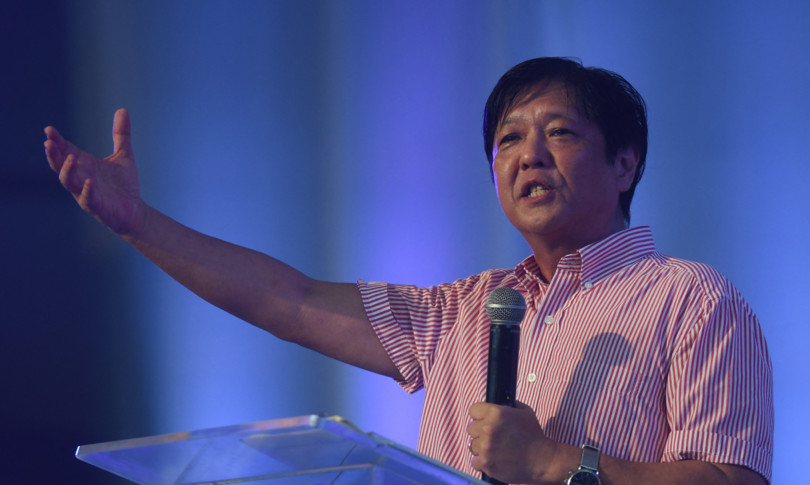
Rodrigo Duterte's era as president of the Philippines has come to an end. After six years marked by the fight against drugs domestically and an ambiguous policy internationally, the former president officially retired from political life. With the May 2022 elections, he was succeeded by Ferdinand Marcos Jr. known as Bongbong. Despite the Marcos family's grim history, marked by 14 years of military dictatorship led by his father Ferdinand Marcos, Bongbong managed to bring home an unprecedented victory since the end of the dictatorship. 

The 90-day campaign, marked by an Orwellian-style effort to rehabilitate the image of the Marcos family, paid off. With Sara Duterte in the vice presidency, the 2022 elections proved to be a victory for Philippine political dynasties and an own goal for Manila's democracy.

During his campaign, Duterte had declared South China Sea issues a priority, putting them to dictate relations with China. In fact, Philippine-China relations have developed relatively positively, with Manila turning its strategic gaze more toward Beijing and less toward Washington in the early years of his presidency.

The foreign policy of the newly elected Marcos is of the same matrix. Indeed, he too has declared his support for an "independent foreign policy," using an expression coined by Duterte, which can be translated into a strategic ambiguity with pro-Beijing overtones. On the campaign trail, Bongbong announced he wanted to intensify bilateral relations with China, and to negotiate an agreement to overcome disputes in the South China Sea, stalled since arbitration in 2016. 

The tribunal, addressed in 2013 by the Philippines against China at the United Nations Convention on the Law of the Sea (UNCLOS) tribunal, had declared Beijing's historical claims as unlawful, and denounced China's belligerent behavior in the South China Sea. The outcome, seen by the Philippines as a victory, had been promptly rejected by the other side.

Disputes regarding sovereignty over South China Sea formations remain the main obstacle in relations between Manila and Beijing, and have helped make Duterte friendlier toward Washington during his last years as president. Among the Association of Southeast Asian Nations (ASEAN) countries that claim waters and islands in this maritime basin, the Philippines and Vietnam are the most exposed to confrontation with China.

In April, Manila and Washington conducted the most massive military exercise in seven years. The Balikatan, in Tagalog "shoulder to shoulder," mobilized about 9,000 Philippine and U.S. military personnel in the Luzon area. Besides the United States, another strategic partner is India, a rival country to Beijing, with which the Philippines held naval exercises in the South China Sea in 2021.

To ease tensions between ASEAN and Beijing, 2022 should see the signing of the long-awaited Code of Conduct for the South China Sea. The document aims to reduce the likelihood of conflict between the parties by creating a guideline for the behavior of states in disputed waters. Among its consequences would be to facilitate the exclusion of third countries from the debate, mainly the United States and India.

Washington's engagement in the Indo-Pacific, which has intensified in recent months, casts doubt on meeting the 2022 deadline. The presence of the Philippines (and other ASEAN countries) within the Indo-Pacific Economic Framework (IPEF) reduces the likelihood that the code of conduct will be made legally binding, and contributes to the further ambivalence of Marcos' foreign policy. 

Oceania and ASEAN closer than people think

Australia and New Zealand do not yearn to participate in the Asia-Pacific power confrontation. And they have similar goals to the countries of the Southeast

"It is wrong to talk about the West versus Russia. We are a liberal democracy and we try to promote, of course, the values that are important to us but we also try to ensure that our foreign policy responses are based on facts, not assertions and assumptions." Speaking, during a speech from Sydney, is Jacinda Ardern. More: "We do not assume that China, as a member of the United Nations Security Council, does not have a role to play in pressuring Russia" on the invasion, the New Zealand premier added. A more subtle view of diplomacy than the "ideological clash" between democracies and authoritarian regimes that the United States often talks about, especially after the start of the war in Ukraine. Despite Washington's charm offensive in the Asia-Pacific and despite its unquestioned inclusion in the list of liberal democracies, the countries of Oceania demonstrate a pragmatic approach; even Australia, which has seen its relations with China hit an all-time low in recent years, does not seem intent on promoting confrontations. On the sidelines of the G20 Foreign Ministers' Summit, a very meaningful bilateral between China's Wang Yi and Australia's Peggy Wong was staged. "We spoke frankly and listened carefully to each other's priorities and concerns. We have our differences, but it is in both of our interests for relations to stabilize," said the minister of the new Australian government led by Labor's Anthony Albanese. As The Straits Times wrote, for decades Australia has been seen as an Anglo-Saxon outpost and America's "deputy sheriff" in the Pacific. Canberra, however, seems intent on increasing engagement with Southeast Asia in order to tighten ties with a region that wants to keep the competition between powers from becoming a full-blown confrontation. And it seems to want to do so without stopping at clashing with Beijing to exert influence over the Pacific islands, but by cooperating in concrete ways with ASEAN and governments in the area. Greater involvement in Asia by the Albanian government may highlight, once again, the unique position of Australia and Oceania in general between East and West.

Thailand: opportunities for green energy made in Italy

Bangkok opens to energy cooperation with Rome. Southeast Asia's second-largest economy aims to break free from dependence on fossil fuels and increase renewables: what is the scenario opening up for Italian companies?

La Thailandia ha fame di energia. Ma non può continuare sulla strada dei combustibili fossili. Negli ultimi trent’anni Bangkok è stato uno dei principali motori dello sviluppo asiatico, trasformando il blocco ASEAN in una delle regioni più promettenti per l’economia di domani. Oggi la seconda economia del Sud-est asiatico ha bisogno di sostenere la propria crescita su basi solide, che dovranno partire da politiche energetiche lungimiranti e coerenti con gli obiettivi di riduzione dei gas serra previsti dall’Accordo di Parigi.

Una nazione in crescita

With a growing GDP per capita ($21.05) and a population of about 66 million, Thailand quickly transformed into an upper-middle-income economy during the 1990s. Today, the export-driven growth model is threatened by a decline in private investment (16.9 percent of GDP in 2019 vs. 40 percent in 1997) and the climate emergency that threatens Thailand's ecosystems. Dependence on fossil fuels is another problem the country must address to secure the energy sector and create opportunities on the ground.

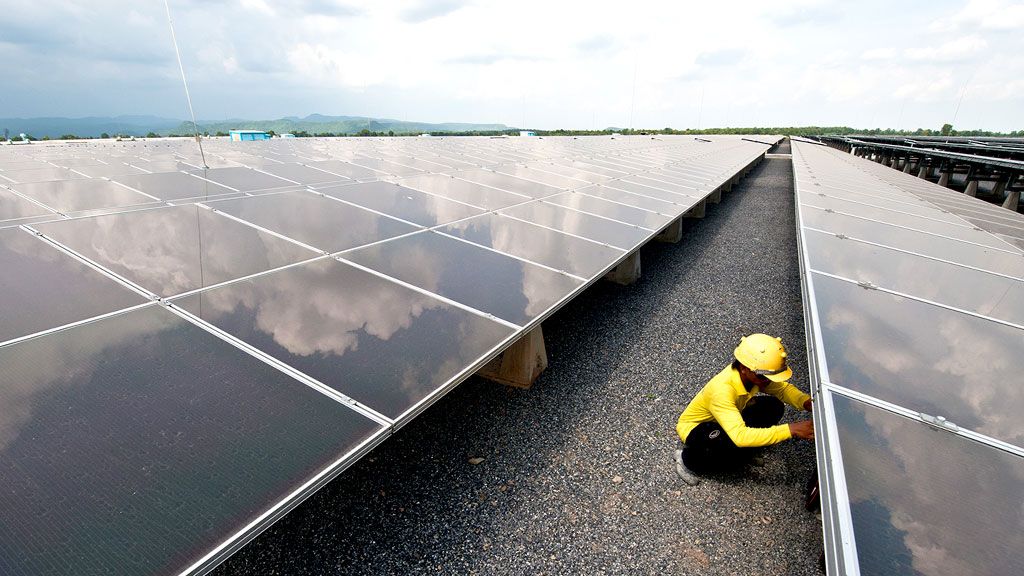
Today, Thailand's energy mix consists mainly of oil (40 percent), natural gas (31.2 percent), and coal (12.5 percent). During 2021, imports of these resources reached 75 percent of the total used, while the Ukraine crisis is exacerbating prices on fuels. Renewables are almost limited to hydropower plants, but government programs to raise the percentage of clean sources are growing. The 2018 Alternative Energy Development Plan promises to achieve 30 percent coverage of the energy mix by 2030 through the construction of new power plants. At the center of the energy transition will be mainly wind and photovoltaics, not excluding the potential of biomass and small-scale hydropower plants. Among the strategies listed, the Thai Ministry of Energy plans to increase access to the raw materials needed to implement a smart grid from green sources and the development of technologies and know-how essential to the construction of efficient, clean and safe plants.

Opportunities for Italy

Thailand plans to achieve carbon neutrality by 2065. Bangkok is aware of the challenges imposed by the energy transition, and is opening up to partnerships with external actors to succeed in developing a resilient energy sector. Thailand participates in ASEAN programs such as the Southeast Asian Energy Transition Partnership (ETP) and the ASEAN Centre for Energy (ACE). The country is now open to new opportunities for investment and cooperation under the strategic partnership with the European Union, which devotes considerable space to the topic of sustainable development and green technologies.

In this context there is also room for Italian companies interested in developing new projects with Thai partners. As speeches at the last Italy-ASEAN High-Level Dialogue organized by The European House-Ambrosetti pointed out, the energy sector represents fertile ground for birthing new collaborations and contributing to Thailand's energy transition. In recent years, the bilateral dialogue between Rome and Bangkok has intensified through a shared agenda of mutual economic cooperation and opportunity sharing in the context of climate challenges and sustainable development. Both sides aspire, as Ambassador Lorenzo Galanti pointed out, to the resumption of negotiations to facilitate technology transfer and exchange of knowledge and expertise in the energy sector.

The second meeting of the Italy-ASEAN Development Partnership was also held on June 10 with the aim of defining areas of practical cooperation from 2022 to 2026. These included the topic of clean energy, with Rome promising to support the energy development of ASEAN countries by providing know-how and safe technologies with low environmental impact. Today, trade exchange between Italy and Thailand has returned to growth after the pandemic pause. Italian exports in the first half of 2020 grew by 18 percent, while imports from Thailand reached +26 percent year-on-year. New plans for the development of technological cooperation, therefore, offer further prospects for growth in the relationship between the two countries.

Indonesia's digital race

From the beginning of the pandemic until the first half of 2021, 21 million new digital consumers have been added in Indonesia. Hence the boom in startups and unicorns

By Chiara Suprani

Indonesia, along with Vietnam and Singapore, is considered a tip of the golden triangle of startups in Southeast Asia. It is the birthplace of 13 unicorn startups, including a decacorn, 10 billion startup created when super-app Gojek merged with e-commerce giant Tokopedia. Gojek's multiservice platform became unicorn faster than Bukalapak or Tokopedia, and now operates in five ASEAN countries. Indonesia, the most populous country with the largest economy in the region, seems to have a special attractiveness and fertile ground for digital and tech growth. From the beginning of the pandemic until the first half of 2021, 21 million new digital consumers have been added in Indonesia, most of them from the hinterland. In fact, before the first wave of Covid-19 only 4 percent of Indonesia's population had access to stable internet lines. Now even outlying regions, thanks in part to the push from Jakarta, are more covered and the country has 350 million digital users. Last year, the gross merchandise value of the country's digital economy stood at US$70 billion, while the total value of the region was US$170 billion. Indonesia's interest in the growth of the digital and tech sector is given by reforms that fit well into the national context. This is evidenced, for example, by the rush of Bukalapak, a tech company backed by Microsoft and Ant Group, which has been propelled by the inclusion of 3.5 million warungs, family-run stalls, among its as yet untapped pool of businesses to go online. But the country sees a chance to expand its domestic market by opening up to foreigners: international digital nomad workers will be able to work in the country without paying taxes. The five-year visa granted by Joko Widodo's government aims to attract 3.6 million foreigners with digital work permits to the archipelago.

Indonesia and ASEAN on the world stage.

Indonesian President Widodo's trip between Kiev and Moscow launches the Southeast Asian region at the center of global dynamics

Editorial by Alessio Piazza

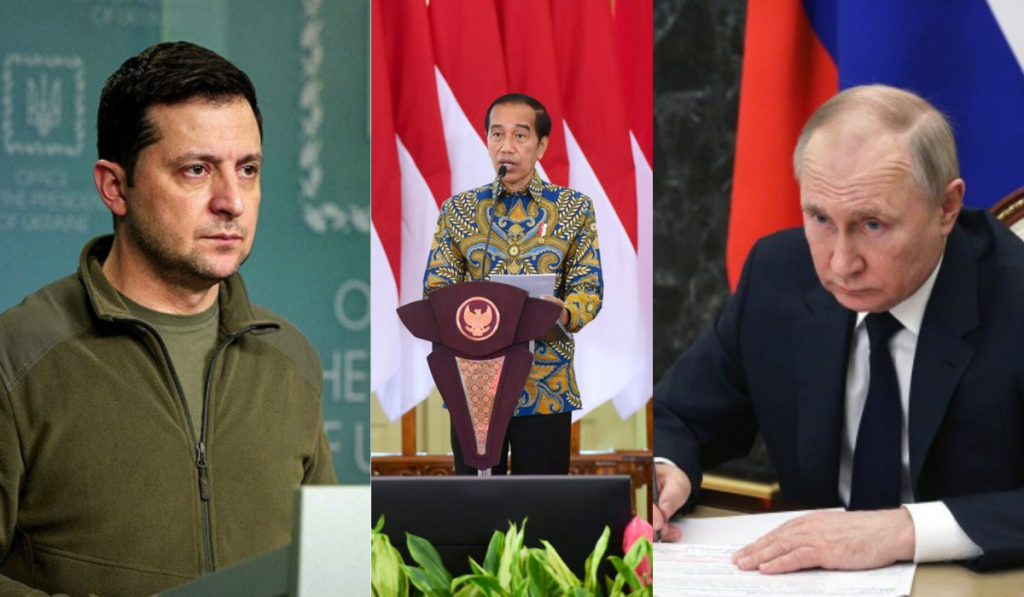
First Kiev, then Moscow. First talks with Volodymyr Zelensky, then talks with Vladimir Putin. Last week saw the visit between Ukraine and Russia of Indonesian President Joko Widodo. It was a diplomatic mission that put Jakarta at the center of international dynamics and thus the entire ASEAN area of which Indonesia is the main economy. Widodo said the Russian president provided him with "guarantees" on the safety of food and fertilizer transportation through sea routes "not only from Russia but also from Ukraine," according to the official Kremlin statement. The Indonesian president also said he had handed Putin a message from Ukrainian President Zelensky and was "ready to help establish contact between the two leaders" to ensure a step toward "a peace settlement and open dialogue." Neither side has further elaborated on the content of the message, and the actual negotiating prospects still appear unclear. But what is certain is that the trip in itself already represents a major turning point in foreign policy not only for Indonesia but for all of Southeast Asia. Indeed, Widodo became the first Asian leader to travel to Kiev since the beginning of the war. Of course, the main factor driving this important development was the fact that Indonesia holds the rotating presidency of the G20. According to some observers of Indonesian politics, the trip may also represent an attempt by Widodo to solidify his personal legacy. Even or especially in preparation for the G20 in Bali, which could go down in history as the final foreign policy brick of Widodo's decade. More in the immediate term, the most sensitive issue is the food crisis. Inflation is also hitting Indonesia, and the assurances received from the Indonesian president during his visit could calm a worried public. But the symbolic and political significance of the trip remains. Just with reference to the G20, Jakarta has been facing opposing pressures on the Bali summit for months. On the one hand to invite Putin, on the other to exclude him. Widodo has made it clear that the principles of neutrality and pacifism, pillars of the ASEAN way, still apply in Indonesia and in the region in general (as recently reminded by Italy-ASEAN Vice President Michelangelo Pipan). 

South-East, the biodiversity heart

If the regional seas and forests start to be protected in a planned and scientific way, which better reflects the local ecosystems, they could become the engine of regional economic growth.

By Chiara Suprani

Last year in December, natural disasters wrecked both the Philippines and Malaysia. The calamities resulted in a large number of fatalities and severe consequences on the landscape and on the biodiversity of the two countries. The Philippines and Malaysia are not the only areas hit by climate change, but the entire South-East Asia region is one of the places in the world most vulnerable to climate changes. Nevertheless the region has a crucial role in the progress toward achieving the goals of the global energy transition, yet its economic potential within the environmental protection sector has been valued only recently.

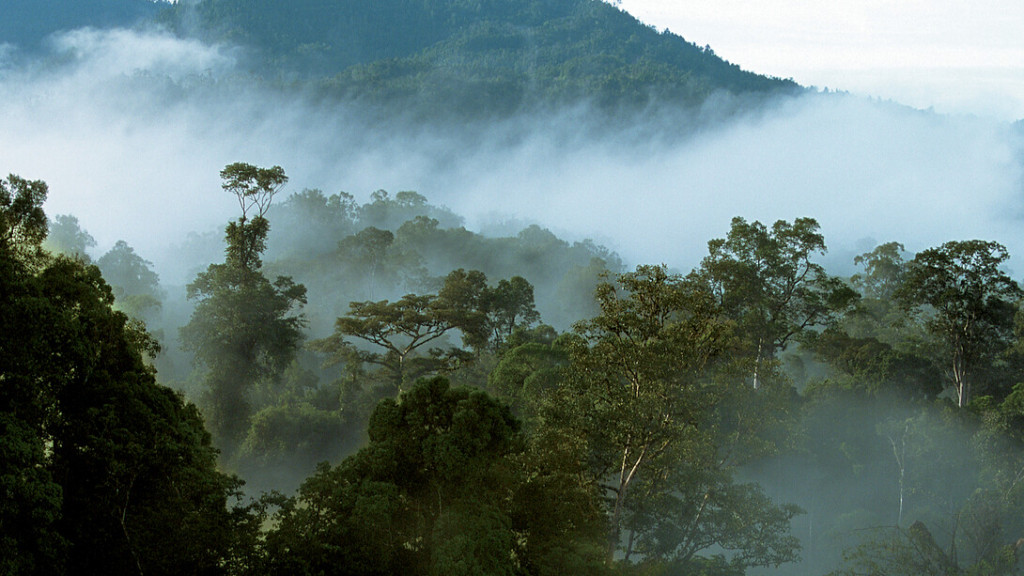
On June 15th, 2022 the Academy of Science Malaysia published a study commissioned by Campaign for Nature, titled “The Nexus Of Biodiversity Conservation And Sustainable Socioeconomic Development In Southeast Asia”. The study admits the environmental and economic value of investing in biodiversity protection and preservation of the southeast edge of the asian continent. Additionally, the Academy highlights that the competences on the conservation of the ecosystems developed in the ASEAN countries could become an important input in other countries, especially if the competences are not mere instruction, but they become a full socio-economic model. In fact, even if South-East Asia covers only 4 percent of global landmass, according to the Biodiversity Intactness Index (BII), the single region presents the 80 percent of the entire global biodiversity. The reason why the model of South-East Asia is perfect to get inspiration from is that it has been the region in the world better able to preserve its biodiversity. Thus, with the right investments, South-East Asia could turn into the nexus between sustainable growth and the protection of local fauna and flora.

If the regional seas and forests start to be protected in a planned and scientific way, which better reflects the local ecosystems, they could become the engine of regional economic growth. To this extent, the regional economic growth would not be based on the exploitation of the resources but on their improvement, hence creating a model of economic growth fixed on environmental protection. 

The Malaysian study understood the importance of the protection of the environment, as an active component of the growth of a country, thanks to a report published by the World Wide Fund for Nature (WWF) in 2018. The report has recognized that the preservation of the ecosystems worldwide is worth US$ 125 trillions. Considering that 57 percent of sea areas and forests belong to South-East Asia, then US$ 2.9 trillions could go into ASEAN countries’ pockets, whose gross domestic product (GDP) in 2018 was US$ 3 trillions. Therefore, the economic potential of preservation and conservation of biodiversity is very tempting at first, especially for developing countries. However, in order to grasp the benefit of this outcome, the governments in the region have to be willing to invest 10 billions of dollars every year, starting from today, up to 46 billions annually in 2030. Moreover, the funding has to be allocated for projects such as the requalification of mangroves, the greening of cities, the creation of carbon credits and the education and digitalization.

Professor Emil Salim, a member of the directive committee of Campaign for Natura, affirmed that thinking about biodiversity as a business able to generate profits is the right recipe for captivating the international and local agencies’ attention on conservation. For instance, the Rimba Raya Biodiversity Reserve Project in Indonesia is the biggest project for the reduction of carbon footprint caused by deforestation and forest degradation (REDD+). The project aims to preserve tropical moors with high carbon density and it was able to stop the deforestation of 65 thousand hectares for palm oil plantation. Financed by the Canadian Carbon Streaming, the REDD+ project was capable of feeding the carbon credits back to the local communities and the infrastructures. The Rimba Raya project was the first REDD+ project that contributed to all 17 Sustainable Development Goals (SDG) of the United Nations, and also that safeguarded 105 thousands orangutans, an endangered species.

Among the ecosystem, the forests are one of the richest in biodiversity, and their value is measurable not only in width, but also in their prosperity and health. Finding the right balance between agriculture, arboriculture and safeguarded forest is key, but protecting their ecosystemic wellbeing is imperative for their survival, especially when the consequences of climate change not only hit plantations but also preserved ecosystems. Oxford Economics, a forecasting company, has highlighted that when looking from a long term perspective, Thailand and the Philippines’ temperatures and torrential rainfall frequency and volume are above average. The company has observed that the heat waves in Thailand in december 2014 and in Vietnam in february 2019 concurred by 5-6 percent of price increase of food products in those months. In conclusion, focusing all the efforts and investments on improving the climatic resilience of the ecosystems, would eventually reduce their vulnerability towards extreme meteorological events. It will also allow the governments to have more control over the economical consequences of these catastrophes on their countries.

High Level Dialogue ASEAN-Italy

 "The interests of Italy, ASEAN and the European Union coincide," stressed Italy-ASEAN Association President Romano Prodi

The sixth edition of the event organized by The European House Ambrosetti with the Italy-ASEAN Association and the patronage of Maeci and Confindustria was held on Wednesday, July 6, in Kuala Lumpur, Malaysia. The High-Level Dialogue on ASEAN-Italy Economic Relations is the benchmark event in the ASEAN region for strengthening economic and strategic ties between ASEAN countries and Italy. During the hybrid physical-digital event, cutting-edge topics were addressed: macroeconomic prospects of ASEAN in the post-pandemic scenario, green technologies for a sustainable future, e-economy, smart technologies and value chains 4.0, aerospace and security for resilience, investment opportunities and tools for cooperation between Italy and ASEAN countries. The event was virtually opened by Foreign Minister Luigi Di Maio: "Strengthening relations with ASEAN is a priority for Italy," he said. "Already more than 700 Italian companies are doing business in the ASEAN market, third in Asia and fifth in the world, but there is still huge untapped potential both in traditional sectors such as agribusiness and in the innovative sectors of renewables and digital transition," Undersecretary Manlio Di Stefano said instead. The event was attended by Malaysia's Minister of Economy Dato Sri Mustapa Mohamed, Minister in the Office of the Prime Minister of Cambodia Sok Chenda Sophea, ASEAN Deputy Secretary General Satvinder Sing, among others. Romano Prodi (President of the Italy-ASEAN Association), Ramesh Subramaniam (Director General for Southeast Asia at the Asian Development Bank), Carlo Ferro (President of the Italian Trade Agency), Valerio De Molli (Managing Partner & CEO, The European House - Ambrosetti), Lorenzo Tavazzi (Head of International Development at The European House - Ambrosetti), and the two Vice Presidents of Italy-ASEAN Association, Michelangelo Pipan and Romeo Orlandi, also spoke. "The interests of Italy, ASEAN and the European Union coincide: a world order characterized by cooperation and not confrontation," said President Prodi. "A world that promotes trade, facilitates procurement and promises global development, with the goal of keeping environmental risks at bay".

Press release

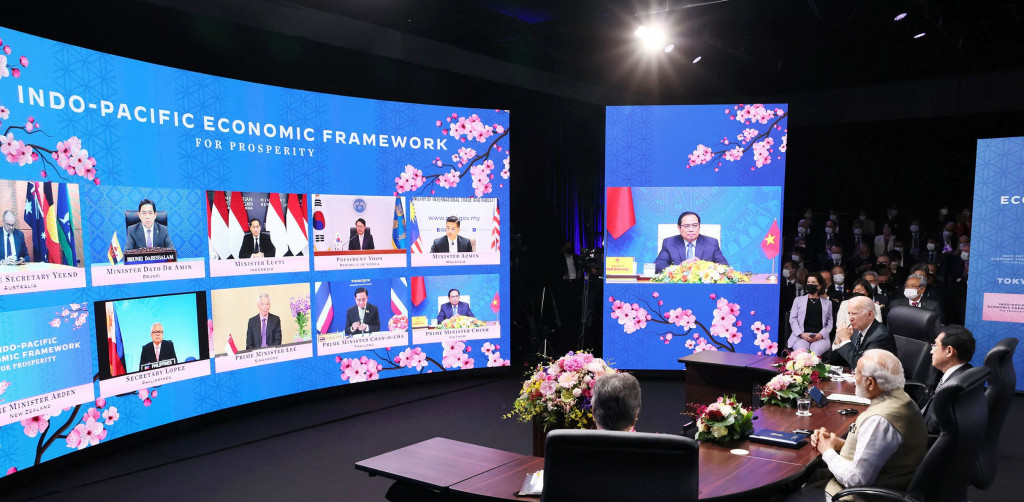
ASEAN and the Indo Pacific Economic Framework for Prosperity

Looking at its initial stage and various forward looking engagements, it will be crucial to see how member nations adapt to the key objectives of this partnership

By Aishwarya Nautiyal

Indo Pacific strategy has not only shown a new synergy among QUAD partners but has given a footprint towards the new Indo Pacific Economic Framework recently launched by US President Joe Biden allowing 12 nations as the participating member also opening doors for any new nations willing to join in future. Among major economic powers like the US, Australia, India, South Korea and Japan, interestingly ASEAN member countries like Malaysia, Philippines, Singapore, Brunei, Indonesia, Thailand and Vietnam have been in the forefront of this newly documented framework. It is crucial to understand that the collective economy of member nations represents nearly 40% of the world’s GDP. This opens the door for an opportunity for countries in the Pacific and Indian Ocean region who are also involved in various economic and security partnerships towards a collective effort to “grow faster and fairer”. Although it is interesting to see that it isn’t an official trade pact, trade has become a “pillar” in this whole framework along with other key elements.

      Though at the initial stage many later negotiations and amendments can be discussed among member nations, the key scenarios have been focused upon certain themes such as Supply Chain, Infrastructure, Green energy, decarbonization, tax and anti corruption and flow of free and fair trade. Thus this can be seen as a counterbalance to RCEP which is a free trade agreement as it outweighs both population and GDP. ASEAN countries that have not been included are Myanmar, Laos and Cambodia. Whereas China has raised its criticism for further economic decoupling perhaps it has also been excluded in this partnership. Interestingly countries such as the United States and India who have not participated in RCEP have been in the forefront in this new framework. India’s vision towards “Look East Policy” has brought ASEAN members to its core of foreign policy thus this new initiative brings the cooperation between India and ASEAN with a vision for strengthening a multilateral framework with other major economies to Pacific Ocean region. 

        Looking at future geoeconomics and geopolitics, the key pillar lies towards a resilient and fair economy which was also a highlight of President Biden’s statement during the East Asia Summit. This can also be seen as a possible replacement of the Comprehensive and Progressive Trans Pacific Partnership (CPTPP). Interestingly launch of IPEF just a day before QUAD summit in Tokyo, Japan has brought two platforms where economic base along with QUAD partners has initiated a new American led engagement to redesign partnership in various level among regional and global partners extending from East China Sea to South China Sea and further to Bay of Bengal and Arabian Sea. Bay of Bengal is a very crucial juncture between India and ASEAN nations. The crucial Strait of Malacca is a key for various goods and energy trade. Apart from India-ASEAN partnership IPEF gives a chance to expand beyond regional to global cooperation.

     Economic integration by creating new technological innovations also creating an industrial supply chain in which India is actively looking to become a new focal point with the future participation of various ASEAN nations in several industrial and technological investments such as semiconductors. Whereas India has been keenly working on enhancing economic connectivity by boosting investments in various infrastructure projects connecting ASEAN nations with the North East part of India. On the other hand US’s willingness to extend cooperation to strengthen the digital based economy and trade inclusive of purchase, sales, data flow enabling global value chain and smart services through several platforms and applications. The key idea is to ensure downstream costs for businesses and enhance the ability for processing of data and analysis, securing a secure platform for business continuity whereas access to key raw materials such as semiconductors, minerals and energy technology boosting the key pillars of IPEF is supply chain resilience.

       On the other hand, decarbonization and building new infrastructure to overcome key issues of global warming and rising levels of pollution by providing finances and technology to share technical assistance and mobilize concessional finances by adopting durable infrastructure for renewable energy. Tax and anti corruption is aimed to promote free and fair competition overcoming issues of taxation, money laundering and bribery through multilateral standards and agreements adopted by the members of IPEF. Looking at its initial stage and various forward looking engagements, it will be crucial to see how member nations adapt to the key objectives of this partnership and the level of confidence building with various engagements in near future ensuring regional and global geographic and economic obligations by creating new opportunities and avenues for future nations willing to be a part of comprehensive economic cooperation of IPEF.

Vietnam commercial engine and green

The Southeast Asian country speeded up even more its growth. Not only at the economic level, but also for its global status.

Hanoi is increasingly at the center of regional and global trade maps. For some time now, the distorting effects of the so-called trade war between the United States and China have led many international companies to locate in Southeast Asian countries. Particularly Vietnam, which attracts not only manufacturers that could form the new "factory of the world" but also global digital giants, won over by a steadily growing middle class and young population. The Covid-19 pandemic first and the Ukraine war then, with all the geopolitics consequences of the case, are speeding up this tendency. It also seen in the numbers. In March, Vietnam's exports grew 45.5% month-on-month and 14.8% year-on-year, reaching a record of US$34.06 billion. According to the Vietnam General Bureau of Statistics, the Vietnamese economy expanded 5.03 % in the first quarter of 2022 compared to the same period a year earlier, surpassing China, which grew 4.8%. In addition, Vietnam's foreign commerce rose to $176.35 billion in the first quarter, an increase of 14.4% year-on-year. In comparison, China's foreign commerce in the 1st quarter increased by 10.7 % in yuan terms. The uncertainty related to pandemic restrictions is also pushing different companies and expats to reconsider their permanence in the People's Republic, often turning their attention just to Vietnam. Hanoi's trade with the United States and the European Union has increased considerably in recent years, thanks in part to the free trade agreement signed with Brussels.The various platforms launched in recent months and weeks could bring other benefits to the Vietnamese economy. Indonesia and Vietnam could be the ASEAN countries to benefit the most from new funding for the clean energy transition under a global partnership for infrastructure investment formally launched by the G7 at the summit a few days ago. The G7 is working with Jakarta and Hanoi in particular on partnerships to provide financing to accelerate decarbonization and the shift to cleaner energy sources. 

The global inflation challenge: how Grab and the ASEAN gig-economy are struggling to survive

Rising fuel prices are the first real shock that Asian unicorns are facing since they expanded in the region. A vicious circle that challenges the resilience of the gig-economy made in ASEAN

Inflation is unforgiving. Even in the ASEAN countries. Especially if your business model has always focused on investor hype and extremely competitive consumer prices. This is what is happening to the ride-hailing giant Grab, a former unicorn now located in Singapore, and nowadays listed at Nasdaq index. The cleaver on fuel prices is straining the company's revenue across the region. Since Grab's core business are food delivery and ride-hailing services, it is no surprise that the crisis is hardly hitting its drivers and couriers.

According to the CEO and co-founder of the company Anthony Tan "Grab's mobility offer will stabilize in the second half of the year". But how? The company has planned incentives for workers and betting on the market recovery. A message that takes time with risk-averse investors but does not reassure customers: "It has been so difficult to find a car lately, it takes up to half an hour of waiting ", complains a premium user at Rest of World. While in the West many employees are trying to make ends meet with some extra income from gig-economy jobs, in Asia - where this market is still immature, albeit growing - the profession becomes less attractive. Once a viable and very profitable alternative to other traditional uses, a job in the gig-economy for ASEAN citizens is now more a risk than a solid investment.

Inflation hits the ASEAN countries

Today a delivery man in the Philippines spends 67% more on fuel than in February, while revenue is threatened by the general price surge. In Malaysia, travel prices during peak hours are estimated to have risen by up to 400%. Even those who rely on delivery services today find everything more expensive. Not only have the prices for raw materials increased - to this must be added the cataclysms that are causing the price of Filipino coffee to rise, for instance - but also the commissions are starting to become too expensive for small businesses.

From the customers’ point of view, without the economic advantages of the first, even the taxi service loses its appeal. As a study on ride-hailing trends in Southeast Asia reveals, the use of vehicles with driver is often a valid alternative for commuters. A rather common trend in Manila, where ride-hailing apps allow you to avoid the chaos (and disruptions) of the metro. In Indonesia, the overcrowded and sparse public transport that pushes users to the apps to book a taxi. Finally, it is curious that research in the area has revealed how, in the absence of these services, many customers would simply return ... to move on foot. According to studies for sustainable mobility there is a limit, estimated between 2 and 5 km, which would not justify the use of the car as the main means of transport: a possible point against traffic in those Asian cities where it is increasingly urgent. impose limitations on climate-altering emissions. And, therefore, another challenge in the horizon of Uber model for individual mobility.

Not to mention that ASEAN governments have opposed Grab while entering their markets. Unequal competition against taxis and contracts with few (or no) guarantees for workers are just some of the factors that prevent a peaceful relationship between these companies and the regulatory authorities. The system has proved fragile at times of crisis, and it is not yet clear whether the strategies adopted will be able to plug the fiscal deficit.

The vicious circle of the gig economy

Less revenue, more costs. Fewer workers, more inefficiencies. Grab isn't the only company caught in the tech unicorn trap. Even the Indonesian Go-Jek has to deal with skyrocketing prices, while resisting thanks to the strong support of Jakarta and customers who see the company as a bulwark of progress made in Indonesia. FoodPanda is in turn a victim of the race to the bottom attempted to penetrate the Grab empire, so much so that today the expansion strategy in Asia has become more cautious while the company looks for new ports elsewhere (for example in Eastern Europe).

Grab's pattern of expansion into Southeast Asia has often been referred to as "aggressive". The startup managed to penetrate the markets of the region thanks to competitive prices, the flexibility of working conditions and some local regulatory gaps. In addition, there has never been a lack of investor support, which has enabled the company to go from unicorn to ride-hailing leader in less than ten years. Between 2013 and 2014, Grab entered the Philippines, Thailand, Vietnam, and Indonesia, beating multinational Uber within a few months. In 2021 the company went public for a value of over 40 billion dollars and the shares immediately increased by 21%. But all that glitters is not gold: the company says it does not expect to make profits by 2023 and the current consumer crisis could further distance this horizon.

Grab's ambitions, and its promises, remain high: it would like to extend to all countries where it operates even the most advanced services, such as insurance and digital payments (currently reserved only for some locations). And he hopes to overcome this inflationary winter with subsidies that keep workers and do not bring down the quality of service. Above all, tariffs must remain extremely competitive - as Asian consumer preference studies suggest. A series of challenges, those of 2022, which test a whole (new) way of doing business and whose survival could determine the rewriting of the rules of doing business.

Recently active members
Foto del profilo di Alessio
Foto del profilo di Monika
Foto del profilo di Gabriel
Foto del profilo di Elena
Foto del profilo di Lorenzo
Foto del profilo di Alessandro
Foto del profilo di Cristina
Foto del profilo di Rocco
Foto del profilo di Clara Lomonaco
Foto del profilo di Redazione
Foto del profilo di Davide Gugliuzza
Foto del profilo di Anna Affranio
Foto del profilo di Ilaria Canali
Foto del profilo di Nicolò
Foto del profilo di Angelo Cangero
Who is online
There are no users currently online
Members
  • Foto del profilo di Alessio
    Active 21 ore, 9 minuti fa
  • Foto del profilo di Monika
    Active 4 giorni, 10 ore fa
  • Foto del profilo di Gabriel
    Active 3 settimane, 5 giorni fa
  • Foto del profilo di Elena
    Active 1 anno, 4 mesi fa
  • Foto del profilo di Lorenzo
    Active 2 years, 6 mesi fa