The ambitious goal of reducing CO2 emissions by 47 thousand tons per year is part of the plan to achieve carbon neutrality by 2050
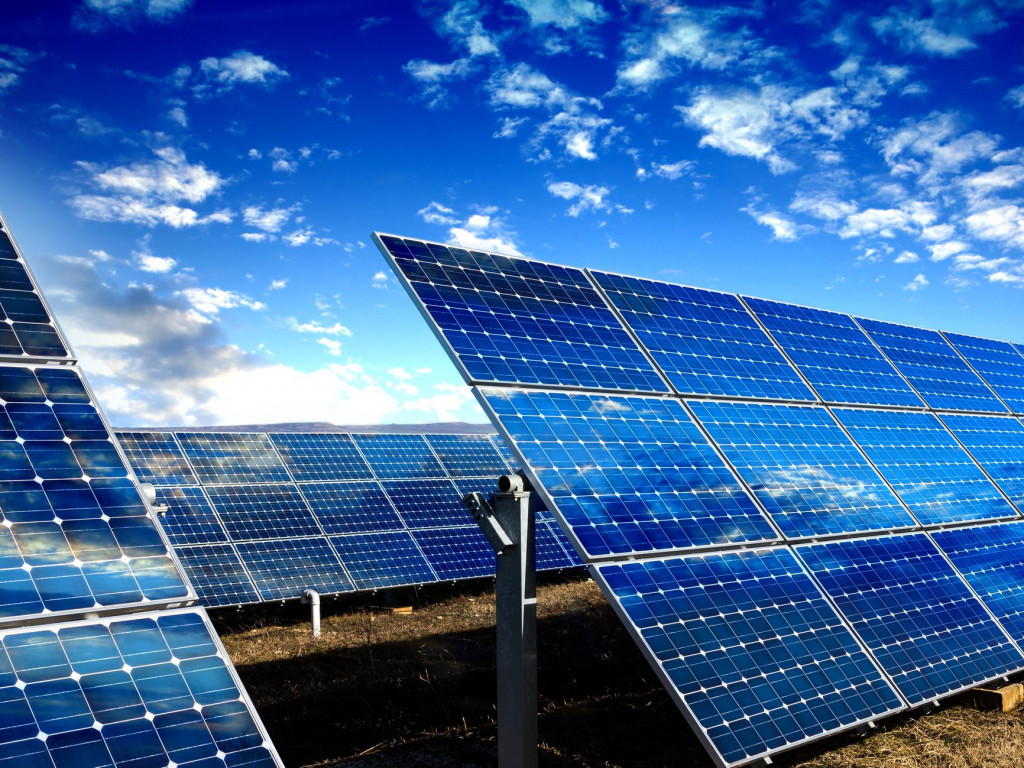
Thailand authorities tout the "world's largest floating hydro-solar farm", which is being built in a reservoir located in the country's northeastern region. Bangkok's commitment to stop using fossil fuels and embark on the path to carbon neutrality begins with the construction of 15 such facilities by 2037. The panels of Sirindhorn Dam, in the province of Ubon Ratchathani, have more than 144,000 solar cells, covering an area equal to 70 football pitches. The installation is a hybrid system that converts sunlight into electricity during the day and generates hydropower at night (about 45MW of electricity). According to the Ministry of Energy, Thailand is still heavily dependent on fossil fuels such as natural gas, which accounts for 55% of the energy used, while renewable sources make up only 11% of the total. The government's emphasis on the Sirindhorn project is also aimed at attracting tourists to the province. A 415m-long "Nature Walkway" shaped like a sunray has been installed to give panoramic views of the reservoir and floating solar cells. "When I learnt that this dam has the world's biggest hydro-solar farm, I knew it's worth seeing with my own eyes," tourist Duangrat Meesit told AFP. However, these clean energy facilities entail several social and environmental costs. Communities living along the banks of the reservoir have complained that the panel system has reduced the number of fish available, thus reducing their income. "We also have to travel longer routes when we're out fishing," said a local resident, "and we can only drive our boats in areas designated by the authorities." In spite of this, project leaders insist that the panels will not affect the livelihoods of local villages. The ambitious goal of reducing CO2 emissions by 47,000 tons per year is part of the plan to achieve carbon neutrality by 2050, but the success of such projects calls for a structural renewal in the energy production sector, as well as a stronger focus on all negative factors that will impact the lives of regional communities.
Femtech — a category of software, products or services that use technology to improve women's health — was born as a response to the conscious need for information, specific treatments and health support of women around the world. In the Asia-Pacific region, where often topics such as abortion, period and menopause are still considered taboo, this sector is growing rapidly, with Singapore leading the trend.
Women account for half of the world's population, yet technology companies that cater to their specific health needs cover just a tiny share of the global tech market. Yan Li, professor of Digital Transformation at the ESSEC Asia-Pacific Business School in Singapore, argues that women's health has historically been disregarded not only by governments but also by the medical industry. In an interview to Nikkei Asia, she said that "women's healthcare is considered a niche industry. Many drug studies are not even tested on female subjects so women are more likely to suffer an accidental overdose." Yan Li's claims are also reflected in a study published in the British Journal of Clinical Pharmacology in 2018: women make up for only 22% of subjects involved in Phase 1 drug trials.
The term 'femtech' was first coined in 2016 by Ida Tin, founder of Clue — an ovulation and period-tracking app — and indicates any software, product or service that uses technology to improve women's health. It is a response to the conscious need for information, specific treatments and health support of women around the world.
In 2019, the femtech industry generated $820.6 million in global revenues and received $592 million in venture capital investments according to PitchBook, a financial research and data company. A large number of apps and tech companies have entered the market to address women's specific needs, including menstrual and fertility monitoring, solutions for pregnancy, breastfeeding and menopause, as well as developing specific programs for diagnosing and monitoring illnesses such as breast or cervical cancer.
In May 2021, a New York Times article was titled Is 'Femtech' the Next Big Thing in Health Care?. In fact, the FemTech Analytics report already counted 1,550 femtech companies worldwide last year: 51.9% are located in North America, 23.5% in Europe, 13.9% in Asia, 4.7% in Australia, 4.4% in South America and 1.6% in Africa.
However, FemTech Analytics predicts that the Asia-Pacific will be the world’s fastest-growing region in the development of women's health apps by 2026. In Southeast Asia, topics such as abortion, birth control and even period have always been taboo. "There are several reasons why women's health issues are not properly addressed in this region of the world. However, the first is undoubtedly the lack of sex education, which prevents women from knowing and seeking better care of their bodies," Yan Li explained in an interview to TechWire Asia. To this day, it is a common practice for local women to stay hidden during their menstrual cycle. For example, in some communities in Laos, Nepal or Indonesia, menstruation is considered impure or dirty; this makes it difficult for women to go to school or carry out daily chores, and virtually impossible to receive proper assistance when in need.
But we must make a virtue out of necessity. To date, according to the latest Femtech Analytics report, there are 24 femtech companies in Singapore, 6 in Thailand, 3 in Indonesia, Vietnam and the Philippines and 2 in Malaysia. Sehati, founded by Indonesian Anda Waluyo, is based on the IoMT (Internet of Medical Things) and aims at providing fetal monitoring and access to specialist consultations for expectant mothers through the app; EloCare, founded in Singapore by Mabel Yen Ngoc Nguyen, monitors and collects data related to menopausal symptoms via wearable devices; ZaZaZu, also founded in Singapore by Jingjin Liu, is a platform that offers education, products and digital services related to female sexuality.
Femtech is a flourishing sector and Asian women are very enthusiastic about the birth of FemTech Asia, "a job search platform founded by young women who wish to develop their careers in Asian technology markets."
Relations between Brussels and Phnom Penh deepen, taking advantage of the ASEAN rotating presidency.
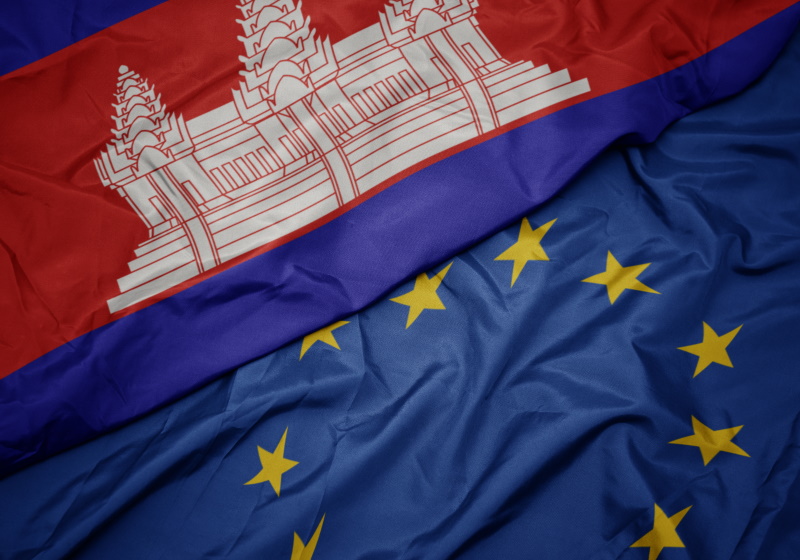
Relations between the European Union and Cambodia took another step forward at the Cambodia-EU Joint Committee meeting held in Phnom Penh last week. The meeting, chaired by Luy David, Secretary of State of the Ministry of Foreign Affairs of Cambodia, and Paola Pampaloni, Deputy Director General for Asia and the Pacific of the EU, addressed several topics: the invasion of Ukraine, global economic trends, climate change, the political situation in Myanmar and the EU-ASEAN strategic partnership. The EU confirmed its full support for Cambodia's chairmanship of ASEAN in 2022 and the appointment of Prak Sokhonn - Cambodia's Deputy Prime Minister and Minister of Foreign Affairs and International Cooperation - as ASEAN's Special Envoy to Myanmar. Then, the group on institutional strengthening addressed the broad topic of human rights development, analyzing it from different perspectives: from civil and political rights to the right to work, from human trafficking to gender equality. In view of this year's municipal elections in Cambodian cities, the EU did not fail to stress the importance of democratic pluralism, human rights and fundamental freedoms. The parties also discussed economic recovery measures, and the development of bilateral trade relations, including the temporary partial withdrawal of EU trade preferences under the European Banking Authority. The importance of improving the business environment by introducing new regulations to investments and diversifying the Cambodian economy was discussed. Finally, the implementation of the new EU Multi-Year Indicative Cooperation Program for 2021-2024 was discussed. This €155 million program aims at intervening in three main fields: ecological transition, education and training, and good governance, in line with the UN Agenda 2030 goals.
The Asia Pacific area is the new center of global dynamics, and greater interests result in greater responsibilities: an overview of security perception in the region
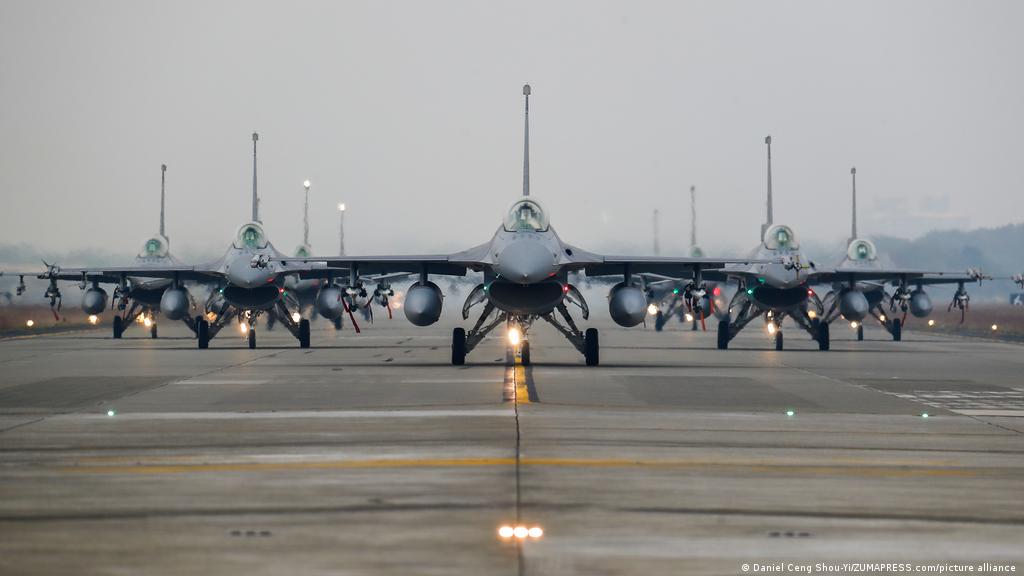
The Philippines has been trying to defend sovereignty over the South China Sea since 2013. In that year, Manila officially filed a lawsuit against China in the Permanent Arbitration Court in The Hague and 3.38$ billion was expended for defense. It is one of the archipelago's largest investments in the military sector of the last decade, which peaked in 2017, when the perception of Chinese assertiveness in the region began to become more evident. But the goal was not just a preemptive move for a hypothetical conflict in the South China Sea: President Rodrigo Duterte's "war on drugs" had turned into a massive and indiscriminate campaign against organized crime, and there was a lack of means to manage it. While the international community was witnessing an escalation of violence in the country and trying to distance itself, it was the People's Republic of China who supplied the Philippines’ army.
It is not easy to analyze a state's military spending, how it is managed and what conditions it can create in foreign policy. Governments often enter arms contracts with countries that could be the very reason for improving the military arsenal and showing themselves "ready" in the event of a conflict. But there is no lack of internal reasons for not letting our guard down. This is what has been happening in Asia from the beginning of the 2000s to today, in a region that is increasingly characterizing international dynamics and interests. In this scenario, the game is being played between the major global powers, and the countries of the area can only respond by taking preventive measures: arm themselves, modernize and integrate themselves into the most advantageous dynamics of globalization. And the crises of recent years have contributed to increasing the perception of insecurity.
The Sipri report
According to the 2019 report by the Stockholm International Peace Institute (Sipri) dedicated to Southeast Asia, it is in this region that the purchase of arms and defense spending have reached the greatest surge in the last twenty years, surpassing the trends of other areas. Among the causes identified by analysts, the rise of Chinese power, but also internal conflicts or tensions along the borders. But the alarming element, the report highlights, is another: in Asia the mechanisms for managing armed conflicts and territorial disputes are lacking - or are unclear. Both the “Asean way” in international affairs and Chinese foreign policy contribute to creating this pattern, both characterized - often - by attempts to avoid direct confrontation and implicit and often cryptic attitudes. The most exemplary case remains precisely that of the South China Sea, where not only the movements of military vehicles, but also the exploration of gas and mineral deposits, or illegal fishing, take place indiscriminately despite the countries having ratified the United Nations Convention. on the Law of the Sea (UNCLOS) - and despite the promise of a "code of conduct" soon.
Going into detail, the military spending of the ten ASEAN countries increased by 33% between 2008 and 2017, even if the reasons behind this choice are different. The countries involved in the territorial disputes in the South China Sea are the ones that have increased investments the most: a response to the unilateral actions considered "suspicious" by Chinese ships and planes. In the other cases, however, the concern and uncertainty towards the neighborhood and the porosity of the borders, which favor the movement of rebel groups, are no less evident: this is what is declared in most contracts for the import of arms, citing the fight against terrorism, organized crime and the transfer of advanced technologies to improve the quality of military operations. Recent cases of inefficiency of military assets, such as the dramatic loss of the crew of the Indonesian Indonesian submarine KRI Nanggala-402, have also raised concerns over equipment modernization.
Exporters and importers
After an initial phase of dependence on the US, Russia, or China, in recent years Asian countries have begun to diversify their suppliers of weapons and military technologies. Today, Sipri data confirm, a significant part of the arms trade flows to Asian markets. This is where 37% of exports from the US, the largest arms exporter in the world, come in, as well as 55% of those from Russia, albeit in decline. Other important exporters are Japan and South Korea, while India occupies a small share of the Burmese market - which with the arrival of the military junta in power seeks to reduce the dependence it has matured towards Beijing.
In Malaysia, in addition to Korea, arms imports from Spain and Turkey play an important role. France does not represent a key player as an arms exporter but, with the growth of international interests in Asian waters, seeks to play a role in monitoring and exercise operations: the latest case dates to the 2021 operations in the Indian Ocean as part of the of the Quad chord. The fledgling alliance desired by the Biden administration is, however, fragile: an element that contributes to influencing the perception of security in Asia.
Cold tensions and new threats
Although Asia has a low percentage of conflicts, concentrated mainly within the countries themselves, there is no lack of conditions for an escalation of tensions in some hotspots of the region. To name a few: the dispute between Malaysia and Brunei over exploitation of the common stretch of sea, the claims of Cambodia and Thailand along the border and the claims of the Philippines on the (now Malaysian) district of Sabah.
Finally, with a view to renewing the defense, the role of global crises is no less important. One such factor is the growing presence of Washington and allies in the Pacific to monitor the region as China's containment practice. The conflict in Ukraine also raises new questions (or rather concerns) on the evolution of global relations: on the one hand, sanctions against Russia represent an unexpected event for countries that receive assistance and weapons from Moscow (such as Vietnam and Myanmar), on the other, Kiev itself exports a small part of weapons (in particular, missiles) to Vietnam and Thailand. Ultimately, the diplomatic impasse and the violence of the conflict could not only increase uncertainty about one's own military capabilities and resources, but also open up the possibility of the international community’s powerlessness to intervene on the ground.
The Mekong is one of the longest rivers on the Asian continent and represents not only a vital source of livelihood for the populations living in its basin area, but also an object of contention between local governments. ASEAN can play a key role in promoting regional cooperation and dialogue with China.
The Mekong originates on the Tibetan plateau in China and winds for more than 4000 kilometers through Myanmar, Laos, Thailand, Cambodia and Vietnam before flowing into a large delta in the South China Sea. The river plays a key role in the South-East Asia region: not only the livelihood of over 60 million people, but also regional geopolitical balances are dependent on its water.
For the fourth consecutive year, the region is facing a water emergency that, in addition to suffering from the worsening climate crisis, reflects the conflictuality characterizing the policies of flow management. The Mekong River Commission (MRC) - an intergovernmental organization that brings together Laos, Thailand, Cambodia and Vietnam, the four countries of the lower river basin – has mentioned "regional low flows, water fluctuations, and droughts" among the risks that local authorities are called upon to address urgently. The Cambodian government has announced that rainfall in the rainy season "will not be enough to meet the immediate needs" and has recommended a thrifty use of valuable water resources, especially in rural areas.
As highlighted in the latest report of the Mekong River Commission published in early January, the significant anomalies that have affected the hydrological regime since 2015 are the result of the dangerous combination of natural hazards and anthropic pressure. The scarcity of rainfall is added to the intensive exploitation of water, exacerbating the devastating impact on ecosystems, economic activities and the livelihood of local populations.
According to a joint study carried out by the Stimson Center and the research company Eyes on Earth, in some areas of the Mekong basin "the impoundment of water and unnatural releases from dams have entirely altered the natural flow of the river". Water is in fact retained by storage systems during the wet season, while flows increase relatively in the dry season, when the water level is too low to make a difference.
The competition for the control of the flows of the Mekong is made manifest by the number of dams that continue to arise along its path: eleven main ones, most of which are located in Chinese territory, to which must be added the hundreds of minor buildings built along the tributaries and used for fishing and agriculture. Since the 1990s, Beijing has been engaged in an ambitious hydroelectric project that has resulted in the construction of dams and power plants along the upper reaches of the river in the southern province of Yunnan. In addition, through the granting of substantial funding, the Chinese authorities have supported the ambitions of the Laotian neighbour, which has not made a secret of wanting to focus on hydropower to become the "battery of Asia" and relaunch its economy.
In response to the increasing risks - with river levels reaching the lowest levels ever recorded in the last 60 years - the Mekong River Commission invites the six countries involved "to take bold actions" and suggests the establishment of a common notification mechanism on abnormal water level fluctuations and a coordinated system for the management of reservoirs and dams.
Although China has denied the allegations of taking advantage of the strategic position upstream of the river to unilaterally capitalise common waters and exert political pressure on neighbouring countries, the reluctance to share data on the management of dams and the same absence within the Mekong River Commission highlight the persistence of political and diplomatic tensions that undermine regional cooperation on resource management.
According to experts from the Stimson Center and Eyes on Earth, the best solution would be an international water sharing agreement that guarantees "a baseline level of flow from upstream dams during periods of drought” with the aim of averting future crises and simultaneously mitigating distrust of China.
In this context, closer synergy between the MRC and ASEAN secretariats is needed. In fact, the Organization can contribute to giving greater centrality to the project of sustainable and coordinated management of the Mekong within the regional political agenda. At the same time, the role of ASEAN in promoting a shared and sustainable development path with the participation of China remains crucial. Hopefully, Beijing will not remain indifferent for a long time to the mutual advantages that a peaceful coexistence along the most productive river in the region could offer.
Korea is one of the EU's strategic partners. Intensive trade has paved the way for strong regulatory and political cooperation. Examining this relationship provides an insight into the direction in which Brussels' ties with its other Asian partners might evolve in the future.
The history Korea-Europe relations is very recent. Unlike China and Japan, which have always been more familiar to Europeans, Korea was less known (and accessible) for centuries, precisely due to the influence of the former two countries on the latter. Untile the 17th century, European scholars spoke of Korea almost exclusively in works devoted to China: the first significant account of Korea is perhaps contained in the Novus Atlas Sinensis (1655) by the Italian Jesuit Martino Martini. The first European to visit the country was Hendrick Hamel from the Netherlands: his written recollection of the 13 years he spent between the island of Jeju and Seoul (1653-1666) was the first direct source on Korea available to European readers. Hamel is little known in his own country, but he is quite famous and honoured in Korea, with monuments and museum. In the last decades of the 19th century, Westerners began to call Korea a 'hermit kingdom' because of its few contacts with the outside world - an expression that has recently come back when referring to North Korea. Relations between Seoul and European countries began to develop with the end of World War II and the end of Japanese control. Many European countries supported South Korea in the War of 1950-1953. Yet perhaps the greatest impetus to this relationship came in the following decades, as a result of intense trade between Europe and the emerging Asian tiger.
Between the end of the Korean War and the early 2000s, the 'Miracle on the Han River' made Seoul one of the most competitive economies in the world. Its economic success has given the country an important role on the global stage, and not just in economic terms. The country hosted the Summer Olympics in 1988 and the Football World Cup in 2002. At the end of the 1990s, the "Korean wave" (Hallyu) began, i.e., the explosion of popularity of Korean media first in other Asian countries and then globally. All these forms of soft power, building on its commercial dynamism, have accompanied Korea's emergence as a global player. In May 2004, the then Korean Minister of Foreign Affairs and Trade Ban Ki-moon launched an ambitious policy of trade liberalisation through new agreements with the European Union, the United States and India. An indication of the country's international prestige is the election of Ban Ki-moon himself as Secretary-General of the United Nations (2007-2016). Of the trade agreements planned in 2004, the one with the EU was concluded first (2011). The agreement represents a milestone for both sides’ trade policy. For Seoul, it was its first trade treaty with an advanced economy to enter into force. For Brussels, it was the first 'second generation' Free Trade Agreement (FTA). This new generation of European FTAs differs from the previous one by including matters never covered in the past: trade in services, protection of intellectual property rights and the promotion of sustainable development through trade (Trade and Sustainable Development Chapters, TSD). The EU-Korea FTA has thus served as a model for trade agreements between Europe and other countries – in Asia as well: Japan (2019), Singapore (2019) and Vietnam (2020).
Korea's strong international position led the EU to identify Seoul as one of its ten 'strategic partners' on the global scene. Here again, trade relations have been the first impetus to deepen this cooperation. For Korea, the EU is currently the third-largest export market and the largest direct foreign investor. Looking at the period 2010-2018, the 2011 FTA had a significant impact on flows from the EU to Korea of goods (+77%), services (+82%) and investments (+39%). Automobiles make up a substantial share of exports from the EU to Korea, but also the other way around. The semiconductor sector - a strategic market dominated by Asian countries - is very important as well and characterised by a 'circular' exchange: Korea exports chips but imports the equipment to produce them from the EU. Synergy in this field is likely to become even more important in the future, as the US is encouraging its allies - including Europeans - to favour 'democratic' supply chains for strategic goods such as semiconductors. This doctrine could lead Brussels to buy more semiconductors in Korea, Japan and Taiwan – as Washington is planning to do – to the detriment of Chinese suppliers. On the other hand, the EU wants to become more autonomous from foreign chip imports, following the principle of 'digital sovereignty'. Another important sector of European exports to Korea is pharmaceuticals.
The FTA negotiations were linked to the revision of another agreement, the Framework Agreement, which sets out the political cooperation between the two partners. A further agreement, the Crisis Management Participation Agreement, was added to these two deals. Korea is the only partner to have three agreements in force with the EU, an indication of the importance Brussels attaches to this relationship. These agreements have allowed for increasing security cooperation, both regionally and globally. Regionally, during the Trump administration, Seoul began to rely more on Brussels to maintain stability on the Korean peninsula and prevent the proliferation of nuclear weapons. Globally, the Korean navy participates in the EU-led Operation Atalanta to counter piracy off the Horn of Africa. The EU-Korea partnership yields a further result: where economic cooperation intersects with political cooperation, regulatory cooperation becomes possible. The two partners manage to be global standard setters and, thanks to the robust institutional architecture of the cooperation agreements, are in constant contact to keep up the discipline of many economic sectors. First and foremost, the digital sector: last December, the European Commission gave the go-ahead with an adequacy decision to the free circulation of data between the EU and Korea. This form of ‘governance through transnational regulatory networks', of which the EU-Korea collaboration is one of the most advanced examples, could be an effective tool to govern the globalised economy, in the absence of a single global regulator.
Indonesia is proving that it has what it takes to play a key role in the post-pandemic economic recovery and that it is ready to work with Europe in key areas for the country’s development.
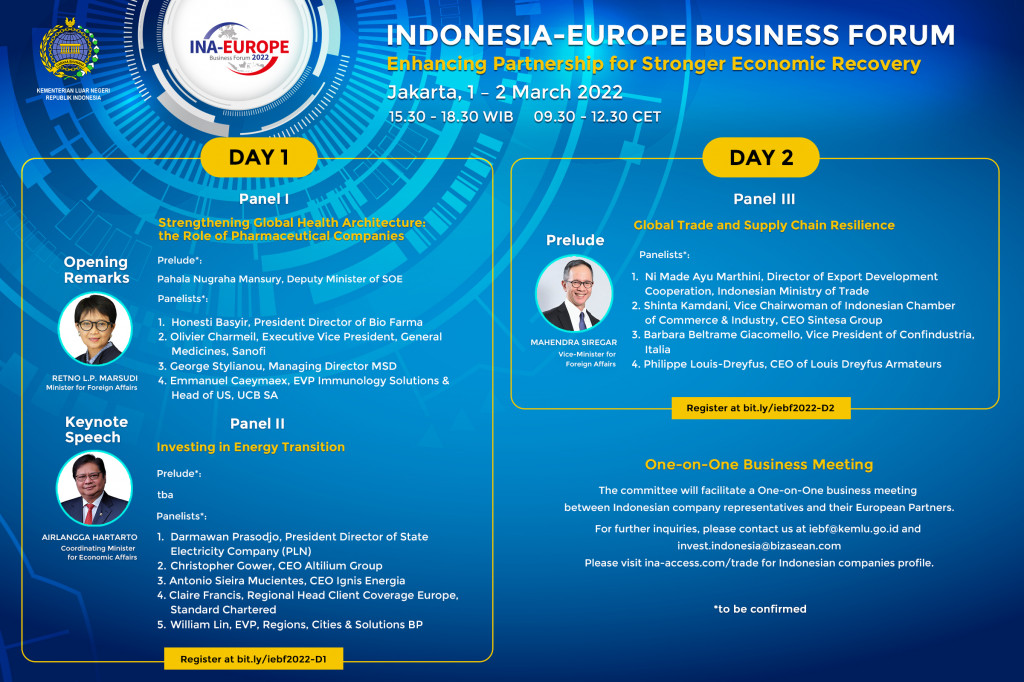
Strengthening the partnership between Europe and Indonesia to better seize all the opportunities of the global economic recovery; this is the focus of the two-day 'Indonesia-Europe Business Forum 2022 ‘Enhancing Partnership for Stronger Economic Recovery', which took place on March 1st and 2st. Senior representatives from the business and political communities attended the online event, with the aim of presenting the potential for partnership between Indonesia and Europe with a particular focus on the following areas: exploring a potential collaboration in the global health architecture and the pharmaceutical industry; promoting trade and investment in renewable energy; and strengthening global trade and supply chain resilience.
The Forum was opened by the Minister of Foreign Affairs of the Republic of Indonesia, H.E Retno L.P. Marsudi. To begin with, the Minister took a position on the war in Ukraine, stating that "the Russian invasion violates international law and respect for the sovereignty and territorial integrity of each State”. The Indonesian diplomat hopes for a peaceful resolution of the conflict, despite the negative economic impact of this crisis. In terms of economic recovery, efforts are moving in the right direction in both Indonesia and Europe. Indonesia has 53 per cent of its population vaccinated and the partnership with Europe has helped Jakarta's economy a lot, today the European Union is Indonesia's fifth largest trading partner. In addition, Jakarta aims to become an increasingly important regional hub in the manufacturing and digital sectors.
The partnership with Europe must therefore develop on three main levels: the health level, helping Indonesia to succeed globally; the technology and digital economy, where Jakarta has already registered eight unicorns, estimated to reach 150 billion in 2025; and finally, the environmental level, driving the sustainable energy transition to achieve zero emissions by 2060.
Then, the Indonesian Minister for the Coordination of Economic Affairs also stressed Jakarta's willingness to strengthen its engagement with Europe through bilateral and multilateral forums. Moreover, the growth figures for 2022 look encouraging: the Indonesian government expects a 4-5% increase and that, of the total 31.3 billion foreign direct investments, 2.4 billion will come from European countries. In addition, reforms are planned to accelerate investment in the new capital Nusantara.
Among the Italian representatives, Barbara Beltrame Giacomello, Confindustria's Vice-President for Internationalisation, stressed the importance of this meeting to make the most of the economic opportunities between the two countries. "Indonesia is a key trade partner for Italy, before the health emergency the investment flow between Italy and Indonesia was €3.1 billion and in the first ten months of 2021 the trade recovery was +21.5% compared to the decline in 2020." The Vice-President further reaffirmed, "These are encouraging numbers but there is further potential to strengthen cooperation, especially in high-value goods. In addition, to increase economic relations we need to focus on investments in advanced 4.0 technologies, which are key steps, especially for the growth and development of Small and Medium Enterprises. Europe and Indonesia are working hard to implement reform packages to increase productivity and modernisation.
As for Italy, the industrial system has implemented reforms thanks to the PNRR and this is the time to support companies in internationalisation, with the aim of creating smart production for the ecosystem with a view to cooperation at international level. Finally, the Vice-President said that "the future of our relationship with Indonesia depends on how we match our weaknesses and strengths: if we succeed, our economy will play a major role in future growth at European level. This event is a great start to explore new approaches to working together, sharing expertise for sustainable, long-term growth."
In conclusion, the outcome of the two days of meetings can be considered more than positive. The Forum served as a platform for fruitful discussions between policymakers, business leaders and other stakeholders. Indonesia and Europe, in line with the main objective of this year's G20, showed their readiness to engage in new partnerships to achieve a stable and sustainable post-pandemic global recovery.
Almost one third of world coffee production comes from the Asian continent
There is a new trend that has spread all over Asia. A drink that is a symbol of taste and refinement, but also of Western influence in the region. We are talking about coffee. In the last five years, the consumption of coffee in Asian countries has grown by 1.5%; a trend that follows the rise of the middle class, eager to always try new products. But it is also a very extensive cultural phenomenon, which derives from colonialism and is intertwined with today's trends that come from the West. In China, for example, the taste for this drink is handed down above all by people who have studied or worked abroad. However, the pandemic has considerably reduced travelling, and coffee lovers started to be fascinated by the local varieties of the drink. Not surprisingly, in the last couple of years, Asian coffee producers are starting to rival big Western industries, such as Starbucks and Costa. And today 29% of coffee beans in the world come from the Asian continent.
Among the main coffee producers there is Vietnam, a real giant of the industry. Ever since the French colonizers first harvested "crimson cherries'' - as coffee beans were nicknamed - this drink has remained part of the Vietnamese tradition. Like for us, in Italy, in Vietnam "going out for a coffee" is a method to socialize. Social networks such as TikTok have drived the interest of the masses for coffee, involving an increasingly wider audience: from young people who want Starbucks-model frappuccini to "expert" consumers, intrigued by the procedures for preparing and roasting the beans. If before the pandemic the main objective was exports, today it has been realized that domestic consumption is just as important.
Indonesia, the second largest producer of coffee in the region, has also seen an increase in local sales in recent years. Local variants are also very popular, such as Kopi Susu, an iced coffee with milk and palm sugar. Coffee, effectively distributed even during the pandemic with delivery services, has never stopped circulating, attracting more and more admirers and onlookers, eager to support local products rather than consume foreign brands. Not to mention that 90% of Indonesians are Muslim, and therefore looking for a social drink that does not contain alcohol.
China is having a similar experience. The arrival of foreign chains such as Starbucks and Costa Coffee in the late 90's triggered coffee culture in the metropolis, attracting young consumers. But with the start of local chains and street kiosks in recent years, public interest has shifted to the consumption of local products. A choice derived not only from the pandemic, but also from trade tensions with the United States. According to a March 2021 report by the financial newspaper Yicai, Shanghai now has the largest number of independent coffee shops in the world, with 6,913 outlets. More than 3,826 in Tokyo, 3,233 in London and 1,591 in New York. Also in this case it was young people, especially those who studied abroad, to import the coffee fashion.
In Japan, tea no longer reigns supreme. The Japanese coffee market is the largest on the Asian continent, with sales exceeding $ 24 billion in 2020. In contrast, tea consumption is decreasing. According to the Japanese Association for the production of tea, the consumption of the drink fell to 108,454 tons in 2019. A decrease of 30% compared to 2004. It is mainly women who have approached coffee. The arrival of "Western" cafes, where smoking is prohibited, has in fact attracted many young customers, previously discouraged by the traditional and smoky Japanese cafes. The pandemic also increased the demand for machines and equipment for making coffee at home.
In South Korea, coffee has become an integral part of the social ecosystem. The market includes consumers of all ages and backgrounds and is aimed above all at those who have made coffee shops their second homes: people who, in addition to sipping a coffee, sit at tables to study, work and talk with friends. And coffee culture is expected to become even more entrenched in South Korea as it is in all of Asia. With the expansion of the middle class, the number of people exposed to a Western lifestyle will increase, bringing the tradition of coffee into their own homes.
Development cooperation is one of the pillars of Italy's strategic partnership with Hanoi
Editorial by Antonio Alessandro, Italian Ambassador to Vietnam
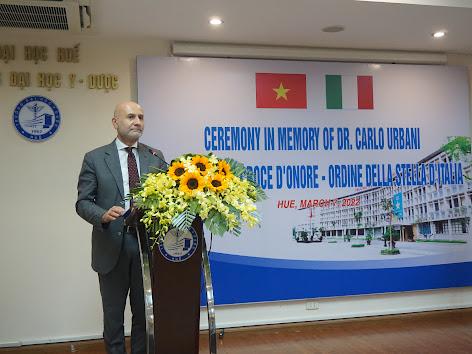
On March 7, an Italian delegation visited the Province of Thua Thien Hue to participate in a ceremony in memoriam of Carlo Urbani and revive relations with one of the most dynamic regions in central Vietnam.
The ceremony was held in the epidemiology center named after Carlo Urbani, with the emotional participation of Italian and Vietnamese authorities and his widow, Giuliana Chiorrini. The WHO Representative in Vietnam shared the testimonies of people who had worked with the famous Italian epidemiologist. Carlo Urbani was awarded the Grand Cross of the Order of the Star of Italy by President Sergio Mattarella in recognition of his extraordinary work in containing the SARS epidemic in Vietnam in 2003.
It emerged that the work of Carlo Urbani, almost 20 years after his death, is still relevant in the face of new pandemics and wars that are shaking the world. Consul General Enrico Padula recalled the vital contribution of Carlo Urbani and the whole Italian community to the strengthening of friendship relations between Italy and Vietnam.
As a concrete sign of Italian solidarity and in the footsteps of Carlo Urbani, a new Department of Gynecology and Obstetrics is being built in the Hue University Hospital. The works are promoted by the Italian Agency for Development Cooperation (AICS) as part of a 13 million euro project for the improvement of health services in the central regions of Vietnam.
Development cooperation is one of the pillars of Italy’s strategic partnership with Vietnam. We have been active since the 1990s and we carried out many initiatives in the fields of health, training, environmental rehabilitation, among others, thus contributing significantly to the country's development. Most recently, Italy donated 2.8 million vaccine doses to Vietnam.
During the visit, a joint research project was launched between the Polytechnic University of Marche and Hue University with the aim of managing cultural heritage data. The province has a strong tourist vocation and is home to one of the best-preserved imperial citadels in the East.
The results of the visit and prospects for future collaborations were discussed with the President of the Province, Nguyen Van Phuong.
The Embassy is committed to strengthening relations with the 63 provinces of Vietnam, which are the core of the country's economic dynamism.
ASEAN is exposed, to varying degrees, to sanctions aimed at the Russian economy. Energy, grain and investment are the sectors where these relations mainly intersect
While much of the "Western" world looks at the developments in the Russian-Ukrainian conflict condemning Moscow with severe economic sanctions, the members of the Association of Southeast Asian Nations have taken an uneven stance. According to some observers, the delay in issuing statements on the crisis and the lack of explicit condemnation of Russia by ASEAN are the symptoms of the difficulty encountered by the regional actors in finding synthesis between their bilateral relations with Russia. Singapore and Myanmar, as an instance, condense the bloc's divisions, one explicitly condemning Moscow's actions, the other expressing support. The reasons for these contradictions are to be found in the historical and commercial ties that unite the fortunes of South-East Asia with those of Russia.
The ASEAN bloc is exposed, to varying degrees, to sanctions aimed at the Russian economy. Energy, grain and investment are the main areas where these relationships intersect. According to James Guild of The Diplomat, although there is uncertainty about the impact of the conflict on Southeast Asian economies, there are some clues that can anticipate its impact. First, Russia's role as a global energy supplier worries some countries in particular. Although for Singapore only 5.7% of oil imported in 2019 is Russian, and for Thailand 3.3%, Vietnam may be more exposed to conflict-driven energy supply shocks, with 15% of coal imported in 2019 coming from Russia. Moreover, energy prices were already on the rise before the conflict broke out, and the war will only exacerbate the situation.
Global inflationary pressure on food prices could increase further, putting economies such as Indonesia and the Philippines, which imported around 25% and 16% of total grain from Russia and Ukraine respectively in 2019, in a crisis. Many Southeast Asian countries have state agencies specializing in the collection of essential commodities to cope with any shocks to supply chains, but the phenomenon of shrinking supply will still affect prices and production.
Then, several joint ventures link the fates of the ASEAN economies to that of Russia. In general, there seems to be an urgent need to break off commercial partnerships with Moscow, not least due to the practical impossibility of carrying out exchanges and transactions. A case in point is Vietnam's Long Phu 1 coal-fired power station, whose Russian contractor fears it will never receive back the money it invested in the project. The link between Moscow and Hanoi dates back to Soviet times and was mainly centered on the supply of defense equipment by Russia, which dominates 60% of Vietnam's military imports. Although Vietnam has not condemned the Russian invasion of Ukrainian territory, international sanctions could jeopardize economic relations with the historic communist ally as well.
Russia had patiently carved out room of influence over the Southeast Asian region. Beyond the primacy in arms supply, the 'turn to the East' policy was an explicit recognition of how much Russian President Vladimir Putin valued relations with regional actors. When the 30th anniversary of official relations between Russia and ASEAN was celebrated in 2021, Putin had commended the political proximity between the sides by stressing how often the positions of the bloc's nations on issues of global significance coincide with those of Russia. Indeed, the two players have also published a comprehensive action plan to implement their strategic partnership for 2021-25, which touches on the trade, strategic and security dimensions. All this shows how Moscow has reserved specific relations with South-East Asia for itself, moving away from the other two dominant models, the US and China. Unlike Washington and Beijing - and with the exception of its controversial arms supply to Myanmar - Moscow is not directly involved in any political-diplomatic crisis in the area. For Russia and the countries of South-East Asia, economic and commercial, and sometimes ideological, ties are also a bridge of diplomatic exchange. The different postures taken by the bloc's nations stigmatize ASEAN's difficulties in claiming centrality in matters that individually touch on these historic bilateral ties.
Vingroup is a Vietnamese corporation specializing in technology, industry, real estate development, retail and services, ranging from healthcare to hospitality.
The history of Vingroup begins with the founding of Technocom Corporation in 1993 in Ukraine, thanks to an ambitious group of young Vietnamese. Technocom started with food production, achieving great success with the Mivina brand. In 2000 it moved to Vietnam with two strategic brands, Vincom and Vinpearl, and the ambition to contribute to the development of the country. In January 2012, Vinpearl JSC merged with Vincom JSC to form Vingroup Joint Stock Company, becoming - with a market capitalization of approximately $ 3 billion - the largest privately held company in the nation. Pham Nhat Vuong, the first billionaire in Vietnam's history, is the Group's president, founder and largest shareholder.
A multi-sector company with 19 member brands, Vingroup is recognized as one of the most dynamic, successful, and well-capitalized companies in Vietnam. The main axes of its business are technology and industry; trade and services; social enterprise. In 2013, Vingroup raised approximately $ 200 million from the US investment fund Warburg Pincus to invest in four areas: commercial facilities, tourism, hospitals, and schools. The Vietnamese giant is currently concentrating resources on automobiles and real estate businesses. At the end of 2019, Vingroup announced its intention to stop retail operations - the largest in Vietnam - and last May it decided to stop the production of smartphones and televisions as well.
Vingroup entered the automotive industry in 2019, founding the subsidiary VinFast and its automotive plant in Haiphong with an annual capacity of approximately 250,000 vehicles. Profitability is still an issue. The company sold around 30,000 vehicles last year, enough to satisfy only around 10% of the Vietnamese market. Vingroup's automotive-focused manufacturing segment posted a pre-tax loss of 11.3 trillion dong in the first half of 2021, more than double the previous year. Pham Nhat Vuong recently told local media that further losses in the automotive sector are expected in the near term.
The company's future is currently focused on the electric vehicle business, launched in late 2021. Le Thi Thuy, Vingroup Vice President and CEO of VinFast Global, recently said that Vinfast will officially become a 100% electric car company by the end of 2022, definitively ceasing the production of petrol vehicles. Around 35,000 electric vehicles were ordered at the beginning of January, including orders from Western markets. The goal is raising $ 1.5 billion through bonds and strengthen its electric vehicle business with a new lithium-ion battery plant. The five-year dollar-denominated bonds will help finance the automotive unit that Vingroup hopes to list in the United States. It has already invested $ 5 billion in this sector. The issue of international bonds is expected in the first quarter of this year.
VinFast has just unveiled five electric vehicles at CES 2022 in Las Vegas, an important debut that intends to develop a sales network in the United States and Europe. Delivery of the first two electric vehicles, the VF 8, and the VF 9, is expected by the end of the year. In December, VinFast began sales of its electric vehicles in Vietnam, becoming the first national car company to sell EVs in the country. The Vietnamese giant is thus preparing to face an increasingly competitive market. By entering the electric vehicle market before the pecking order is firmly established, Vingroup aims to carve out a strategic position that will drive its future actions.
Fresh water is not only essential for life, but key to agricultural production and food security. Crop production, livestock farming, and food processing all need clean water in sufficient quantities. According to the World Bank, about 70 percent of the total water withdrawn worldwide is used to irrigate crops. But the reality of the supply side does not correspond to these needs. Although an astonishing 71 percent of the earth’s surface is covered with water, only 2.5 percent of that is fresh and one percent of that, accessible.
For a predominantly agricultural country like Thailand, therefore, a high premium has always been placed on fresh water. More significantly, a lot of efforts have been invested in how to manage those resources to ensure that the people and the nation have the means to thrive.
It is little wonder therefore, why successive Thai monarchs have consistently expressed a keen interest on the issue. In fact, they have been personally and heavily engaged in advancing different methods – given the varied circumstances – of securing this ‘lifeline’ for their people.
Prior to 1857, it was about managing people to suit the water conditions – either moving people away from or closer to water sources. The conclusion of the Bowring Treaty in 1855 led to demands for rice exports that required enough water for irrigation. Therefore, King Mongkut focused on developing canal systems in the Chao Phraya river delta for both irrigation and transportation. King Chulalongkorn, or Rama V, followed suit by upgrading them into more systematic irrigation and drainage systems, which led to the establishment of the Canals Department in 1902. Under King Vajiravudh, the Canals Department became the Barrages Department in 1914, as it expanded its work to construct the first large-scale barrage across the Pasak River in Ayutthaya, named the Rama VI Barrage.
Photo: Rama VI Barrage/Dam, which began construction in late 1915 and was completed in December 1924. Its function is to supply water to 680,000 Rai of agricultural land in every part of the Rangsit canal area.
(Source: Touronthai.com)
Post 1932, when Thailand became a Constitutional Monarchy, work in all areas was pursued slightly differently as the King no longer had executive power over state administration. This did not necessarily mean that the people’s interests had suddenly changed overnight. Moreover, the work of the monarchs prior to this change spoke for itself. The Thai monarchs had built up a strong bond between the monarchy and the people and fostered a genuine trust in an institution that had for centuries, spared no effort to develop and advance the nation into the future. So the monarchy was able to rally and retain full public support for their public interest endeavours, in a manner that was complementary to the government’s efforts, without being tied to party politics or factional interests.
Indeed, when King Bhumibol acceded to the throne in 1946, Thailand was already a leading rice exporter and rice farmers accounted for around 80 percent of the country’s 17 million people. But by that time, the impact of the perennial paradox of experiencing both drought and flood seasons had become more severe due to excessive and uncontrolled timber logging. For farmers, dealing with dry and cracked land that was unsuitable for growing crops was just as painful as having crops almost ready for cultivation completely submerged under flood water.
When the King and Queen visited the Isan region in 1955, the Northeastern region of Thailand was plagued with drought. Rainfall could only support one single annual rice crop. The King witnessed the problems experienced by the farmers firsthand and it inspired him to devote his attention and energy to achieving effective water resource management for Thai farmers everywhere. He would go on to instill water conservation and awareness in his children.
For the rest of his 70-year reign, the King engaged in countless projects related to water in different aspects. He spent almost 15 years developing a working formula for artificial rain to address drought and improve water resource management. He also invented the patented Chaipattana Aerator, a low-cost mechanical device for treating wastewater.
In the North, the King focused on preserving watershed areas and creating check dams, such as the Mae Kuang Udom Thara Dam in Chiang Mai. In the northeast, the work was concentrated more on setting up a water network system, such as the 740-meter long water delivery system that siphons water from Huai Pai Reservoir in Mukdahan to Lam Payang Reservoir in Kalasin. This project benefited 736 hectares of irrigable area, increased glutinous rice production from 270 kilogrammes per rai to 480 kilogrammes per rai and made year-round farming possible. In the south, projects such as the Bang Nara River Basin Development in Narathiwat effectively addressed the problem of drought, flood, saline, and acidic water.
Having traveled throughout the country, no one understood better than the King that there was never one formula or one solution to address all needs. So he dedicated his time to studying each locality in depth in order to come up with a tailor-made solution for different regions, and placed local residents at the centre of his approach. He considered the social geography of the area, the culture, traditions and lifestyles of the local people. Most importantly, the people had to be included in whatever solution was pursued in order to nurture a sense of ownership. The King was convinced this was the only way to ensure the solution was sustainable and he passed on these lessons to his children.
Since he was Crown Prince, King Maha Vajiralongkorn learned about the importance of water resource management from his late father, and has continued to treasure, preserve and build on the Royal Development Projects initiated by King Bhumibol. He completed several of them, including the construction of 7 reservoirs around Pa Sak Jolasid Dam, as well as expanded the irrigation network to cover more agricultural areas. In Chanthaburi, the King alleviated water problems petitioned by the villagers with the Royally-Initiated Weir Construction Project at Khao Daeng Pattana Village, which increased water supply for 320 hectares of farm land. In 2017, the King also commissioned the Royal Guard Units, related government agencies and teams of volunteers to remove garbage and weeds clogging the canals in various communities, which was essential for flood water drainage in the Bangkok and Metropolitan area.
Photo: Weir at Khao Daeng Pattana Village.
(Source: salika.co)
Princess Bajrakitiyabha, the King’s first born, has also taken an interest in complementing water management through her ‘Friends in Need (of “PA”) Volunteers Foundation’ – PA being her nickname. Through this foundation, she set up telemetering systems in 80 watershed areas in 11 provinces, using a comprehensive management approach involving the local community. The new telemetry collects data from real time sensors, processes the information, and provides warnings. This timely warning enables reservoir operators to reduce water levels, people to reinforce their homes, and authorities to be prepared. The Foundation plans to install another 510 telemetering systems across Thailand.
Photo: (from left to right) Automated Telemetry Station in Pongyeang sub-district, Mae Rim District, Chiang Mai Province and interface of ThaiWater mobile-application that has been integrated for general use.
(Source: Matichon)
To this day, the lifeline of the people continues to occupy an important place in the work of the Thai monarchy, as out of 4,877 Royal Development Projects, nearly 70% of them, or 3,386, are water resource development projects.
But the work is far from done. According to the Global Climate Risk Index, Thailand ranks 9th in countries most affected by extreme weather events between 2000 – 2019. Furthermore, research conducted by Thammasat University found that the 6 provinces of Loei, Udon Thani, Sakon Nakorn, Nakhon Phanom, Roi Et and Ubon Ratchathani are at the risk of repeated severe floods, while Khon Kaen, Mukdahan, Chaiyaphum, Nakhon Ratchasima and Surin are prone to repeated drought. Thailand’s current efforts on preventing floods and drought will not be enough. Every year, drought affects about 9.71 million people and 411,360 hectares of irrigable land, causing about 20.34 million USD of damage. Floods, on the other hand, cause damage to 1.2 million hectares of farmland worth 167 million USD annually, with 4.5 million people in 63 provinces affected.
All sectors in Thailand have to work together and harder on sustainable and effective water resource management, and look into using new technology. Indeed, the King has already commissioned further studies into utilising the full potential of the river basin. Some agencies and academic institutions have already begun looking into how to use water for irrigation more efficiently. Indeed, it is equally important to raise public awareness of the issue, so that every person living in Thailand may use water and water ways sensibly and sustainably, and help to nurture this lifeline for generations to come.
* * * * * * *
*Dr. Sumet Tantivejkul Dr. Sumet Tantivejkul is the Secretary-General of the Chaipattana Foundation, which was established by His Majesty King Bhumibol Adulyadej The Great with the vision to provide prompt, timely and necessary responses to problems affecting the Thai people through various development projects. He is often seen in photographs of King Bhumibol as he served the King closely for 18 years at the Office of the Royal Development Projects from 1981 until 1999, when he resigned and continued to serve His Majesty as Secretary-General of the Chaipattana Foundation—where chaipattana means “Victory of Development.” Dr. Sumet is also an adviser to the government’s water management committee and has advised the committee to follow His Majesty’s guidance in understanding both the geographical and social landscape of the country to best respond to the development needs of each locality. chaipattana letteralmente significa “vittoria dello sviluppo”. Il dott. Sumet è anche consigliere del comitato governativo della gestione dell’acqua, e in quanto tale ha suggerito al comitato di seguire la guida di Sua Maestà per comprendere la struttura geografica e sociale del Paese così da rispondere al meglio alle necessità di sviluppo di ciascuna località.
Questo sito Web utilizza i cookie per migliorare la tua esperienza. Se clicchi su Ok darai il consenso potrai proseguire nella navigazione, ma se lo desideri puoi modificare le impostazioni. ImpostazioniAccetta
Privacy & Cookies Policy
Privacy Policy
Ultimo aggiornamento: aprile 2020
Informativa Privacy
Nella presente informativa sulla privacy (“Informativa”), resa ai sensi degli artt. 13 e 14 Regolamento (UE) 2016/679 Generale sulla Protezione dei Dati Personali (“Regolamento” o “GDPR”), sono descritti i trattamenti dei dati personali effettuati dall’Associazione Italia-Asean (la “Associazione”, “noi”, “nostro/a/i/e”) attraverso il sito https://www.itasean.org/ (il “Sito”).
Titolare del trattamento
Ai sensi della presente Informativa e dei trattamenti dalla stessa presi in considerazione, Titolare del Trattamento (ex art. 4, n° 7 del Regolamento) è l’Associazione Italia-Asean. La sede legale dell’associazione è in Piazza Sant’Andrea della Valle, 6 00186 Roma.
Che tipo di dati personali trattiamo, finalità e basi giuridiche del trattamento
Attraverso il Sito, l’Associazione potrà effettuare i trattamenti di Dati Personali descritti nella presente sezione.
Soggetti che si registrano sul Sito (“Utenti Registrati”)
Categorie di interessati e di dati personali trattati
L’Associazione potrà trattare i dati personali di Utenti Registrati, quali referenti e rappresentanti di aziende, professionisti, docenti, studenti, giornalisti e tutti gli altri soggetti che decidono di registrarsi sul Sito. Le categorie di dati personali trattati dall’Associazione e riferite agli Utenti Registrati sono le seguenti
Informazioni anagrafiche (nome e cognome)
Username scelto per la creazione di un account sul Sito
Indirizzo e-mail
Paese di provenienza (residenza)
Qualifica (rappresentante di azienda, professionista, giornalista, studente, docente, altro)
Nome dell’azienda rappresentata
Ateneo frequentato da uno studente o presso cui insegna un docente
Testata presso cui un giornalista lavora
Dati relativi a preferenze e interessi personali (paesi e settori di interesse)
Altre informazioni che potranno essere condivise da un Utente Registrato in sede di creazione di un account sul Sito
Informazioni relative alle interazioni tra un Utente Registrato e l’Associazione attraverso il Sito
Informazioni relative alle attività degli Utenti Registrati sul Sito (es. commenti pubblici)
Dati personali, immagini, foto e altre informazioni che gli Utenti Registrati decideranno di condividere pubblicamente interagendo con l’Associazione e con altri Utenti Registrati attraverso il Sito
Finalità e basi giuridiche del trattamento
Il trattamento dei dati personali di cui alla presente sezione 2.1 è funzionale a permettere agli Utenti Registrati di registrarsi al Sito e di compiere le attività proposte dal Sito, tra cui l’iscrizione a gruppi, l’interazione con altri Utenti Registrati e in generale la fruizione di tutti gli altri servizi offerti dall’Associazione attraverso il Sito.
La base giuridica su cui si fondano i trattamenti in questione è rappresentata dal consenso degli Utenti Registrati ai sensi dell’art. 6, par. 1, lett. a) GDPR.
Fonte dei dati
I dati personali di cui alla presente sezione vengono forniti all’Associazione direttamente dagli Utenti Registrati nel momento in cui gli stessi si registrano sul Sito. L’Associazione potrà, inoltre, raccogliere altri dati relati alle attività ed alle interazioni degli interessati attraverso il Sito, come meglio specificato alla successiva sezione 2.5.
Natura del conferimento dei dati
Il conferimento dei dati di cui alle precedenti lettere a), b), c), d) è necessario e, in mancanza, non sarà possibile creare un account sul Sito.
Il conferimento dei dati di cui alle lettere e), f), g), h), i), j), k), l) è facoltativo e la sua mancanza non inficerà la possibilità di creare un account sul Sito, anche se potrebbe limitare le esperienze di un Utente Registrato sul Sito.
Periodo di conservazione
I dati personali degli Utenti Registrati saranno conservati per il periodo strettamente necessario per il perseguimento delle finalità per cui sono raccolte. In particolare, nel momento in cui un Utente Registrato decida di cancellare il proprio account dal Sito, l’Associazione procederà alla cancellazione immediata degli stessi e provvederà comunque entro il termine di 1 anno
Il periodo di conservazione dei dati il cui trattamento è descritto nella presente sezione 2.1 potrebbe essere prolungato nel caso in cui ciò si rendesse necessario per adempiere ad un eventuale obbligo di legge o per difendere un diritto dell’Associazione dinnanzi ad un’autorità giurisdizionale, amministrativa o in altra sede.
Dati trattati per l’invio di newsletter e comunicazioni istituzionali
Con il consenso specifico degli Utenti Registrati e degli altri soggetti che visiteranno il Sito, l’Associazione potrà trattare i dati forniti dagli stessi per l’invio di una newsletter e di altre comunicazioni istituzionali relative alle attività dell’Associazione, dei propri soci e associati, dei membri del network dell’Associazione e di terzi.
Le comunicazioni in questione potranno, col consenso specifico degli interessati, essere personalizzate sulla base dei propri interessi e delle proprie preferenze.
Il consenso per questo genere di trattamenti è facoltativo e la sua mancanza non inficerà l’utilizzo e la fruizione del Sito da parte degli interessati.
I dati personali trattati per l’invio di newsletter e altre comunicazioni promozionali saranno conservati per un termine massimo di 24 (ventiquattro) mesi a partire dal momento in cui viene prestato il consenso da parte degli interessati per tale tipo di trattamento.
In caso di comunicazioni personalizzate, il trattamento proseguirà per un massimo di 12 (dodici) mesi dal momento della prestazione del consenso.
I periodi di conservazione potrebbero essere prolungati nel caso in cui ciò si rendesse necessario per adempiere ad un eventuale obbligo di legge o per difendere un diritto dell’Associazione dinnanzi ad un’autorità giurisdizionale, amministrativa o in altra sede.
Dati relativi a candidati per posizioni lavorative all’interno dell’Associazione
Categorie di interessati e di dati personali trattati
Talvolta l’Associazione potrebbe pubblicare degli annunci relativi a posizioni lavorative all’interno del proprio organico. In tal caso, così come nel caso di candidature spontanee, l’Associazione potrebbe trattare le seguenti categorie di dati personali riferite ai candidati:
Dati anagrafici (es. nome, cognome, data di nascita e residenza)
Dati di contatto (es. recapiti telefonici, indirizzo e-mail)
Fotografia/ritratto personale (ove allegato al CV)
Dati relativi alle qualifiche, alla formazione e alla carriera professionale
Qualsiasi altra informazione che i candidati decideranno di fornirci in sede di candidatura
L’Associazione non tratterà categorie particolari di dati ex art. 9 GDPR allo scopo di compiere selezioni dei candidati per posizioni lavorative (es. dati sanitari, dati idonei a rivelare opinioni politiche, fede religiosa, appartenenza a sindacati, orientamento sessuale) a meno che, nel caso in cui le stesse fossero contenute nei CV ricevuti dall’Associazione i candidati abbiano esplicitamente autorizzato l’Associazione al loro trattamento.
Finalità e basi giuridiche del trattamento
Il trattamento dei dati personali poc’anzi elencati viene effettuato al fine di compiere le attività di ricerca e selezione del personale da parte dell’Associazione.
La base giuridica su cui si fonda tale trattamento è rappresentato dalla necessità di eseguire un contratto e correlati obblighi precontrattuali a richiesta dell’interessato ex art. 6, par. 1, lett. b) GDPR.
Fonte dei dati
I dati personali di cui alla presente sezione vengono forniti all’Associazione direttamente dai candidati nel momento in cui gli stessi presentano la propria candidatura per posizioni lavorative all’interno dell’Associazione.
Natura del conferimento dei dati
Il conferimento dei dati di cui alla presente sezione è necessario e, in mancanza, non sarà possibile per l’Associazione procedere alla valutazione delle candidature ricevute.
Periodo di conservazione
I dati personali dei candidati saranno conservati per il periodo necessario allo svolgimento delle attività di selezione per la specifica posizione lavorativa per cui un soggetto ha presentato la propria candidatura e, in ogni caso, per non più di due anni dal termine delle selezioni in questione.
In caso di candidatura spontanea, l’Associazione provvederà tempestivamente ad eliminare i dati dei candidati nel caso in cui non vi fossero posizioni lavorative aperte o i loro profili non venissero ritenuti in linea con le esigenze professionali dell’Associazione.
Con il consenso specifico dei candidati, l’Associazione potrà prolungare la conservazione dei loro dati in vista di future opportunità lavorative all’interno del proprio organico.
I periodi di conservazione potrebbero essere prolungati nel caso in cui ciò si rendesse necessario per adempiere ad un eventuale obbligo di legge o per difendere un diritto dell’Associazione dinnanzi ad un’autorità giurisdizionale, amministrativa o in altra sede.
Dati che gli utenti ci forniscono quando decidono di contattarci
Nel momento in cui un utente decide di contattarci secondo le modalità indicate nella sezione “Contatti” del Sito potremmo trattare dati personali allo stesso riferiti come dati anagrafici (es. nome e cognome), dati di contatto (numero di telefono, indirizzo e-mail, fax, recapito postale) o altri dati personali che lo stesso utente decide di fornirci nel momento in cui ci contatta.
I dati personali a noi forniti in tali circostanze verranno trattati, con il consenso degli utenti, per le finalità e per un periodo di tempo strettamente necessari a fornire un riscontro al soggetto che decide di contattarci, a meno che una conservazione più prolungata non sia necessaria per adempiere ad un obbligo di legge posto in capo all’Associazione o per l’esercizio di un diritto da parte della stessa Associazione innanzi ad un’autorità giudiziaria, amministrativa o in altra sede.
Dati raccolti durante l’utilizzo del Sito
Quando un soggetto effettua una navigazione sul nostro Sito, raccogliamo, tramite cookie che vengono installati sul dispositivo degli utenti, i seguenti dati di navigazione in forma aggregata:
Informazioni tecniche, tra cui indirizzo IP, informazioni sui dispositivi utilizzati dai visitatori del Sito, sul browser e sui sistemi operativi, etc.
Informazioni sulla navigazione sul Sito, tra cui URL delle pagine visitate e attività che vengono svolte sulla pagina, date e orari di navigazione, tempo di permanenza sul Sito, clickstream.
Queste informazioni vengono raccolte per il corretto funzionamento, la gestione, il mantenimento ed il miglioramento del Sito, nonché per garantire che la navigazione avvenga in sicurezza e per poter accertare la responsabilità in caso di violazioni cyber-security. Esse vengono anche utilizzate per consentirci di ottenere analisi statistiche sull’utilizzo del Sito con la possibilità di analizzare il dato anche in forma aggregata.
Per conoscere meglio il funzionamento dei cookie, il modo di attivarli e disattivarli, occorre consultare la nostra cookie policy.
Gli Interessati sono sempre liberi di decidere se fornirci i loro dati di navigazione, ad esempio scegliendo di disattivare i cookie tramite le impostazioni dei propri browser. Tuttavia, il rifiuto a fornire informazioni necessarie ai fini della navigazione potrebbe rendere impossibile lo svolgimento di attività strettamente connesse con la navigazione stessa e, dunque, anche la consultazione e interazione con il nostro Sito.
Conserviamo tali dati unicamente per il tempo strettamente necessario ai fini per cui sono raccolti.
Modalità del trattamento
Il trattamento dei dati personali avviene attraverso strumenti informatici, telematici e/o cartacei nel rispetto dei principi di correttezza, liceità, trasparenza, esattezza, integrità, minimizzazione dei dati e limitazione delle finalità e della conservazione, nonché in accordo con quanto previsto dal GDPR e dalla normativa vigente in materia di protezione dei dati personali, nonché con l’adozione di adeguate misure di sicurezza.
Come proteggiamo i dati
I dati personali di cui alla presente Informativa sono raccolti, trattati, trasmessi e conservati adottando adeguate misure di sicurezza (fisiche, logiche e organizzative) per proteggerli da eventuali violazioni (come distruzione, perdita, modifica, divulgazione non autorizzata o accesso, in modo accidentale o illegale, ai dati personali in questione) e per garantire che il trattamento sia effettuato unicamente per le finalità descritte in questa Informativa.
A chi comunichiamo i dati personali
Nell’ambito dei trattamenti descritti in questa Informativa, l’Associazione si avvale di soggetti terzi che forniscono dei servizi (es. back-up dei dati, gestori del servizio newsletter, gestori del sito), i quali potrebbero trattare i dati personali degli interessati per conto dell’Associazione e quindi agire in veste di responsabili del trattamento dell’Associazione. Tali soggetti sono stati selezionati tra professionisti che garantiscano l’implementazione di misure tecniche ed organizzative appropriate, di modo che i trattamenti siano sempre effettuati nel rispetto della normativa applicabile e garantendo la tutela dei diritti degli interessati.
Gli interessati potranno richiedere dettagli su tali soggetti contattandoci come indicato nel paragrafo “Come contattarci”.
L’Associazione potrebbe altresì dover comunicare i dati personali degli interessati a terzi (quali consulenti o autorità) qualora ciò sia necessario per la tutela dei propri diritti o per l’adempimento di obblighi di legge.
Inoltre, gli interessati ed in particolare gli Utenti Registrati potranno decidere volontariamente di pubblicare i propri dati sul Sito nel momento in cui interagiscono con lo stesso (es. tramite commenti su gruppi pubblici).
Trasferimenti dei dati al di fuori del SEE
Nel caso in cui i dati personali degli interessati dovessero essere trattati in un Paese al di fuori dallo Spazio Economico Europeo (SEE), l’Associazione assicura l’adozione di precauzioni appropriate per garantire che i dati personali degli interessati siano protetti adeguatamente e conformemente ai livelli di tutela garantiti dalla normativa UE, applicando una delle misure di salvaguardia previste dagli artt. 44-50 del GDPR.
Diritti degli Interessati
In conformità con la normativa applicabile, ed in particolare con quanto stabilito dal Regolamento, gli interessati hanno i seguenti diritti:
Accesso: ottenere informazioni a proposito del trattamento dei dati personali da parte dell’Associazione ed una copia di tali dati personali;
Rettifica: laddove l’Interessato ritenga che i suoi dati personali siano inaccurati o incompleti, potrete chiedere che tali dati siano rettificati o modificati seguendo le istruzioni dell’Interessato;
Cancellazione: fatti salvi i casi previsti dalla normativa applicabile, l’Interessato ha il diritto di chiedere la cancellazione dei dati personali, quando: (i) i dati non siano più necessari per le finalità per cui sono stati raccolti e trattati; (ii) revoca il consenso al trattamento; (iii) si oppone al trattamento per finalità di marketing diretto o al trattamento effettuato per perseguire altre finalità e non sussistono motivi legittimi prevalenti per proseguire con il trattamento; (iv) i dati siano trattati illecitamente; (v) la cancellazione sia imposta dalla legge;
Limitazione: richiedere la limitazione del trattamento dei dati personali in conformità con quanto stabilito dall’art. 18 del Regolamento;
Opposizione: in conformità con quanto previsto dall’art. 21 del Regolamento, l’Interessato ha il diritto ad opporsi al trattamento dei Dati Personali in qualsiasi momento in relazione alla propria particolare situazione. Ricevuta l’opposizione, l’Associazione proseguirà con il trattamento solo se vi siano motivi legittimi e cogenti dimostrabili che prevalgano sui diritti, interessi e libertà dell’Interessato; Il diritto ad opporsi a trattamenti effettuati per finalità di marketing diretto è assoluto ed esercitabile in qualsiasi momento nelle modalità indicate nella sezione “Come contattarci”. L’opposizione a trattamenti effettuati attraverso strumenti automatizzati è valida altresì per i trattamenti posti in essere con strumenti tradizionali.
Revoca del consenso: nel caso in cui il trattamento dei dati personali si basi sul consenso, l’Interessato ha il diritto di revocare il proprio consenso in qualsiasi momento;
Portabilità dei dati: ove il trattamento sia basato sul consenso, l’Interessato ha il diritto di ricevere in un formato strutturato, di uso comune e leggibile da dispositivo automatico i dati personali che ci sono stati forniti fornito e, laddove ciò sia tecnicamente fattibile, alla trasmissione in sicurezza dei dati personali ad un altro titolare del trattamento.
Come contattarci
Per l’esercizio dei diritti dell’Interessato, e per qualsiasi domanda o chiarimento su come i dati personali sono trattati ed utilizzati ai sensi di questa Informativa, è possibile contattare l’Associazione a mezzo posta all’indirizzo Piazza Sant’Andrea della Valle, 6 (00186 Roma), tramite email all’indirizzo info@itasean.org o al numero dedicato +39.06.45491715.
Nel caso in cui un interessato decida di contattarci, tutti i dati che forniti in tale occasione saranno trattati esclusivamente al fine di fornire un pronto riscontro e per garantire la corretta gestione della richiesta avanzata.
Tutela dei diritti
A tutela dei diritti e dei dati personali di un interessato, è sua facoltà, in qualsiasi momento, proporre reclamo all’autorità di controllo competente, vale a dire il Garante per la Protezione dei Dati Personali (tel. +39 06.696771, indirizzo e-mail: garante@gpdp.it o urp@gpdp.it) o di esperire un’azione avanti ai competenti organi giurisdizionali nazionali.
Modifiche alla presente Informativa
Ci riserviamo il diritto di aggiornare in qualsiasi momento la presente Informativa. A tal fine, riportiamo l’ultima data di aggiornamento all’inizio dell’Informativa.
Qualora un Interessato ci abbia già inoltrato i suoi dati personali, qualunque modifica che incida sostanzialmente sul trattamento dei relativi dati personali gli verrà comunicata attraverso gli appositi canali, sempre in modo da garantire l’effettiva conoscenza delle modalità del trattamento, nell’ottica di una piena trasparenza del trattamento stesso e di una piena e adeguata tutela dei diritti.
I cookie necessari sono assolutamente essenziali per il corretto funzionamento del sito Web. Questa categoria include solo i cookie che garantiscono funzionalità di base e caratteristiche di sicurezza del sito Web. Questi cookie non memorizzano alcuna informazione personale.
Qualsiasi cookie che potrebbe non essere particolarmente necessario per il funzionamento del sito Web e viene utilizzato specificamente per raccogliere dati personali dell\'utente tramite analisi, pubblicità, altri contenuti incorporati sono definiti come cookie non necessari. È obbligatorio ottenere il consenso dell\'utente prima di eseguire questi cookie sul tuo sito Web.


















 English
  Italian