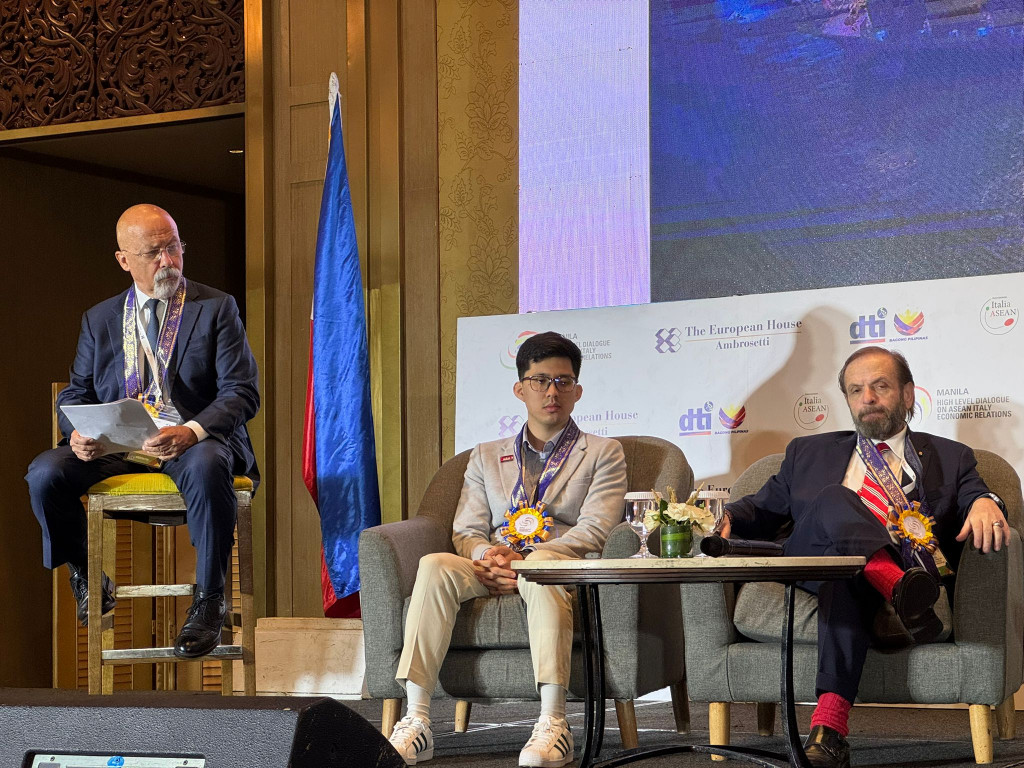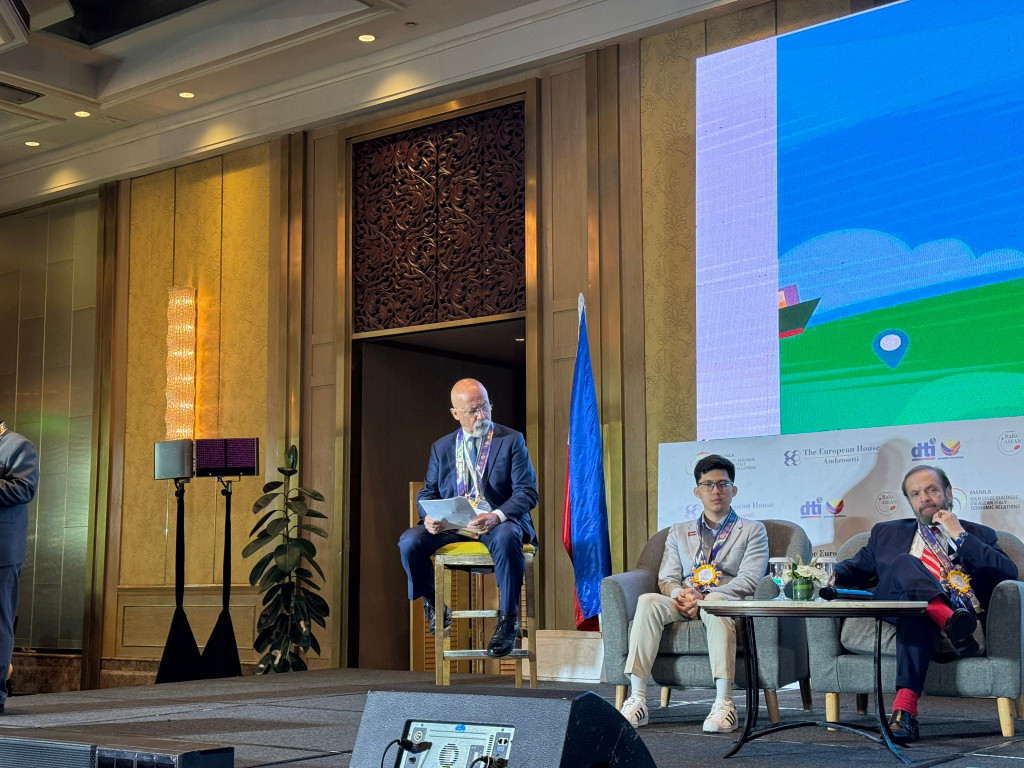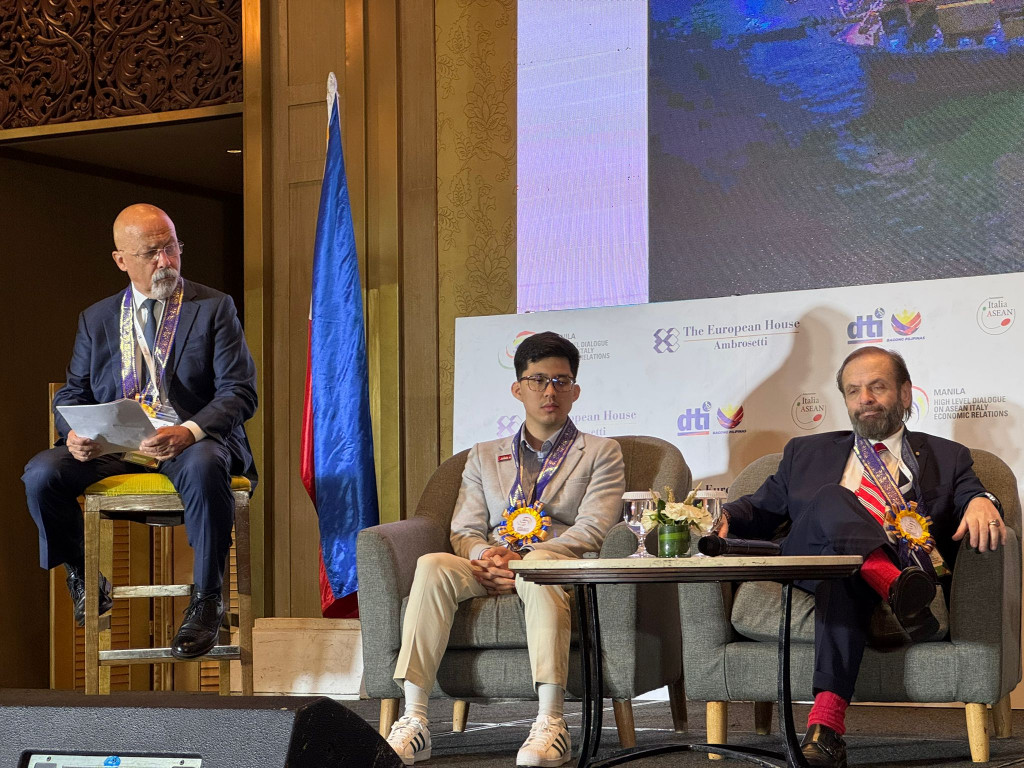
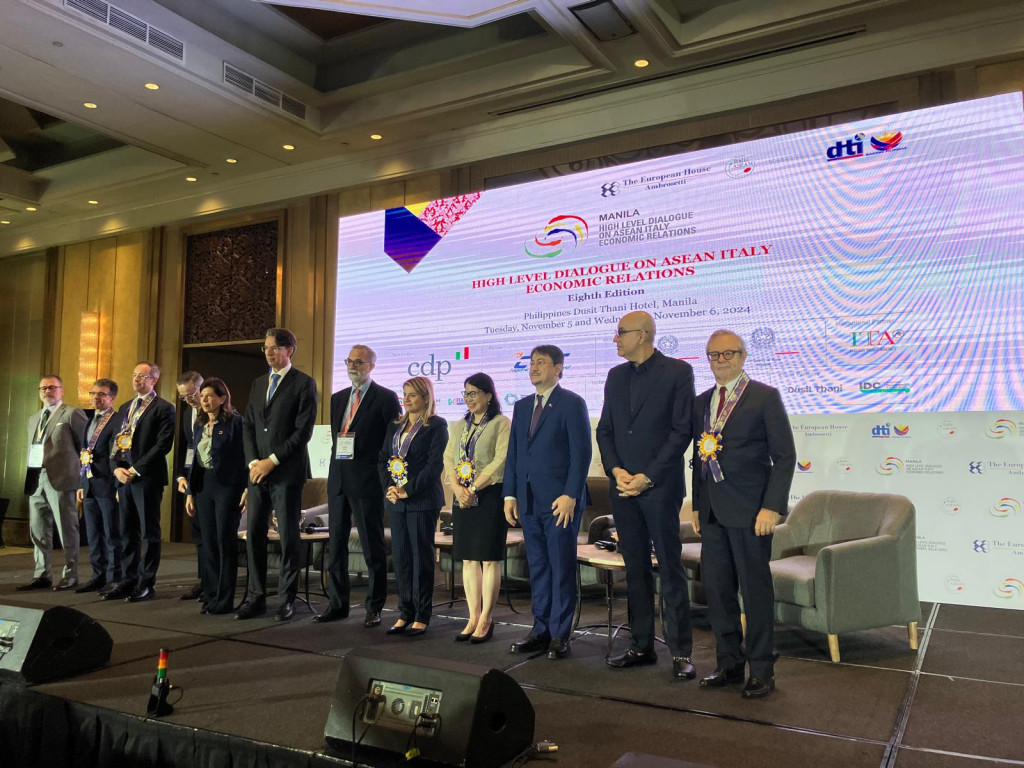
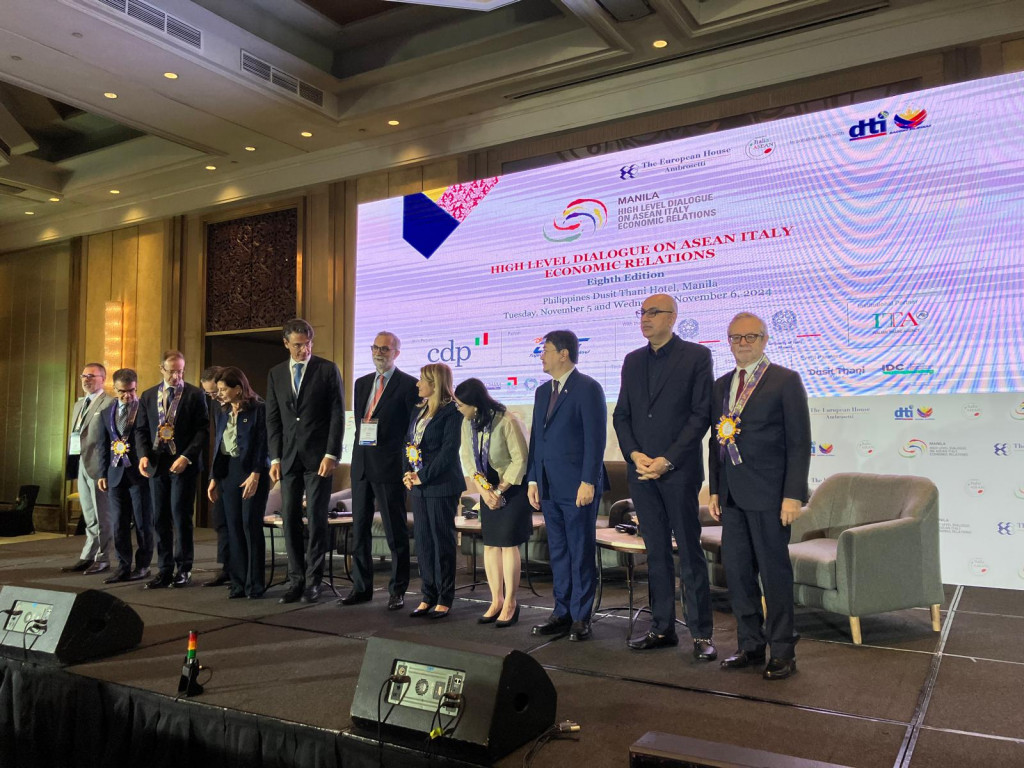
High Level Dialogue on ASEAN-Italy Economic Relations: the speech by Ambassador Michelangelo Pipan

The speech by Ambassador Michelangelo Pipan, President of the Italy-ASEAN Association at the High Level Dialogue on ASEAN-Italy Economic Relations in Manila

When the Italy ASEAN Association was founded with the intent of promoting relations between Italy and the ASEAN countries, back in 2015, the world was a very different place: in virtual absence of major troubles the economy was booming, interest rates were low thanks to equally low inflation, free trade was reigning, globalisation was the name of the game. In that context the Association’s job in pursuing its goals was rather straightforward, although everything but easy: as Italian businesses were far from tapping the extraordinary opportunities offered by the ASEAN countries, it was necessary to attract their attention to and increase their awareness of the vast openings existing in each and every ASEAN member country and the very favourable atmosphere provided by the ASEAN stance towards international trade, let alone the strong sympathy everything Italian enjoyed in the area. In 2015 ASEAN became a Community also in the economic field, making possible a practically unhindered circulation of goods and capitals. Then came the RCEP agreement opening up an enormous common market in this part of the world. Those achievements consolidated the ASEAN role and made its member countries an even more appealing partner, one that could not be overlooked. In fact the Italian government did not fail to realise that and sought the status of ASEAN’s Development Partner, which was achieved in 2020. Since its inception the Association pursued its mission mostly implementing awareness activities with the support of its members, some of the major Italian Corporations, and in cooperation with the Italian official bodies. We soon realised that it was of the utmost importance to bring the Italian CEOs to ASEAN to meet their counterparts, to see with their own eyes the dynamism of the people, governments and entrepreneurs in these countries. That’s how the cooperation with TEH Ambrosetti was initiated and the HLDs started. 

Fast forward nine years, so much has changed on the global stage. After the disruption brought about by the pandemic and the subsequent expectations arising from the unprecedented financial resources made available by many governments and international organisations, war broke in Eastern Europe, then in the Middle East, in South Sudan, inflation rose, so did interest rates, trade barriers started to be Introduced and then strengthened . The world is now a totally different place. But how have these portentous events changed the landscape for us, for the perspectives of the relations between the EU and ASEAN? How are they affecting the work of our Association? Well, if anything, I am convinced that ASEAN as well as our work have become more relevant, because in a scenario where containment, confrontation, inward looking attitudes seem to take hold in so many places and cause a dangerous fragmentation of the international order., Asean stands out for the perseverance in sticking to its founding principles: a stalwart champion of free-trade as a means to growth and peace - convinced that stability can be achieved through development and vice versa ,an unconditional supporte of multilateralism, ASEAN’s policy remain that of resorting to discrete diplomatic dialogue for the solution of controversies, a policy so intrinsically linked to the success of the association that has been dubbed “the ASEAN Way”. In recent times, this has been coupled with the “ASEAN Centrality” a concept that - extending the other basic ASEAN principle of non-interference - signifies the unwillingness of the block to be pushed to take sides in the major power’s contest for predominance in the area. No wonder only a few days ago, when participating to the 14th ASEAN- UN summit in Vientiane , the SG of the UN, Mr Gutierrez, praised the Association as a “wonderful model for the world….a bridge builder and a messenger for peace “, lauding is commitment to multilateralism and its efforts to defuse tension by prioritising dialogue and respect of international law. At the same time in spite of geopolitical uncertainty and conflicts, the World Bank estimates that global trade to GDP ratio has reached 74%, exceeding pre pandemic levels. According to other authoritative sources world exports have grown 1,8% last year and are looking to grow 3.5% in 2024. In this scenario it has been said by experts on the area that “South East Asia is poised to be the biggest winner in global trade over the next decade, even amid (possible) escalating confrontation between the major powers”. Moreover, last year the six major ASEAN economies attracted more FDI than China (that incidentally looks to become soon the major foreign investor in the area). On top of this ASEAN continues to look ahead and is drafting a new ASEAN Community Vision 2045 to be adopted next year. At the same time the EU is advancing its work for the establishment of FTAs with more ASEAN nations, including the Philippines our host this year. All this considered, the work of our Association has become even more essential, in my view, for the reciprocal benefit of Italy and the ASEAN countries. A lot can be achieved thanks to a strong complementarity: we have In front of us a rich tapestry of opportunities can can be woven on the solid framework of the EU-ASEAN relations. It is thus a great privilege to hold the 8th edition of the HLD in Manila and we are most thankful to the Philippines government to host it. We are also extremely grateful to the many organisations and individuals whose commitment contributed to make it happen. I align myself to the individual thanks that were presented earlier by Mr Tavazzi. I know from personal experience- back in 1981 Manila was the first posting abroad of my diplomatic career- of the many opportunities for bilateral cooperation the stand in front of our two countries and the rest of ASEAN. Having expanded considerably since then, they are clearly spelled out in today’s program and reach out to the most contemporary fields of activities - let me remind you that the World Intellectual Property Office has chosen the Philippines as pilot country for measuring the contribution of the creative industry to GDP. I trust they will get a significant impulse today thanks to your discussions. In conclusion, I wish you the best of success and thank you for your kind attention.
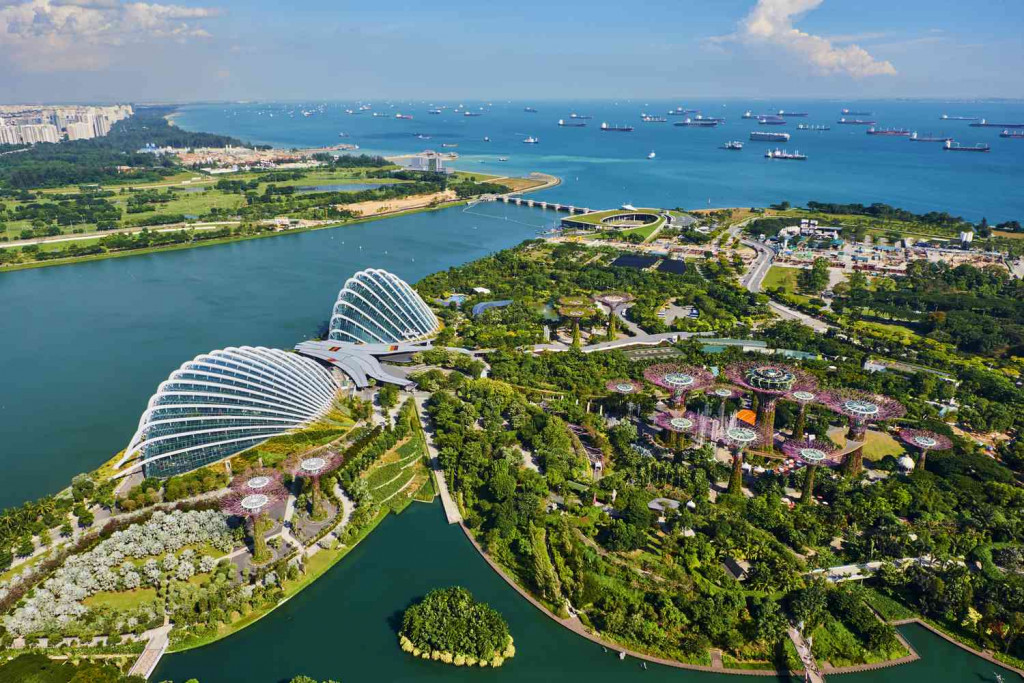
Singapore and “harmonious multiculturalism”

Since its independence in 1965, the creation of a “harmonious multiethnic society” has been one of the principles guiding the work of the city-state government

By Emanuele Ballestracci

“We, the citizens of Singapore, pledge ourselves as a united people, regardless of race, language or religion, to build a democratic society based on justice and equality in order to achieve happiness, prosperity and progress for our nation.” Every morning thousands of Singaporean students begin their day by reciting this mantra, exemplifying one of the cornerstones of its executive: governing through differences. Indeed, since its independence in 1965, the creation of a “harmonious multi-ethnic society” has been one of the guiding principles of the People's Action Party (PAP) in its uninterrupted rule of Singapore. 

The relevance of this issue lies in the peculiar composition of the Singaporean population and the ethno-social clashes that have historically characterized its decolonization process, albeit to a lesser extent than in the broader regional context. In South and Southeast Asian states, especially Sri Lanka, Indonesia, and India, riots and violent clashes between different ethnic groups are in fact phenomena that have often been repeated after their independence. In 1965, Singapore's population was about 75 percent Chinese, 13 percent Malay, 7 percent Indian, and 5 percent so-called Others (migrant workers and Eurasians), and the figures have remained roughly stable to the present day. Given such heterogeneity, ethnic-social governance was an existential challenge for the fledgling city-state from the very beginning. It was clashes between Singaporeans of Chinese and Malaysian origin in 1964, which resulted in 36 deaths and hundreds of injuries, that led PAP founder Lee Kuan Yew to scuttle the federation project with Malaysia and the subsequent establishment of Singapore as an independent state. Since then such incidents have declined exponentially, leading Singapore to be the much-vaunted model of social order and stability that it is today.

To achieve a so-called “harmonious multicultural society” over the years, the PAP launched a series of highly successful initiatives, chief among them the choice of English as the lingua franca. This choice allowed the former British colony to create a neutral space in which to develop shared values and identity, while allowing the various ethnic groups to maintain the use of their traditional language. In fact, Mandarin Chinese, Malay, and Tamil remain the country's official languages and depending on ethnicity are taught alongside English. In some cases even the legislative system has been adapted to Singapore's particular multicultural composition, and family legislation is a clear example. In fact, the Women's Charter is the main source on the subject, but there is a parallel legal and judicial system to follow Muslim law on marriage, divorce, maintenance, and child custody. 

Then there is the quota system for the allocation of public housing, which accounts for 80 percent of the total in Singapore, created in 1989 in order to reflect the ethnic composition of the population in each district, neighborhood and condominium. This has prevented the creation of mono-ethnic enclaves and encouraged the creation of multicultural communities. A quota system also ensures minimum representation in parliament for minorities, and the office of Head of State is traditionally given to a Malay or Indian, further balancing the political weight of each ethnic group. 

Finally, a dense body of legislation has been enacted over the years that allows the Singapore government to severely punish any kind of racial violence or discrimination, whether offline or online. Such punishments have often been criticized for being far too harsh, in remonstrance of the importance the PAP places on the issue of social harmony. Further evidence of this is the swiftness with which such laws are updated to respond in a timely manner to new forms of racial hatred. 

However, not all that glitters is gold, and Singapore is certainly no exception. Indeed, the designation of the respective ethnic groups remains a controversial and extremely rigid process. In identifying the major social components, all the specificities within them, all three of which were extremely rich, have been flattened out. Moreover, the ability to change the racial identity attributed is also limited for the children of interracial couples, who must still designate a “main race” for their children for administrative purposes. Also presenting critical issues are the system of political representation of minorities and the admittedly celebrated housing system. Indeed, the political supremacy of ethnic Chinese remains a constant in the history of the city-state, while quotas for the allocation of public housing have distorted the housing market, increasing economic inequality among the population.

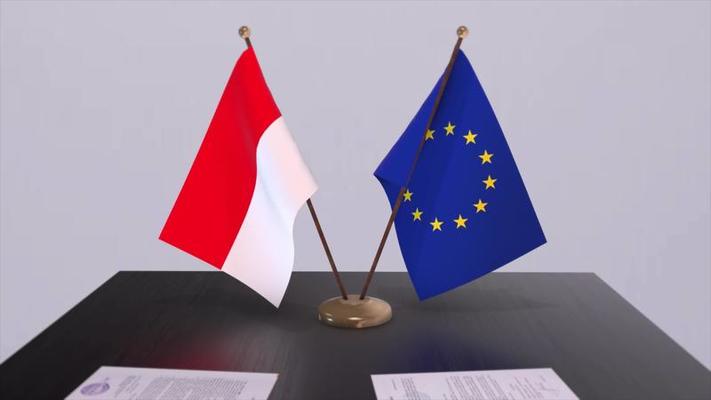
New momentum for Indonesia-EU free trade.

Incoming administrations in Brussels and Jakarta offer hope for progress in negotiations

After nearly a decade of negotiations, the proposed free trade agreement between the European Union and Indonesia may be becoming more feasible. This is according to Alif Alauddin in an analysis published in The Diplomat. Indeed, Indonesia aims to conclude negotiations under the administration of new President Prabowo Subianto, who officially took office on Sunday, Oct. 20. At the same time, the European Union unveiled a new European Commission team under the second term of Ursula von der Leyen, which began Sept. 17. The last roundtable between Brussels and Jakarta, held in July, showed that the remaining open issues are largely related to the domestic interests of both sides, which are concerned about protecting domestic industries from any disadvantages once the agreement enters into force. Since negotiations began in 2016, the EU has remained steadfast in enforcing sustainability standards, while Indonesia has found it difficult to meet these expectations. “Both sides now need to look more broadly at the changing geopolitical landscape,” argues The Diplomat, according to which Prabowo wants to seek Western trade and investment partners. This includes accelerating efforts to obtain environmental, sustainability and governance (ESG) certification for nickel mining sites to comply with EU and U.S. market standards. The ambition to achieve 8 percent annual economic growth during his first term will be largely driven by foreign investment, with a focus on green energy, electric vehicle manufacturing, advanced technology and the digital services sector. “Prabowo's inauguration should therefore be welcomed by the EU as an opportunity to revive talks on the free trade agreement,” it reads. “Likewise, ensuring Indonesian market access is a priority of the EU Commission,” as Jakarta could help it diversify its economic relations, reducing dependence on Beijing. Moreover, points out the Diplomat, “compared to imposing unilateral measures such as to dictate terms on key Indonesian products, a free trade agreement can be a more effective tool of external influence to meet global sustainability standards.” 

Prabowo Subianto's Economic Policies

Article by Luca Menghini

Indonesia's Path to Growth and Stability

Since October 20, 2024, Prabowo Subianto is the new president of Indonesia, following a highly contested election that brings both continuity and change. Building on the foundation laid by his predecessor, Joko Widodo, better known as Jokowi, Prabowo aims to boost Indonesia’s economic growth while introducing new strategies to address the long-standing structural challenges that have always characterized the country. His administration arrives at a crucial moment for Indonesia, which, as the largest economy in Southeast Asia, positions itself at the center of the global trade, especially given its wealth of natural resources.

Prabowo has emphasized that his commitment will be to continue many of Jokowi's policies, particularly concerning infrastructure development and resource management. Jokowi's administration saw Indonesia become a significant player in the electric vehicle supply chain, capitalizing on and leveraging its vast reserves of nickel, one of the key components used to manufacture EV batteries. Various foreign companies, including Hyundai and LG, have made significant investments in Indonesia, attracted by the opportunity to access these resources. Prabowo has promised to pay particular attention to developing the domestic downstream sector, which involves refining raw materials into high-value products. This is to ensure that Indonesia gains more benefits beyond the mere extraction of resources, allowing the country to better capitalize on the wealth present within its territory.

Prabowo's promises of continuity are reassuring for many people; however, compared to his predecessor, he faces an economy with new challenges. Under Jokowi, Indonesia experienced stable growth of around 5% per year. However, Prabowo has set an even more ambitious goal, aiming for growth of 8% during his presidency. Achieving this will not only require a continuous flow of investments in infrastructure but also reforms in other sectors, particularly in boosting the level of innovation and addressing the ongoing issue of informal employment in the country. Indonesia's economy, heavily reliant on exports of raw materials such as nickel and palm oil, needs to be diversified to ensure sustainable growth and avoid falling into what economists call the "middle-income trap." This is the point at which a country's economy begins to stagnate before reaching the status of a developed economy.

One of Prabowo's most ambitious plans is to significantly increase government spending, particularly on social programs such as free meals for school-aged children, one of his campaign promises. His administration is aiming to raise Indonesia's debt-to-GDP ratio from the current 39% to 50%, a move that is sparking a heated debate among economists and investors. While Prabowo's team argues that increasing the country's debt is necessary to provide the funds deemed essential for the various programs the government wants to implement, critics claim that such a move could destabilize Indonesia's long-standing fiscal discipline. Under Jokowi, Indonesia maintained conservative fiscal policies, with strict limits on budget deficits and debt issuance, which helped protect the economy from external shocks.

Prabowo's administration has reassured the markets by stating that the increase in borrowing will be accompanied by efforts to raise revenues. His team has proposed various measures to boost government income, including raising taxes and royalties from the mining sector, as well as enhancing the mechanisms for tax collection. However, the challenges are significant. The tax-to-GDP ratio remains low compared to other Southeast Asian nations, and many of the country's workers are employed informally, making it difficult to expand the tax base.

Energy and energy security are other key pillars of Prabowo's economic agenda. Indonesia is the largest producer of palm oil, and Prabowo is planning to expand its use in biofuel production, with the goal of reducing the country's dependence on diesel imports. Under the B35 policy introduced last year, a blend containing 35% palm oil is now legally required in biodiesel, and Prabowo has decided to increase this percentage to 50% by 2029. By reducing dependency on fuel imports, Prabowo hopes to improve the country’s trade balance and give a significant boost to domestic production. 

Regarding the issue of food security, Prabowo has emphasized the need for agricultural reforms to increase productivity and reduce Indonesia’s dependence on food imports. He has highlighted plans to invest in modernizing the agricultural sector, improving irrigation systems, and expanding access to credit for small-scale farmers. These measures aim to ensure that Indonesia meets the food needs of its population while also creating new opportunities in rural areas.

Prabowo's leadership will also be shaped by Indonesia's geopolitical position between the two global powers, the United States and China. Indonesia has maintained a neutral stance, carefully balancing its relations with both countries, and Prabowo is expected to continue this approach. China is Indonesia's largest trading partner, and economic ties between the two countries have strengthened in recent years, particularly in terms of infrastructure investments. At the same time, Indonesia remains a key partner of the United States in Southeast Asia, particularly in the security sector. Prabowo, a former general, is expected to continue developing Indonesia's defense capabilities while maintaining a neutral approach in the broader geopolitical competition between the United States and China.

Foreign investments will continue to play a key role in Prabowo's economic strategies. Under Jokowi, Indonesia saw significant growth in foreign direct investment (FDI), particularly in the mining and manufacturing sectors. Prabowo has indicated that he will maintain the incentives introduced under the previous administration to attract foreign investors, including tax breaks and streamlined regulations. However, the market reaction to Prabowo's economic policies has been mixed, with some investors concerned about the potential risks of increased borrowing. Recent downgrades by investment banks like Morgan Stanley reflect these concerns, although rating agencies such as Fitch and Moody's have maintained a stable outlook for Indonesia, citing the country's strong economic fundamentals.

Despite these challenges, Prabowo's presidency represents an opportunity for Indonesia to solidify its position as a regional economic leader. His administration is focused on industrial development, energy independence, and food security, which should lead to the goal of achieving long-term stability and growth. However, everything will depend on how effectively his government can balance the need for fiscal prudence with the demands of an ambitious economic agenda. Investors and international partners will be closely watching how Prabowo navigates these challenges in the early years of his presidency.

The inauguration of Prabowo's presidency marks the beginning of a new chapter for Indonesia. It is hoped that this chapter will be defined by efforts to accelerate growth while ensuring that its benefits are distributed equitably among the population. His ambitious targets, while challenging, signal a clear intention to transform Indonesia into a high-income country by 2045. If successful, his policies will not only lift millions of people out of poverty but also solidify Indonesia's role as a global economic power in the years to come.

ASEAN and BRICS

We publish here an excerpt from Chan Chian Wen's editorial, which appeared in Nikkei Asia

A common critique of BRICS lacks the cohesion necessary for long-term stability. However, ASEAN's five-decade track record proves otherwise. This group of 10 Southeast Asian economies serves as a real-time case study of how political and economic diversity can coexist while fostering peace and prosperity. ASEAN comprises Muslim-majority, Buddhist-majority, and Christian-majority countries, all with multi-ethnic and multi-cultural societies. These nations don't even share the same political systems. Yet, ASEAN's continued existence and prosperity serve as a powerful rebuttal to the notion that a diverse mix of countries cannot function effectively together. ASEAN's proven record of neutrality has long supported regional stability; now it should extend its influence to help reduce conflict risks beyond its borders. While BRICS aims to foster economic multipolarity, it is often viewed by Washington as aligned with its geopolitical rivals, Moscow and Beijing. ASEAN, without such baggage, is uniquely positioned to ease concerns over BRICS being perceived as anti-Western. ASEAN can also benefit from BRICS's growing commodity exchanges, which provide an opportunity to boost sustainable economic growth and improve food security. By protecting commodity-dependent economies from excessive speculation, BRICS exchanges help mitigate price volatility, a key threat to ASEAN's stability. Furthermore, BRICS countries play significant roles in global supply chains for both raw and value-added commodities. Many experts believe the world is on the cusp of a new commodity super-cycle, driven by decades of underinvestment in resource extraction and refining infrastructure. BRICS, with its significant lead in this space, is well-positioned to cushion the socio-economic fallout of such a cycle -- an advantage that ASEAN lacks. With global trends shifting toward electric vehicles, lithium batteries, nuclear energy, semiconductors and electrification, ASEAN risks falling behind without deeper engagement with BRICS. Additionally, BRICS offers access to alternative platforms for financial transactions, such as blockchain. By linking settlement currencies to neutral reserve assets like gold, ASEAN could reduce its exposure to the risks of sharp fluctuations in the U.S. dollar. For ASEAN to maintain true neutrality, it must adopt a platform-agnostic approach to financial transactions in global trade and investment. In conclusion, it is not in ASEAN's best interest to passively observe attempts to reverse the trend toward multipolarity, including the forging of closer ties between BRICS and ASEAN.

The surge of investment in Southeast Asia

Growing role of private equity and venture capital in ASEAN countries

By Luca Menghini

In 2023, the private equity (PE) and venture capital (VC) sectors in ASEAN countries witnessed significant developments, despite facing substantial headwinds in the global economic landscape. The ASEAN region, with its continuously expanding and growing middle class and a very young population, continues to attract numerous investors, particularly in the technology, healthcare, and infrastructure sectors. These sectors are crucial drivers of growth in an increasingly competitive market and in a constantly evolving global market.

The Southeast Asian private equity market ended 2023 with a total of 22 deals amounting to $3.9 billion. This figure represents a decline compared to previous years, largely due to macroeconomic challenges such as inflation and high interest rates. However, experts remain optimistic, given the young workforce and increasing demand for innovative solutions, which is expected to drive future growth. Venture capital performed very strongly, with assets under management reaching a record $27.3 billion in 2023, highlighting the resilience and potential of the region's startup ecosystem.

The healthcare sector emerged as a key area for private equity investments in 2023, accounting for 36% of total deals. The growing demand for an improved healthcare sector capable of offering more advanced services, driven by the fact that the average ASEAN population is aging and simultaneously becoming wealthier and able to afford higher-level care, has created numerous opportunities for investors. In addition to healthcare, the other sector that attracted the most attention was technology and telecommunications, which accounted for around 31% of private equity investments.

Investments in infrastructure were a dominant theme in 2024, with the sector accounting for 78% of total private equity deals in the second quarter of this year. As Southeast Asian countries prioritize the transition to a low-carbon economy, opportunities in renewable energy and sustainable infrastructure projects have attracted the interest of numerous investors. Additionally, the region's strategic location as a hub for global trade has made investments in digital technologies and, more generally, in digital transformation, along with physical infrastructure, vital for its economic future. This has led private equity activities to focus on sectors aimed at redesigning and transforming regional supply chains and increasing commercial connectivity.

Despite the encouraging and optimistic trends, the private equity and venture capital sectors in the ASEAN landscape are facing significant challenges. The macroeconomic environment remains uncertain, with concerns related to inflation and interest rate fluctuations creating unfavorable conditions for transnational deals and agreements in general. Additionally, the number of exits is in sharp decline, fundraising has decreased, and investors are adopting a more cautious approach. Exit conditions remain difficult, with many private equity firms opting for secondary sales over initial public offerings (IPOs) due to a sluggish public market.

Nonetheless, there is a high level of available liquidity, which remains ready to be used, positioning investors optimally to capitalize on future opportunities. Experts predict that the consumer goods sector, education, and financial services will see an increase in investments in the coming years as ASEAN economies stabilize and continue on high-growth trajectories.

Looking ahead, the continued development of the Southeast Asian private equity and venture capital markets will be shaped by digital transformation, innovations in healthcare, and the need for sustainable infrastructure. These sectors offer the greatest promise both for investors and governments seeking to strengthen the region's competitiveness in the global economy. With a young, tech-savvy population and a rapidly growing middle class, ASEAN is positioned to remain a bright spot for private equity and venture capital investments in the years to come.

In conclusion, while the private equity and venture capital sectors in ASEAN are not without their challenges, the region's growth prospects remain strong and stable. The focus on infrastructure, healthcare, and technology, along with the availability of capital, allows Southeast Asia to continue being a key destination for investments in global markets. Investors are likely to maintain a cautious but optimistic approach as they navigate the opportunities and risks that come with investing in one of the most dynamic regions in the world.

Thailand and Malaysia in front row for BRICS

Bangkok and Kuala Lumpur are the first two Southeast Asian governments to have expressed interest in joining the group

Di Silvia Zaccaria

The acronym BRICS refers to the grouping of Brazil, Russia, India, China and South Africa. In January 2024, Egypt, Ethiopia, Iran, Saudi Arabia and the United Arab Emirates joined the BRICS. The five original member countries alone make up about 26 percent of the earth's land area, 30 percent of the global economy and 43 percent of the global population, a figure that continues to grow. Just as the BRICS have among their purposes the goal of bringing together the economies of the Global South, ASEAN was also established as an organization created for the purpose of contributing to the economic, social and cultural development of the countries of Southeast Asia, ensuring their stability, fostering their economic promotion, reducing poverty, and encouraging the exchange and support of countries with profoundly different economic and development levels. By virtue of the increasing economic and political importance the BRICS are gaining, many ASEAN members have expressed more or less concrete interest in their possible entry into the grouping, as early as the 2023 summit in Johannesburg. On May 28, Thailand approved a letter officially manifesting its intention to join BRICS. Ready to follow is Malaysia, whose Prime Minister Anwar Ibrahim has expressed strong interest in possible entry. Indonesia, which participated as a guest at the 2023 BRICS Summit, through Foreign Minister Retno Marsudi, also said it is in the process of evaluating the possible benefits of joining the group. Finally, Vietnam also asserted that the country is seriously considering joining BRICS. In particular, it was pointed out that countries such as Thailand and Malaysia are aiming for BRICS entry for economic and social growth intentions of national interest. “BRICS membership would benefit Thailand in many ways, for example, by increasing Thailand's role in the international arena and enhancing its prospects of being one of the international economic policymakers.”, said Bangkok’s government.

“ASEAN way means success”

The speech by Thongloun Sisoulith, President of Laos, at the opening of the ASEAN summit in Vientiane

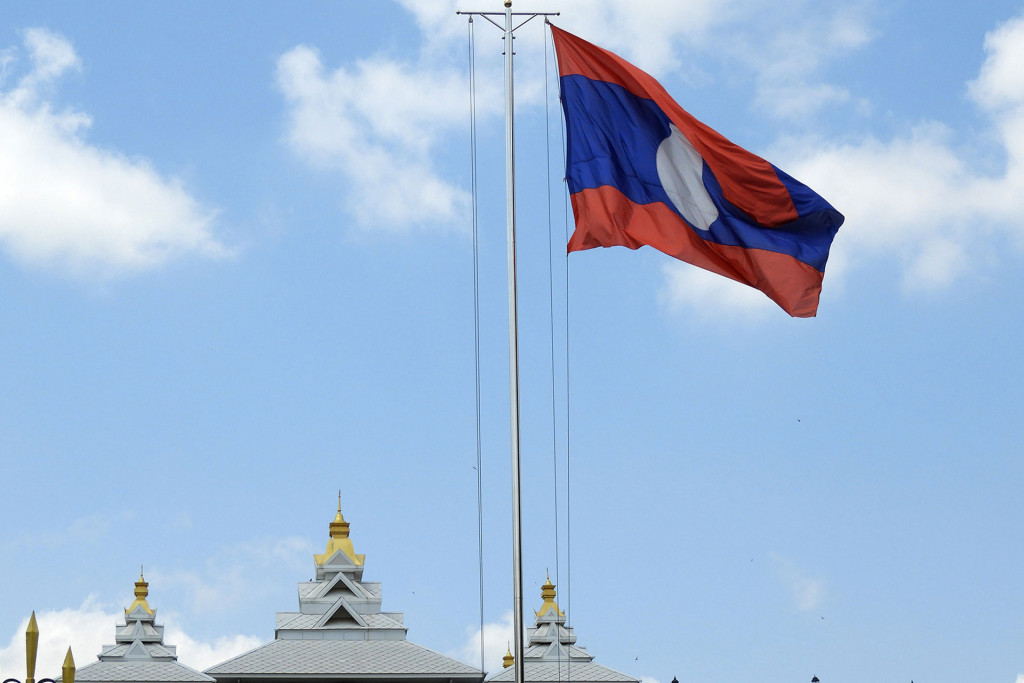
This year, Lao People's Democratic Republic has the honor of assuming the chairmanship of ASEAN for the third time since our accession to ASEAN on 23 July 1997. Each time, we have received invaluable support and assistance from our family ASEAN, dialogue partners and friendly nations. ASEAN is defined by its diversity. Throughout its evolution, it has successfully overcome numerous challenges, which led to the creation of the ASEAN Community in 2015. Today, ASEAN is home to nearly 700 million people, making it the third largest economy in Asia and the fifth in the world. Projections indicate that ASEAN will become the world's fourth largest economy by 2030. In the near future, ASEAN will include all Southeast Asian nations with the accession of Timor-Leste as a full member, reaffirming its diversity and while creating new opportunities for its external relations. ASEAN's achievements over the years have brought tangible benefits to people, reflecting the region's shared aspirations, intentions, unity and solidarity amid diversity. These findings further demonstrate that cooperation, guided by the ASEAN way, resonates with the shared goal of maintaining and promoting peace, stability, and sustainable socioeconomic development. Regional and international environments are experiencing a rapid and complex phase of change and new challenges. In this context, ASEAN must continue to uphold its common cause of peace, stability and sustainable development, as well as its commitment to multilateralism based on equality and mutual benefit. Lao PDR has consistently pursued a foreign policy of “peace, independence, friendship and cooperation”. Lao PDR is proud to be a member of the ASEAN family, whose achievements, including its thriving external relations, have contributed significantly to the socio-economic development of our country. Under the theme “ASEAN: Enhancing Connectivity and Resilience”, this presidency aligns with the goal of promoting connectivity and resilience, and shows our aspiration to transform Laos from a landlocked country into a regional hub with international connectivity. I firmly believe, with the long tradition of cooperation and mutual support within the ASEAN family and from our external partners, that the summit and related summits in recent days will be a great success.

Coffee prices are on the rise in Vietnam

Amid a supply shortfall, financial speculations and an increase in demand for Robusta beans, Vietnamese coffee prices are surging.

By Anna Affranio

Vietnam has very quickly become one of the world's leading producers of coffee. This product, massively consumed around the globe, was introduced to Vietnam as early as 1857 by some French priests during the colonial period, first in the northern provinces, and then later in the central and southern highlands. The soil and climatic conditions soon proved ideal for the cultivation of the robusta and arabica varieties, to the point that over time the country has gained a relevant position among the world's largest coffee producers (second largest exporter by volume after Brazil). This has been possible in recent decades thanks to large investments that followed the liberalization of land tenure with the Đổi Mới reforms in the mid-1980s, and World Bank/IMF policy recommendations incentivizing farmers to produce coffee for export. During this period, Vietnam specialized in producing beans of the Robusta variety, of which it is also the world's largest producer and which makes up almost all of the coffee produced in the country. 

But something is changing in the coffee market, in Vietnam and around the world. According to a recent report by the International Coffee Organization, in April prices of the Robusta species reached their highest levels in 45 years. What are the reasons for such a drastic increase in prices? The causes are mainly to be ascribed to the imbalance between supply and demand.

Currently, Robusta beans account for less than 30 percent of the world's coffee production, compared to the Arabica variety, which is much more in demand because of its softer taste and lower amount of caffeine. In contrast, the Robusta quality has a stronger, more bitter flavor and is easier to produce because, as the name suggests, it is more resistant to pests and is better adapted to different climatic and geographical conditions. These beans are usually used in espresso blends to add strength and body to the cup, but they are also widely used in instant coffees due to their convenience and consistent flavor profile. In fact, demand for the Robusta species is higher than ever, given their greater resilience to climate change than Arabica. In addition, rising transportation and fuel costs are pushing major European and U.S. companies to switch from the high-end Arabica variety, produced mainly in Central and South America, to the more affordable Robusta.The higher demand is thus inevitably driving up their price.

But back to Vietnam. Here, supply is contracting sharply due to a reduction in coffee-growing areas. In fact, local farmers are gradually replacing coffee cultivation with that of durian, the strong-smelling fruit much loved on the Asian continent. In particular, China has increased its demand for durian, and production of this fruit is proving more profitable for many farmers than coffee. It does not help that to comply with Chinese durian export requirements, which prevent durian from being grown with other plants, farmers are also cutting down existing coffee trees within mixed coffee-durian plantations. In addition, this particularly hot and dry season has not been conducive to an abundant harvest of beans.

Last but not least, it should be noted that coffee is one of the favorite commodities (along with oil and gold) for financial speculation, and the changing geopolitical, environmental, and climatic conditions provide fertile ground for wide volatility in coffee futures, thus further increasing prices.

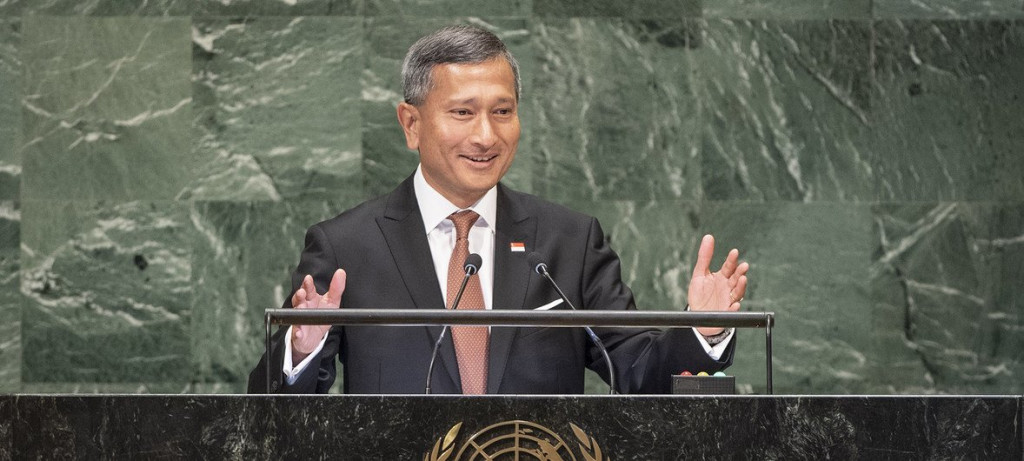
Singapore calls for UN reform

Foreign Minister Vivian Balakrishnan's Address to the UN Security Council.

“The United Nations is at a turning point. We need to reform multilateral and UN institutions to address current and future challenges, including the reform of this Security Council itself,” said Singapore's Minister of Foreign Affairs Vivian Balakrishnan at the open debate at UN Headquarters. “All permanent members should focus on the broader goal of ensuring international peace and security. However, the rising trend of veto exercise suggests that we cannot leave it to the five permanent members to voluntarily change their behavior. The UN as a whole must agree on how the veto should be exercised in the future, and Singapore is ready to discuss this further at the General Assembly. The approach is not to encroach on the mandate of the Council, but to avoid actions that prevent this Council from fulfilling its mandate,” he added. The reference is probably to the cross vetoes placed on some resolutions regarding the war in Ukraine and ii bombing of Gaza. “The role of the elected members of the Security Council needs to be strengthened,” Balakrishnan said. “We saw how the 10 elected members bridged the gaps when the permanent five were instead mired in mutual distrust and paralysis. Given the powerful bridging role of the elected 10, the elected members should have more say in the decision-making process, and they should be empowered to lead or read key issues together, particularly with regard to their respective regions. The Security Council also needs to do more to prevent conflict. It should work more closely and effectively with the other main organs of the UN to facilitate early warning and response. Article 99 of the U.N. Charter, which allows the Secretary-General to bring to the attention any issue that in his opinion may threaten the maintenance of peace and security, is in fact a powerful tool of preventive diplomacy. I am pleased that the Pact for the Future made reference to it. However, this Council needs to react more quickly with a concrete response when the Secretary-General invokes Article 99, particularly for humanitarian disasters and mass atrocities,” concluded Singapore's Foreign Minister.

What to expect from the ASEAN summit in Laos.

The annual summit of Southeast Asian countries kicks off. Here are what's on the agenda at the six-day event in Vientiane

By Emanuele Ballestracci

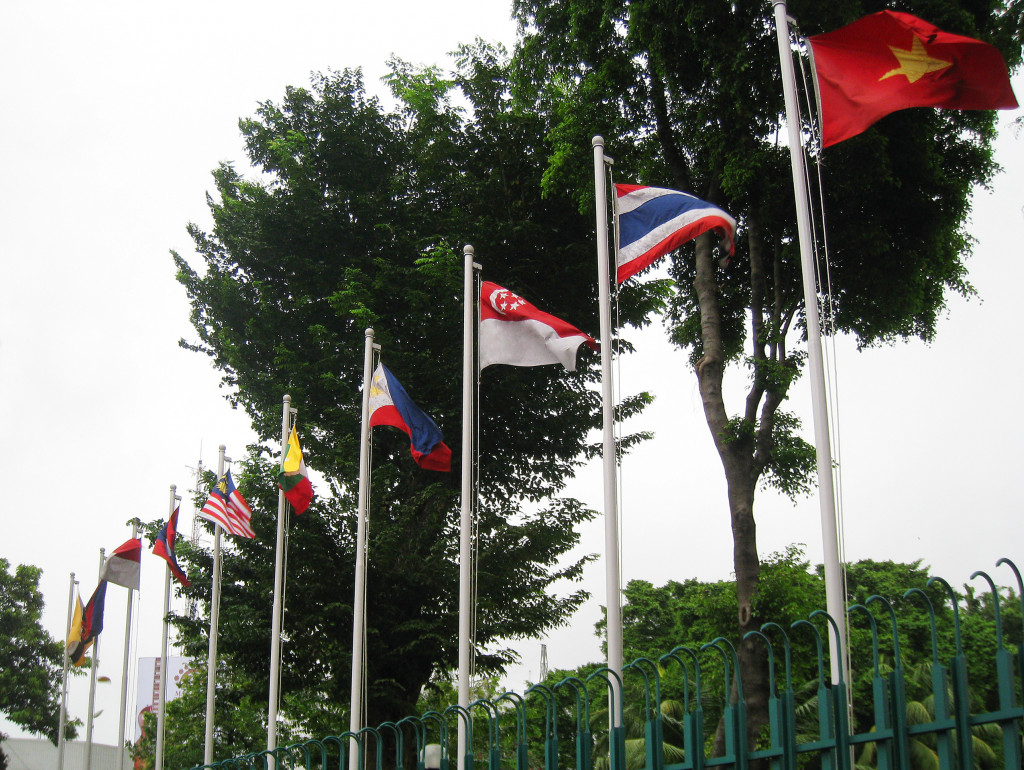
Between Oct. 6 and 11, Vientiane will host the 44th summit of ASEAN countries and the most important political event of the year for the Southeast Asian region. There are many thorny dossiers that will need to be addressed, chief among them the civil war in Myanmar and tensions in the South China Sea, and there will be no shortage of high-level meetings with representatives of key partner countries.

The chairmanship of ASEAN rotates annually, and in 2024, for the third time in its history, it fell to the Lao People's Democratic Republic. Already in July this year, a meeting of the foreign ministers of the member countries was held, where the bloc's difficulty in dealing with the two most sensitive foreign policy issues emerged. Indeed, the slow implementation of the five-point peace plan for resolving the civil war in Myanmar and the military junta's feeble willingness for dialogue has caused quite a few disagreements among ASEAN members. Indeed, Malaysia, Thailand, Indonesia and Singapore are pushing for a stronger stance by the bloc to resolve the conflict while others, including Laos and Vietnam, prefer a less invasive approach. The handling of tensions in the South China Sea between China and, first and foremost, the Philippines and Vietnam have also been divisive. Indeed, Manila and Hanoi are calling for tougher responses toward Beijing while other members prefer not to risk escalating tensions given China's preponderant economic presence in the region. 

Vientiane's chosen theme for its chairmanship is “ASEAN: Enhancing Connectivity and Resilience” and will be developed based on three pillars: promoting infrastructure connectivity; reducing the development gap; and promoting greater economic integration and human mobility. Already during the summit of the Economic Ministers of ASEAN countries held in mid-September, the importance of responding to global and regional challenges through greater unity and cooperation was enunciated, concretely realizing the slogan “enhancing connectivity and resilience.” The focus on these issues reflects the national interests of Vientiane, which, being landlocked, needs greater regional connectivity to move from being “land-locked” to “land-linked.” Already during the previous two presidencies, Laos had placed a focus on similar issues. In fact, the “Vientiane Action Program” and the “Vientiane Declarations,” which resulted from the 2004 and 2016 summits, had strengthening infrastructure and regional integration as pivotal elements. 

Two other more distinctly foreign policy issues were placed at the center of the proceedings: strengthening ASEAN's relations with external partners and maintaining the organization's centrality in the evolving regional order. Indeed, the October summit will be peppered with numerous meetings with representatives of other global powers, which were already preceded between mid- and late September by as many consultations and preliminary meetings. Indeed, bilateral summits are on the agenda with all major regional players (starting with China, India, Australia, Japan) as well as the European Union and the United States. Particularly relevant will be meetings with Beijing representatives, given China's importance in infrastructure investment, development finance and because of territorial disputes in the South China Sea. 

The 19th East Asia Summit (EAS), the annual forum of East Asian leaders focused on regional cooperation and strategic dialogue on security, political and economic issues, will also be conducted in parallel. In addition to the ASEAN countries, China, the United States, Russia, India, South Korea, New Zealand, Japan and Australia are members. 

Finally, East Timor's process of joining ASEAN as a full member will be discussed. The small island state gained official observer status in 2022 at the conclusion of the 41st ASEAN summit and approval “in principle” to become a member. In the following two summits, the roadmap for full membership was established, and East Timor has since made significant efforts to fulfill the criteria imposed. Nevertheless, achieving these goals will require cooperation with current members and dissolving the reservations of Singapore and Myanmar, still cool about its membership. The 44th ASEAN summit will thus be a golden opportunity for East Timor to gain the consensus needed to become its 11th full member.

ASEAN's Role Under Laos' Leadership

Toward the Oct. 6-11 summit in Vientiane. A key element of the Lao strategy is the ambition to transform from a “landlocked” to a “land-connected” nation. This goal includes enhancing transportation and digital infrastructure 

By Luca Menghini

In 2024, Laos assumed the presidency of ASEAN with the theme "Strengthening Connectivity and Resilience" during a crucial period to address and resolve growing geopolitical and economic challenges. Laos has previously held the ASEAN presidency twice, in 2004 and 2016, but this time it is facing increasing pressures. Connectivity has long been a strategic goal of ASEAN, and under Laos' leadership, the focus will be on strengthening regional ties and building greater resilience in the face of emerging threats.

The ASEAN Master Plan on Connectivity (MPAC) 2025 is crucial to regional integration efforts, focusing on sustainable infrastructure, digital transformation, and people-to-people connections. These objectives are vital not only for economic growth but also for social and political cohesion. Laos will promote deeper regional integration, sustainable development, and the reduction of development gaps between ASEAN nations.

A key element of Laos' strategy is the ambition to transform from a "landlocked nation" to a "land-linked nation." This goal involves enhancing transportation and digital infrastructure, making Laos a strategic hub for trade and investment within ASEAN. This transformation is essential for strengthening regional cooperation and consolidating supply chains, especially as Southeast Asia recovers from the economic consequences of the Covid-19 pandemic.

ASEAN's resilience in the face of global and regional challenges is equally crucial. The region must tackle climate change, natural disasters, cybersecurity threats, and economic uncertainty. Laos' presidency aims to promote regional stability by building robust infrastructure and developing partnerships with external powers such as the United Kingdom and the European Union to improve disaster response, energy security, and sustainable development.

Another key objective of Laos' leadership is promoting inclusion, particularly for women and marginalized communities. The aim is to ensure that all groups can benefit from ASEAN's growth, addressing the needs of vulnerable populations, especially in remote areas. Through these initiatives, Laos seeks to foster greater equity and sustainability of livelihoods across the region.

Digital transformation will be a key area of focus. As ASEAN moves towards building a digital economy, Laos will prioritize digital innovation and infrastructure. This includes cooperation on cybersecurity, data governance, and trade digitalization. The ASEAN Digital Masterplan 2025 sets ambitious goals, and Laos' leadership will be critical in promoting digital literacy and infrastructure development, especially in less developed areas. Strong digital connectivity will drive economic growth and improve access to education, healthcare, and government services.

Energy connectivity is another vital element of the ASEAN 2024 agenda. With growing energy demand and the transition to a low-carbon economy, Laos will play a central role in strengthening regional energy cooperation. The ASEAN Power Grid, aimed at improving energy security and integrating renewable energy sources, will be a priority. Events such as the Energy Business Forum and the ASEAN International Conference on Energy and Environment in 2024 will provide a platform to address issues of energy security, climate action, and the sustainability of energy infrastructure.

In addition to its role as ASEAN's rotating president, Laos will promote its campaign to boost tourism and investment, called "Visit Laos Year 2024." By showcasing its cultural and natural heritage, Laos aims to attract 4.6 million visitors, positioning itself as a key player in the region's tourism sector. This goal aligns with ASEAN's broader aim of strengthening cultural connectivity and people-to-people ties, essential elements for building a regional identity.

Laos faces a complex geopolitical landscape as it takes on the presidency. Geopolitical tensions, particularly in the South China Sea, pose a challenge to ASEAN unity. Laos, with its tradition of maintaining neutrality and mediating between major powers, will need to balance the interests of China, the United States, and other external actors while ensuring ASEAN remains cohesive. This delicate diplomatic balance will be crucial, especially as ASEAN grapples with maritime security issues and relations with major powers.

Looking ahead, the success of Laos' presidency will depend on its ability to implement ASEAN's post-2025 agenda. This agenda focuses on building a dynamic, inclusive, and people-centered community, requiring coordination across all sectors. By promoting infrastructural development, social inclusion, digital transformation, and energy cooperation, Laos has the opportunity to lay the foundation for a more interconnected and resilient ASEAN. Its success will depend on the region's ability to adapt, innovate, and strengthen both external and internal ties.

Recently active members
Foto del profilo di Alessio
Foto del profilo di Monika
Foto del profilo di Gabriel
Foto del profilo di Elena
Foto del profilo di Lorenzo
Foto del profilo di Alessandro
Foto del profilo di Cristina
Foto del profilo di Rocco
Foto del profilo di Clara Lomonaco
Foto del profilo di Redazione
Foto del profilo di Davide Gugliuzza
Foto del profilo di Anna Affranio
Foto del profilo di Ilaria Canali
Foto del profilo di Nicolò
Foto del profilo di Angelo Cangero
Who is online
There are no users currently online
Members
  • Foto del profilo di Alessio
    Active 4 ore, 30 minuti fa
  • Foto del profilo di Monika
    Active 3 giorni, 12 ore fa
  • Foto del profilo di Gabriel
    Active 3 settimane, 4 giorni fa
  • Foto del profilo di Elena
    Active 1 anno, 4 mesi fa
  • Foto del profilo di Lorenzo
    Active 2 years, 6 mesi fa