La strategia della Malesia nel mercato dei chip

Kuala Lumpur ha presentato una nuova strategia nazionale per i semiconduttori con la quale intende acquisire un ruolo più strategico all’interno della catena di approvvigionamento globale

By Alessia Caruso

Negli ultimi anni, il mercato dei semiconduttori è stato sottoposto a pressioni significative, che hanno spinto le aziende leader del settore a decentralizzare e diversificare le loro operazioni. Questo contesto ha stimolato un crescente interesse tra le nazioni del Sud-Est asiatico, che vedono nel decoupling un’opportunità per assumere un ruolo di primo piano in una delle catene produttive più strategiche e tecnologicamente avanzate del mondo.

Tra queste nazioni, la Malesia si distingue per la sua lunga esperienza nel settore. Già negli anni ’70, era sede di 14 aziende di semiconduttori, attirando investimenti da leader del settore come Intel e Infineon. Recentemente, il Paese ha deciso di rafforzare il suo ruolo competitivo. Il 28 maggio 2024, il Primo Ministro malese Anwar ha annunciato la Strategia Nazionale per i Semiconduttori (NSS), mirata ad espandere e riposizionare la Malesia nella catena produttiva globale dei microchip.

Il piano prevede di attrarre 107 miliardi di dollari in investimenti per l’industria nazionale dei semiconduttori, offrendo 5 miliardi di dollari in incentivi fiscali per gli investimenti esteri, creando 20 aziende locali per il design e il packaging avanzato di chip, e avviando un programma di formazione per 60.000 ingegneri malesi. Questa strategia intende rafforzare in modo strutturato e consistente il ruolo della Malesia nella catena di approvvigionamento globale, con una prospettiva di crescita annuale dell’11,41% entro il 2029.

Due elementi della strategia sono particolarmente degni di attenzione. Il primo riguarda il tentativo di riposizionamento lungo la catena di approvvigionamento. Attualmente, la Malesia rappresenta il 13% del mercato globale di test e packaging dei semiconduttori, fasi produttive che richiedono tecnologie non particolarmente avanzate e facilmente trasferibili. L’obiettivo del Primo Ministro malese è spostarsi verso fasi produttive più tecnologiche, occupando un ruolo più strategico. Il secondo elemento da attenzionare è il tentativo di posizionarsi come hub neutrale. In occasione del lancio della NSS, Anwar ha affermato che intende “offrire la nazione come il posto più neutrale e non allineato per la produzione di semiconduttori, contribuendo alla costruzione di una catena di approvvigionamento più sicura e resiliente”.

Quest’ultima considerazione è particolarmente rilevante se inserita nel contesto geopolitico attuale. Tre dinamiche principali hanno caratterizzato questo settore negli ultimi anni: le crescenti tensioni fra Stati Uniti e Cina, le tensioni fra Cina e Taiwan, e gli impatti della pandemia di COVID-19. La competizione tecnologica tra Stati Uniti e Cina ha portato a restrizioni commerciali e politiche protezionistiche. In seguito alle sanzioni imposte dagli Stati Uniti su alcune aziende cinesi, le imprese statunitensi sono state spinte a cercare alternative per le loro catene di approvvigionamento, aumentando così l’interesse verso i produttori di semiconduttori in altre regioni, inclusa la Malesia. In secondo luogo, le crescenti tensioni tra Cina e Taiwan hanno spinto le aziende globali a diversificare le loro fonti di semiconduttori. Taiwan è infatti un attore chiave nel mercato globale dei semiconduttori, con aziende come TSMC che dominano la produzione di chip avanzati. Infine, la pandemia ha evidenziato le vulnerabilità nelle catene di approvvigionamento globali, causando interruzioni significative nella produzione e nella distribuzione di chip. In risposta, molte aziende hanno cercato di ridurre la dipendenza da singoli punti di produzione, spostando parte della loro produzione in regioni con infrastrutture adeguate e politiche di supporto.

La strategia malese si inserisce in questo contesto. L’obiettivo è quello di cogliere le opportunità di attrarre capitali di aziende alla ricerca di un hub tecnologico stabile, lontano dalle tensioni regionali.

Tuttavia, le sfide che si pongono di fronte alla Strategia Nazionale per i Semiconduttori sono diverse. Molti paesi del Sud-Est asiatico hanno infatti riconosciuto le opportunità offerte dal mercato dei semiconduttori. Paesi come Vietnam, Cambogia e Thailandia stanno investendo in questo settore. Tuttavia, la Malesia ha una lunga storia nell’industria, che le dà un vantaggio competitivo significativo. Inoltre, nonostante rappresenti uno dei maggiori esportatori di chip verso gli Stati Uniti, nel 2023 il volume di export è diminuito del 20%. Contrariamente, essa rappresenta l’esportatore di chip più in rapida espansione in Cina, nonché il primo Paese ASEAN. Il rischio è che la Malesia possa rimanere intrappolata nelle dinamiche competitive dell’area, diventando un punto di riferimento solo per uno dei due contendenti. La Malesia ha anche una significativa carenza di capitale umano qualificato, che rappresenta una sfida significativa, soprattutto considerando che il mercato dei semiconduttori è caratterizzato da competenze altamente settoriali e a rapida obsolescenza. La NSS intende proprio affrontare questo problema.

In definitiva, il mercato dei semiconduttori malese oggi si trova di fronte a grandi opportunità che lo Stato intende sfruttare. Se riuscirà a gestire la competizione regionale e posizionarsi come un hub centrale e neutrale, la sua esperienza nell’industria, unita alla sensibilità del governo nel rafforzare le debolezze strutturali, potrà rendere la Malesia un grande hub mondiale per il mercato dei semiconduttori.
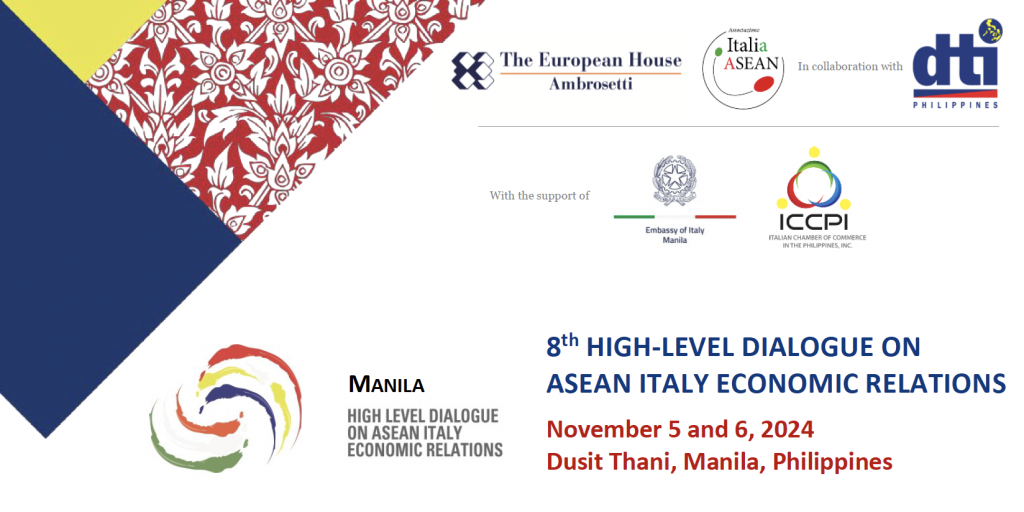
Italy-ASEAN: in Manila the eighth High Level Dialogue

Back in November is the High Level Dialogue on ASEAN Italy Economic Relations, the initiative that The European House - Ambrosetti and the Associazione Italia ASEAN have been implementing since 2016

Di Lorenzo Tavazzi, The European House – Ambrosetti

The landmark event for bilateral relations between Italy and ASEAN countries is back: the High Level Dialogue on ASEAN Italy Economic Relations, the initiative that The European House - Ambrosetti and the Associazione Italia ASEAN have been carrying out since 2016 and this year reaches its eighth edition.

Each year the High Level Dialogue is hosted by an ASEAN country: this year it will take place in Manila, Philippines, at the Dusit Thani Hotel, on Tuesday, November 5 and Wednesday, November 6, 2024, with the support of the Philippine government, through the Department of Trade and Industry (DTI), as co-organizer of the event.

The Dialogue, since its first edition in 2017 in Indonesia, and subsequent editions in Singapore, Vietnam, Malaysia, and Thailand, along with two digital editions in 2020 and 2021, has brought together more than 3,500 presidents, CEOs, and government and institutional leaders from ASEAN countries and Italy. The 2023 edition alone, held in Bangkok, was attended by more than 450 high-profile delegates.

This year's Dialogue will address a number of priority issues for the development of Italy-ASEAN relations with a dual character in partnership opportunities between Italian companies and their counterparts in Southeast Asia. These include: the supply chain of critical raw materials for the strategic sectors of the future, artificial intelligence and digital innovation, the role of the blue economy for economic cooperation, the evolution of the creative industry, opportunities for technological and industrial collaborations in space, defense and high-tech manufacturing, financing and services to support the development of sustainable businesses and infrastructure. 

Within this framework, the specificities and opportunities offered by the Philippines, with which Italy celebrated 75 years of bilateral relations in 2022, will also be explored.

Participation in the High Level Dialogue is free and by invitation only. 

To register for the event: Registration

To get more information about previous editions of the event: High Level Dialogue website

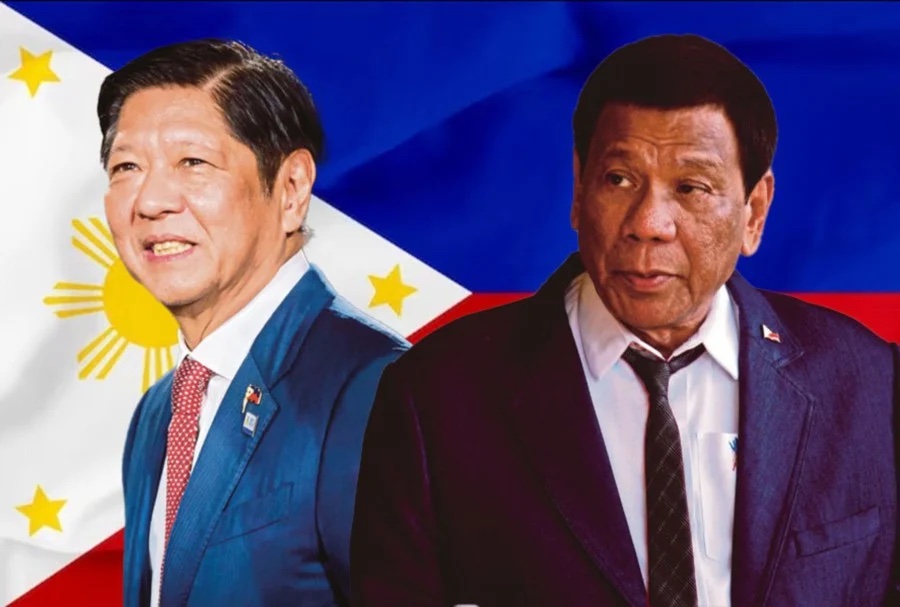
Philippines, friction in Marcos-Duterte alliance

Vice President Sara Duterte's resignation from her role as Secretary of Education revives the political challenge between the two families of Manila politics

By Francesco Mattogno

As the world looked to the South China Sea, an important thing happened in Philippine politics last week: Sara Duterte resigned as Education Secretary, thus leaving the government of President Ferdinand Marcos Jr. Duterte is the country's vice president and the daughter of Rodrigo Duterte, Marcos' predecessor. Political dynasties in the Philippines (as well as throughout Southeast Asia) are serious business, and the Marcos and Duterte families are two of the most prominent in the state. The former rooted in Ilocos Norte province in the north, the latter in Davao in the south.

Sara Duterte and Marcos have allied themselves ahead of the May 2022 elections within the so-called "Uniteam," supporting each other in their quest for the country's vice presidency and presidency, respectively. It should be pointed out that unlike in other places, such as Taiwan or the United States, in the Philippines the presidential and vice presidential candidates do not formally run together. Two separate elections are held and this means, as has happened several times throughout history, that a vice president may not even be part of the president's coalition. Marcos and Duterte did well, at least on paper: they were allies and each won his race.

The election of both should have paved the way for a united, solid government, but it was clear from the beginning that this would not be the case. The first cracks in the relationship between the two came as early as the appointment of the government team. Duterte wanted the sensitive post of secretary of Defense, but Marcos granted her only that of secretary of Education. A less politically relevant role and one for which, by the way, the vice president was not remotely qualified.

In May 2023, Duterte then left Lakas-CMD, the party led by House Speaker and Marcos' cousin Martin Romualdez. The decision came in the wake of the demotion of one of Duterte's key allies (former President Gloria Macapagal-Arroyo), and was only the first act in the feud with Romualdez. A few months later, following a parliamentary investigation, the speaker of the House blocked the allocation of "reserved funds" to be allocated to the Department of Education, accusing Duterte of spending 125 million pesos (about 2 million euros) in only the first 11 days of his term. A massive amount and deemed unjustified.

With the arrival of 2024, relations definitely fell apart. Duterte never commented, except by belittling them, on his brother Sebastian and father Rodrigo's attacks on Marcos (even accused of being a "drug addict"). The parties clashed on various other issues, and finally Duterte, after declaring Uniteam dead, resigned on June 19 as both Secretary of Education and Vice Chair of the Task Force to Counter Communist Armed Conflict.

Her resignation was welcomed by teachers' associations, which had been complaining about Duterte's total unpreparedness for two years. The vice president was also accused of never considering the demands of sector workers and silencing critics with the practice of "red-tagging" (which we discussed here). Despite this, according to a December 2023 poll, 57 percent of Filipinos were satisfied with his job in government. Duterte is a popular figure, with a strong family and dozens of allies behind him, both in politics and in the military. His open opposition to Marcos opens up a number of scenarios that could radically change the country's future.

As John Ney pointed out in Rappler, Duterte will now put all his eggs in the 2028 elections (to which Marcos cannot run again, given the one-term limit). Her resignation has freed her from her governing responsibilities, and this will help her make Filipinos forget about her poor handling of the Education sector, while also allowing her to freely criticize Marcos's policies, especially on the South China Sea and the fight against communism (Duterte is opposed to peace talks with the rebels).

While coming out of the closet so soon is a risk, it is a calculated risk, at least in theory. Duterte resigned with 100 days to go before the deadline for filing candidacies for the 2025 midterm elections, which she will need to test the ground ahead of 2028.

A major realignment of the country's political parties is expected, with possible numerous defections from the Marcos camp, whose popularity has been declining since last year. Already there are those who are talking about Duterte as the leader of the opposition, although the main minority party, the Liberal Party, has made it clear that the values of Davao's ruling family do not match those of those who challenge the current government's actions. For now, however, there has not been the big political shock that might have been expected. The breakup between the president and his deputy had been in the air for some time, and the clear political intent of his resignation did nothing to warm the spirits of his supporters.

However, that of last June 19 remains a very important development. First for the opposition front, which could exploit the vote split between Marcos and Duterte to gain more seats as early as 2025 and strengthen its position ahead of 2028. Then for what may be the consequences in foreign policy, particularly in the South China Sea. Duterte shares his father's more dialogical stance with China and is likely, if elected, to weaken defense ties with the United States, which Marcos has instead brought to all-time highs.

Thailand and Malaysia towards joining BRICS

We publish here an excerpt from an article by Maria Siow published in the South China Morning Post

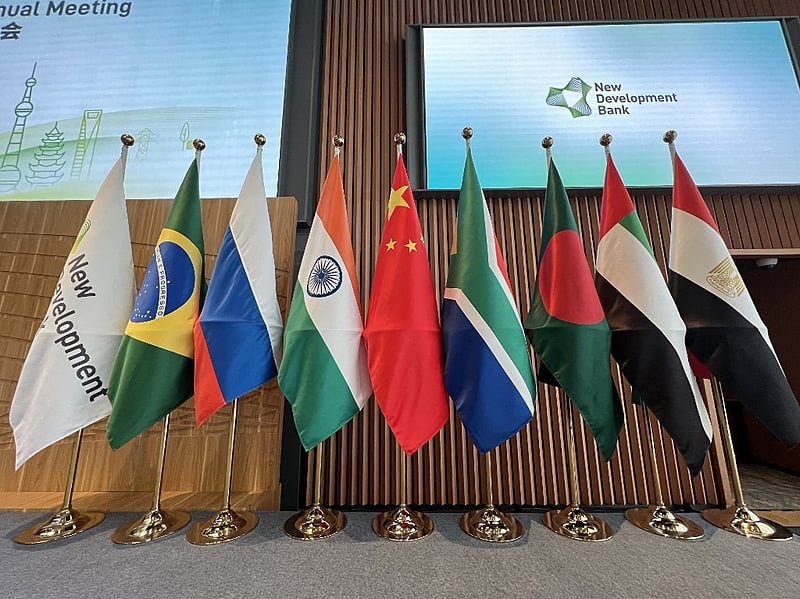
The prospect of Southeast Asian countries joining BRICS has sparked heated debate among analysts: supporters argue that membership could unlock lucrative trade and geopolitical opportunities, while skeptics warn that it risks dragging the countries into the orbit of China and Russia and further eroding regional unity. Thailand and Malaysia have announced in recent weeks that they will apply to join the platform, following in the footsteps of Laos and Myanmar, which declared their interest last year. Contrary to fears that BRICS membership will erode ASEAN's unity and centrality, several Asian analysts believe the Association has the flexibility and resilience to maintain its relevance to member states. Many ASEAN members also belong to other organizations such as the Organization of Islamic Cooperation, the Indian Ocean Association and the Asia-Pacific Economic Cooperation forum. Other multilateral institutions to which Asean members already belong are the Asian Development Bank, the World Bank, the International Monetary Fund and the Asian Infrastructure Investment Bank. "BRICS membership will provide access to a new source of financing for the many development needs of countries in the Southeast Asian region," said Jayant Menon, senior fellow at the ISEAS-Yusof Ishak Institute in Singapore, referring to the New Development Bank established in 2015 by the BRICS countries. Indonesia and Vietnam also said they are considering the benefits of BRICS membership. Joining the group of emerging economies could provide better access to lucrative markets, increased foreign investment, and opportunities for collaboration on infrastructure projects. BRICS membership can also be seen as a strategic move to diversify economic partnerships and reduce dependence on Western-led financial institutions. The move, if managed effectively, could strengthen Southeast Asia's voice and influence in global affairs. Indonesia also aims to join the OECD within three years, as reiterated by the country's coordinating economy minister in May after the organization's secretary-general visited Jakarta and met with President Joko Widodo. According to OECD projections, Indonesia's gross domestic product will reach $10.5 trillion by 2050, making it one of the largest economies along with China, the United States and India.

VinFast's ambitious mission

The first all-Vietnamese automaker has big plans for the future. The competition is strong and there are many obstacles to overcome, but the company has been included by TIME among the most influential in the world

By Francesco Mattogno

Few even among Formula 1 fans remember the Hanoi circuit. Not because of the characteristics of the track, with a questionable layout, but because the Vietnam Grand Prix only existed on paper, or in the virtual world. The race, which should have debuted in 2020, was first postponed for a year due to the Covid pandemic and finally permanently removed from the Formula 1 calendar, despite a ten-year contract signed in 2018 (a decision also influenced by the anti-corruption campaign that hit some of the event organizers). Today anyone who wants can "race" in the Hanoi circuit only on the Formula 1 2020 video game, in which it had been inserted beforehand.

It would have been the second Grand Prix of the category in South-East Asia (after that of Singapore), but also the first major showcase for VinFast, a Vietnamese car manufacturer part of the Vingroup conglomerate. The announcement with great fanfare and the subsequent cancellation of the race, for which Vingroup would have been the main sponsor, fit perfectly into the path of ups and downs that has characterized the short history of VinFast up to now. The company was founded in 2017 by will of Pham Nhat Vuong, president, major shareholder and founder in 2002 of Vingroup itself, which within twenty years has become the largest private Vietnamese company thanks to the activities of its subsidiaries, operating mainly in real estate, technology and services sectors.

Vingroup's great growth has made Vuong the first billionaire in Vietnam's history and consequently one of the country's most prominent public figures, who is also believed to be very close to the leadership of the ruling Communist Party. A position of strength that pushed Vuong to invest in a hypercompetitive sector such as the automotive one, with the idea of ​​making VinFast a brand specialized in the production of electric vehicles. And also making it a matter of national pride.

Vingroup's plan was to make VinFast the first all-Vietnamese automaker, as the industry's other major brand, Truong Hai Auto Corporation (THACO), makes vehicles for large foreign companies such as BMW, Hyundai and Kia. It is no coincidence that the inauguration ceremony of the Haiphong production plant, still today the only VinFast factory in Vietnam, was organized on 2 September 2017, on the 72nd anniversary of the declaration of independence from France pronounced by Ho Chi Minh in 1945 .

VinFast started shipping its first cars to Vietnam in June 2019, two years after its founding, but only entered the electric vehicle market in 2022 (at first it mainly produced cars with combustion engines). 2022 is also the year in which Vuong kicked off the company's international expansion plan, which began to focus entirely on electric. Vingroup first signed a preliminary agreement worth two billion dollars with the US county of Chatham (North Carolina) for the construction of the first VinFast factory abroad, then it agreed with Intel to jointly develop technologies for autonomous driving of vehicles.

Also in 2022, another subsidiary of the conglomerate, VinES Energy Solution, started construction of an electric car battery factory together with China's Gotion High-Tech, in Vietnam's Ha Tinh province. VinES then merged with VinFast the following year. Vingroup's large investments laid the foundations for VinFast's stock market listing in the United States, on the Nasdaq, but they also hid a certain frenzy on the part of the group to make the company truly competitive in the electric sector.

In 2023 the company sold 34,855 electric cars, a figure much higher than that of 2022 (7,400) but still lower than the target of 50 thousand deliveries set by the company, which just last year began shipping cars, scooters and electric buses also outside Vietnam. Beyond the net losses, which in 2023 reached 2.39 billion dollars (+14.7% compared to 2022), what is especially worrying are the details. If it is true that VinFast delivered around 35 thousand vehicles in 2023, more than 72% of these were "sold" to Green and Smart Mobility (GSM), a subsidiary taxi company of Vingroup.

In the first days, VinFast's capitalization was the third highest among global car brands, behind only Tesla and Toyota, but as time passed the value of the Vietnamese company's shares collapsed by more than 95% compared to its peak initial. Analysts have spoken of a "meme title", inflated by the great interest aroused in it by the international media and social networks. On the other hand, even today the brand, despite the many negative reviews on its products, enjoys good press: for example, TIME has included VinFast in the list of the 100 most influential companies of 2024.

In recent months the Vietnamese company has found itself forced to withdraw hundreds of cars already delivered due to safety problems (such as faulty airbags) or the poor quality of components, as well as facing various legal disputes. In the United States, an investigation has been launched to ascertain the cause of the death of four people, including two children, due to the VF 8 they were traveling in crashing into a tree. The car, which also caught fire, may have had problems with its autonomous driving system. VinFast was then sued by AncelorMittal for the theft of intellectual property regarding some steel components used in its vehicles, while in April several investors sued the company, accusing it of artificially inflating the value of its shares on the Nasdaq.

Vista la situazione complicata, a gennaio Vuong ha preso le redini del progetto auto-nominandosi amministratore delegato dell’azienda, e diventando così il quarto CEO di VinFast negli ultimi tre anni. Nonostante i tanti intoppi, che avrebbero potuto suggerire un ridimensionamento di VinFast, Vingroup sembra invece intenzionata ad aumentare progressivamente obiettivi e investimenti. La casa ha dichiarato di voler arrivare a vendere 100 mila veicoli elettrici nel 2024, fissando poi una soglia di 750 mila consegne annuali entro il 2026.

To do this, in addition to large injections of liquidity (Vingroup and Vuong have invested more than 11 billion dollars in VinFast since 2017), the company has said it intends to expand into at least 50 international markets by the end of the year. In just a few months, VinFast has opened various offices in Europe and signed agreements for the sale of its cars in Ghana, Thailand, Micronesia and the Philippines, while it is strengthening its charging station infrastructure and planning the construction of two more production plants, in India and Indonesia, which would be added to that in the United States.

“VinFast is entering a highly competitive electric vehicle market, against established legacy brands and in the midst of a price war,” analyst Chris Robinson told the Nikkei. And this could be his biggest obstacle.

Friends of all, enlisted by none

Vladimir Putin's recent visit was not a choice for Vietnam, but a necessity for its diplomatic line

Editorial by Lorenzo Lamperti

There is often an "exclusive" view of diplomatic relations in the West. Almost as if maintaining or pursuing better relations with one or the other relationship means making a field choice. A black-and-white view that does not help to understand the perspective of many emerging countries, the so-called "Global South." And particularly Southeast Asia, a region that is the litmus test of the desire for multipolarity and multilateralism. A desire rooted deep in ASEAN's approach and reflected, while maintaining different traits and specificities, in its member states. The one who perhaps most embodies this posture is Vietnam, with its "bamboo diplomacy." The idea behind it: be a friend to all, enemy to none. Just like the bamboos, Vietnam believes that with this approach it can grow flexibly but firmly. A belief that has proven correct so far. Hanoi has managed to maintain close political-defensive ties with Russia and economic ties with China. But it has also successfully pursued a path of deepening relations with other Asian neighbors and with the West. Over the course of a few years, Vietnam has elevated bilateral relations with Japan, South Korea, Australia and the Philippines. But it has also signed two important free trade agreements with the European Union and the United Kingdom. Not only that. During its chairmanship of ASEAN, the RCEP, a trade agreement that brings together most of the Asia-Pacific countries, was also signed. When Joe Biden headlined a historic visit to the Vietnamese capital last September, Hanoi also took the partnership with its old rival to the highest level. Further deepening the already thriving trade relationship-Vietnam is increasingly a regional epicenter of investment and a global manufacturing hub. A process that in recent times increasingly involves major international tech giants. All this, however, does not mean that Hanoi has made or is willing to make a field choice. The U.S. president's visit was not a prelude to "enlisting" Vietnam in an anti-Russian or anti-Chinese perspective, as some may have thought given the criticism of Vladimir Putin's recent trip to the country. For Vietnam, receiving the Russian president was not a choice but a necessity to continue to protect its international relations, providing some reassurance to the historic partner after the two steps in the direction of Washington. Relations with Moscow, however, have not prevented the Vietnamese government from showing closeness to Ukraine as well. In the past two years, the PM has met twice with Ukrainian President Volodymyr Zelensky, and Hanoi has also sent humanitarian aid to Kiev. All while trying as always to foster dialogue and political resolution of the conflict. 

Between the folds of the Funan Techo

Everything you need to know about the canal under construction in Cambodia. A key commercial infrastructure as well

By Francesco Mattogno

For the past couple of months in Cambodia, Vietnam, and a bit in all the states crossed by the Mekong River, there has been a lot of talk about a canal that does not yet exist, except on paper. Officially it is called the Tonle Bassac Navigation Road and Logistics System Project, but to everyone it is simply the "Funan Techo." In the Cambodian government's intentions, the canal will connect the port on the Mekong River in the capital Phnom Penh to the port in Kampot, a city overlooking the Gulf of Thailand (or Gulf of Siam), and thus the sea.

The Funan Techo will be 5.4 meters deep, 100 meters wide, 180 kilometers long, consist of two lanes, and its construction will be fully financed by China. Beijing will invest $1.7 billion on the project, entrusted to the state-owned China Road and Bridge Corporation (CRBC). A subsidiary of CRBC, China Harbour Engineering, has also entered into an agreement with a local developer to help build the Kampot Port (estimated to cost $1.5 billion), right where the Funan Techo will flow. Construction on the canal is expected to start by the end of 2024 and take a maximum of four years, Phnom Penh says.

The strong Chinese presence within the project is just one reason why it is being much discussed. The Funan Techo is designed to reduce Cambodia's logistical dependence on Vietnam, through which all Cambodian goods transported by ship on the Mekong for international trade are forced to pass. It is a matter of geography: the river, one of the largest and most important in the world, flows throughout Cambodia but before flowing into the sea it crosses Vietnamese territory for more than a hundred kilometers.

This condition gives Vietnam some political and economic leverage over Cambodia, whose companies are forced to bear high transportation costs (with consequences for the competitiveness of its exports) and live with the perennial risk of a naval blockade. It has already happened 30 years ago, in 1994, when at a time of high tension between the two countries Hanoi decided to stop Cambodian boats from sailing along the Vietnamese section of the Mekong for months. Today, relations between Cambodia and Vietnam are good, but although in 2009 the two neighbors also signed a treaty for freedom of navigation on the river, Phnom Penh has never stopped looking for an alternative. And here it is.

It is not just a matter of economic security. The Funan Techo is also a vehicle to foment nationalism and legitimize the new course of Prime Minister Hun Manet, who in August replaced his father Hun Sen, who remained in power for 38 years. This is evidenced by the very name given to the channel. "Funan" recalls the ancient Funan Kingdom (born in the first centuries A.D.), which is believed to be a precursor to the Khmer Empire, while "Techo" is a term that is part of Hun Sen's honorary title. According to Cambodian analyst Chhengpor Aun, with the construction of the canal Phnom Penh will try to symbolically restore the loss of the Mekong Delta, which France formally handed over to Vietnam in 1949 during its colonial rule.

For weeks the Cambodian government has continued to list the benefits of building the canal, which will "facilitate irrigation of the land" and result in the creation of "10,000 jobs." Phnom Penh estimates that costs for shipping goods will be reduced by 30 percent, and shipments will be more agile and faster. However, it is too early to say how much these projections will be reflected in reality. As several experts have pointed out, for example, the depth of the canal will not allow too heavy cargo to be transported, and this means that many products will equally have to pass through Vietnam (which, in any case, immediately complained about the project). 

Beyond the economic issues of whether or not it is convenient for Cambodia to build it, the Funan Techo presents environmental issues. The fear is that the canal, with its very high embankments, will impede natural flooding of the plains surrounding the Mekong (crucial for the agricultural sector), alter the water flows of other tributaries, and increase the salinity of soils. Phnom Penh has pledged to conduct all relevant environmental impact assessments with "48 international experts."

Historic step: Thailand legalizes egalitarian marriage

Moment to remember for Bangkok, which approves legislation legalizing same-sex marriage

By Alice Freguglia

On June 18, 2024, rainbow flags will fly in Thailand, which has become the first Southeast Asian country ready to legalize same-sex marriage. A decisive step forward for LGBTQ+ rights, driven by strong ideals of equality and inclusion, promoted by the Pheu Thai Party and Prime Minister Srettha Thavisin himself. 130 out of 134, in fact, were the affirmative votes enunciated by the Senate, for which, now, the law will await the consent pronounced by King Maha Vajiralongkorn, considered, however, a mere formality. 

Although Thailand is celebrated for its vibrant LGBTQ+ culture and general tolerance, activists have long criticized the country's conservative attitudes and legal framework, especially with regard to the recognition of transgender and nonbinary people, who are still prevented from changing their gender on identification documents. Indeed, over the past decade, there have been several attempts by the government to legalize same-sex unions, epitomized in the last presidential election in 2023 with the victory of the Pheu Thai Party, which proposed the legalization of egalitarian marriages in its election manifesto, gaining support especially among younger voters.

Recently passed legislation redefines marriage as a union between two individuals, eliminating gender-specific terms such as "men," "women," "husbands," and "wives" in favor of gender-neutral language. As a result, this change gives LGBTQ+ couples the same legal rights as heterosexual couples, including inheritance and adoption rights. Plaifah Kyoka Shodladd himself, a member of the Parliamentary Committee on Same-Sex Marriage, expressed pride in the achievement, noting that "love has triumphed over prejudice" after decades of struggle.

Following the recent developments, Thailand joins Nepal and Taiwan as the only jurisdictions in Asia to have legalized same-sex marriage. Specifically, in that part of the world where rights in regard to LGBTQ+ people are often repressed, such as Southeast Asia, Thailand represents a source of change and inclusiveness. Indeed, in Myanmar and Brunei, same-sex relationships are still considered a punishable crime, while discrimination and hostility are recurrent in Indonesia and Malaysia. Chanatip Tatiyakaroonwong, Amnesty International's researcher in Thailand, described it as a historic step and a reward for the tireless efforts of activists, civil society organizations and supportive lawmakers. 

The new law promises to transform the lives of countless couples and promote a more just and equitable society. As Thailand celebrates this milestone, it also sets a precedent that could positively affect change throughout the region, proving that equality and love can indeed triumph over prejudice and discrimination.

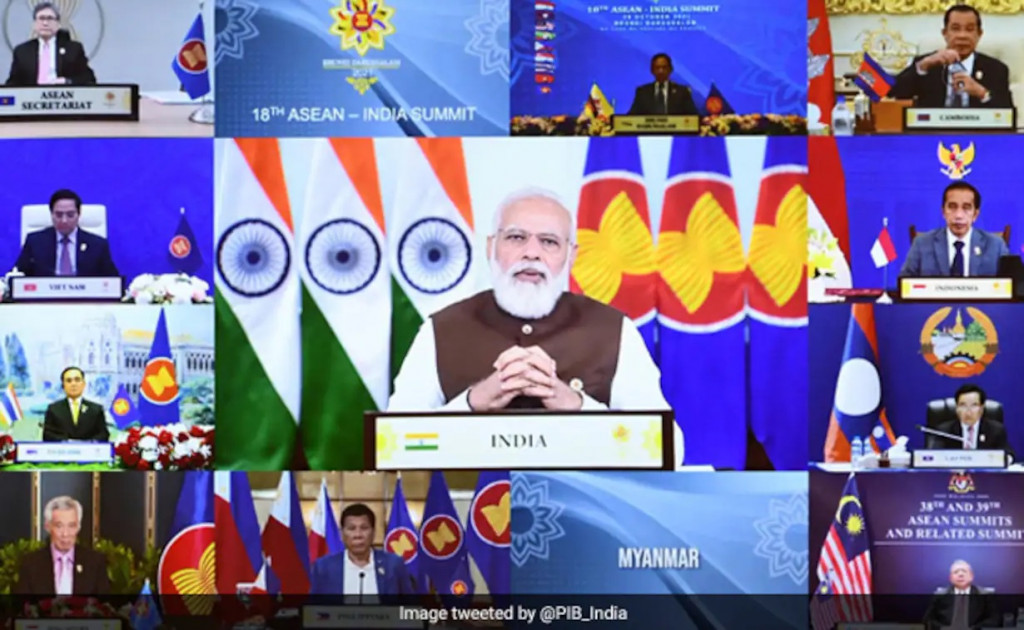
Modi wants India and ASEAN closer together

Among the Indian PM's third term goals is to strengthen relations with Southeast Asia

Can Narendra Modi's third term as prime minister bring India and ASEAN closer together? A commentary by Syed Munir Khasru, published in the South China Morning Post, wonders. India's "Act East" policy is poised for recalibration. New Delhi's economic and strategic engagement with Southeast Asia soared during its first two terms, albeit with some shortcomings that require course correction. Modi may now reinvigorate this key foreign policy as India seeks to establish a stronger presence in the Indo-Pacific. On the economic front, trade and investment ties with Southeast Asian countries have received a major boost, with annual bilateral trade soaring from about $80 billion in 2014 to more than $110 billion by 2021-22. However, the existing trade agreement with the Association of Southeast Asian Nations-the Asean-India Free Trade Area-is seen as strongly favoring the Asean side, frustrating India. India's exports to Southeast Asia increased moderately in FY2023 to $44 billion from $42.3 billion in the previous year. Meanwhile, imports from ASEAN countries increased at a faster pace, from $68 billion to $87.6 billion, resulting in a substantial trade deficit of $43.6 billion for India. The need to address the trade imbalance is even more urgent considering that in 2011 the trade deficit was only $5 billion. But the Modi government has not seized all opportunities for economic rapprochement with ASEAN countries due to reluctance to undertake market reforms and tariff liberalization. On the strategic front, India's efforts under the Act East policy helped bring seven Asean members into the Indo-Pacific Economic Framework, an initiative to strengthen economic cooperation between the two regions. Participation in these complementary Indo-Pacific strategies allows for greater coordination of respective interests in this strategically vital region. Initiatives involving connectivity, such as the $484 million Kaladan multimodal transport project linking India to Myanmar and the trilateral India-Myanmar-Thailand highway, are examples of what collaboration between ASEAN and India can achieve in this area.

Nuclear weapons in Asia: the ASEAN approach

Southeast Asian countries are the most active and willing to avoid nuclear weapons proliferation in the region

By Francesca Leva

At a United Nations speech delivered last March, the United Nations Secretary-General Antonio Guterres declared that the risk of a nuclear war is at “its highest point in decades” and that nuclear weapons are “growing in power, range, and stealth,” adding that “an accidental launch is one mistake, one miscalculation, one rash act away.”

Asia makes no exception: there, nuclear weapons had a profound influence on both public health and the environment, resulting in the displacement of people and hindering development, education, cultural preservation, and economic stability.

Nuclear weapons first arrived in Asia in 1945 with the tragic events in Hiroshima and Nagasaki. A few years later, the URSS also announced its nuclear weapons programs: during the Cold War, from 1950 to the 1990s, the MAD – “Mutual Assured Destruction” – phrase was used to describe the nuclear build-up phase between the US and the URSS. As a result, in 1957, the UN established the IAEA - International Atomic Energy Agency - recognizing the need for peaceful development of nuclear power. In 1968 the UN also adopted the NPT – Non-proliferation Treaty -, whereby only the five nuclear States of the time, the US, China, Russia, the UK, and France, were allowed to possess nuclear weapons, but would also agree to the peaceful application of nuclear technology and the reduction of their nuclear arsenals. However, several non-signatory countries of the NPT started to develop nuclear weapons on their own: among them India, Pakistan, and Israel. As a matter of fact, in 1988, India detonated three bombs close to the border with Pakistan, an action that was immediately followed by Islamabad’s nuclear tests.

What seems to be the pattern is that when a country develops a nuclear weapon, its threatened neighbors and enemies will also start nuclear testing, both for self-preservation and national pride. This dilemma poses a concrete threat to Asia, where China, Pakistan, India, North Korea, and the Russian Federation are all nuclear countries.

One of the main flashpoints in Asia is the so-called “nuclear triangle,” constituted by China, India, and Pakistan. In this case, the risk is ignited by regional competition, domestic situations and tech developments. The development of Pakistan’s full-spectrum deterrence has, in fact, led to India’s development of a preemptive counterforce nuclear system. This nuclear threat is further enhanced by US-China competition. While Beijing tries to match Washington’s nuclear capabilities, India is also incentivized to maximize its nuclear arsenal, shifting away from its traditional “no-first-use policy.” Pakistan's devolving domestic situation, as well as the increasing Pakistan–India competition, add to the risk of accidental use, inadvertent escalation, and nuclear brinkmanship. 

A further potential flashpoint is constituted by North Korea and South Korea; the risk is not only the one of a war between Seoul and Pyongyang but also the fact that both South Korea and Japan might feel pressed to develop their own nuclear arsenals. Finally, other possible tension areas are in the South-China Sea, where regional competition as well as national priorities collide.

In 1995, the ASEAN member States signed the Treaty of Southeast Asia Nuclear-Weapon-Free Zone - SEANWFZ, also known as the Bangkok Treaty – which was originally devised to reaffirm the importance of the NPT and to establish a nuclear weapons-free zone (NWFZ). There are currently five NWFZs in the world, and they all represent a regional approach to strengthening nuclear nonproliferation and disarmament. In the designated areas covered by the NWFZ treaties, it is explicitly prohibited to engage in activities related to the acquisition, possession, placement, testing, and utilization of nuclear weapons. Furthermore, the States that have ratified these treaties are actively working towards establishing legally binding agreements to ensure that nuclear-armed nations refrain from deploying nuclear weapons against any of the countries within these zones.

However, there has been growing preoccupation and skepticism among the NPT signatory countries, as the five NPT states have continued to develop their own nuclear arsenals; the NPT was unable to integrate non-signatory countries – especially India, Pakistan, and Israel – and it was also ineffective in bringing back North Korea. As a consequence, in 2017, the Treaty on the Prohibition of Nuclear Weapons (TPNW) was crafted to reinforce the NPT and signed by all ASEAN countries besides Singapore. Although the outcome of these measures remains uncertain, it is evident that the nuclear threat represents an unacceptable risk for Asian countries, especially considering the number, the density, and the proximity of urban and inhabited areas.

Queerness in Southeast Asian Cinema

Queer cinema in the region is vibrant and prolific, intersecting the representation of the Lgbtqia+ community with local traditions of sexual and gender fluidity

Article by Agnese Ranaldi

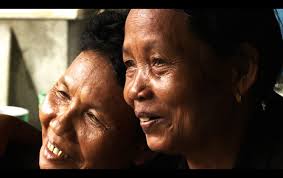
“Today I ask the village chief or the authority to recognize me. Even though I am a lesbian, I also have a heart. I love all the Khmer people. I claim my rights not to be discriminated against, and this also applies to the next generation.” Speaking is Soth Yun, one of the main characters in Two girls against the rain, a 2012 short film directed by Sopheak Sao.

Two women have known each other since the Khmer Rouge days in the 1970s. They have been together ever since. Many years later, over-50s Soth Yun and Sem Eang recount their lives in a society that has made it difficult to accommodate them. They have defied hetero-patriarchal conventions and any prejudice with respect to their ability to support themselves and feed their families. But they recount the frustration of still having to wait for official recognition from village authorities. Their story, told in a 10-minute short film and set in Cambodia, speaks for many others. Lgbtqia+ cinema in Southeast Asia highlights the injustices that stem from the lack of recognition of queer couples throughout the region.

From the 1950s to the present

The experience of the Lgbtqia+ community is a story of struggles for visibility. Amid authoritarian regimes, censorship, and social stigmas embedded in some cultures, film has been one of the most effective expressions for the queer battle in the region. Where words are not enough, images come in. Cinemas, documentaries, series, and short films have become the tool for questioning the normativity associated with sex and gender, from the first, tentative openings that occurred in the second half of the 20th century, to the last few decades, when films have begun to shed light on the link between queerness and the region's history.

There are four factors that explain the recent increase in films on the subject, according to Atit Pongpanit and Ben Murtagh. The authors of the article Emergent queer identities in 20th century films from Southeast Asia argue that the past few years have created an environment in which grassroots claims of queer communities have found space even in the most restrictive countries. Widespread access to digital technologies, the growth of platforms such as Youtube and Vimeo, an increase in public discourse on the topic through festivals such as Myanmar's “&Proud” Yangon Lgbt Film Festival (no longer active since the coup of 2021), or Indonesia's Q! Film Festival; and finally a widespread tendency to deconstruct normative sexuality and gender discourses throughout Asia, despite resistance from some governments.

The case of the Philippines
The Philippines, for example, despite an authoritarian political culture and rigid religious traditions, has a long history of films that address these issues, in part because they graft well into a society to which sexual and gender fluidity are no strangers. Starting with the Philippine film Tubog sa Ginto (“Gold Plated”) directed by Lino Brocka and considered one of the cornerstones of queer cinema throughout Southeast Asia.

Bakla's is also a story of power and self-determination. In the Tagalog language, spoken in the Philippines, bakla denotes the practice of male cross-dressing. “It is an identity built on performative cultural practice rather than sexuality,” said Filipino-born Australian filmmaker Vonne Patiag in an article in the Guardian. In one of her short films, Tomgirl, she chronicles the life of a young Filipino man in Western Sydney who receives a crash course on his culture of origin, at which his uncle reveals to him that he observes the bakla tradition.

Quella dei bakla è anche una storia di potere e autodeterminazione. Nella lingua tagalog, parlata nelle filippine, bakla indica la pratica del cross-dressing maschile. “Si tratta di un’identità costruita sulla pratica culturale performativa più che sulla sessualità”, ha detto il regista australiano di origini filippine Vonne Patiag in un articolo apparso sul Guardian. In uno dei suoi cortometraggi, Tomgirl, racconta la vita di un giovane filippino di Western Sydney che riceve un corso intensivo sulla cultura di origine, in occasione del quale suo zio gli rivela di osservare la tradizione bakla

“They were renowned as community leaders, seen as the traditional rulers who transcended the duality of man and woman,” Patiag explains, “Many of the early accounts of the Spanish colonizers referred to mystical entities who were ‘more man than man and more woman than woman.’ Later I discovered that many people problematically translate bakla as 'gay' in English. Being a non-gender identity, the word does not directly correspond to the Western nomenclature of Lgbtqia+ identities, placing it somewhere between gay, trans and queer. When Filipinos moved to countries such as Australia and the United States, baklas were mislabeled as part of Western gay culture and quickly sexualized.” Patiag hopes that through Tomgirl, this culture can be made known and can inspire a more fluid interpretation of gender boundaries.

Diaspora
Un altro segno della vivace proliferazione di film sul tema nel Sud-Est asiatico, è il Queer East film festival di Londra. Si tratta della rassegna di film provenienti dall’Asia orientale e sudorientale e dalle comunità della sua diaspora. Presenta opere cinematografiche, ma anche arti dal vivo e icone del movimento Lgbtqia+. Per i suoi organizzatori, lo scopo è esplorare “cosa significhi essere queer e asiatici oggi”. “Gli eventi globali degli ultimi anni ci hanno ricordato ancora una volta che una rappresentazione razziale e sessuale equa e autentica è fondamentale per la nostra società – si legge sul sito del Queer Festival. – La ricchezza del patrimonio asiatico e queer costituisce una parte vitale dell’identità di questo Paese”. Attraverso un programma diversificato, il festival mira ad amplificare le voci delle comunità asiatiche e a sfidare le normatività eteropatriarcale. L’obiettivo? Eliminare le etichette e gli stereotipi associati alle rappresentazioni asiatiche queer.

ASEAN centrality in a changing world

We publish here an excerpt from Kavi Chongkittavorn's analysis, which appeared in the Bangkok Post

What is ASEAN centrality? It may have different meanings for different people, but in general it can be seen as a regional framework that supports ASEAN's role as a dominant regional platform to overcome common challenges and engage with external powers. Citizens of the ASEAN community know its intrinsic value, as it has kept the region stable and resilient over the more than five decades of its existence. In a rapidly changing world, the question is often asked whether the concept of ASEAN centrality needs to be redefined. In the 1990s, ASEAN was perceived as an “engine” of regional cooperation. The question was whether it was only an engine and whether the passengers (member states) set the direction. Regardless of the answer, ASEAN continued to believe that it was in the driver's seat, helping to guide regional processes. As ASEAN entered the 21st century, the bloc became a “central hub,” similar to an airport that could provide navigation and protection services. 

Today, ASEAN's centrality is recognized for its role in driving the region's high economic growth. But what form will ASEAN centrality take in the next 20 years? In the not-too-distant future, the ASEAN region is expected to become the third most populous region in the world and the fourth largest economy, with a rapidly growing middle class. In addition, with its diversity and good connectivity, the region will become an innovative society. 

ASEAN could and should be bolder in the future, becoming a pioneer in green transformation, digital connectivity, and innovative economy. ASEAN can also be an example to transform contention and confrontation in the South China Sea into cooperation and connectivity. In addition, ASEAN can be an example of how to successfully address multiple crises, such as climate change and water and food security in the Mekong region, thereby providing solutions to other regions. 

ASEAN's centrality has already gained ground as major powers, particularly the United States, China, and the European Union, continue to court ASEAN. With its convening and persuasive power, ASEAN Centrality 2.0 can go global and create a milestone, especially in efforts to build a better and peaceful world.

Recently active members
Foto del profilo di Alessio
Foto del profilo di Monika
Foto del profilo di Gabriel
Foto del profilo di Elena
Foto del profilo di Lorenzo
Foto del profilo di Alessandro
Foto del profilo di Cristina
Foto del profilo di Rocco
Foto del profilo di Clara Lomonaco
Foto del profilo di Redazione
Foto del profilo di Davide Gugliuzza
Foto del profilo di Anna Affranio
Foto del profilo di Ilaria Canali
Foto del profilo di Nicolò
Foto del profilo di Angelo Cangero
Who is online
There are no users currently online
Members
  • Foto del profilo di Alessio
    Active 1 giorno, 5 ore fa
  • Foto del profilo di Monika
    Active 2 giorni, 13 ore fa
  • Foto del profilo di Gabriel
    Active 3 settimane, 3 giorni fa
  • Foto del profilo di Elena
    Active 1 anno, 4 mesi fa
  • Foto del profilo di Lorenzo
    Active 2 years, 6 mesi fa