Asean

From durian a lesson in the pros and cons of free trade

Since the Regional Comprehensive Economic Partnership (RCEP) came into force on 1 January, exporting has undoubtedly become easier for ASEAN countries. The recent boom in durian sales in China offers important insights into the sustainability of the agreement and the challenges of establishing a free trade area with a market as big as China's.

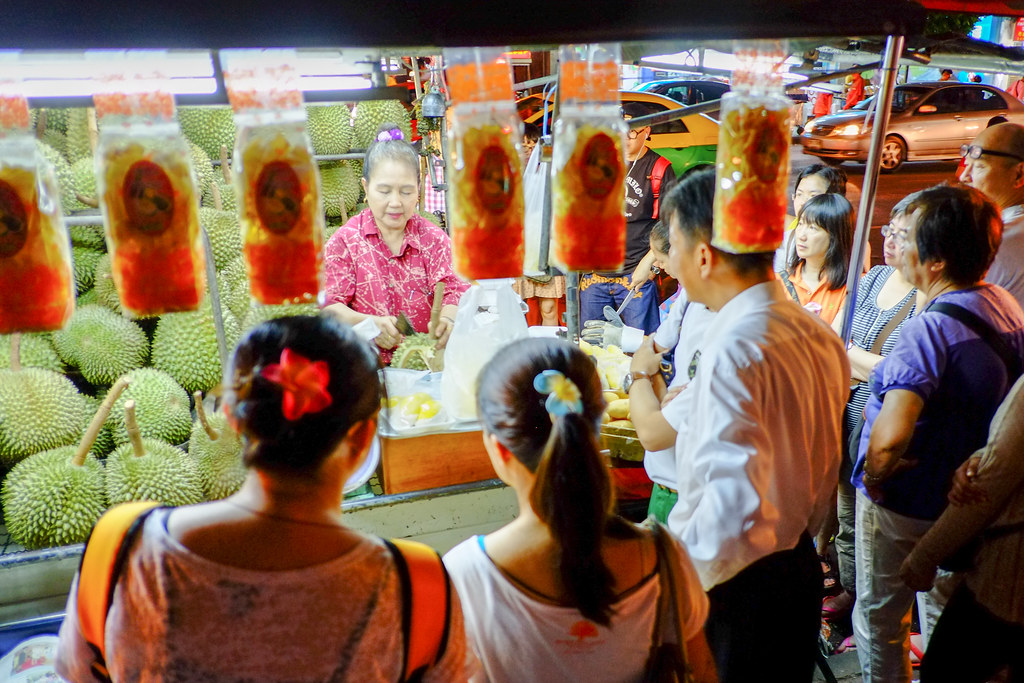
The RCEP currently accounts for 30% of the world's GDP and is the world's largest trading bloc. For the ten ASEAN economies, joining the agreement has been a major boost to the export of their products. Alongside the almost complete dismantling of tariff barriers, the faster customs clearance of perishable goods is a big advantage when freshness is essential to ensure the high quality and competitiveness of the product. This is the case with durian, which has become the most imported fruit in China, both in terms of volume and value.

According to Chinese customs statistics, fresh durian imports reached 821,600 tonnes in 2021, totalling USD 4,205 billion, registering significant increases compared to previous years. Compared to 2017, imports of the 'king of fruits' grew fourfold and a further acceleration in sales is expected this year.

Although costs have reduced following the entry into force of the RCEP, this has not impacted prices, which continue to rise in parallel with the surge in demand for the product by Chinese consumers. To date, a durian generally costs more than USD 7 per piece, but the high price has not stopped demand in supermarkets and the spread of durian dishes such as cakes, durian milk crepes and even durian hotpots, enthusiastically reviewed by consumers on Chinese social media and popular in upscale restaurants.

In response, South-East Asian producing countries are expanding their production capacity. From 2019 to 2021 alone, Thailand has increased its durian production by about 30 per cent. "China's imports are already high, but China's per capita consumption is expected to grow further. Thai farmers are highly motivated to expand production", an official of the Thai embassy in China explained to Nikkei. 

Malaysia is deforesting part of its tropical rainforests to make room for plantations of 'Musang King' durian, the most prized and fashionable variety, not without causing irreversible consequences on the ecosystem and local communities, according to some experts. A joint statement signed by thirty-six civil society organisations and promoted by the environmental group B.E.A.CC..H identifies deforestation as the main cause of the recent floods in the Gunung Inas area, Baling district, which swept through 42 villages and residential areas, affecting 1,500 villagers and causing the loss of three lives. Laos and Vietnam are also receiving increasing flows of large-scale investment, including from the Chinese side, for the expansion of durian cultivation.

The shared fear is that the fashion for durian in China may one day wane, or that Beijing may use import restriction measures as a diplomatic tool, as it did last March with the ban on Taiwanese pineapple imports. In other words, China's inclusion in the main regional economic integration platform, in the name of greater trade and investment cooperation, seemed desirable in the eyes of many. On the other hand, there is a risk that this could increase the economic dependence of ASEAN countries on China, leaving room for sudden disruptions, even in the currently most profitable market niches, such as that of durian.

Southeast Asia at the center

First the IPEF ministerial, then the China-ASEAN Expo: the region pursues its line of neutrality and international cooperation.

Editorial by Lorenzo Lamperti

The war in Ukraine has sharpened a trend that had been going on for some time: the demand, implicit or not, to choose "sides." Not only on Russia, but also in reference to China. However, ASEAN seems to have long ago chosen a side, namely that of neutrality and pacifism. A path that is placing Southeast Asia, one of the fastest growing regions in the world, at the center of international trade (and other) relations. The plastic demonstration comes during this month of September, with two relevant events within a week. Between Sept. 8 and 9, representatives from Brunei, Indonesia, Malaysia, the Philippines, Singapore, Thailand and Vietnam attended the first ministerial meeting of the Indo-Pacific Economic Framework for Prosperity (IPEF), the trade cooperation platform launched a few months ago by President Joe Biden's United States, in Los Angeles. At the end of the summit, the 14 countries that are part of the project agreed on key guidelines for negotiating the four main "pillars" of a future agreement: trade (including data flows and workers' rights), supply chain resilience, green energy and environmental standards, and anti-corruption and tax measures. On the other hand, the 19th China-ASEAN Expo and China-ASEAN Business and Investment Summit is scheduled from Friday, September 16 to Monday, September 19. The event takes place in Nanning, Guangxi Autonomous Region, with the physical participation of more than 300 companies and another 2,000 companies in virtual mode. Malaysia, as the country of honor, will host a series of activities on the theme of the 10th anniversary of the development of two industrial parks (in Qinzhou in Guangxi and Kuantan in Malaysia), called to further deepen economic and trade exchanges and cooperation between China and ASEAN, including under the Regional Comprehensive Economic Partnership (RCEP). Beijing has long been ASEAN's largest trading partner. In the first seven months of 2022, the interchange has further increased. It signals an important bond for both sides. The possibility of "adding on," for other international players, is real. And it is demonstrated by the cooperation being deepened between ASEAN and the European Union. "Replacing," on the other hand, appears much more complicated.

ASEAN Locomotive speeds up

With a global contingency that is complex to say the least, Southeast Asia is one of the most attractive regions for international investors

Editorial by Alessio Piazza

A tourism boom, robust restart of domestic demand, wealth of raw materials and increasingly welcoming rules for international players. Southeast Asia is one of the most attractive regions for global investment. It was before, it is even more so in the current contingency, made even more complex by widespread inflation and unknowns about supply chains. Starting with energy. While global equities are struggling after the latest moves by the U.S. Federal Reserve, Southeast Asia's growth prospects in fact make the ASEAN region a favorite among investors. Bloomberg estimates that most major economies in the region are expected to grow by at least 5 percent in 2022, thanks to the lifting of restrictions imposed during the Covid-19 pandemic. And global funds have poured a net $2.4 billion into the region, not counting Singapore. According to the South China Morning Post, the composition of Southeast Asia's equity benchmarks, with a relatively high proportion of banking stocks, is also favorable amid rising global interest rates. While most global central banks have been forced to tighten fiscal policy to deal with rising inflation, driven in part by years of pandemic stimulus, the problem has been less acute in Southeast Asia. Indonesia, whose stock market is among the best performing in the world this year, only began raising rates in August. And, in general, rates are still much more affordable than in several other parts of the world. Malaysia has more than doubled its annual target for tourists following an above-estimated rebound in recent months, while Thailand expects to raise as much as $11 billion thanks to a sharp increase in foreign visitor arrivals in the second half of the year. But Indonesia is also accelerating and, most recently, has also attracted the attention of Saudi Arabia on its startups with a potential unicorn future. Not to mention Vietnam, which is becoming a manufacturing destination for more and more international giants. The ASEAN locomotive has restarted.

ASEAN and Agriculture 4.0: between global challenges and food insecurity the agtech market flourishes

Asia, the world's most populous continent, is also home to more than half (425 million) of the world's people still suffering from hunger. Recent environmental, health and political challenges have served as a 'wake-up call', highlighting the need to rethink production and supply chains. In South-East Asia, this has given a strong impetus to the digital transformation already underway in the agricultural sector, triggering a true Agriculture 4.0 revolution.

"Agriculture is a way of life in ASEAN”. Eight out of 10 countries in the region depend on agriculture and its production, and in some, such as Myanmar and Laos, the sector accounts for over 40% of GDP. However, traditional production techniques cannot cope with the increasingly sophisticated demand for food of an ever-growing population. The Asian Development Bank estimates that to keep up with the expansion of the middle class and the growth in demand for food, production would have to increase by 60-70% compared to ten years ago. South-East Asian countries are therefore increasingly turning to agtech solutions that allow them to produce more (and sustainably) with fewer resources in order to ensure food security in a context of increasing instability.

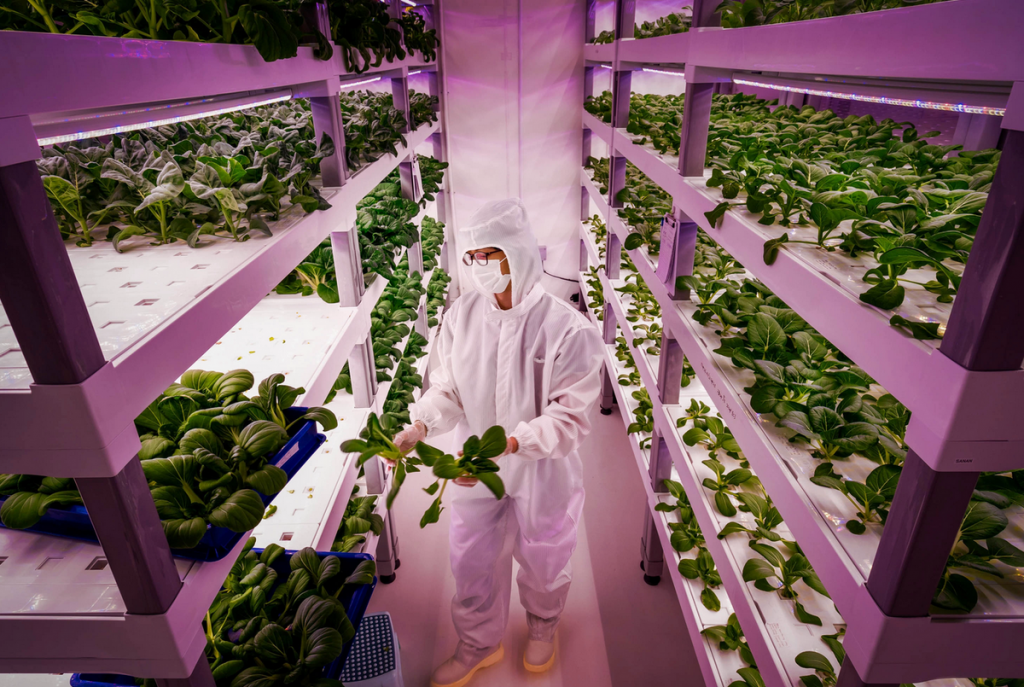
Singapore, one of the most densely populated areas on the planet, relies on vertical farming to overcome the scarcity of land for agricultural use. There are now more than a dozen rooftops used for urban agriculture, designed to guarantee a harvest of 2,000 tonnes of vegetables per year. Using hydroponic technology, the ComCrop company manages to produce vegetables without the use of harmful pesticides or herbicides, while at the same time reducing water consumption by 90% compared to traditional agriculture. Production, transport and storage costs are also significantly lower: produce grown on the city's rooftops is available in local shops more quickly and at lower prices.

In addition to limiting insecurity due to high external dependency in terms of food supply, new technologies also protect crops and animals from potential environmental hazards. Blue Ocean Aquaculture Technology (BOAT) has transformed an industrial space in the Tuas area of Singapore into an indoor 'futuristic fish farm' system. By exploiting nano-oxygen technology, the company is able to sustainably produce up to 18 tonnes of fish per year, safe from problems such as water pollution and plankton blooms.

The work of pioneering companies such as ComCrop and BOAT aligns perfectly with the Food Security Roadmap, the Singapore government's plan to independently provide 30% of the city-state's nutritional needs by 2030, which includes the allocation of more than USD 40 million aimed at ensuring the resilience of the agricultural industry and the efficient management of resources.

The success of agtech is also transforming the lives of many workers in the region. Pham Thi Huong told Nikkei Asia that he gave up her job on coffee plantations in the central highlands of Vietnam to dedicate herself to growing strawberries on rocks in a greenhouse in Orlar. The Australian company, in collaboration with the Dutch Business Association of Vietnam, has in fact devised a new form of vertical farming that uses rocks treated with a patented mix of microbes to provide nutrients for the crops, in the absence of soil and with minimal use of water.

In the Thai province of Prachuap Khiri Khan, Kirana Leesakulpran, 48, who has been in the shrimp farming business for almost 30 years, has turned her business around by integrating some automatic feeders and a paddle aerator system in her factory. "Since implementing this new technology and system, we’re able to produce more. We earn more profit and it makes our lives as farmers more sustainable," she commented, explaining how water purification times have been reduced from three to seven days and productivity has increased significantly, while at the same time reducing feed waste, which is one of the biggest costs in the industry.

For people whose livelihoods depend on farming and animal husbandry, the balance between productivity and sustainability plays a key role in ensuring access to nutritious food in sufficient quantities. Against the backdrop of a general surge in food prices and rising fuel and fertiliser prices due to the conflict between Russia and Ukraine, farmers in South-East Asia are faced with extreme weather events and endemic food insecurity problems. This is prompting governments and local companies to rethink production and supply systems, opting for the integration of digital technologies and artificial intelligence into production chains. Given the region's strong technological vocation, South-East Asia is a fertile ground for the development of innovation in the agri-food sector; global and regional challenges will provide an important test bed for the nascent agtech and foodtech markets.

Southeast Asia's rush to digitization

ASEAN countries are growing rapidly on the digital front, while at the same time trying to keep a tight rein on the Internet lives of their citizens

In the field of technology and digitization, various governments of ASEAN countries have two competing goals. On the one hand, they promote and support greater digitization, especially with a view to expanding their economies. "Keeping up with the times" from a digitization perspective is a basic requirement for these growing economies. On the other hand, however, there is a strong tendency of some governments in limiting the population's access to the Internet. 

Concrete demonstration of this behavior can be found in the example of Vietnam. Vietnam's economy is growing strongly; Vietnamese exports in the first quarter of 2022 grew by 12.9 percent over the past year. To sustain this strong growth, modernization of the country's digitization systems is needed. For this reason, Vietnamese Prime Minister Pham Minh Chinh last month had several meetings with representatives of companies such as Apple, Google, and Facebook. In reality, the relationship between the Vietnamese government and these tech giants is far from simple and straightforward. Indeed, on the one hand, the Vietnam market is a great source of revenue for these tech companies. On the other hand, however, there are stakes that are often imposed on international digital companies and restrictions on access to digital platforms. 

According to journalist Lien Hoang in an article in Nikkei Asia, the same companies that Vietnamese Prime Minister Phạm Minh Chính met with in Silicon Valley are lobbying in Vietnam to avoid further restrictions in the digital field. In fact, the Vietnamese administration would like to make even more stringent changes to Decree 72, which regulates the management, provision and use of Internet services, information and online games. The most stringent changes would be two. The first concerns the introduction of fines in case a content that is not considered suitable by the Vietnamese government is not blocked by online platforms within 24 hours. The second novelty would be to require companies to store data collected online in Vietnam within national borders. This measure would thus introduce a ban on transferring this data outside the state's borders. Hanoi is ready to do business with big tech companies but at the same time wants to maintain firm control over the digital lives of its citizens.

The issue of net freedom is not only present in Vietnam, but is a more generalized and relevant problem in other ASEAN countries. As can be seen from the chart below, many Southeast Asian countries do not score high in the degree of "internet freedom" (internet freedom). Myanmar ranks second to last among Asian countries with an internet freedom index of 17, only 7 points higher than China. In contrast, Vietnam earns an internet freedom index of 22 out of 100, representing the third-to-last country in Asia in terms of digital freedom. Thailand and Cambodia also do not achieve very high indices of their citizens' online freedom. On the other side is the Philippines with a score of 65 out of 100, which is thus rated as the country where citizens have the most freedom to freely use digital platforms. To have a yardstick for comparison, states such as Italy, France, Germany have an "internet freedom" index around 76-78 out of 100. In general, as stated by various experts, heavy restrictions in the context of digital platforms could in the future prove extremely counterproductive and contradictory to the goal of many ASEAN countries to develop digital economies. Therefore, it is likely that the issue of "internet freedom" will be of utmost importance to Southeast Asian countries in the coming years. 

Immagine che contiene testoDescrizione generata automaticamente
Fonte grafico: https://www.statista.com/statistics/373347/degree-of-internet-freedom-in-asia/ 
Per approfondire e vedere sulla mappa: https://freedomhouse.org/explore-the-map?type=fotn&year=2021


ASEAN and EU even closer

A summit with an unprecedented format between the two blocks is scheduled for December to discuss trade cooperation and supply chains

Editorial by Lorenzo Lamperti

War in Ukraine, Asia-Pacific tensions, inflation and energy dilemma. The shadows over the near future worry many, and multilateral cooperation becomes even more urgent. The European Union and ASEAN have demonstrated many times before that they understand this need and are now moving to accelerate bilateral cooperation. In this spirit, a summit of national leaders from the two blocs was held for the first time on Dec. 14 to discuss trade expansion and infrastructure assistance. Previous summits between the two groups have been attended by heads and senior officials of the EU executive body, but this time the heads of state and national leaders of ASEAN and EU countries will be directly involved. It signals a desire to ensure greater political alignment, in addition to existing economic and trade alignment. The goal is to develop and secure global supply chains threatened by the economic and geopolitical turmoil of recent months. Europe will encourage Southeast Asia to play a central role in the West's supply chain, based on the idea of "friend-shoring" between nations with shared values. In return it should offer infrastructure aid and economic cooperation agreements. Perhaps by pursuing negotiations for new free trade agreements with ASEAN member countries. Agreements are already in place with Singapore and Vietnam but efforts are also being made to accelerate with Indonesia, the Philippines, Malaysia and Thailand. An expanded free trade network would diversify supply chains and reduce dependence on energy resources from other countries such as Russia. In 2021, the EU and ASEAN traded $250 billion worth of goods, but the room for improvement is still wide. No later than Aug. 4, EU High Representative for Foreign Affairs and Security Policy Josep Borrell reiterated his commitment to deepening relations with the ASEAN region. A need increasingly clear to the governments of the various European countries, which like those of their Asian counterparts have no intention of returning to a world divided into blocks. 

Southeast Asian countries' rush to green bonds.

The region, particularly vulnerable to climate change, invests in green finance

Southeast Asia is turning to green finance to boost its economy in these difficult times. Already, ten ASEAN countries have issued green bonds to finance green projects, hoping to make plans to safeguard the planet increasingly concrete. Green bonds are regular bonds whose issuance is linked to projects that have a positive impact on the environment, such as energy efficiency, energy production from clean sources or sustainable land use. These issues are very dear to the region, which is particularly prone to extreme weather events and vulnerable to rising sea levels. 

The ASEAN sustainable debt market reached an annual record of $24 billion worth of green, social, and sustainable bond and loan issuance in 2021, to which an additional $27.5 billion is added when considering sustainability-linked bonds and loans.

Indeed, many countries have already made very ambitious commitments to reduce, or even offset, carbon emissions. Thailand, Vietnam, and Malaysia for example, have set targets to achieve carbon neutrality by 2050, Indonesia by 2060. These ambitions are also being realized by mobilizing capital through the sustainable finance market. According to a June report by the Asian Development Bank, the amount of sustainable bonds issued by the major markets in ASEAN and East Asia reached $478.7 billion at the end of March, registering a year-on-year expansion of 51.3 percent.

In particular, Thailand is particularly attractive to investors due to its mature bond market, the second largest in Southeast Asia after Malaysia. Since 2020, the government and state-owned enterprises have issued more than 127 billion baht, according to the Thai Public Debt Management Office's annual report. Among the funds raised, a large chunk (about 30 billion baht) partly financed the new Orange Line, a rail line connecting Bangkok's outer suburbs from east to west to the city center. This infrastructure project is expected to alleviate traffic and air pollution problems, persistent in the Thai capital and worsened in the wake of the COVID-19 pandemic, as commuters have resumed using private vehicles to avoid crowded public transportation.

Singapore has announced that government agencies will issue up to $SG 35 billion in green bonds by 2030. Again, the aim is to finance green infrastructure projects, such as public transport, in order to encourage more commuters to take the train and reduce their dependence on cars. Among the projects the city-state government intends to implement is the Jurong region railway network in the western part of the country, which aspires to reduce land transport emissions by 80 percent around mid-century. Singapore is also exploring the use of bonds for climate change adaptation, for example for coastal protection. The Philippines has also issued its first green bonds to finance climate change mitigation and adaptation projects.

Malaysia and Indonesia, on the other hand, which have large Muslim populations, have introduced Islamic green bonds, also known as sukuk. The objective of these instruments is in line with the Islamic principle of environmental protection, allowing issuers to tap into the thriving Islamic finance market. Examples of this trend include Malaysia's issuance of green sukuk to finance the construction of large-scale solar power plants.

Finally, Vietnam is taking advantage of the green bond market, particularly for financing transportation and energy projects, such as the Dau Tieng solar park.

Not just business: EU jumps into Asia-Pacific

The EU is looking with increasing attention to the Asia-Pacific. Recently also with an unprecedented focus on securitarian aspects, in addition to and not in place of the approach traditionally hinging on soft power and economic cooperation 

The Indo-Pacific represents "the world's economic and strategic center of gravity." This is how Josep Borrell, High Representative of the European Union for Foreign Affairs and Security Policy and Vice-President of the Commission, defined the region in March 2021, underscoring the urgency for the European Union to equip itself with a strategic approach to that area of the world that is catalyzing the attention and efforts of key international players.

The macro-region stretching from the east coast of Africa to the island states of the Pacific and East Asia contributes two-thirds of the global growth rate and a 62 percent share of the world's GDP and is home to four of the EU's ten largest partners (China, Japan, South Korea, and India), as well as more than half of the world's population. At the same time, it represents the main theater of geopolitical competition between China and the United States. Aware of its strategic significance, a number of European countries, such as Germany, France and the Netherlands, have long since put in place autonomous initiatives and strategies to protect national interests in the region, in an attempt to mitigate the consequences of Sino-US rivalry and from frictions between regional powers, which reverberate on global supply chains, trade and free navigation on the seas.

But the pandemic crisis and escalating political tensions and territorial disputes in the region have made the need for more concerted efforts obvious. On April 19, 2021, the European Council announced the approval of conclusions on a strategy for cooperation in the Indo-Pacific, which aims to harmonize the different national orientations of member states into a common vision that can guide future long-term European engagement in the area. The 27 foreign ministers agreed on the goal of strengthening European engagement to "contribute to the stability, security, prosperity and sustainable development of the region," in line with common values of support for democracy, human rights, the rule of law and respect for international law.

As is typically the case, European engagement goes through the deepening of economic relations with countries in the area and the strengthening of the strategic trade position vis-à-vis the massive existing trading blocs in the area, a reflection of the agreements signed in recent years, the Regional Comprehensive Economic Partnership (RCEP) and the Comprehensive and Progressive Trans-Pacific Partnership Agreement (CPTPP). Goals include reaching free trade agreements with Australia, Indonesia and New Zealand and relaunching negotiations with India, building on the ambitious trade and investment agreements already signed with Vietnam, Japan, the Republic of Korea and Singapore.

The strategy for the Indo-Pacific also introduces a novel focus on security aspects, distancing itself from an approach traditionally centered on soft power and economic and human rights cooperation. The strengthened European engagement takes the form of a series of initiatives ranging from traditional defense and security, such as joint military exercises with regional partners, to the more innovative domains of cyber security, and comes in response to China's growing assertiveness in the region.

As part of the European Critical Maritime Route Indian Ocean (CRIMARIO II) project, the EU has decided to expand the geographic scope of its critical maritime route protection operations. The scope of the project, inaugurated in 2015 with a focus on a few particular East African countries and archipelagos and currently in its second phase, now extends to include all countries bordering the Indian Ocean and Southeast Asia, and European authorities are exploring the possibility of replicating the experience in the South Pacific. In addition, the areas of cooperation have been expanded: alongside information sharing and training and capacity-building initiatives, some additional components of communication between law enforcement and the judiciary at the national, international, and regional levels and compliance with international regulations have been envisaged, to be implemented exclusively in the South and Southeast Asian areas.

Coordinated actions of this kind come alongside the autonomous deployment of naval forces by member states (and one former member state, namely the United Kingdom), some of which temporally precede any integrated strategy at the European level and are due to the historical presence of some countries in the region. First and foremost, France, the only European country with a permanent military presence in the area, in the face of impressive strategic interests, starting with the presence of some overseas territories, including the island of Reunion in the Indian Ocean and the archipelagos of French Polynesia in the South Pacific. Also significant is the contribution of the Royal Navy, which from 2021 inaugurated a significant strengthening of its naval presence in the area with the deployment of the mammoth aircraft carrier HMS Queen Elizabeth (R08) and its Carrier Strike Group (CSG). The Netherlands and Germany also helped fortify the European military commitment in the area by sending HNLMS Evertsen and Bayern frigates, respectively.

The Asia Pacific plan aligns with the Global Gateway, Europe's model of global partnerships for sustainable "reliable connectivity." This broader strategy takes the form of "smart, clean and secure" infrastructure investments in partner countries, with a focus on the key sectors of digital, energy and transport, health and research education, for which the Union and member states plan to mobilize up to €300 billion.

Although not made explicit in the document, some observers say the project may reflect a European desire to untangle itself from Sino-US competition by offering partner countries an alternative (albeit not perfectly overlapping in terms of modalities and funds invested) to similar connectivity initiatives: the Chinese Belt and Road Initiative and the US-led Build Back Better World (B3W). However, the Union's approach to the region remains "geared toward cooperation, not seeking confrontation," as clarified by EU Foreign Affairs and Security Policy spokeswoman Nabila Massrali and repeatedly stressed by European authorities. In the new strategy for the Indo-Pacific, the willingness to maintain an open and inclusive attitude toward all regional actors who share concerns, interests and values with the Union is openly emphasized. The chairwoman of the European Commission herself, Ursula von der Leyen, commented on Twitter, "We want a peaceful and prosperous Indo-Pacific. It must be free, open, interconnected, prosperous, with a rules-based security architecture that serves all interests. We will continue to encourage Beijing to play its part in a peaceful and prosperous Indo-Pacific region."

It remains to be seen whether Europe will really be able to wade in between the two competing superpowers to pursue its own ambitious agenda, offering a real alternative to its regional partners, or whether its recent desire to increase its political, military and economic projection will only exacerbate the tense climate in the area. 

ASEAN's rational vision

Tensions rise in the Pacific: South-East Asia offers its model as peacekeeping solutions

Editorial by Valerio Bordonaro

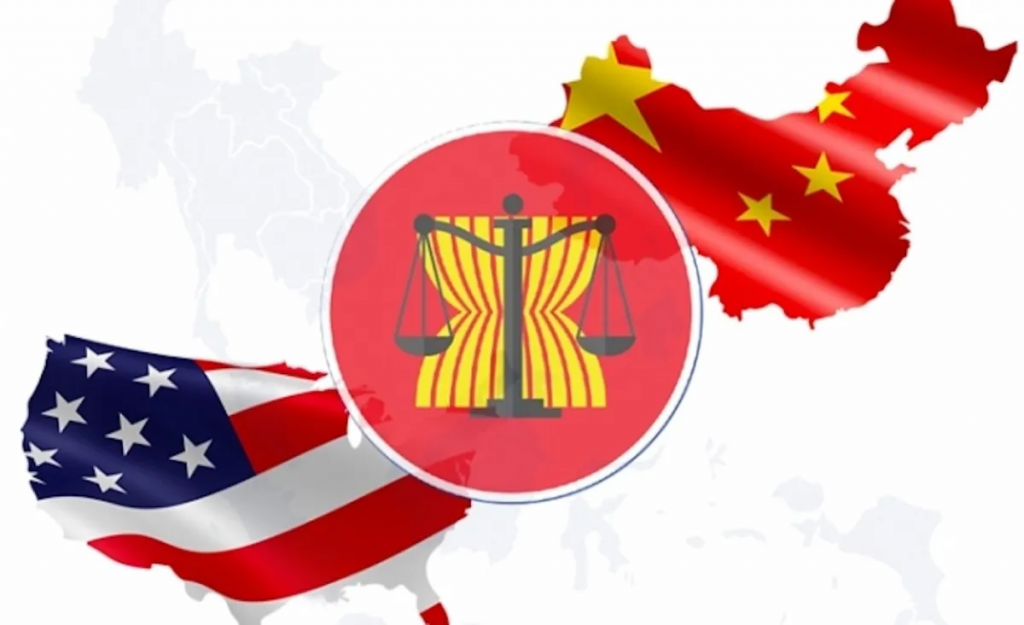
Over the past month, ASEAN has once again become a crossroads for world diplomacy. July began with the now customary High Level Dialogue between ASEAN and Italy, in Kuala Lumpur. The occasion highlighted Italian expertise in the field of energy transition and the five points on which the Italy-ASEAN bilateral partnership will focus its efforts were outlined. A partnership between ASEAN governments and Italian private companies is being considered to make investments more attractive. These days the ASEAN Foreign Ministers' summit took place in the Cambodian capital Phnom Penh. And, once again after Indonesian President Joko Widodo's recent trip between Kiev and Moscow, South-East Asia is standing up as a possible mediator of conflicts following its line of neutrality and pacifism. Indeed, the Phnom Penh forum took place in the midst of tensions between the US and China over Nancy Pelosi's trip to Taiwan. The world seems to have rhetorically split in two, with Washington and the G7 condemning Beijing's harsh reaction including military exercises around the island, and Russia instead supporting China along with North Korea. ASEAN, on the other hand, adopts its own third way hoping to point to a different method for international relations. In a rare official stance on Taipei issues, ASEAN issued a note urging both the US and China to calm tensions and refrain from provocations. ASEAN stated that 'the global community urgently needs the wisdom and responsibility of all leaders to protect multilateralism and partnerships, cooperation, peaceful coexistence and fair competition to safeguard the common goals of peace, stability, security and inclusive and sustainable development'. An invitation addressed to both superpowers. ASEAN also expressed its commitment to play a constructive role in 'facilitating peaceful dialogue between all parties, including through the use of an ASEAN-led mechanism to calm tensions, safeguard peace, security and development in our region'. From the current crises, ASEAN is emerging with a stronger image of rationality and diplomacy.

The evolution of relations between Australia, New Zealand and ASEAN

After the Australian elections last May, both Canberra and Wellington are led by Labour governments. Both countries maintain deep ties with the United States, but they have different approaches to growing Chinese assertiveness. Cooperation with ASEAN could play an important part in the stability of the region.

In the Australian elections last May, Australian Labor Party Leader Anthony Albanese defeated the incumbent Liberal Prime Minister Scott Morrison. After the administration change in Canberra, both Australia and New Zealand are led by Labour cabinets. Both governments play a complex game on the Indo-Pacific chessboard. On the one hand, the two countries represent the southern end of the 'Anglosphere' (and the related Five Eyes intelligence alliance) and are key partners of the United States - in short, a piece of the 'West' in the Far East. On the other hand, their relations with their Asian neighbours are marked by alternating phases of concern and trust, cooperation and tension. So what will be the Indo-Pacific strategy of Australia and New Zealand in the coming years?

Already during the election campaign, the Australian Labor Party had vigorously expressed its support for the Quadrilateral Security Dialogue (Quad, which comprises Australia, India, Japan and the United States) and the AUKUS (which links Canberra to the US and the UK). Previous liberal-national governments had committed themselves to these agreements in 2017 and 2021, respectively. Barely three days after his election victory, the new PM Albanese was already in Tokyo for the Quad leaders' summit, at which he confirmed that his government would continue to support the Dialogue. At the same time, the Albanese administration intends to change certain aspects of the foreign policy of previous centre-right governments, ushering in a new phase of engagement with Pacific nations and commitment to international climate cooperation. The Morrisons governments had always opposed climate change policies - even when much of the country was engulfed in flames between 2019 and 2020 and rising sea levels are an existential threat to many countries in the region. So it is not surprising that Australia has been suffering from a poor standing among insular countries of the Pacific, which are most vulnerable to global warming. New Foreign Minister Penny Wong has also promised to increase financial support for Southeast Asian countries, so as to contain the growing Chinese influence in the region - Wong has recently defined the security pact between China and the Solomon Islands as the 'worst failure of Australian foreign policy in the Pacific since the end of World War II'.

Indeed, the expanding military influence of large Asian countries has always been seen as a threat by Canberra: first Japan, later China and, to a lesser extent, Indonesia. The improvement in relations between Beijing and Washington in the 1970s had also reassured Australians who had begun to see Asia as an opportunity rather than a threat. In the 1990s, another Labor PM, Paul Keating, had effectively summed up the paradigm shift shortly before concluding a security agreement with Jakarta: Australia was to pursue its security 'in Asia, not from Asia'. Relations between Australia and China have remained excellent for decades and still were so when Xi Jinping visited the country in 2014 for an official visit culminating in a historic address to the Australian Parliament. Nevertheless, the deterioration of China-US relations in recent years has been accompanied by a foreign policy shift with regard to Beijing, even in Canberra. Decades pass, but Australians continue to follow their American allies.

New Zealand, on the other hand, seems to have taken a more nuanced stance recently with regard to the US strategy for the Indo-Pacific. In early July, Labour PM Jacinda Ardern called for a more cautious approach to the Chinese presence in the region. For Ardern, it is wrong to regard Beijing's recent actions as 'new' and to require governments to take sides: ‘the honest reality is that the world is bloody messy. And yet, amongst all the complexity, we still often see issues portrayed in a black and white way’. Ardern's caution contrasts with Joe Biden's tough stance, according to which there is an ongoing battle between democracies and autocracies in the world which requires every government to pick a side. Wellington hopes for a de-escalation in the region and greater cooperation between all actors, even if Beijing becomes even more assertive. New Zealanders, however, are not indifferent to Chinese manoeuvres: they too, like Australia and the US, have expressed concern over the China-Solomon Islands defence agreement. Australia and New Zealand are in a position not different to the ASEAN countries, which are reluctant to get involved in the strategic competition between the US and China. Wellington seems intent on following a strategy similar to the one employed by other governments in the region: fostering dialogue with Beijing without renouncing strategic cooperation with Washington. Canberra, on the other hand, seems more rigid in its security concerns and more in line with Biden's vision. Both governments, however, could benefit from greater cooperation, especially with the ASEAN countries: the regional organisation in fact constitutes a factor of stability in the region and a central partner, as recognised in the Quad as well, which could balance Chinese assertiveness. The new Australian Labor government should, however, agree to cooperate with ASEAN on other issues and not exclusively on security: a strengthening of economic and political ties is preparatory and necessary if Albanese wants to move to other more sensitive forms of cooperation. International climate cooperation could be the first test and, as we have seen, the two Labour governments in Canberra and Wellington have expressed their intention to build new partnerships with other Indo-Pacific governments on the issue.

Energy transition is being made in Asia

The effects of the war in Ukraine are not slowing, but if anything accelerating, a process of historic dimensions

478.7 billion dollars of sustainable bonds outstanding at the end of the first quarter of 2022 among ASEAN and East Asia, an expansion of 51.3 percent year-on-year. Record issuances of green, social and sustainable debt (so-called GSS bonds) in 2021 totaling $24 billion across the six largest ASEAN economies, up 76 percent from $13.6 billion in 2020. These are some of the numbers of Southeast Asia's "green" race, reflected in economics, politics and finance. ASEAN and East Asia account for 18.1 percent of sustainable bonds outstanding globally, behind only Europe. Two regions that believe strongly in energy transition. A process that in ASEAN has not been slowed down, but if anything sped up by the war in Ukraine and its side effects. The need to increase the weight of alternative energy sources has never been more evident. Singapore has announced that government agencies will issue up to $35 billion in green bonds by 2030. The purpose is to finance green infrastructure projects and to disincentivize the use of private transportation. Thailand began issuing sustainable bonds at a rapid pace in 2020, mainly to aid recovery from the pandemic. Since then, total issuance of sustainable bonds by the government and state-owned enterprises has reached $3.5 billion. The Philippines, Malaysia and Indonesia are also moving in the same direction. But the tension toward energy transition is also seen in the choices of governments and investors. Vietnam has just approved a program that includes restrictions on the production and import of fossil-fuel vehicles, with the goal of achieving a zero-emissions industry by 2050. By then, all vehicles on the road will have to use green energy or be electric. Even the rail network will have to be entirely converted. Atlas Capital, a venture capital firm in the climate technology sector, and many other regional or international companies are raising funds to invest in projects related to the environment or energy transition in Southeast Asia. A trend that looks set to accelerate more and more.

The effects of inflation on the ASEAN


Southeast Asian countries are studying ways to withstand the pressure caused by rising prices. Here's how

Articolo a cura di Chiara Suprani

Le iniziative di policy per la ripresa post-pandemica dei Paesi si sono dovute confrontare con l’aggravamento della crisi alimentare attuale, esacerbata dalla guerra. Secondo l’Istituto Internazionale di Ricerca sulle Politiche Alimentari (IFPRI), fino ad oggi il 17,22% del mercato internazionale dei prodotti alimentari è stato soggetto ad innalzamento delle barriere tariffarie, e non,  o ad embarghi. L’inflazione, colpendo in particolare i Paesi delle economie più avanzate, ha ridotto l’afflusso di investimenti diretti esteri (IDE) da queste economie verso quelle dell’ASEAN. Secondo la Federal Reserve degli Stati Uniti, il tasso medio di inflazione nei Paesi dell’ASEAN è aumentato dallo 0,9% di gennaio 2021, al 3,1% di dicembre 2021, per poi raggiungere il 4,7% ad aprile 2022. I tassi di inflazione fino ad Aprile di Indonesia, Singapore, Laos e Thailandia sono stati tra i più acuti: Indonesia 149%, Singapore 161%, Laos 206% e Thailandia 267%. Il tasso di inflazione è diminuito in Malesia, mentre è rimasto sostanzialmente invariato nelle Filippine e nel Vietnam.  Tuttavia, in molti Paesi, la fiducia dei consumatori oggi è inferiore a quella del periodo pre-pandemico, e per gli economisti non si è arrivati ancora al picco massimo di pressione inflazionistica, che è previsto nei prossimi mesi. Sebbene le conseguenze della crisi degli approvvigionamenti, della ripresa post pandemica e della guerra in Ucraina non abbiano colpito in maniera uniforme i Paesi membri dell’ASEAN, tuttavia la reazione condivisa dalle banche centrali da alcuni di questi è stata quella di non aumentare immediatamente i tassi di interesse. Nelle Philippines, la banca centrale Bangko Sentral ng Pilipinas (BSP) si prepara ad alzare di mezzo punto i tassi di interesse, portando il tasso chiave dall’attuale 2,5% a 3%. In Indonesia, a marzo, il governo aveva dichiarato di voler mantenere l’inflazione tra il 3 e il 5 per cento per i prodotti alimentari, come l’olio di palma. Eppure, a giugno, l’inflazione è aumentata del 4,35% su base annua. Tra i Paesi dell’ASEAN, come nel caso del Vietnam il divieto di esportazioni di prodotti alimentari si applicherebbe solamente se la situazione interna fosse davvero critica. Per altri, lasciare l’economia aperta e priva di barriere o vincoli è ancora più vitale, come per Singapore. Ma alcuni Paesi hanno fatto della logica dietro all’espressione “nazionalismo alimentare”, cioè l’interruzione dell’esportazione di certi prodotti particolarmente chiave per l’economia del Paese, una vera e propria iniziativa di policy, con conseguenze a catena sulle economie dei loro partner ASEAN. Per stabilizzare il prezzo delle carni di pollo, il governo della Malesia ha imposto un embargo all’esportazione di carne di pollame a partire da giugno, e una task force chiamata dal Primo Ministro Ismail Sabri Yaakob “Jihad against inflation”, per combattere l’inflazione. In Indonesia l’embargo di olio di palma durato tre settimane, è stato quello con l’effetto monetario più impattante dall’invasione russa dell’Ucraina, con 19 miliardi di dollari americani di prodotto soggetti a restrizioni. Giacarta, a causa dell’embargo di carne di pollo della Malesia, ha iniziato ad inviare tonnellate del prodotto a Singapore. La città-stato, il cui piatto nazionale è di fatto il riso al pollo (chicken rice), si è trovata nella condizione di dover differenziare il proprio approvvigionamento. Nell’attuale situazione inflazionistica e di nazionalismo alimentare, secondo Roehlano M. Briones, ricercatore presso l’Istituto per gli Studi sullo Sviluppo delle Filippine (PIDS), occorre “integrare la cooperazione regionale, (che) è qualcosa che è abbastanza cruciale per guidare e stimolare la crescita continua e l’emergere di una regione ricca di scambi regionali di mais e carne all’interno dell’ASEAN.”