
Asean

Asian diasporas: stories of places and generations in Europe

The Asian diasporas in Europe are a phenomenon related to the events of the twentieth century, from colonialism to the Cold War passing through the First Indochina War and the Vietnam War. Asian communities have settled inside and in the outskirts of London, Milan, Berlin and Paris and continue to grow.

London is home to southeast Asian's largest diaspora on the European continent. On the banks of the Thames is where Filipino emigration is most concentrated, about 200,000 people initially fled the dictatorship of Ferdinand Marcos Sr. in the Seventies and Eighties and then arrived in the United Kingdom for economic and academic reasons. There are also about 50,000 Thais and 50,000 Vietnamese, the latter mainly as asylum seekers following the fall of Saigon in 1975.

The second Filipino community in Europe has settled in Milan and counts for the largest Southeast Asian community in Italy. The community has experienced an extraordinary growth: from the 16 Filipinos who arrived in the Lombard capital in 1970 it has reached almost 50,000 today. A relevant factor that has led many of them to choose Italy is the religious one. Affiliation to the Roman Catholic Church is vital for their community life for it represents a bridge between the two countries and an element of cohesion between the first and subsequent generations. In the shadow of the Madonnina, over 200 Filipino associations collaborate with the municipality and the new generations are shaping a solid entrepreneurial environment mostly in traditional catering and travel agencies.

Since the days of divided Germany, Berlin has been home to the country's main migration from Southeast Asia. The main ethnic group is the Hoa, Sino-Vietnamese, concentrated in Little Hanoi in the District of Lichtenberg, East Berlin. The heart of the community is the Dong Xuan Center where most of the entrepreneurial activities are located and where Vietnamese festivities are celebrated. There are also Vietnamese communities in West Berlin that, unlike most compatriots who lived in the East, were naturalized at the time of national reunification of Germany. This has meant that in addition to the 20,000 Vietnamese legally in the country, another 23,000 continue to remain in Germany illegally.

The Vietnamese community has also reached the Czech Republic, settling in the city of Prague since the country's entry into the Warsaw Pact in 1955. Little Hanoi is located in the Sapa district of the Czech capital, counting between 60-80,000 Vietnamese throughout the country, growing very rapidly and representing the third largest foreign ethnic group in the Republic. Outside of Prague, the town with the highest concentration of Vietnamese is Cheb, near the border with Germany.

In the Netherlands, the Asian migration comes mainly from the Indonesian archipelago, counting for about 352,000 people who arrived because of colonial ties and following the escape from the country due to the Indonesian War of Independence that lasted from 1945 to 1949 that led to the victory of the forces of Sukarno, the first president of the Indonesian Republic. To date, the third generation counts for about 800,000 people and gather in the main cities of the country.

The most peculiar story, made of interculturality and multiethnic, comes from France. Known in the country as "the city of the sleeping dragon", Lognes is a village in the Seine-et-Marne 20 kilometers east of Paris with the highest Asian concentration after the XIII Arrondissement of the capital. The epithet was not chosen randomly: in French, Lognes is pronounced very similar to "lóng" (龙), which means dragon in Chinese and Vietnamese. Here the migration from Southeast Asia dates back to the proclamation of the People's Republic of China on October 1st 1949. While Mao Zedong was giving his historic speech from Beijing's Zhongnanhai, they en masse fled from southern China to French Indochina and then reached Europe after the First Indochina War. Since the first generations lived in Chiang Kai-Shek's China or are descendants of Chinese who emigrated to Indochina before the communist victory in '49, ties with Taiwanese associations are very strong. In fact, community life revolves around the pagoda built by the Taiwanese association Fo Guang Shan, "the mountain of Buddha's light". The village has been experiencing a consistent demographic growth for decades: from about 250 inhabitants in the immediate post-war period to over 15,000 today, 70% of Asian origin. The growth has been enhanced by the large funding from the French government to simplify the purchase of property in the village, the construction of the A4 Eastern Highway, the so-called Francilienne, and the RER rail link with Paris and the rest of the Asian diaspora living in the capital.

Every diaspora lives its identity problems. The first generations experience the distance and detachment from the homeland and from a past from which they often fled. Following generations experience the existential doubt that leads them to wonder whether they are Asian or European. It is not uncommon for Asian European youth to choose to go to their parents' countries on journeys of rediscovery: to see the places where their parents grew up, to meet family members they never got to know, to live the experience of that place where, after all, they feel they belong. The European Asian youth thus mends those bonds of affection that seemed broken, that past that didn’t seem to belong to them but that, after all, has always been part of them.

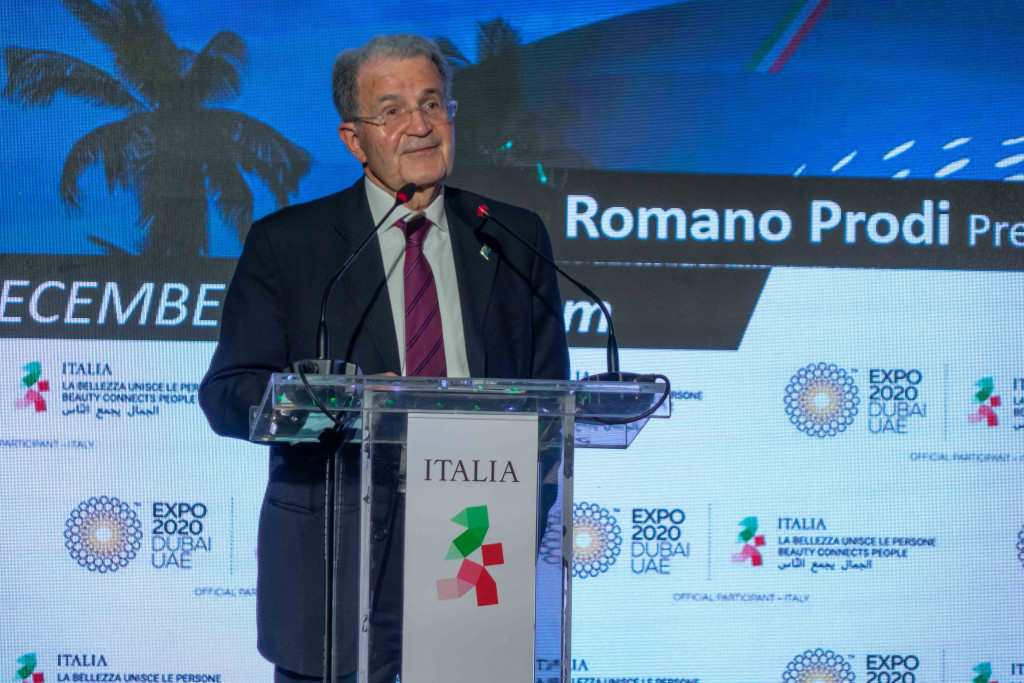
High Level Meeting: seeds of a shared future

The “summit” between top public and private managers of ASEAN countries, Italy and the United Arab Emirates was successfully held at the Italian Pavilion of Expo Dubai 2020

On Thursday, December 9th, was held the High Level Meeting, “A Partnership for Success in Asia, the Gulf and Europe”, organized by the Italian Commissioner at Expo 2020 Dubai in collaboration with the Italy-ASEAN Association and the Chamber of Commerce of Dubai.

The “summit” was opened by the speech of Romano Prodi, President of the Italy-ASEAN Association and former President of the European Commission, and Lim Jock Hoi, Secretary General of ASEAN and has had the objective to define innovative models for the relaunch of economy after the health emergency through multilateral relations among countries that play a strategic role in the area of the world - from Mediterranean to Asia, passing through the Gulf - where in the next years will have the highest rates of economic, technological and financial growth, but also major issues related to climate change, energy transition and social sustainability. “Italy wants to deepen the already strong collaboration with ASEAN”, declared Prodi. “After the pandemic, sustainability is no longer just rhetoric but has become a strategic objective”, said the President of the Italy-ASEAN Association: “With environmental sustainability we are called to preserve social sustainability as well. The pandemic will not be the end of globalization, but a deep correction of it, and we need to be ready”.

Lim Jock Hoi highlighted the strength of the link between Italy and ASEAN, mentioning the circular economy sector, and underlined the trajectory of development of the region, that must “find a more sustainable way of production and consumption” based on a “safer and greener” development. Jamal Saif Al Jarwan, Secretary General of UAE International Investors Council, and Amedeo Scarpa, Director of the ICE Office of Dubai, also spoke. The event then developed with three parallel working groups dedicated to: technologies and finance for sustainability, renewable energies and sustainable agriculture.

At the end, the two Vice-Presidents of the Italy-ASEAN Association summed up the results. “This was a very productive meeting during which there were established bilateral and trilateral relations. With this event we have opened new useful links to develop follow up”, explained Ambassador Michelangelo Pipan. “The participation has been fantastic”, said Romeo Orlandi. “Everyone agrees that we need to move towards renewables, but how to do it? We tried to give some answers about wind, solar and other types of energy. Conclusions are promising and all the involved parts will stay in contact after this event”. President Prodi summed it up: “Competence, culture and heart. We are at the beginning of a fertilization process to develop ideas and proposals that were put on the table during this meeting”.

The green transition will be stronger than inflation

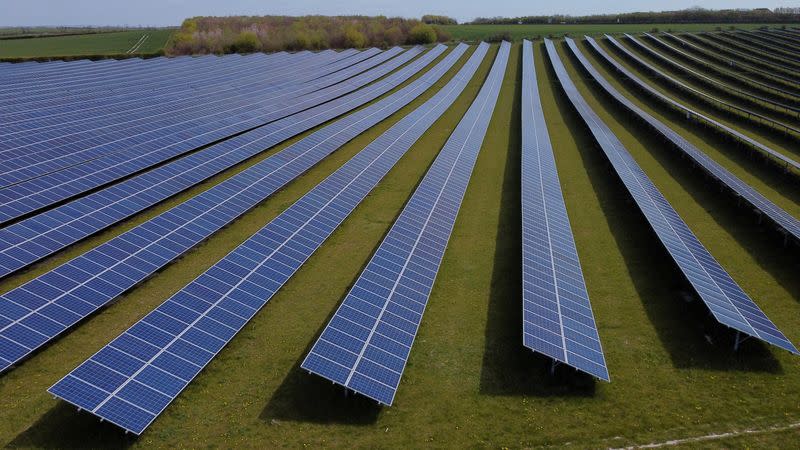
In the long term, the demand for renewable sources will not decrease due to production costs

The costs of renewable energy production are increasing considerably. Inflation associated with the transition to a green economy - better known as "greenflation" - is a controversial topic of discussion, as it could have a significant impact on the balance sheets of governments and businesses. In recent months, the increase in demand for clean energy has plumped the boom in requests for raw materials, which have experienced a surge in costs since the use of traditional extraction methods has now been limited: the prices of Metals, such as tin, aluminum, copper, nickel and cobalt, all essential for energy transition technologies, have increased between 20% and 91% this year. A trend that could discourage the use of clean energy.

However, although the ecological transition is increasingly expensive, at least in the short term, there is no need to fear for the economic sustainability of the sector. This was stated by the Reuters Global Markets Forum. In fact, when solar panels or other necessary components of the renewable energy chain are mass-produced, production costs are reduced, generating what are called "economies of scale", facilitating the reduction of costs related to taxation, labor and advertising, allowing the sector to grow even more. "The overall costs for the green industry will tend to decline," said Harry Boyd Carpenter, the chief executive officer for green economy and climate action at the European Bank for Reconstruction and Development.

The forecasts are therefore positive: Allied Market Research expects that the global renewable energy market, now valued at over 1.2 trillion US dollars, will double in 2030, reaching almost 2 trillion dollars. Gauri Singh, Deputy Director General of the International Renewable Energy Agency, said that despite inflation and supply chain disruptions, lower financing costs contributed to the record generation of 260 gigawatts of energy from renewable sources last year. "The renewable energy market is softening - said Singh - From now on it will no longer be so easy to earn from those products that are considered harmful to the environment."

Now you can also participate online at the ASEAN-UAE-ITALY High Level Meeting

The High Level Meeting "A Partnership for Success in Asia, The Gulf and Europe" is approaching. Temporally but also physically. Top public and private managers from ASEAN countries, Italy and the United Arab Emirates will meet for the first time on December 9th in Dubai to explore objectives and concrete ways of bi and trilateral collaborations in the field of sustainable development through the use of innovative technological and financial resources.

But, given the latest health developments related to the Covid-19 pandemic, it has been decided that remote participation will be allowed. Everyone will therefore be allowed to follow the event, no matter where they are.

The "summit", organized by the Commissariat of Italy at Expo 2020 Dubai in collaboration with the Italy-ASEAN Association and the Dubai Chamber of Commerce, will be opened by Romano Prodi, President of the Italy-ASEAN Association and former President of the European Commission, Lim Jock Hoi, Secretary General of ASEAN, and a representative of the United Arab Emirates government.

The High-Level Meeting, “A Partnership for Success in Asia, The Gulf and Europe”, will have the objective to define innovative models for the relaunch of the economy - in the aftermath of the pandemic - through multilateral collaborations between countries that play a strategic role in the area of the world – from the Mediterranean to Asia through the Gulf – where the major economic, technological and financial growth rates are likely to occur over the next few years, together with some of the major problems related to climate change, energy transition and social sustainability.

In the aim to set the pace for new trilateral and bilateral partnerships between public and private players of the area, the proceedings will focus on the issues of technologies and finances for sustainability, renewable energy and sustainable agriculture. These topics will be dealt with in three separate working groups, led by the Vice-Presidents of the Italy-ASEAN Association, Ambassador Michelangelo Pipan and Prof. Romeo Orlandi, and the Deputy Commissioner for the Dubai Expo Marcello Fondi. The moderators will be flanked by representatives of the authoritative specialized institutions that provided the background documentation: ERIA (Economic Research Institute for ASEAN and East Asia), Irena (international renewable energies agency), Confagricoltura with a board member.

See all the details and register from this page.

Netflix, Facebook and Google under pressure from Southeastern governments

Manila's demand for the removal of two episodes of the Australian series Pine Gap from Netflix Philippines’ catalog is just the tip of the iceberg of recent government pressure on Western digital platforms in Asia.

On November 1st, the Philippine government requested and obtained the removal from the Netflix Philippines’ catalog of episodes two and three of the Australian series "Pine Gap". Manila's irritation arose from the appearance of a map of the South China Sea representing the so-called "nine-dash line", typical of Chinese maps of those resource-rich waters disputed between China, the Philippines, Brunei, Malaysia, Indonesia, Taiwan and Vietnam. The Philippine film classification authority has defined the deleted episodes as "unsuitable for airing" and the Philippine Department of Foreign Affairs argues that the appearance of such a map must be countered as it is aimed at legitimizing the "nine-dash line" with the risk of "corrupting the knowledge and memory of young Filipinos about the real territories of the country". The removal of the two episodes was almost immediate, taking place in the evening. However, the hurry with which Netflix complied with the Philippine government's request was not the same in providing explanations to Reuters, responding only late at night. The cancellation decision was only made public on November 1st for currently unknown reasons.

It's not the first time that streaming services have had problems with authorities about film performances touching on sensitive issues in the region. Vietnam is an example of how pressure from local governments can become real coercion. If in the Philippines two episodes of Pine Gap were eliminated, in Vietnam the series was entirely deleted from the list for the same reason. Similarly, in 2019 Hanoi had withdrawn from theaters the Dreamworks film "Abominable" as well as the Chinese rom-com "Put Your Head on My Shoulder" and the American political drama "Madam Secretary" from on-demand services to avoid "hurting the feelings of the entire Vietnamese people".

Netflix is just one of the actors in this relationship between governments and platforms. In Asia-Pacific there are 40% of Meta’s social media users, formerly Facebook, which therefore has great interests in the area. Vietnam alone has 100 million users and a market worth a billion dollars. Filipinos are the most active on Meta platforms, spending on average over four hours a day online according to eMarketer, while Indonesians use WhatsApp as their main means of communication and information. Given the great impact of Meta on the populations of the region, local governments pay particular attention to what is happening on its platforms, especially since 2017.

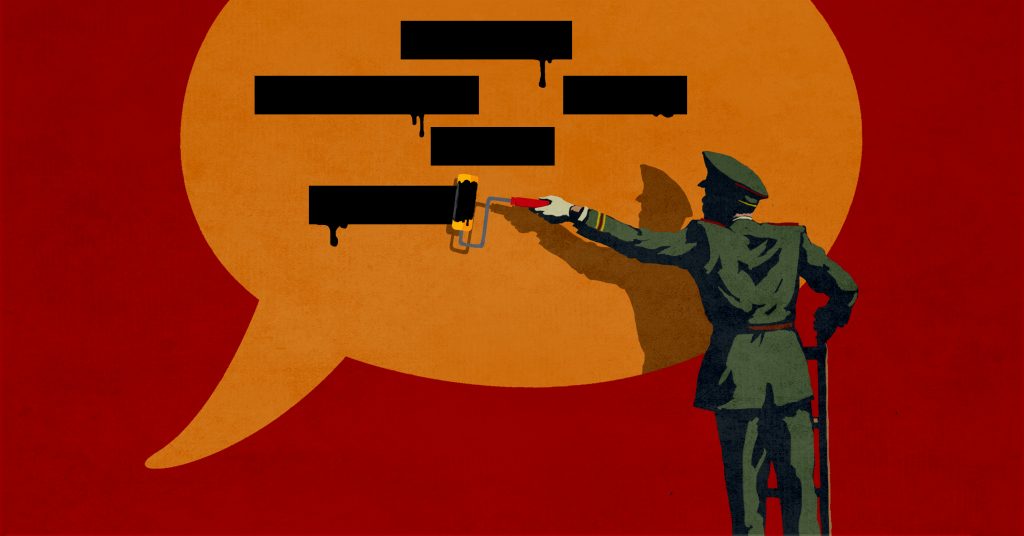
Facebook works with the Ministry of Information and Communication (MoIC), the State Bank of Vietnam, the General Department of Taxation, and the Ministry of Public Security to identify and prosecute political crimes on social media. Under threat of shutdown and with the obligation to maintain its registered office, servers and local data storage in Vietnam, Facebook may have taken part in the censorship activities of the Hanoi government: according to Transparency Report, since 2019 the repression of dissent in the country has increased by 983%, the year in which Facebook has shut 200 anti-government sites down. From the Facebook Papers, documents leaked this year along with an investigation by the Washington Post on the Californian company, it emerges that in early 2021 Mark Zuckerberg may have given the approval to the censorship of many Vietnamese dissidents on the platform on the way to the thirteenth Congress of the Vietnamese Communist Party, essential for the selection of the leadership for the five years to come. Google's YouTube is not excluded from these dynamics. In 2019 it was forced to remove dissenting contents about the Hanoi government by deleting over 7000 videos and 19 channels. 58 Vietnamese games have been deleted from the Play Store, as well as from Apple.

Meta's Facebook also plays a role in the Philippines. Since 2017, it has participated together with Rodrigo Duterte’s government in the development of fast internet infrastructure in the country. Facebook's balancing with the government is difficult: in 2020 Duterte did not approve the shutdown of various accounts linked to the Police and the Philippine Army because of their role in the war on drugs initiated by the President. Duterte threatened the social network saying that for Filipinos there would be a life after Facebook and that some spokesmen of the social network should explain what occurred.

In Indonesia, the government uses the Law on Electronics Information and Transactions Act (ITE) to counter dissidents. Invoked about two hundred times since 2019, according to Amnesty International, this excessive use of it violates freedom of expression. To integrate this law, Ministerial Regulation 5 will come into force from December 2021 allowing foreign platforms to be taxed and involved in the legislative process, under threat of possible shutdown of the platform to prevent the spread of material "prohibited, illicit or that disturbs public order". For this reason, Facebook collaborates with the Ministry of Communication and Information Technology (Kominfo).

Beneath the surface of the digital sea, freedom of expression freezes more and more, thus magnifying the iceberg of repression.

Chipped away. What does the global semiconductor shortage teach us?

The semiconductor supply chain has been in crisis since 2020 and the shortage will continue. It takes little to stop global trade flows. Governments want to invest in the sector to strengthen their technological autonomy, and ASEAN and the EU could play an important role.

2021 looks like an annus horribilis for global trade, even more so than 2020. Many sectors of the economy have benefitted from the post-crisis rebound and seem to be returning to pre-pandemic levels. Other sectors, however, are still struggling, with tangible effects on consumers. Energy, raw materials, cars, IT products. Everything is more difficult to obtain and therefore more expensive. Of particular relevance is the shortage of chips, which are now essential components for many everyday objects. The global crisis in the semiconductor supply chain is an excellent case study for understanding the nature and fragility of the globalised economy. And it affects ASEAN countries closely: a couple of them - Singapore and Malaysia - are among the main global producers and a large proportion of chips, even when they come from other parts of Asia, pass through the seas of South-East Asia.

The global value chain for semiconductors has very particular characteristics. All the world's economies need these products, yet their manufacture is concentrated in very few countries that are interdependent since nearly every stage of the production chain takes place in a different country. Companies in each country have specialised in a specific stage of production or a certain type of chip, sometimes creating regional monopolies. For example, 92% of semiconductors below 10 nanometres are produced in Taiwan. One EU company, ASML, is the world's only producer of EUV scanners, an essential piece of equipment to produce sub-7 nanometres chips in Taiwan. This dense network of trade has prompted governments to significantly reduce tariffs and semiconductors are indeed among the least taxed products in the global trade system.

Chips need to circulate and need a liberalised and interconnected global market. Major events that can slow down trade flows, such as the Covid crisis, can produce a succession of bottlenecks and ultimately the unprecedented global shortage we are witnessing. Many chip factories in Asia have been forced to close or reduce production due to the pandemic. The transportation industry is also going through a crisis and can no longer distribute semiconductors produced in Asia to the rest of the world. Increasing production capacity in Asia may not be enough if there is a lack of carriers. The trade war between the US and China waged by Donald Trump until last year also had an impact: restrictions on imports of Chinese chips led American companies to turn to Taiwan Semiconductor Manufacturing Co. (TSMC) and Korea's Samsung, whose production levels were already stretched to the limit. However, the Covid crisis or trade tensions are not the only triggers. What is new is that even smaller events, which at first glance may only be of local relevance, have global effects.

‘A flap of a butterfly's wings in Brazil can set off a tornado in Texas’. The butterfly effect theorised by US meteorologist Edward Lorenz also applies to globalisation and the semiconductor market. A failed manoeuvre by a single ship - built in Japan, operated by a Taiwanese company, registered in Panama and managed by a German company: the now-famous Ever Given - blocked the Suez Canal for days, stopping 12% of world trade and almost $10 billion in goods for every day of obstruction. A few weeks after the Suez incident, another seemingly local event, the drought in Taiwan, had a negative impact on the global semiconductor market - and drew public attention to how much water is needed for their production. A few weeks earlier, a fire in a single factory in Japan had dealt a further blow to the sector’s capacity, causing the concern of the global automotive industry, for which chips are increasingly indispensable.

How long will it take to resolve this crisis, according. to the chipmakers? At least another year. Lisa Su, CEO of AMD, believes the situation will improve in 2022, while Pat Gelsinger, head of Intel, is less optimistic and predicts that the semiconductor shortage will last until 2023. In the short term, semiconductor prices will remain sky-high, partly due to the hoarding of chips by companies. Hoarding is taking on unexpected dimensions and forms, even causing the Biden administration to react. On eBay and other online platforms, freelancers are active, buying single, used or disassembled parts at auction and then reselling them to companies. A symptom of the hardship business is facing in procurement. It is natural then to ask how companies and governments are dealing with the emergency. The consensus solution seems to be massive investment plans to increase production. However, the US and EU governments want new plants to open on their territory. The issue goes far beyond the strengthening of the supply chain or economic and employment returns: semiconductors are a strategic asset too important to leave them to the monopoly of Asian countries. In Joe Biden's and Ursula Von der Leyen's speeches on the subject, expressions such as 'national security' and 'technological sovereignty' come up more and more often. Companies too are interested in moving part of their production out of Asia, especially when they are promised generous incentives by governments: TSMC has already started building a $12 billion plant in Arizona and promises further investments in the US, while Intel intends to invest up to $80 billion to open new factories in the EU. The only question is: where? Italy is courting the American gian to attract part of the investment, as is Baviera since one of the plants will probably be built in Germany.

Unfortunately, these projects may not have the desired effect. Although the global value chain of semiconductors is carefully and rigorously studied by experts, it remains difficult to codify the competitive advantages of the sector’s leading companies. Much of the know-how required falls into the realm of tacit knowledge and cannot easily be transferred from the factories in Asia to those in Europe or the USA. So much so that companies build new plants by strictly reproducing the organisation and layout of their existing ones - in line with its famous Copy Exactly! strategy, Intel reproduces details such as barometric pressure, the colour temperature of the lighting or the colour of workers’ gloves. Moreover, the fact that global semiconductor production is so concentrated in a single region, East Asia, and depends on a dense network of regional value chains is a weakness but also a strength of the industry. Will the new factories in the EU or the USA be able to find their place in the global value chain? Will they be able to be competitive?

ASEAN countries can play an important role in the future of semiconductors and already account for 22% of world exports of electronic components. As mentioned above, Singapore and Malaysia are major players in the sector and could attract new investment from the USA, Taiwan and Korea. Thailand and Vietnam have launched ambitious incentive and investment plans to encourage the growth of the sector in their territory. Although Hanoi should pursue an ambitious plan of infrastructure upgrades and reforms if it wants to attract foreign direct investment. Indonesia is also a promising environment for the development of the semiconductor industry, even if this development is held back by a lack of infrastructure and deep free trade agreements. Even for semiconductors, trade deals will play a crucial role in the development of regional and global supply chains: all ASEAN countries are part of the RCEP agreement and, among them, Singapore and Vietnam already benefit from very close trade ties with the EU.

It is difficult to predict the future of the global semiconductor market. Or rather, where that future will take place. The traditional producer states intend to maintain their central role, while the ASEAN countries, the EU and the USA want to start playing a greater part. The only certain thing is that the sector will attract billions of dollars in private and public investment in the years to come.

I thank Filippo Bizzotto for his assistance throughout the writing and revision of the manuscript.

Green and strategy: London’s interest in Southeast Asia

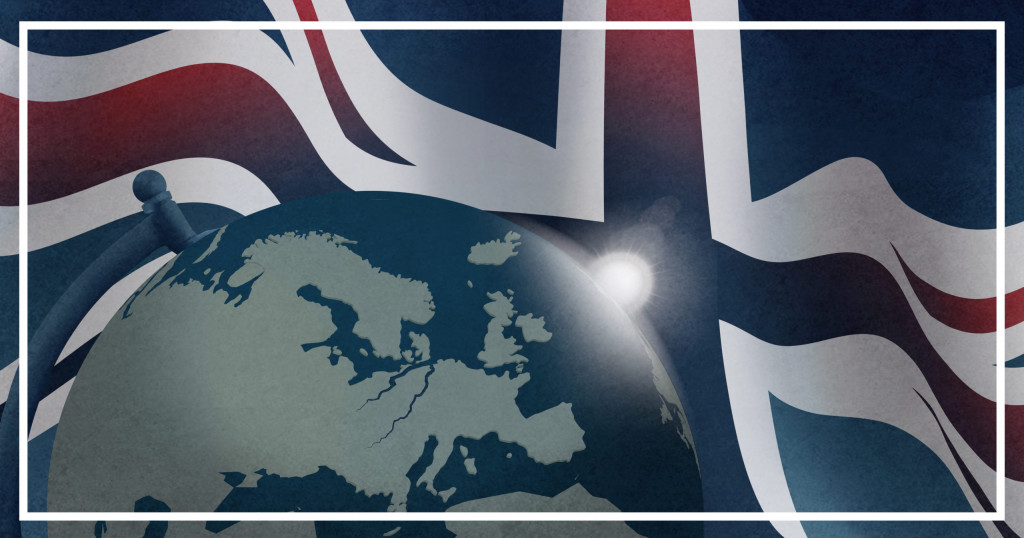
The ultimate British ambition is to return to a relevant role in the international context. Consolidating a relationship with ASEAN countries is considered a fundamental element in this strategy.

Articolo a cura di Luca Sebastiani

The announcement came during Cop26 in Glasgow. The UK will provide GBP 110 million in funding for sustainable infrastructure projects in Southeast Asia. An economic support to the “Catalytic Green Finance Facility” of ASEAN (the Association of Southeast Asian Nations), managed by the Asian development bank (Adb). Developing countries of the region will therefore take advantage from funds to launch programs related to renewable, clean transport and “green” technologies.

It is a declaration that is mixed in with others of similar impact released in recent hours by British government, such as that of new investments on the African continent, and that is accompanied by similar public statements from other countries and organizations – including the EU. Despite this, it is news worthy of particular attention.

The line dictated by Prime Minister Boris Johnson, particularly after Brexit, is clear: “Reappropriate old friends and embrace new ones”. The Southeast Asian region is one of London’s favorite areas in which to forge economic and diplomatic friendships. The GBP 110 million, in fact, are just the last sign and outlay of money proceeding in this direction. In addition to highlighting the increase of employment and work in the UK resulting from the investment, Liz Truss, British Foreign Secretary, defined ASEAN “an important partner for Global Britain”, expressing the will to deepen mutual ties and bring the relationship into a new era. A further step forward after that, in August 2021, the Southeast Asian association conferred to UK the status of “dialogue partner”, a recognition that had not been granted for more than 25 years. An unequivocal signal that even by ASEAN there is the will of interest for tightest relationships.

The obligatory search for support and commercial agreements around the world, carried out by London after its exit from the EU, has found a particular outlet in the Indo-Pacific area. Not a random choice since today this region is under the spotlight of world attention and is considered the strategic area par excellence. Between 2020 and 2021, ASEAN countries (Indonesia, Thailand, Malaysia, Singapore, Philippines, Vietnam, Myanmar, Cambodia, Laos and Brunei) with which the 10 Downing Street has signed free trade treaties were Singapore and Vietnam, in the wake of similar agreements already in force between the two nations and the EU. However, to strengthen economic relations, the UK has signed bilateral pacts with almost every other state.

On the other hand, these countries are in a phase of impressive economic expansion. Currently, ASEAN ranks sixth among the world’s largest economies, but the forecast is that by 2030 it could be the world’s fourth largest market, behind the US, China and the EU (not necessarily in that order). These figures alone explain the reason for the special British attention. At this time, the value of trade in goods and services between the two parties is important. In 2020, British exports to ASEAN countries were USD 21.5 billion and imports were USD 24 billion, for a total of about USD 46 billion. A declining figure due to the Covid-19 pandemic, as it in 2019 reached USD 52 billion. In the same year, investment from the UK, and directed into the regional bloc, reached USD 36.5 billion.

However, if Global Britain branches out on the one hand with commercial agreements, on the other one diplomatic, strategic and military factors emerge in a plastic way. In November 2019, London established its mission to ASEAN and appointed an ambassador specifically for the area. Last March, more recently, British government released the “Integrated Review of Security, Defence, Development and Foreign Policy” with the emblematic title “Global Britain in a Competitive Age”. In the document is highlighted the interest in the Indo-Pacific and ASEAN countries. Among the goals set by the UK there is one about supporting the central role of Southeast Asian countries in regional stability and prosperity.

Lastly, the military character. In recent months, the Carrier Strike Group – led by the British aircraft carrier HMS Queen Elizabeth – has traversed and is traversing the hottest waters of the globe, crossing those famous bottlenecks fundamental to trade and control of seas. The most significant stops of his journey were made in ports and bases of the Indo-Pacific area and in some Southeast Asian countries. During the deployment, the group conducted exercises with various allied armies, but most importantly, it was tasked with demonstrating the UK’s strength – or at least its willingness – to be a valuable containment tool in an anti-Chinese key useful to the US in the future.

The ultimate British ambition is to return to a relevant role in the international context. Consolidating the relationship with ASEAN countries is considered a fundamental element in this strategy.

All projects lead to the Indo-Pacific

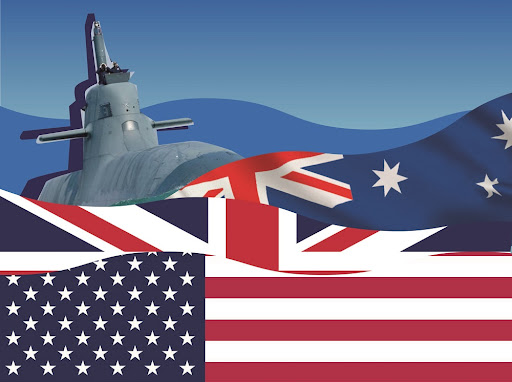
AUKUS is just the latest in a series of multilateral initiatives focused on the region. From the United States to the United Kingdom, from Australia to the European Union, all have a reason to increase their presence in the area.

By Dmitrii Klementev

All roads lead to Rome – one could say when the Roman Empire stretched across the vastness of the Mediterranean. The greatness of ancient civilizations shaped the way in which most of us see the planet approaching a world map centered on the Mediterranean. Now we see how the world is turning in the other direction - towards the Indo-Pacific region. Every year an increasing number of projects are being implemented in this region. More and more global actors adjust their strategies taking into account its growing importance. This article seeks to shed light on the most significant of them, drawing conclusions for the future of world order.

Recently, the signing of the “AUKUS” agreement has provoked heated discussions all around the globe. Some countries were even caught off guard by the decision of the US, the UK and Australia. Nevertheless, “AUKUS” is but one link in a big chain of events which has been gradually developing over the last decade and even not a surprising one.

With regards to the UK, the “Global Britain” foreign policy concept, issued in March 2021, particularly emphasized the importance of the Indo-Pacific region for the country. This shift in focus of British foreign policy was demonstrated already in 2016 when the country voted to leave the European Union. In line with the new strategy, the European countries are considered to be the UK’s competitors in the region, as long as it seeks to “establish a greater and more persistent presence than any other European country” in the Indo-Pacific.

The US, another “AUKUS” signatory state with which the UK enjoys the Special Relationship, started reorienting its foreign policy towards the Indo-Pacific even earlier. Therefore, it already possesses a number of ambitious initiatives, aiming to promote its influence in the region. On June 12, 2021 at the US initiative the G7 leaders launched the “Build Back Better World” (B3W) initiative, which is officially focused on addressing infrastructure needs in low- and middle-income countries. However, the absolute majority of experts tend to consider the project as an alternative to the Chinese Belt and Road Initiative (BRI).

It is worth mentioning that the Biden administration did not design the B3W initiative from scratch. It was based on the project developed under D. Trump - the Blue Dot Network (BDN). The latter was kicked off by the US, Japan and Australia in 2019 on the occasion of the Indo-Pacific Business Forum. The BDN aims to provide assessment and certification of infrastructure projects worldwide ensuring their compliance with a number of environmental, financial and social criteria. The rationale behind it was to divert countries from the Chinese BRI, which is believed to force them into indebtedness and, as a result, fall into the Chinese area of influence. Under the Biden administration the BDN started operating under the OECD.

For the third party to the “AUKUS” deal, Australia, the agreement became an opportunity to voice its concerns about regional security. Cooperation with the US and the UK, allows the country to achieve a nuclear-powered submarine fleet as well as potentially get access to long-range missiles and some other capabilities.

Without a doubt, China’s growing influence is the main reason explaining why Australia has become an active actor in big politics nowadays. This can be also confirmed by the fact that in 2018 Australia upgraded its relationship with Vietnam to a strategic partnership. Both Canberra and Hanoi share concerns about freedom of navigation in the South China Sea, which is the most important transport hub in the region.

Interestingly enough, “AUKUS” is not the first multilateral initiative in the region which brings the US, the UK and Australia together. Alongside Canada and New Zealand, the above mentioned countries form up the Five Eye intelligence alliance the establishment of which dates back to the beginning of the Cold War. Originally designed to counter the Soviet threat, nowadays, the alliance aims to deal with China.

Last but not least, the announcement of the “AUKUS” defense pact on September 15, 2021, outshadowed another important event – the presentation of the Indo-Pacific strategy by the European Union, which is not going to give up in the race for influence in the region.

Being preoccupied with the rising tensions in the Indo-Pacific, disregard for human rights and democratic values, the EU mainly relies on trade and investment policy instruments, since it is in these areas that the Union possesses a number of advantages in the region.

This list of initiatives, strategies and actors is far away from being exhaustive. However, even this may be enough to state that the world order has entered an active phase of transition. The latter represents a unique opportunity to make a breakthrough for those who lagged behind. Nevertheless, this process will equally show no mercy to those who ignored it. Probably, in a few years the centrality of the world map we are accustomed to will change, since almost all projects today eventually lead to the Indo-Pacific.

Facebook Papers are shaking ASEAN Countries

Hate speech, propaganda, elimination of political dissent and human trafficking. Issues of which the giant company was aware, but did not act, according to the allegations of the investigation called Facebook Papers

Recently, Facebook has been in dangerous waters after several U.S. and European newspapers simultaneously published articles based on internal documents released by whistleblower and former employee Frances Haugen on some controversial matters concerning the company.

The leaked documents, initially known as the "Facebook Files" and later dubbed the "Facebook Papers," detail the failures of the company's leadership to curb misinformation, hate speech and violence on the site. The situation is aggravated by Facebook's alleged knowledge of these problems, which it has failed to solve sometimes due to inertia, sometimes due to a lack of technical means, but probably, the investigation claims, due to the choice of putting profit and the pursuit of engagement before the safety and well-being of users.

For more than a decade, Facebook has pushed to become the world's dominant social network However, its efforts to keep the social media platform safe and inclusive have not kept pace with its global expansion. The documents also revealed several issues related to ASEAN countries, particularly Vietnam, Myanmar and the Philippines, where social media use has grown exponentially in recent years, as has access to mobile networks. For many people in these countries, Facebook is the only point of access to information, and many consider social media posts to be real news.

One of the main aspects of the investigation concerns the fact that Facebook is largely unprepared to counter misinformation outside of the United States and a few other Western countries. In fact, if we consider that, according to an internal document cited by the New York Times, 87% of the platform's resources are dedicated to fighting misinformation in the United States, the remaining 13% for the rest of the world seems a very small figure. Like other tech companies, the social networking giant uses algorithms to flag and eventually delete content deemed harmful before it quickly spreads online, but many posts are written in local languages and dialects or feature culturally specific references that the algorithms understand with extreme difficulty. For example, until 2020 the company did not have Burmese language screening algorithms, a flaw that allowed aggressive language and incitement to racial hatred to flourish on the platform. Facebook has been accused of playing a key role in spreading racial hatred against the Rohingya minority in Myanmar when the military carried out "cleansing operations" of the ethnic group, forcing 650,000 Rohingya refugees to flee to Bangladesh due to persecution.

Vietnam also found itself involved in the Facebook Papers scandal, albeit for other reasons. According to a series of internal documents that emerged during the investigation, CEO Mark Zuckerberg allegedly gave in to the Vietnamese government's demands to censor the posts of anti-government dissidents so as not to risk losing a billion dollars in annual revenue in the country, a figure estimated by an Amnesty International report. Vietnam is one of Facebook's most lucrative Asian markets, with more than 53 million active users (over half the population). According to Huynh Ngoc Chenh, an influential blogger who works on democracy and human rights issues, the Menlo Park giant "mistreated activists by eliminating free speech, turning itself into a media tool in the service of the Communist Party of Vietnam." In response, the company said that the choice to censor is justified "in order to ensure that services remain available to millions of people who rely on them every day," according to a statement provided to The Washington Post.

But it doesn't end there. Finally, scandals have also emerged about Facebook's behavior in the Philippines, where often misleading posts and content continue to fuel the popularity of controversial President Duterte. Earlier this year, an internal Facebook report identified gaps in the detection of criminal groups using the platform for human trafficking. In fact, even though the Government in Manila has a task force committed to preventing such situations, the company's platforms are being used to recruit, buy, and sell domestic workers.

Belt and Road Initiative: where are we now in ASEAN countries?

From the enthusiasm of the early years, the pandemic crisis now also affects China’s ambitious infrastructure projects abroad. Beijing doesn’t give up, some decision makers are hesitating, and the data show impending dangers. However, the group of the ten countries looks favorably on Chinese money, at least on a discursive and diplomatic level.

ASEAN needs the Belt and Road Initiative (BRI). Or is it China that needs ASEAN to carry out the new Silk Road? The answer lies somewhere in between. What has been happening in the last year tells something more about how Xi Jinping’s project is evolving, which has changed a lot in terms of substance and objectives since its beginning in 2014.

The pandemic and the halt to production activities gave another blow to Beijing's plans. The growth forecasts of the Southeast Asian economies continue to remain cautious, while the Chinese government seems to be more careful and disciplined to the distribution of its foreign direct investments. This hasn't stopped China from maintaining its role as the largest investor in the region, as the US tries to move forward to replace Beijing as it begins to lose ground. Whether it is territorial disputes in the South China Sea, or simple skepticism coupled with greater negotiating power, China is facing a rapidly changing BRI.

BRI calls China

How Beijing manages its investments abroad is a well-known phenomenon. The deals between China and poorer nations in the BRI framework are often embedded in bonds that are paid off, in the absence of liquidity, by supplying raw materials, or granting an asset to investors for their own use. However, the fascination of Chinese capital remains one of the most powerful tools of the People's Republic's foreign policy. On 1st September at the Belt and Road summit, ASEAN representatives announced that more investment in BRI projects is needed to help their economy recover from the post-pandemic crisis.

There are many projects promoted since the beginning of the Covid19 crisis, but there are also some stops due to the uncertainty of the identity of the joint ventures between Chinese and local companies. In the first four months of 2021 alone, 61 new projects were signed with Vietnam, for a total value of 1 billion dollars. The analysis phase has started for the Kyaukphyu Special Economic Zone (SEZ) in Rakhine, Myanmar. A place where China International Trust and Investment Corporation Group (CITIC) promises collaborations with an ad hoc Chinese-Burmese consortium, even if the ambitious incentives (9-10 billion dollars) are now opening the way to projects on a more "small-medium scale ". In Malaysia, the latest BRI project involves the construction of a new photovoltaic plant. Again, Chinese companies (almost always state-owned) promise $ 10.1 billion worth of jobs.

Thailand is a separate case. Although like its neighbors Cambodia and Laos, the leadership of the country is de facto autocratic, the government is more cautious towards Chinese capital. It has been realized that often costly solutions have been favored instead of fixing the problems at their root, and that many of the Chinese projects could end up in the vacuum of investments with no return. The negotiating power of nations such as Cambodia and Laos is weaker, therefore Beijing seems to dictate the rules with greater consent from governments, often because other forms of independent organization are absent or powerless.

China calls BRI

Even China remains cautious, even as BRI projects seem to continue with no or less friction. This is the case of the Thailand-China railway, which starts from Bangkok, and it will pass through Vientiane to reach Kunming. Beijing has also offered to take on the project to move the waters of the rivers, a thirty-year-old ambition of the Thai government, but which until now seemed feasible given the enormous costs that the project would require. China's proactivity, in this sense, aims to touch the needs of individual countries, even if it is from Thai environmentalists that the complaint comes that an efficient water system would save citizens from water lost every year (40% of that transported).

The numerous initiatives involving the ten countries of Southeast Asia also act as an attractive pole towards Beijing. China hosted the first face-to-face meeting after 16 months with ASEAN representatives on 7 June, while the 18th China-Asean expo on 10-13 September allowed for new proposals to be made on the issue of trade. This report has long inspired Beijing, which has since aimed to move beyond the concept of investing in the region as capital to build “empty” infrastructure, with a greater focus on cooperation for advanced research and development.

Debt trap or hidden debt?

AidData, a research center affiliated with William & Mary University, has announced that the debt accumulated by Asian governments towards China could be much more expensive than expected. The research analyzed the 13,427 Chinese projects in Laos since 2000, calculating a total cost of around 800 billion dollars. Of these, at least 385 billion would be of "ghost" debt. In total, there would be at least 44 countries that have debts with China equal to 10% of their GDP.

Last year's G20 had established that in 2020 the debt of 73 less developed economies had to be suspended to face the Covid emergency. This type of investment, considered risky for the health of state budgets, can however be hidden among the various exceptions contemplated by international law. For example, agreements can be made directly by state-owned companies, joint ventures, and individuals without necessarily receiving a resolution from the Chinese government. In this way, as in the case of the Laos-China railway, the financial hole could be much larger than expected. A complex issue, which sees the last two most important projects underway as protagonists: the Laos-China railway and 580 km of motorway.

The risks for ASEAN’s weaker nations in terms of governance frighten analysts, who fear a return to the "debt trap". With this type of practice, China has already resolved various disputes by obtaining the concession of some Laotian assets, including part of the electricity grid. Again, the debt is much less hidden than it might appear: just look at the combination of the joint venture to see that the majority of the capital is controlled by three Chinese state-owned companies. A complicated mix of challenges and opportunities, which for now has not significantly slowed Beijing's race along the new Silk Roads but has nevertheless helped to evolve the reasoning in some of the ASEAN governments. A useful experience, which now requires more cohesion to avoid the risk of default among the most fragile member states.

Environment, here are ASEAN’s Greta

Youth activism in Southeast Asia is an opportunity for fighting climate change.

Greta Thunberg's environmental concerns fuel youth movements in Southeast Asia. In this region, the threat of climate change is particularly alarming, especially for countries such as Indonesia, Vietnam, Thailand and the Philippines. This is the reason why, as the inauguration of the Glasgow international climate negotiations approaches, vanguards of young activists have organized to lobby national governments to do more for the environment, to reduce greenhouse gas emissions, and to address the social implications that the environmental crisis entails.

Hopes of a sustainable future are in the hands of new generations and in the case of climate action, it is not just empty rhetoric. "Sustainable development is a development that satisfies the needs of the present", reads the UN report "“Our Common Future”" (1987), a milestone in international cooperation on the subject, "without compromising the ability of future generations to meet their own needs". This principle is called “inter-generational equity” and consists of collective responsibility towards the planet and those who will inhabit it.

Information and sensibilization movements on the issue proliferated within the ASEAN area. In the Philippines, 23-year-old Mitzi Jonelle Tan co-founded Youth Advocates for Climate Action, a Filipino version of Fridays For Future inaugurated by Greta Thunberg, together with some peers. In the weeks leading up to the UN Climate Change Conference (COP26) meeting to be held in Glasgow, activist and activist groups such as Tan and her collective took part in numerous awareness-raising meetings, strikes, and protests to demand real change. In particular, young people in the Philippines are well aware that theirs is among the countries most exposed to the environmental and social consequences of the climate emergency. Tan said the global North owes less rich countries a concrete commitment to climate cooperation since they "caused the climate crisis". Therefore, it is appropriate to demand an ever greater commitment on the part of these governments, to have the certainty of “being able to adapt, to face losses and damages and to switch to renewable energies'', she concluded. 

The spirit of Fridays For Future is also spreading in Vietnam. One of the first climate strikes, held in September 2019, was initiated by Huyen Phan. Once back from her studies abroad, this young student felt she had to do something for her city, Ho Chi Minh, one of the places most exposed to the risks associated with rising sea levels, as well as one of the cities with the worst air quality in Vietnam. “I was very surprised that people around me didn't care at all about climate change or air pollution,” said Huyen, “when I heard about the global climate strike, I tried to find an event in Ho Chi Minh City but I failed, so I decided to create one myself. Hong Hoang, coordinator of an association that promotes the energy revolution by raising awareness in local communities from below, said he was very proud of the event. “This time the strike was not organized by any climate NGO, but by concerned individuals”, he said,“ this is the popular power that is essential to pressure world leaders to take things more seriously ”.

The great determination of young environmentalists should not come as a surprise: for new generations, climate change is an existential threat. This is why the label of "young activist", used by people or institutions of power, is not much appreciated. The effect is to diminish in a paternalistic sense the concrete commitment that these youth movements are claiming before the world leaders. Experts suggest that this expedient risks continuing to exclude young people from decision-making processes, which instead express a disruptive force precisely because "they are future-oriented, community-oriented and willing to think beyond the status quo". What new generations of activists in Southeast Asia are claiming is that national governments and international institutions go beyond the paradigms of exploitation of natural resources, and figure out alternative ways of development. The action of youth activism has so far shown that it can be widespread and radical, precisely the kind of change required by exceptional circumstances such as the current climate emergency.


Vaccini, Italia in aiuto dei Paesi ASEAN

Il sostegno sanitario al Sud-Est asiatico può aiutare anche una ripresa economica inclusiva e duratura in un’area di crescente interesse per il nostro Paese

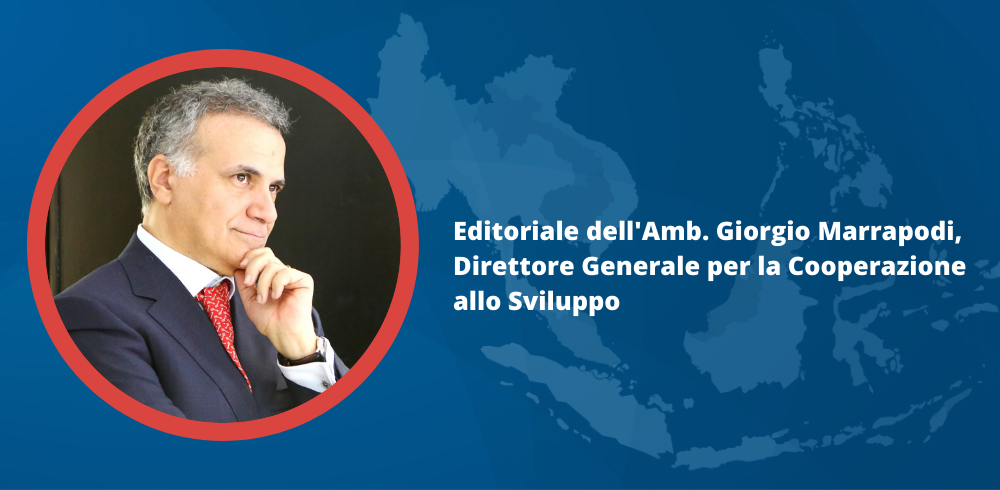
Editoriale a cura dell’Amb. Giorgio Marrapodi, Direttore Generale per la Cooperazione allo Sviluppo

Da alcuni mesi il Sud-Est asiatico è interessato da una nuova ondata pandemica, caratterizzata da un incremento preoccupante dei contagi e dei decessi, specie tra le fasce più vulnerabili della popolazione. L’impegno delle Autorità locali nella lotta alla pandemia si scontra con la limitatezza dei mezzi a disposizione, specie in termini di dosi vaccinali disponibili. L’Italia, Partner di Sviluppo dell’ASEAN dal 2020, si è immediatamente attivata per l’inclusione del Sud-Est asiatico fra le aree beneficiarie in via prioritaria di donazioni di vaccini mediante la Covax Facility. Tale azione si è finora tradotta nella donazione da parte italiana di oltre 2,8 milioni di dosi al Vietnam e di quasi 800.000 dosi all’Indonesia, per un totale di oltre 3,5 milioni di dosi. Altre dosi saranno in arrivo nelle prossime settimane, sulla base delle più recenti allocazioni, e sulla base della segnalazione della regione del Sud-Est Asiatico come un’area prioritaria. Il nostro Paese sta lavorando alla donazione di dosi anche a favore di altri Paesi ASEAN. Le donazioni si inseriscono nel più ampio impegno dell’Italia a destinare entro la fine dell’anno 45 milioni di dosi ai Paesi a medio-basso reddito, annunciato dal Presidente del Consiglio, Mario Draghi, il 22 settembre scorso nel corso del “Global COVID-19 Summit”, a margine della 76esima Assemblea Generale dell’ONU. L’Italia “triplica” in questo modo l’impegno assunto lo scorso 21 maggio in occasione del Global Health Summit di Roma di donare 15 milioni di dosi entro il 2021 e conferma di essere in prima linea, anche in qualità di Presidente di turno del G20, nella lotta alla pandemia e nell’accelerazione della campagna vaccinale nelle aree più colpite, incluso il Sud-Est asiatico. Ciò nella piena consapevolezza che “no one is safe until everyone is safe” e che solamente attraverso una più equa ed ampia distribuzione dei vaccini sarà possibile creare le condizioni necessarie per un ritorno alla normalità e per una ripresa economica inclusiva e duratura, specie in un’area di crescente interesse per il nostro Paese e per le nostre aziende quale l’ASEAN.