Asean

Editorial | USA - China, in the South-East the challenge is (also) digital

It is not only geopolitics, in the ASEAN region the giants of Washington and Beijing compete for a fast-growing market

Editorial by Lorenzo Lamperti, Editorial Coordinator Associazione Italia-ASEAN

South China Sea, diplomatic relations, strategy and geopolitics. All true, but the rivalry between the US and China in South-East Asia also concerns purely economic issues. In particular, the competition between the technological giants of the two countries. Yes, because the digital market in the ASEAN area is experiencing a very strong growth, made even more impressive and rapid by the Covid-19 pandemic. It is not a coincidence that a bit all the big companies are investing in the area: Amazon, Facebook, Google and Microsoft on one side, Alibaba and Tencent on the other. For example, as Nikkei Asian Review underlined, on cloud computing: Singapore is one of the main headquarters of data centres at world level. Mark Zuckerberg’s company is building one, its first in Asia, from 170 thousand square meters in the city-state making about billion dollars of investment.

It is not the only case. Amazon will open a new center in Jakarta by early 2022. Microsoft has announced the opening of two plants, in Indonesia and Malaysia. Chinese actors don’t just stand by and watch. Alibaba already has three data centers active in Indonesia and by the end of the year it will open one in the Philippines. The company founded by Jack Ma also announced investments of over USD 1 billion over the next three years in Asia-Pacific startups. Tencent has also taken root in the South-East, with offices spread across several countries of the region. On the other hand, the growth prospects are considerable: 650 million people and a constant increase in the penetration of connection and digital devices. An unparalleled trajectory in the world that offers a wide range of opportunities for e-commerce, fintech and online entertainment. It is therefore no coincidence that there is strong competition to win the trust of the local middle class.

However, the South-East is not just a battleground between the US and Chinese technological giants. Local realities are emerging on a regional scale and are attracting the attention of international realities. For example, Singapore Grab’s super app benefits from Amazon andMicrosoft’s cloud services. Alibaba and Amazon are competing for the supply of services to the Indonesian Tokopedia. 

TPP: from the backyard to the epicenter of world politics

By Dmitrii Klementev

It is likely that the interest towards the CPTPP will only increase in the near future. Here is why

The Indo-Pacific represents a tangle of different institutional formats which allow maintaining a fragile balance of power among major geopolitical players in the region. The foundation of this framework was largely laid in the second part of the 20th century. However, at the turn of the century it experienced a rebirth. The end of the Cold War followed by the rapid economic and technological growth of the Asian countries have preconditioned the shift of the center in the world system of international relations (IR) to the Indo-Pacific, for control over which the struggle between the leading powers has already begun.  

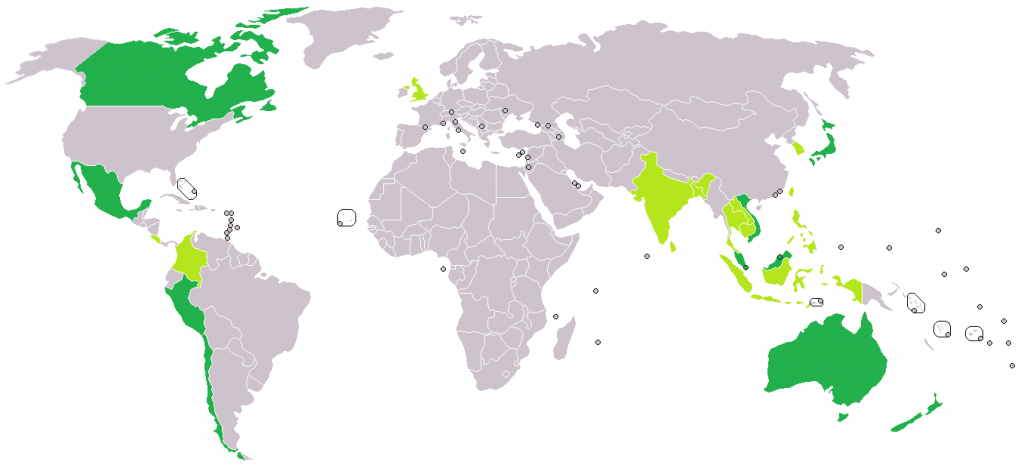
In 2002, the history of the Trans-Pacific Partnership Agreement (TPP) started with Chile, New Zealand and Singapore signing the Trans-Pacific Strategic Economic Partnership Agreement, which was later joined by Brunei. In 2008, the US decided to adhere to the initiative and use the agreement to contain the Chinese influence in the region. However, in 2017, the Trump administration left the deal that seemed to bring the negotiations on the TPP to a standstill. At that time, the agreement had already 11 members apart from the US and the decision to continue talks were eventually made. Joining the negotiations Japan took the lead. 

Finally, in 2018 the remaining countries signed a renewed version of the TPP, the Comprehensive and Progressive Agreement for Trans-Pacific Partnership (CPTPP), which entered into force the same year after being ratified by the six signatory-states. CPTPP covers a wide range of issues, including trade in goods, services, investment, customs checks, labor and environment provisions. Altogether the eleven countries’ economies account for more than 13% of global GDP and 15% of global trade, that makes the agreement comparable to the largest free-trade areas of the world.

Nevertheless, at that point the US was no longer the party to the treaty, even despite the fact that “America is back” has become the leitmotif of the Biden’s administration, which replaced D. Trump in the office in 2021. The absolute majority of experts in the White House were quite skeptical about the prospects of renewing talks with the CPTPP members in the near future. However, if the possibility of rejoining the CPTPP has been frequently questioned by the US officials, the very goal of engaging economically in the Indo-Pacific region through “alternative measures” has always been considered a top priority. The newly adopted Interim National Security Strategy Guidance lists the Indo-Pacific in the first place among the US “vital national interests”.

It is worth mentioning that to date, the United States has been not the only country that paid attention to the CPTPP initiative. On February 1, 2021 the UK expressed its will to join the agreement. This step has become well-enshrined in the logic of the revised system of foreign policy priorities of the United Kingdom, set up after the decision to leave the EU. In March 2021 the British Government presented a new edition of the Integrated Review, which stated explicitly the UK’s goals up until 2030. In particular, the Review emphasized the necessity to “forge new trade deals… adapt to major challenges in the world…, including the growing importance of the Indo-Pacific region”. With regards to the latter point, the British government considered ASEAN and the CPTPP as two key initiatives to focus on. For the UK, potential accession to the CPTPP is assessed unambiguously positively, as it will allow the country to replace the previous free trade frameworks that it possessed as a member of the EU.

Based on the dynamics examined, it is likely that the interest towards the CPTPP will only increase in the near future due to a number of conclusions. First of all, the above analysis demonstrates that the Indo-Pacific countries are capable of making independent foreign policy choices and can be considered as credible partners. Such a circumstance also testifies to a strengthening multipolar order. Second, an increased interest towards the CPTPP will be also explained by the ongoing transition to a new system of IR centered on the Indo-Pacific region. Third, the more important geopolitical dimension of trade tools makes them indispensable for promoting states’ interests in the international arena today. In addition, the spread of such practices gives a hope for the formation of a more or less rules-based order in the future centered on “mega-trade FTAs”, such as CPTPP.

EMERGENZA COVID-19 IN ASEAN: RICHIESTA DI AIUTO

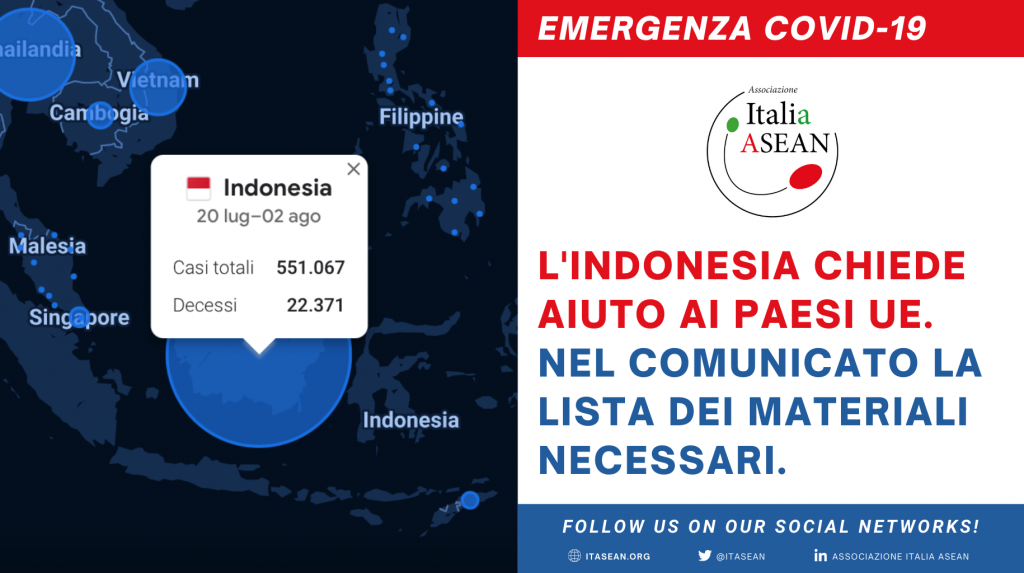
Il Ministero degli Affari Esteri e della Cooperazione Internazionale (MAECI) ci segnala la drammatica situazione che il Sud-Est asiatico sta attraversando, trovandosi ad affrontare una nuova fase della pandemia di COVID-19, caratterizzata da un incremento preoccupante dei contagi e dei decessi, specie tra le fasce più vulnerabili della popolazione. L’impegno delle Autorità locali nella lotta alla pandemia si scontra con la limitatezza dei mezzi a disposizione, sia in termini di dosi vaccinali che di materiale sanitario.

In tale contesto, il Ministero sta ricevendo diverse richieste di aiuto da parte dei Paesi dell’ASEAN. Fra questi in particolare l’Indonesia, che ha fatto pervenire alle istituzioni UE e alle Ambasciate degli Stati Membri presenti a Giacarta la lista dei materiali sanitari necessari.


Il Ministero ha pensato di sondare la disponibilità dei Soci, dei Partner e di tutti i contatti dell’Associazione Italia-ASEAN di farsi carico dell’acquisto del materiale richiesto.

In questa fase l’Associazione potrebbe raccogliere le manifestazioni di interesse e trasmettere al MAECI un quadro completo (specificando il tipo di materiale e il quantitativo che ciascuna azienda sarebbe disposta ad acquistare).

Ove sulla base delle informazioni ricevute emergesse la possibilità di raccogliere un quantitativo significativo di beni, il MAECI potrebbe valutare di organizzare un volo umanitario e farsi carico delle relative spese.

Tale gesto di solidarietà, oltre a valorizzare il ruolo dell’Associazione nella regione, rappresenterà un esempio concreto di sinergia fra istituzioni e società civile nel rafforzamento delle relazioni bilaterali e nella promozione del Partenariato di Sviluppo tra l’Italia e l’ASEAN, che si fonda anche sull’assistenza umanitaria.

Specifichiamo che le imprese dovrebbero far pervenire il materiale necessario presso la base di pronto intervento umanitario di Brindisi, gestita dal Programma Alimentare Mondiale, dove il personale incaricato dalla Farnesina di seguire i trasporti umanitari italiani si occuperebbe della presa in carico e della predisposizione per la spedizione. Una volta confermata la fattibilità dell’operazione e prima che si proceda all’acquisto dei beni, il Ministero manderà tutti i dettagli da comunicare alle aziende interessate, che dovrebbero idealmente individuare un punto di contatto per la definizione degli aspetti tecnici della spedizione, in stretto raccordo con i competenti servizi del MAECI.

Rimanendo a disposizione per eventuali comunicazioni, vi ringraziamo per il supporto e la disponibilità in questa fase così complessa per i Paesi ASEAN.

The development of the ASEAN Collective Investment Scheme

The Philippines is now officially part of the ASEAN CIS framework and its entry into the scheme is the latest step towards enhancing capital market connectivity in the region.

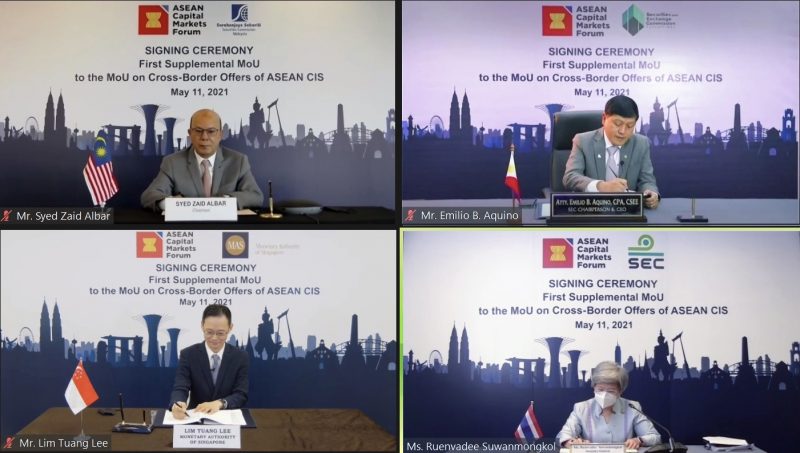
Gli organismi di regolamentazione del sistema di investimento collettivo dell’ASEAN (CIS) hanno annunciato l’entrata delle Filippine nel framework. L’11 maggio 2021 i 4 membri hanno firmato un memorandum d’intesa supplementare che ha formalmente ammesso le Filippine nel framework e ha segnato la ben sperata espansione. Gli investitori delle Filippine saranno autorizzati ad offrire fondi nei paesi che partecipano all’ASEAN CIS framework. Così, le società di investimento delle Filippine inizieranno ad offrire fondi agli investitori in Malesia, Singapore e Thailandia. Ruenvadee Suwanmongkol, segretario generale del SEC tailandese, parlando del l’ingresso delle Filippine nel quadro, ha sottolineato l’importanza dell’ASEAN CIS framework con queste parole:

“Siamo lieti di accogliere le Filippine come nuovo firmatario dell’ASEAN CIS framework, che promuove una maggior interconnessione, inclusività e resilienza dei mercati capitali dell’ASEAN. Questo nuovo partenariato creerà maggiori opportunità commerciali e rafforzerà la cooperazione economica tra gli Stati membri dell’ASEAN, arricchendo, nel contempo, il pool di fondi disponibili per gli investimenti nell’ASEAN. Ci aspettiamo la partecipazione di più Stati membri dell’ASEAN in questo framework nei prossimi anni.” 

ASEAN CIS framework è diventato ufficialmente operativo nel 2014. L’idea alla base dell’ASEAN CIS framework è che le unità di un fondo autorizzato in uno dei paesi partecipanti al CIS possono essere offerte in un altro paese CIS dopo l’approvazione di entrambi i paesi interessati. I risultati più evidenti di questa cooperazione sono la ridotta burocrazia e maggiori opportunità per la distribuzione transfrontaliera dei fondi, l’accesso ai prodotti, la diversificazione degli investimenti e delle alternative per gli investitori al dettaglio. Più nello specifico, ASEAN CIS framework è regolamentato attraverso una combinazione di leggi del paese d’origine del fondo e del paese in cui viene offerto il fondo straniero. Gli organismi di regolamentazione sono la Securities and Exchange Commission delle Filippine, l’Autorità monetaria di Singapore, la Securities Commission della Malaysia e la Securities and Exchange Commission della Thailandia.

One of the scopes of the ASEAN CIS is to facilitate and expand the possibility of collective investment schemes between the CIS’ countries that at the moment are Thailand, Malaysia and Singapore and the Philippines. Above all, the ASEAN CIS framework is born from the desire to obtain mutual fund recognition and to harmonize the offering of funds in Asian countries. In fact, many Asian countries do not recognise each other funds or do not have agreements to make their capital markets to collaborate. For example, the security and exchange commission of Thailand offers foreign funds through the ASEAN CIS Framework and through the Asia Region Funds Passport or foreign exchange traded. So, in Thailand foreign funds can be offered only through two methods. This again highlights the importance of the ASEAN CIS framework since for some countries is one of the few methods employed to allow for foreign funds. Moreover, this similar types of agreements start to be stipulated not only between ASEAN member states but also with other Asian countries. An example of this is Thailand, that early this year has announced the Hong Kong-Thailand Fund Passport that serves for the mutual recognition of funds.

More specific and technical information on this topic can be found at this link.

The ASEAN regional and global automotive competition

Automotive is a strategic sector for ASEAN economies, integrated through complex global value chains. The pandemic has transformed preferences of consumers and producers, opening the sector to new developments

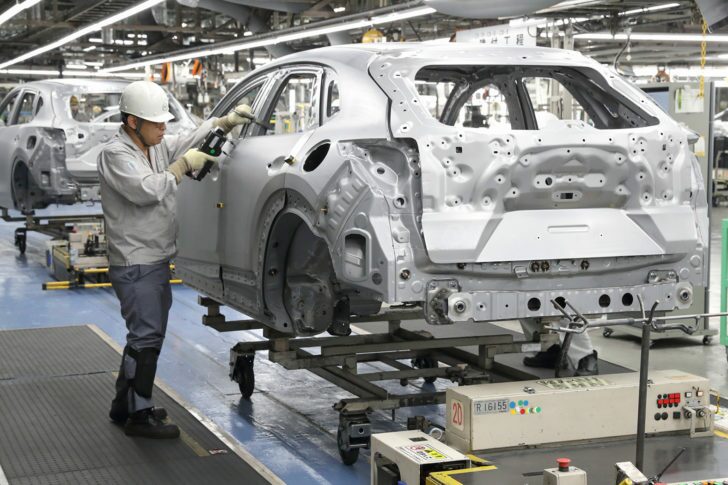
The Covid-19 pandemic has forced people to rethink daily habits and priorities. In Southeast Asia, the cornerstone of global value chains, the automotive sector has proved particularly sensitive to these transformations. As reported by the consulting firm Deloitte, some significant trends emerge, on both the production and consumption side, which could strongly affect competition in the sector, with consequences at a global level.

For what concerns the demand, the preference for personal vehicle travel has increased since the pandemic. Before the health crisis, an average of 37% of consumers preferred to travel by their own means, but with the outbreak of the pandemic this percentage increased significantly, reaching 52%. Local consumers, according to Deloitte, are also rethinking the type of vehicle they would be willing to buy: fuel-efficient vehicles are gaining ground, but the lack of efficient infrastructure means that consumers continue to prefer hybrid electric vehicles (HEVs), compared to battery electric vehicles (BEVs). About 38% of respondents in the region prefer these fuel-efficient vehicles - particularly in Indonesia, the Philippines and Thailand, this preference was expressed by more than 40% of the sample analyzed. Furthermore, according to the report, since a large part of the population interviewed said they were unwilling to pay more for the purchase of electric vehicles, the government support for production and sales could be useful in encouraging their diffusion. 

As for the supply side, if ten years ago Thailand could claim the undisputed primacy in automotive production in Southeast Asia, things are bound to change. To fully grasp this transformation, it is good to observe the growth of local emerging markets from a genealogical point of view. The production of automobiles, assembly and the creation of intermediate parts has always been one of the favored sectors by regional economies. Southeast Asia represents, on a macroscopic level, one of the strategic hubs of global supply chains. Building a car involves a long and fragmented process, through integrated transnational networks that provide hundreds of thousands of jobs, attract billions of dollars in investment, and require skills and technologies that can foster long-term growth of economies. of the region. Countries such as South Korea and Japan have based their economic growth on a model that hinges on the production and export of automobiles, and this success has made them references to emulate in East Asia.

Thailand is an emblematic case. It is one of those emerging markets in Southeast Asia that has meticulously followed the instructions to the free market promoted by the International Monetary Fund and the World Trade Organization, opening the value chains to foreign investment and imports. For economies so dependent on interactions with foreign markets and investments, the health crisis represented a real shock, and Thailand's leadership in the automotive sector was challenged by the emergence of another challenger. Indonesia has taken a different path to launch its automotive sector and national economic growth. Exports to Jakarta took off thanks to strong domestic demand, which increased from 486,000 in 2009 to 1.2 million in 2014. The Indonesian experience, according to James Guild from The Diplomat, questions the development model prescribed by international institutions for the growth of emerging markets.

However, competition between car manufacturers is not just a local issue. Among the effects of globalization is the extreme mobility of investment flows, which also perform the strategic function of channeling geopolitical competitions. Southeast Asia has always been a particularly attractive destination for Japanese car manufacturers: around 90% of the vehicles produced and sold in Thailand come from Japanese manufacturers. However, Tokyo seems to want to stay in the footsteps of traditional gasoline fueling, while the preference of local fuel-efficient and hybrid consumers is growing, especially in Thailand. Chinese companies seem willing to seize this opportunity. Chinese company Great Wall fully entered the Thai market last year, acquiring a plant from General Motors in which it has invested over $ 700 million. The entire facility has been transformed into a state-of-the-art factory, with production lines powered by artificial intelligence, which began producing hybrids in June and plans to launch production of electric models by 2023. The Great Wall would take advantage of a Thai government program that offers concessions for the design of electric vehicles. Bangkok, in fact, aims to make 30% of locally produced vehicles electric by 2030, and the reluctance of Japanese manufacturers to resort to the electric breakthrough is diversifying competition.

Therefore, the Southeast Asian automotive sector is in transition. Consumption and production are slowly adapting to the new circumstances of the post-pandemic globalized economy, with different speeds depending on the emerging economies. It will be interesting to observe which directions the sector will take, which will tell something about the economic development of the entire region.  

The importance of connectivity between Europe and Asia

The European Union strategy to relaunch relations with the Asian continent

Asia has strategic importance for Europe. In recent years we have experienced that the economy and financial markets of Europe and Asia are increasingly interdependent and integrated. Changes in the economic performance of one region have a direct influence on the economic conditions of the other. With a population that far exceeds that of any other continent and its fast-growing economies, in 2019 alone, Asia was the recipient of 28% of EU exports and 40% of its imports. Not to mention that China is the only world power to close 2020 with economic growth, with a GDP increasing by 2.3%.

All facts that the EU could not ignore. Also for this reason, in 2018, European leaders adopted a joint communication, known as “Connecting Europe and Asia – Building Blocks for an EU Strategy”. The strategy proposed by the European Union focuses on building a deep interregional dialogue by creating sustainable connectivity systems and shared rules. This becomes possible, first of all, by restructuring the networks and connections system between the two regions, creating transport corridors, advanced digital connections and improving energy cooperation. Secondly, by setting up partnerships focused on connectivity, which hinge on common rules and standards, capable of enabling better management of the flow of goods, services, people and capital between Europe and the Asian continent. Finally, the European Union is committed to closing the gap in investments dedicated to connectivity with Asia, mobilizing resources and helping to strengthen cooperation with private investors and organizations of an international nature and multilateral development banks.

The strategy evolved with the promotion of an EU-Asia meeting (ASEAM) aimed at expanding connectivity between the two regions. It is an informal platform that also includes a parliamentary dimension (ASEP), which brings at the same table 53 countries from the two regions, about 60% of the global population and 65% of world GDP. Another permanent institution is the ASEF (Asia-Europe Foundation), which is responsible for encouraging intellectual, cultural and interpersonal exchanges between Asia and Europe. The relations between the two blocs were then strengthened with the conclusion of five strategic partnerships - including one with ASEAN - and free trade agreements with several Asian countries, of which the last, negotiated with the ASEAN, concerns the liberalization of interregional air traffic.

However, it is all too evident that improving connectivity costs money. The Asian Development Bank estimates that around 1.3 trillion euros per year are needed, to be used in infrastructure investments, economic growth and green policies. To this must be added investment of 1.5 trillion euros, in the period 2021-2030, to be addressed to the Trans-European Transport Network (TEN-T). The project will also be supported by the European Investment Bank (EIB), the European Fund for Sustainable Development (EFSD +), the European Bank for Reconstruction and Development (EBRD) and by private and international financial institutions.

In a moment of shuffling of the cards on the international scene, Brussels does not underestimate the advantages of connectivity with an emerging area of ​​the world: thinking about the future means relaunching relations with the Asian continent, promoting dialogue and strengthening ties between governments and institutions. financial and private sector actors. 

Rita Bonucchi: "ASEAN fosters innovation, it is impossible not to be there"

ITALY-ASEAN / We begin a cycle of interviews and insights on Italian companies and realities present in Southeast Asia. This interview puts the spotlight on the CEO of Bonucchi e Associati Srl, a consulting company based in Milan and Singapore.
Rita Bonucchi is CEO of Bonucchi e Associati Srl, a management consulting company based in Milan and Singapore (since 2011), which deals with international marketing, export and internationalization strategies, with a long and solid presence in Southeast Asia. She is an Export Strategist, experienced trainer, and Management Consultant. Since 2020 she has also founded BeaConsulting Pte Ltd in Singapore, focusing on local clients and projects.

How did your business in ASEAN start?

Nel 1993 ho avviato un’attività di consulenza per la pianificazione marketing. All’epoca, non essendo così sicura dei volumi di lavoro, ho accettato un progetto di supporto al procurement di guanti monouso. Questo settore era distante dal mio solito focus di lavoro.  Partendo da quella che fu una scelta casuale, ho iniziato a frequentare l’ASEAN dal 1993 e, in seguito a quell’incarico, avendo accumulato contatti e conoscenza di territorio, ho continuato a seguire altri progetti, che tuttavia restavano marginali rispetto alla mia attività principale.

In 2010 I supported the drawing up of a business plan for a consulting activity based in Malaysia. The following year my company, Bonucchi e Associati, came of age. From 1993 to 2010 we accompanied many companies in their internationalization strategies. So, I realized that the time to go abroad had come for us too. Internationalizing a service company is not easy, there are far fewer models. We decided to apply the same modus operandi that we use for our clients: checkup, selection of destinations, plan. The selection of destinations brought out ASEAN, also thanks to all that experience which began by chance. After an initial focus on Malaysia, it was clear that Singapore was the most suitable place for us. we have been investing in Singapore since 2011. Initially, we looked for partners and collaborators. Then we began to stabilize and set up a headquarters in Singapore, also investing in business trips. We went on more than four trips a year, with long stays, especially in summer.

In addition to this, a series of international projects for the European Commission took me to Indonesia, specifically to Bali. There I followed projects for SMEs and local artisans on empowerment for exports to the European Union. Following clients, missions, institutional projects, we reached another turning point in our history in ASEAN. In 2018 we became consultants for a government agency, Design Singapore, which deals with the promotion and development of Singapore design, locally and abroad. We are consultants for the internationalization in Europe of various Singaporean designers and architectural firms. Now we play a bigger role in this project, leading us to have even more specific needs. Until February 2020, I was flying to Singapore every month. A wide-ranging job with a very positive impact on our visibility in Italy, as part of this task, requires a matching between Singaporean designers and Italian producers.

What are the focal points of your work in Southeast Asia?

We do not have a closed sector specialization, but in the last ten years, we have focused our activity in ASEAN on a few sectors, including cosmetics and the whole beauty world. We handle the internationalization process in Southeast Asia of Cosmetica Italia, the association of cosmetics manufacturers within Confindustria. The other sector we focus on is Design: architects, engineers, manufacturers of systems, materials and products that have their destination within a building, up to furniture and furnishing textiles. We are now working a lot with the medical and agri-tech sectors. It is Singapore that guides us according to the new trends and fields it focuses on. We are equipped to follow the trends, also thanks to our local clients. Since 2020 we have found a 100% subsidiary company in Singapore, BeaConsulting pte ltd, focusing on local clients and projects. We operate both as an Italian company in Singapore and as a local company.

What are the reasons that led you to invest in Singapore?

ASEAN fosters innovation, that's where things happen. This is the strongest motivation. We can not be there. It is a conviction for us and our clients, not a simple geographical attraction. Not being present in ASEAN means losing not only a slice of the business but above all the main wave of innovation, in terms of quality. It is a privileged observation point, particularly in Singapore, where many currents meet, especially those relating to the digital world. All the typical tools of the Western world and China are present. There is an enormous local liveliness, very visible from the e-commerce sector. Not being there means missing a piece of opportunity.

Other reasons concern the lifestyle and the way of doing business. In Singapore I become more productive, I work on networks much more intensively. Times are compressed: from the beginning of a business proposal to its closure, it takes less time, compared to Italy. The environment is more international. Even if I work in Milan, I feel that Singapore's speed is higher. There is a more developed international community, a concentration of capital that is of particular interest to startups and which tends to increase along with the growth of venture capital. The speed in the establishment of companies is predominant. Over the past year, we have set up various companies for our clients and opened checking accounts without physically being in Singapore, with relatively simple processes.

We employ a model whereby SMEs land first in Singapore and then cover the rest of the ASEAN countries. A traditional model, which response to a single consideration: many of the SMEs we dialogue with are neither ready to choose a single country nor to bear the costs and commitment of a settlement in terms of industrial and intellectual property, legal certainty, starting a business. In our opinion, Singapore remains unbeatable. The time to open in Vietnam, Thailand, Indonesia, and Malaysia can always come. Often, we find partners in Singapore who help us cover the other markets in the region.

Today, how is the response from Italian clients?

Our ten years of experience in the field gives us the strength that clients need. We still cannot get to their settlement that quickly. In addition to finding a partner in Singapore, we encourage companies to set up there as soon as possible and take advantage of the regional advantages, not least the grants available for companies with foreign capital. However, this vision is not yet fully embraced by the companies with which we dialogue. It takes more effort to get them to decide on a direct settlement. The most frequent request remains the development of an export project and the search for distributors. For this kind of service, we are accredited with the main funding programs (Maeci/Invitalia, Simest and others). For some products, we also push for direct access to local e-commerce.

History of your entrepreneurial activity: present and future developments.

Our present leans on our collaborators in Singapore who have allowed us to move forward during this period. First of all, our Project Manager Marianna Fichera.

Bonucchi e Associati is both in Milan and Singapore. The method and the work team are the same, although we are based in two different locations. This is very unusual for companies of our size. We also have local partners who, from the very beginning, have helped us to take root. They are still our point of reference in both Singapore and Malaysia. We can work at different levels because we can count on different types of collaborators. Through our group of collaborators on-site we increase our focus on ASEAN.

Thanks to our role as the brand ambassador of MM Design in Singapore, an award-winning industrial design studio, and membership in various local associations, we have achieved important recognitions as consultants and experts. Local companies can obtain funding from various Singapore government agencies even when working with us. We are working to be equated with a local consulting company also for the benefits reserved for the clients themselves.

We recently changed our headquarters in Milan, replicating what we have in Singapore inside the National Design Center. Paperwork is the co-working space that houses our office for the local team in Singapore, allowing us to benefit from the innovative and vibrant reality of the hub for the Asian market. To reproduce the model already tested in Singapore, we moved our headquarters to YoRoom space, a community of companies, freelancers, and start-ups, where talents and ideas meet in the heart of the Isola/Garibaldi district in Milan.

For the future, we expect a balance of employees in Singapore and Milan, maintaining the concept of a single team, hoping to return to travel soon. Having also strengthened the network that allows us to work in other ASEAN countries, we will formalize and strengthen these relationships. Singapore, Indonesia, and Malaysia are very well manned, followed by Thailand and Vietnam.

Which impact did the Covid-19 pandemic have on business processes?

The pandemic came while we were on the launchpad for many projects. At first, it was complicated, especially for the event’s cancellation, but then we figured out how to adapt to the situation, changing the way we work. Now we have settled down again. 

The inability to travel from country to country is the biggest damage, so we are increasing the emphasis on Singapore. In all the projects, we initially focus on Singapore, expecting to be more incisive on the other countries as well. Before the pandemic, the work involved continuous movement. Now we have to wait and use our local references more. That very strong mobility is still unimaginable, which is one of the main characteristics of the ASEAN market. The lack of mobility was the most significant impact, which led us to concentrate on sectors that have their focus in Singapore: health-tech, agri-tech and food-tech, food security and supply chain, circular economy. 

Regarding the sector of sustainability, we are involved in Coffeefrom, a circular economy project that creates, for example, cups with coffee grounds. The pilot project is in Italy, and we have the task of replicating it starting from Singapore. With the Green Plan 2030, Singapore is certainly the most visionary country in this direction. In addition, agglomeration economies are created, there is a great opportunity both to meet companies in the sustainability sector and their stakeholders. There are venture capital funds exclusively dedicated to startups committed to sustainability, such as Pufferfish Partners. In the need to work remotely and not being able to physically participate in events, it has become more important to deepen and maintain the virtual network with these subjects.

The role of women in Singapore entrepreneurship.

In Milan, we are a group of women and in Singapore, we have maintained this prevalence. I am very dedicated to the enhancement of Italian female professionals present in Singapore. I am a member of the Italian Women’s Group Singapore (part of the Singapore Business and Professional Women’s Association), which unites more than 120 Italian women in Singapore: managers, entrepreneurs, and many women who have moved for family reasons. In the latter case, very often their professional skills are compressed. Many professions are not replicable in Singapore, for example, those related to the legal world. In other cases, the continued mobility of the spouse makes it impossible to replicate a certain type of activity. Some women who work or have worked with me come from this range. Until now it was possible to make them work with the letter of consent for a visa, which can no longer be requested from May of this year, making the situation even more critical.

In Singapore, there is a highly developed female entrepreneurship, where comes out the role of Christina Teo of she1K, a competition open to female startups. The initiatives financed by CRIB are also very interesting. Singapore is a multi-ethnic country, sensitive to equal opportunities. Unfortunately, many professionals exported from Italy suffer a compression. To the present day, it is a wasted asset. Some women move from Italy with a position of value and do not find the possibility of continuing to express it in this framework. Some women opt for creating their businesses. There are interesting activities related to jewellery production, such as Italian Hands by Ilenia Circolani, and psychomotor skills, such as Sparkd | The Brain & Fitness Hub, founded by Anna Milani. However, in other sectors, it is not possible to have the same opportunities as in Italy.

NFTs: a new normal for the ASEAN digital art market?

By Sabrina Moles

The decentralized and intermediary-free market based on blockchain is also gaining momentum in ASEAN. NFTs do not only protect copyrights in the digital world: for workers in emerging economies it is a real alternative to earning

The train of non-fungible tokens (better known as NFTs) has also arrived in Southeast Asia and it is already becoming the main tool for groped success in a new investment sector among art investors. First of all, let's clarify what NFTs are: as the name itself implies, these types of goods are not fungible, that is, interchangeable. This means that each NFT is not equal to the other, thus allowing investors to get hold of something unique and unrepeatable. Anything can be registered as an NFT in the blockchain, which more precisely is based on the system provided by Ethereum (the technology behind the second most widespread cryptocurrency after Bitcoin). The ecosystem created by Ethereum is defined by a blockchain without intermediaries where these ‘smart contracts’ circulate, are bought or sold.

It didn't take long for the NFT-effect to become the new trend around the world, becoming a topic of debate among cryptocurrency enthusiasts and investors as an exceptional tool in a scarce market. One of the biggest uses of NFTs today is in the digital art market. Thanks to this technology, files of any type are labelled, to which a certain value is attributed also by their being a unique, collectable piece. Works sold as NFTs, just like those existing on real economy markets, can be worth thousands, if not millions, of dollars. This is a revolution for the world of digital art, where it has always been easy to counterfeit and steal works. But that's not all: artists thus have more freedom to sell their works without having to go through the traditional channels of mediators and exhibitions. This creates a system that not only reduces operating costs but amplifies the opportunities to reach the ideal audience. As Singapore photographer Shavonne Wong told Art Sg: “NFTs have given me space where I can really do what I want, without outside direction. It's a very liberating experience. "Finally, NFTs are creating spaces to experience a new artistic experience that pushes the boundaries of the perception and conceptualization of physical works." With NFTs, there is a greater chance to explore the digital approach that I integrate into my artistic process and to show more works in motion graphics ", says Indonesian artist Radhinal Indra. For the most passionate about this new world of digital trading and investments, NFTs are a real revolution, which could soon land in the world of traditional finance. In this market, the opportunities for artists to earn money by selling works of art and unique pieces such as NFT are rapidly multiplying.

NFTs, as elements created and exchanged in the blockchain, can be produced through mining activities - a two-way process where those who offer hardware systems or help make part of the blockchain work obtain another cryptocurrency in exchange. The world of gaming is another function of NFT that is depopulating in ASEAN countries and in emerging economies in general, where 80% of the so-called "miners" come from. Even spending a certain amount of hours a day on a video game is equivalent, in fact, to a mining process. In Southeast Asia, for example, as Nikkei Asia recounts, the Axie Infinity game has become a stable income for many precarious workers in the world of work. As one of the interviewees, the Filipino Gilbert Jalovaal, tells us, at least two hours a day spent on the platform allow to extract enough NFTs that converted into local currency or Ethereum to reach figures far higher than his monthly salary.

Many different realities are jumping on the NFTs train, a free environment where - at least for now - the only limit seems to be the analytical tools to fully understand its potential. Decentralized finance, as the NFT-based system can be defined, is a process that is being enriched thanks to this heterogeneity of contributions. There are realities such as the Tropical Futures Institute, a multidisciplinary studio based in the Philippines, which have been researching and participating in the cryptocurrency ecosystem in the art world since 2015. Sometimes stories of great solidarity and collaboration emerge, such as the Filipina's project Narra Gallery has created a virtual fund dedicated to artists who wish to approach the NFT universe. Buyers can access the site and purchase the works through a cryptocurrency offer: a sort of virtual auction.

It is still too early to say whether the enthusiasm of the art world (and not) towards NFTs will have a future, just as it is premature to see them spread widely in Asia. For now, ASEAN countries offer some of the most creative spaces in this sense, and it will be interesting to observe how the NFT ecosystem will evolve in this part of the world. It is only the beginning of an experiment that is having great success but could explode like other "bubbles" of the past.

US and China to collide over digital trade in Southeast Asia

The US proposes a digital “Marshall Plan” in the Indo-Pacific. Biden wills to counterbalance the Chinese influence in the region, but Southeast Asia has very close relations with Chinese technology companies

The Biden administration is discussing a proposal for a digital trade deal in Asia-Pacific to revive the US role in the region. President Donald Trump had downsized Washington's international leadership with a series of unequivocal moves: among others, interventions against the institutions of the liberal international order and the abandonment of the Comprehensive and Progressive Agreement for Trans-Pacific Partnership in 2017. Joe Biden changes course, and after having spent the first months of his presidential mandate strengthening existing agreements and retracting the positions taken by his predecessor, he is considering launching what has been called a digital "Marshall Plan" for Asia and the Pacific. According to analysts, besides the economic interest of US brands and investors, strengthening Washington's presence in the region is also a way to counterbalance Chinese influence. Wendy Cutler, from the Asia Society Policy Institute in Washington, said the deal "would bring the United States back into the business game in Asia while considering the benefits of rejoining the Comprehensive Transpacific Partnership Agreement (CPTPP)."

Apparently, the goal is to create a paradigm of shared standards for the digital economy, which includes rules on the use of data, electronic customs agreements and trade facilitation. Countries such as Japan, Malaysia, Singapore, Australia and New Zealand would be included in the project. As the associate director at the Information Technology & Innovation Foundation Nigel Cory contends, when negotiating commercial treaties, the difficulty lies in having to reconcile different and sometimes divergent demands, such as those on work, services and environmental regulations. "It is a very challenging and complicated task" he noted, "while with specific agreements for digital commerce it is a little easier."

Moreover, Southeast Asia has already embarked on the path towards greater digital integration. The region is currently home to around 400 million internet users, 10% of whom landed online for the first time in 2020. ASEAN's efforts are moving towards greater international cooperation on the issue, both between member countries and between the 'Association and its dialogue partners. As the Singapore Minister of Communication and Information Josephine Teo pointed out, the fragmentation of the technological and digital space should be prevented by stepping up efforts towards partnerships that foster digital commerce in the area. “We should look for more partnerships, not fewer” he suggested, “instead of technological bifurcation, we are actually trying to have more interoperable systems and standards (...) [to] promote cross-border data flows and grow digital commerce that will help our businesses, both large and small ".

However, the anti-Chinese strategic interests of the United States are a controversial issue for Southeast Asia. Although the relationship between the ASEAN countries and China may be ambivalent, the possibility of being co-opted into the Atlanticist countries is not a trivial matter. The Chinese technology giants invest heavily in the region: between infrastructure, trade and financing they represent a real resource for local economies. Large Chinese companies such as Alibaba Group Holding Ltd. and Tencent Holdings Ltd. have spearheaded a wave of investment among ASEAN countries in recent years. This week, national representatives from some Asian countries expressed support for Biden's proposal, taking care to avoid any mention of Beijing's potential exclusion. Malaysian Commerce Minister Azmin Ali welcomed the idea and called on American companies to use his country as a "gateway" to Southeast Asia. All this just a few days after Kuala Lumpur's decision to choose Ericsson and not Huawei for the development of the 5G network infrastructure. Move that was noted in Washington. while Singapore has suggested that the deal has the potential to create "open and trusted global digital commons". In any case, as analysts have observed, greater exposure of Southeast Asia to Western rules can undermine the relationship with Chinese technology companies, advocates of a totally different approach to privacy, transparency and surveillance.

Some Chinese state media have negatively welcomed the White House proposal. They have accused the US administration of hypocrisy, accusing it of promoting a treatment that is only apparently on par with Southeast Asia, which lacks the adequate economic stability to enjoy fair trade with the US. According to the Global Times, the United States has adopted a zero-sum mentality to promote discord and instability in the region. One of the sectors in which ASEAN and China cooperate most profitably are digital infrastructures, which would create the preconditions for developing the virtual commerce sector. The economies of the Indo-Pacific seem willing to take advantage of cooperation with Washington, without giving up the intense relationship with Beijing. Regional stability remains the top priority of all the actors involved, which is why the most disruptive geopolitical consequences of a digital trade agreement with the United States will have to be mitigated.

Italy-ASEAN cooperation for a shared future

In September 2020, Italy became an ASEAN development partner. Bilateral relations will intensify in various areas: political, security, economic. Bilateral cooperation has all the potential to create opportunities for a shared future

Italy has excellent political and economic relations with ASEAN. On Wednesday 7th July, during a CeSI webinar, guests praised the intensification of bilateral cooperation, in view of the development partnership launched last year. In September 2020, Italy obtained the title of "ASEAN Development Partner", which implies greater proximity between the parties on various areas: connectivity, fight against climate change and sustainable development, management of natural disasters, protection of cultural heritage, strengthening the role of women, peacekeeping and limiting the spread of Covid-19. Italy has decided, with foresight, to enhance relations with the countries of Southeast Asia by focusing on multilevel cooperation.

During the webinar, the Ambassador of the Republic of Indonesia to Italy, Esti Andayani, noted that this is a golden period for Italy-ASEAN relations. Despite the outbreak of the health crisis, development cooperation has not waned. “No one is safe until everyone is safe. One of the lessons to be learned is that we should cooperate more in achieving sustainable development”, the Ambassador stressed. Although the pandemic has taken its toll, causing a sudden contraction in international trade, Andayani is optimistic about the future. The Director-General of the Foreign Ministry Luca Sabbatucci described Italy's approach to cooperation with the region. The Italian paradigm consists of the strengthening of plans for sustainable development, the green and digital economy and green energy. The bilateral efforts are based on the awareness that the two economies can support each other politically, diplomatically, culturally and commercially.

Italy has excellent relations with the 10 countries of the bloc and enjoys a very positive image among the locals. As Romeo Orlandi, the Vice-President of the Italy-ASEAN Association, points out "Italy has excellent bilateral relations, unpolluted by post-colonial grudges. There are no political tensions, much less military or security-related ones. The image of Italy as a country that expresses art and culture, where the quality of life is high and prestigious consumer goods are produced, is also strong among consumers. The lifestyle, cuisine and sporting events are appreciated”.

This attraction is mutual. Southeast Asia is appreciated by the Italian population for its culture, cuisine and traditions, but businesses recognise the value of relations with ASEAN too. However, stereotyped perception of the region still prevails, due to sometimes inaccurate media narratives and a fascination with the exotic that derives from the experience of European colonialism. As Giuseppe Gabusi of the Turin World Affairs Institute (TWAI) observes, "between the beaches of Thailand and Bali, the Buddhist temples of Myanmar and the shopping malls of Singapore, it is difficult to convey the real image of these countries". The approach needs to be transformed, to look at the partnership with ASEAN as a mutually fruitful interchange. As the EU Ambassador to India Ugo Astuto pointed out, the proliferation of think tanks and research institutes is recently contributing to a deeper understanding of Southeast Asia.

Italy also acknowledges ASEAN as a "positive example of multilateralism based on respect for international law", and aims to deepen relations with the region also in the security field. Shortly after accepting his candidacy as a Development Partner, a meeting was held between the representatives of the parties to discuss issues related to transnational security. On this occasion, Italy committed to working with ASEAN countries on capacity-building operations against terrorism, organized crime, drug trafficking and cybercrime.

Regional emerging markets have shown great dynamism, especially in tackling the difficulties caused by the Covid-19 pandemic. In this period, bilateral trade between Italy and the Asian bloc has continued, although it has undergone a negative downturn. According to data from the International Trade Center, the volume of trade in 2020 amounted to about 18.7 billion euros, with Italy in slight trade surplus (10.3 billion in exports in 2020). Italy is the fifth-largest European economy in terms of exports to Southeast Asia, after Germany, France, the United Kingdom and Switzerland, while Singapore, Thailand and Malaysia are the main trading partners, especially for machinery and electronic equipment. About 1.8 billion euros of products exported from Italy arrive in Singapore and are then sorted in other East Asian countries. ASEAN is the source of about 2.3% of Italian imports (8.4 billion out of a total of 370 billion in 2020), and destination of about 1.7% of exports (7.3 billion out of a total of 434 billion in 2020).

Multilevel cooperation will have to develop simultaneously in these areas: political, security and socio-economic. The proliferation of exchange opportunities can contribute to greater mutual understanding and create the right coordinates for a shared future.

Japan and the energy transition in ASEAN

Tokyo wants to play a leading role in the economic dynamics of post-Covid ASEAN and, thanks to the energy transition, aims to limit Chinese expansion in the area.

At the recent meeting of G-7 leaders, the complicated issue of climate change and the energy transition was also discussed. Political leaders have now realised that the issue needs to be tackled head-on to arrive at a solution that limits the negative effects of climate change as much as possible. If industrialised countries can deploy significant economic resources and know-how to ensure energy transition and achieve decarbonisation of their economies, the same cannot be said of middle-income countries that are going through a process of economic development, largely based on fossil energy resources, but lack both the economic resources and technological knowledge to deploy projects for the ecological conversion of their societies. Southeast Asia is in this condition and needs the support of developed countries to be able to implement the l’ASEAN Plan of Action for Energy Cooperation (APAEC) 2016-2025 to reduce dependence on fossil fuels.

Therefore, Japan is preparing to invest in the ASEAN’s energy transition. In a recent meeting between ASEAN Ministers on Energy and the Minister of Economy, Trade and Industry of Japan, a joint declaration was issued that commits the parties to strengthen cooperation. Moreover, the Land of the Rising Sun will invest 10 billion dollars in transition support through the Japan Bank for International Cooperation (JBIC) and other financial institutions. This money will be aimed at increasing renewables, energy efficiency, the transition from coal to gas, the use of CO2 capture and storage technologies and finally the transfer of know-how. Tokyo would like to help each of the 10 ASEAN countries to draw up a road map to achieve zero emissions but does not specify a deadline for achieving the goal. However, only three ASEAN countries, Cambodia, Myanmar and Laos, have so far issued official statements on achieving carbon neutrality by 2050, and Japan is pressing all other members to draw up plans and timelines.

The investments in environmental sustainability promoted by Japan should not be seen as a stand-alone move, but are part of a larger logic system that the Asian country has long implemented. Indeed, in recent years, Tokyo has returned interested in Southeast Asia and has strengthened diplomatic and economic relations with the ASEAN countries. Specifically, Japan is very active in investments in the defence, infrastructure, resources and automotive sectors and has recently launched a tax subsidy plan to encourage the relocation of Japanese companies based in China to Southeast Asia. Tokyo believes that investing in ASEAN, relocating businesses and helping the region in the ecological transition, can be beneficial both for itself in terms of economic growth and to offset Chinese influence in the area. For example, decreasing the dependence of ASEAN countries on coal indirectly would mean limiting Chinese influence towards them as Beijing is a major investor and builder of coal-fired power plants.

It is clear that all these actions, in addition to having an economic implication, have a geopolitical value too. Tokyo looks with alarm at the Belt and Road Initiative of Beijing and, as a result, it was the only Asian country not to have joined the Asian Infrastructure Investment Bank created precisely to finance the new Chinese Silk Road. On the other hand, Japan can count on the Asian Development Bank based in Manila. The institute - which was founded in the 1960s and of which Tokyo has the largest shareholding and is therefore always the chairman - has helped to invest heavily in Southeast Asia and is now directing financial flows to support the energy transition in ASEAN.

Russian arms drive Mosca’s influence in Southeast Asia

Russia focuses on military cooperation in Southeast Asia. It holds the record in arms exports, and continues to deepen relations with some regional players through the so-called "defence diplomacy"

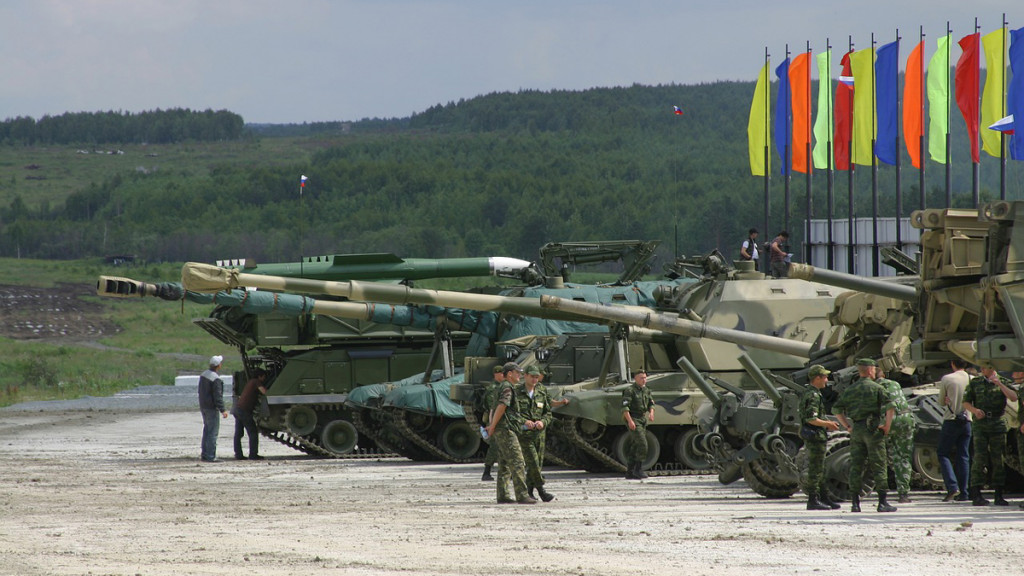
Over the past few days, Russian Foreign Minister Sergey Lavrov met with his Laotian counterpart Saleumxay Kommasith in Vientiane, the capital of Laos. Minister Kommasith thanked Russia for its help during the Covid-19 pandemic. The meeting was part of Moscow's broader "turn to the East" policy as a strategy for strengthening relations with the Asia-Pacific region, which hinges on Russia's leadership in arms sales and defence investments. This strategy has recently seen developments in Laos, with the start of the joint construction of an airport and defensive infrastructure.

Vladimir Putin recognises great potential in Southeast Asian countries and advances his strategic objectives by focusing on defense diplomacy. This emphasis on hard power is a peculiarity of the Kremlin's foreign policy, whose political culture values less the pervasiveness of soft power. According to several analysts, it is precisely Moscow's geostrategic ambitions and security imperatives that have allowed for a strengthening of cooperation with the Asia-Pacific region.

In recent years, Moscow intensified its efforts to sell arms to East Asia. However, the uncontested primacy in the sale of military supplies in the region seems to be showing signs of waning. Exports are in decline, mostly due to the Countering America's Adversaries Through Sanctions Act (CAATSA), passed in 2017 by the Trump administration. Faced with Russia's continued involvement in the wars in Ukraine and Syria and its interference in the 2016 US elections, Washington's reaction was not long in coming: the law imposes sanctions on anyone who has commercial relations with the Russian military-industrial complex. During 2015-19, Russia's arms exports to the Southeast Asian region amounted to $ 2.7 billion, down from $ 4.7 billion in 2010-14, according to Ian Storey of the Institute for Southeast Asian Studies (ISEAS). Between 2010 and 2019, Russia's global exports also declined, falling from $ 36.8 billion in 2010 to $ 30.1 billion in 2019, a drop of 18%.

The countries of Southeast Asia play a strategic role. The growth of national defence spending goes hand in hand with economic development. "Weapons have flowed into Southeast Asia in recent years in part because ASEAN nations can now afford to buy them," said Siemon Wezeman, a researcher at the Stockholm International Peace Research Institute (SIPRI). Trade with Russia has several advantages: arms prices are much more competitive than those of competitors such as the US, China and the European Union. In addition, "Russia is flexible on non-cash payment methods, which gives it an edge in developing economies," said Shinji Hyodo, director of policy studies at Japan's National Institute for Defense Studies. For instance, Indonesia is expected to pay half of its payment for Su-35 jets with exports of palm oil, rubber and other products. But the real strategic advantage is that Moscow does not require any ideological counterpart, contrary to what happens with the United States and the EU, which asks for political performances on human rights and democracy. This is why Myanmar cannot import weapons from the EU due to an embargo that has been in place since 1990. Similarly, the 2014 military coup in Thailand also led to restrictions on the part of European suppliers.

Vietnam and Myanmar are the main Russian arms destinations, followed by Malaysia, Indonesia and Laos. In Vietnam, Russia dominates 60% of defence imports. In Myanmar, the role of arms supplier is particularly controversial, due to the recent military coup. Last month, a Russian delegation secretly visited the coup military junta amid protests from human rights activists. Among the other members of the delegation, there was a representative of Rosoboronexport - a state agency that deals with exports of defence-related goods and services. The Burmese coup leader Min Aung Hlaing returned the visit on 22nd June, proving that the military cooperation between the two countries does not seem to show signs of abating. Indeed: Russia was among the countries that at the United Nations abstained from the assembly resolution calling for an arms embargo in Myanmar: Russia and China are in fact the country's two largest arms suppliers.

The countries of the region are working on an autonomous role in international relations, and the competitive advantages represented by Russia could be outclassed by different calculations. The urgency of dealing with security issues such as Myanmar and the South China Sea is combined with the desire to protect regional stability and the quiet life of its inhabitants. The Kremlin's defence diplomacy will have to diversify its offer of defence-related goods and services to compete with increased international competition.