
Asean

Overview of labour market in ASEAN member States

By Carola Frattini

Work is the fuel of an economy and therefore it is important to have a picture of the labour market in ASEAN countries to understand its development and possible future scenarios.

Work is of vital importance in a state, and therefore it is at the heart of the Italian constitution. In particular, the labour market affects the economy of a country since it is the place where workers and employees interact with each other. A faster and stronger economic growth is fostered by a healthy labour market. A strong labour market also involves higher employment rates, higher wages and lower social inequalities between individuals. In addition, data on the labour market are also important for entrepreneurs who want to open a business in the country of interest and for investors who want to invest in local companies.

More than half of the world’s workforce is located in Asian countries and, in particular, 10% in Southeast Asia. Employment rate, unemployment rate and the labour force participation rate are fundamental statistics to understand the labour market of a country. Looking at the unemployment rate of the ASEAN countries over the last decade, it is possible to see that some of them experienced the lowest rates in the world. In general, in the period from 2006 to 2020 the unemployment rate has remained higher in Europe than in the ASEAN countries. This trend seems to continue since, according to data collected from the Italian Ministry of Foreign Affairs, the unemployment rate of ASEAN 2021 is 3.2% while the European rate is 7.3%. In addition, with a range between 67.5% and 84.4% Cambodia, Thailand and Vietnam have the highest participation rate in the workforce among ASEAN countries.

Many ASEAN countries, before Covid-19, showed promising signs of labour market development. For example, the Philippines, one of the three largest economies of Southeast Asia, was experiencing a period of expansion, accompanied by an increase in wages and a decrease in people engaged in "informal work". As a matter of fact, one of the problems of the Philippines' labour market has always been informal work, an employment relationship in which workers' rights are not respected. Unfortunately, Covid-19 has stopped and perhaps reversed these encouraging trends leading to a rise in the number of people involved in informal work but above all to an increase in the unemployment rate.

Although not all ASEAN member countries have yet published official and complete data on unemployment in 2020, it is irrefutable that some Southeast Asian countries experienced a strong increase in the unemployment rate according to a study by the "Asia-Europe Institute". However, an increase in the unemployment rate may have long-term effects. When an economy is hit by such a negative shock (one example can indeed be Covid-19 and its consequences) hysteresis of unemployment can result. Hysteresis of unemployment consists of a prolonged period of high unemployment due to an increase in the number of people in long term unemployment. This is a serious problem because people in long-term unemployed lose basic skills over the years and therefore it will be more difficult for them to be recruited and return to work. AS a consequence, reducing the unemployment rate will be a much more difficult task.

The labour market of ASEAN countries is also experiencing a relocation of jobs in different sectors due to Covid-19. During the pandemic, the tourism sector and all those sectors relying on interpersonal contact were the most affected and are also the ones that are now struggling to recover. The sectors which are catching up faster are those which require workers to have specific skills. This can become a problem for the matching efficiency of supply and demand in the labour market. Since the unemployment rate has risen, more workers are looking for a job, but they do not always have the required skills. This may lead to the persistence of long-term unemployment since workers are not qualified for the available positions.

Despite these potential problems, the International Labour Organisation seems to believe that the labour market of ASEAN’s member countries is already recovering, showing that Covid-19 has only slowed down and has not stopped its development.  

Per ulteriori informazioni sul mondo del lavoro nei paesi ASEAN

A new wave of Covid threatens the recovery in Asia

Several Asian countries coped efficiently with the outbreak of the health crisis, containing and preventing infections. The timeliness of the measures adopted is now threatened by the shortage of vaccines

A new wave of infections from COVID-19 has swept through the Indo-Pacific region in recent weeks. On the other side of the hemisphere, vaccines are being used, but the virus is spreading to several Asian countries. These include various ASEAN states such as Singapore, Vietnam and Malaysia. The first two were considered to be among the world's strongholds in the fight against COVID-19 in 2020. Their national authorities had been so virtuous in containing the epidemic that international media referred to a real "Asian model" of health crisis prevention. In addition to the well-known cases in China, South Korea and Taiwan, this model also included several ASEAN countries. At that time, international observers had long wondered about the political and cultural reasons for this success. However, this time, the main cause of the new emergency is clear: the shortage of vaccines.

According to the research institute Our World Data,, less than 20% of the population has been vaccinated in eight of the ASEAN countries - except Singapore, which vaccinated half of its citizens, and Myanmar, whose data are partial and only up to 15th May. Compared to estimates of more advanced countries, the disadvantage is clear: 52.71% of the US population is vaccinated, 46.6% of that of the European Union and 43.21% of the Chinese population. Initial supplying of vaccines has been a challenge worldwide, but it was the wealthiest and most affected countries that were quickest to acquire vaccine patents. Those in Southeast Asia, with lower infection rates, did not take advantage of this comparative advantage or hesitated in the face of the Sino-US competition shifting from trade to vaccine diplomacy.

"To end the pandemic, both defensive and offensive strategies are needed. The offensive strategy is vaccines," suggested Jason Wang, a professor at Stanford University School of Medicine. According to Prof. Wang, when the threat perceived by the population decreased, governments only responded to that threat in a reactive way. Therefore, the most common strategy in the ASEAN area was to close national borders, a functional defensive measure also aimed at appeasing some xenophobic drifts that were gaining space in the public discourse on the health crisis. Furthermore, as Peter Collignon, physician and professor of microbiology at the Australian National University said, "the reality is that those who produce the vaccines keep them to themselves". In seeking politically acceptable answers to this reality, representatives of national governments in East Asia thought that there was basically no reason to hurry. While in Europe and the United States the vaccine rush was also a source of national pride, the South Korean Minister of Health, as an instance, declared at the end of 2020: "We are coping with Covid-19 relatively well so we don’t have to begin vaccination in a hurry when the risks have not been verified yet”.

Currently, Vietnam, which received praise from the international community for the efficiency of its prevention, is experiencing the worst wave since the pandemic began. Since the new wave started at the end of April, it has risen from very few daily cases to having almost 500 every 24 hours, with an exponential increase in total infections in just two months (from 3,000 to 13,000 cases approximately). Thailand, Cambodia and Malaysia are also grappling with new restrictions, especially Kuala Lumpur, which has planned an extension of the national lockdown until at least 28th June.

Some countries in the area hoped to boost tourism by gradually reopening their borders. In Cambodia, the Philippines and Thailand, the sector’s contribution to the national economy is close to 20-30%, so a rapid recovery in international travel could have made a major contribution to the region's economic recovery. In contrast, international passenger traffic in Southeast Asia has been stuck at around 3% of pre-pandemic levels for several months, according to Channel News Asia. The situation can only worsen, as successful vaccination campaigns in other parts of the world will allow the tourism sector to recover, leaving several Asian countries behind.

Thailand is determined to implement the measures necessary for the economy to recover. On Wednesday 16th June, government representatives said they were ready to reopen the borders within 120 days for travellers showing a valid vaccination certificate. Phuket is the destination chosen for the pilot programme to welcome tourists from low- and medium-risk countries, provided they do not leave the island for at least 14 days. This is the “Phuket Sandbox plan”, which was approved in late May by the Thai government's economic task force, and comes just days before the start of a mass vaccination campaign. The hope is that this will help those who live off tourism-related activities and have suffered severely from the absence of the 40 million tourists a year who visited the country before the pandemic.

Bangkok's efforts may prove insufficient if countries continue to react unevenly to the new wave of COVID-19. A coordinated economic recovery cannot do without vaccine-related health security. The backlash suffered by ASEAN countries, and more generally by a large part of East and South Asia, risks slowing down the region's post-Covid economic recovery and making in vain the extraordinary timeliness with which several Asian governments stemmed the contagions in 2020.

Energy, ASEAN's countries bet on nuclear power

By Sabrina Moles

Five ASEAN countries (Indonesia, Malaysia, Vietnam, Thailand and the Philippines) have included the development of civil nuclear energy in their development strategies for the coming years

Energy security in ASEAN countries is an urgent problem for their development strategy. The need to respond to the energy challenges of the future is also increasingly linked to the climate issue and the zero-emissions target. In this complex political, economic and social framework, an option that has never been considered by the group until recent years is coming forward: nuclear energy.

ASEAN countries are catching up with high-income countries in the race for next-generation energy, financing ambitious projects for renewable energy. In this way, ASEAN aims to create an ecosystem of collaboration, exchange and growth in the energy sector, a strategy that it is now also trying to transfer to the nuclear sector. Among the determining factors emerges the energy demand of the countries of the region, which has increased by 80% since 2000. This is combined with the need for alternative and less-polluting energy sources, precisely because the rapid consumption growth has also given the boost to emissions with direct consequences also on public health. It is estimated that more than 650,000 people per year will die from harmful emissions in the ASEAN states by 2040, compared to about 450,000 in 2018. Driven by environmental, economic, and social needs, the region has recorded one of the most promising rates of growth in the renewable sector. The plans of the ASEAN countries are ambitious and aim to raise the share of renewable energies to 70% of the total energy mix. However, achieving zero emissions will require a major effort, which is why nuclear power seems to be a solution consistent with ASEAN's goals.

The post-Covid crisis has led governments to rethink their energy development strategy more pragmatically, including the nuclear option. Plants are becoming increasingly durable: in a few years, we have gone from around 40 years of plant life to more optimistic estimates of 90-100 years. The environmental impact of nuclear energy compared to its efficiency would further justify investments in this sector. According to the ASEAN Centre for Energy (ACE), nuclear power has the same climate footprint as wind power, when emissions from the raw material extraction process, maintenance and decommissioning of infrastructure are also calculated. Another element is the so-called CF factor (capacity factor). This measures the ratio between energy generated and energy that can be generated, giving a picture of the reliability of an energy source, how much output it produces based on its potential. . According to the calculations by the US Energy Information Administration (EIA), the CF of nuclear energy reached 93.5% in 2019, a level much higher than all other energy sources.  These figures reach a maximum of 52% for wind power, while they drop to 21% for solar power.

ASEAN countries are strongly interested in promoting nuclear energy, which they said was always - even before the pandemic - ‘underestimated’. For this reason, the plans promoted by the group of Southeast Asian countries include a clear roadmap for implementing nuclear energy projects in the region. An interesting element, mentioned many times in the Memorandum of Understanding signed in March 2021 with the World Nuclear Association (WNA), is the issue of public acceptance. A few paragraphs of the chapter on civil nuclear power in the document for phase II of the APAEC (ASEAN Action Plan and Energy Cooperation) for 2021-2025 are dedicated to the so-called ‘literacy’ of citizens on nuclear power. In Asia, nuclear concerns came after the Fukushima-Daiichi plant accident, followed by a wave of statements from the West about the recession from nuclear power. States such as Germany, Belgium, Spain, and the United Kingdom have already declared that they will shut down their reactors by 2030. However, the trend is not global, quite the contrary. There are just as many countries that are undertaking new projects, from the Middle East (United Arab Emirates, Egypt, Iran) to Asia, passing through Russia.

The new strategy will require not only communication, according to the Phase II document, but also other forms of preparation before construction begins. These include the creation of a solid knowledge base on the world of nuclear energy and international safety standards. Here the most important players on the scene can play a significant role: ASEAN already started relying on international cooperation to plan its nuclear future. Since 2016, a collaboration with the Government of Canada has begun under the "ACE-Canada" project. The joint work has resulted in the first real feasibility study for nuclear energy in ASEAN countries. Released in April 2018, the report gives an overview of the state of human and economic capital available to ASEAN to launch an energy development program. Collaboration with foreign countries allows the group's objectives to be framed in terms of sharing expertise not only from a technical point of view but also as capacity in legislation, the adaptation of local policies and communication of risks and benefits.

Half of the ASEAN countries have sufficient knowledge and resources to implement civil nuclear plans. Indonesia, Malaysia, Vietnam, Thailand and the Philippines are identified as leading the way in terms of advanced regulatory frameworks, capacity to build nuclear infrastructure and training of competent human resources on various project aspects (but not only). The plans of these five countries have already included the nuclear element in the development strategies for the coming years. The Philippines aims to activate the nuclear power plant of Bataan, in the north of the country, and never operational since its construction was completed in 1984. The choice to build nuclear power began during the 1973 oil shock as an energy security strategy and now returns to respond both to systemic risks in the energy market and to align with global climate targets. Indonesia's first power plant is scheduled to be operational in 2030, with two more due to arrive in 2035. Malaysia and Thailand are also looking to the same deadline: Malaysia is the most prepared for the leap to nuclear power, thanks to effective collaboration between the government and the body responsible for the nuclear power programme, the Malaysian Nuclear Power Corporation.

The nuclear option is also not excluded for Laos, Cambodia, and Myanmar. These countries have entered into nuclear agreements with Russia, although hydroelectric and solar projects with China prevail. This choice is also made given the availability of Chinese capital for these projects, while nuclear power plants have significant upfront costs for their construction that curb the ambitions of governments. This does not rule out the possibility that soon the commercialisation of Chinese reactors will also reach the southern neighbours, especially due to the potential of the so-called small modular reactor on which China is focusing as part of its strategy to open up global energy markets. Brunei and Singapore are the two great unknowns of ASEAN nuclear power. However, the Asian metropolis-state is working to develop significant know-how in the field of nuclear safety, and sustainable self-sufficiency seems to have become the new post-pandemic imperative.

East Timor 11th ASEAN’s member: is 2022 the right year?

After a long expectation, finally, East Timor could join ASEAN next year

An 11th Southeast Asian country is ready to sit at the ASEAN table next year: East Timor could become part of the most important political, economic and cultural organization in the Pacific region. East Timor has been officially recognised as an independent state less than 20 years ago, but its recent history is full of episodes of violence and conflicts, which developed in the last 30 years of the 20th century during the struggle for independence from Indonesia.

In 1975 the island of Timor was abandoned by the Portuguese, marking the beginning of the country’s decolonization process. However, the situation on the island was unstable due to the disputes between the country's three main parties, and Indonesia took advantage of this by occupying East Timor with its military troops. The following year, Indonesian dictator Suharto proclaimed Timor Timur a new province of Indonesia.

For about 24 years, there have been violent clashes in the area between Indonesian military forces and the socialist-revolutionary forces of the Revolutionary Front of Independent East Timor (FRETILIN), the movement formed by rebels demanding independence for Timor. Indonesia's control of the territory was repeatedly challenged by the United Nations, which, however, only intervened to resolve the conflict in 1999. In the preceding years, in fact, Indonesia received the support of numerous western states that were interested in maintaining good relations with Suharto's authoritarian government (only Australia, now one of East Timor's main trading partners, supports its independence).

However, it was in the 1990s that the atrocities committed by the Indonesian military came to light: thanks to a television report by Australian journalists, the images of the Santa Cruz massacre of 12 November 1991 in the capital Dili, in which the Indonesian military fired on the Timorese crowd causing the death of about 400 civilians, were broadcast all over the world.

Indonesia lost international credibility and the situation favoured FRETILIN, which in the following years found the support of the United Nations thanks to the International Force for East Timor (INTERFET), a military contingent composed of soldiers from 17 countries who in 1999 intervened to put an end to the conflicts.  

With the fall of Suharto's government, who resigned as President of Indonesia in 1998 following several scandals, his successor Jusuf Habibie held a referendum for independence approved with 79% of the votes of the inhabitants: East Timor is no longer under the control of Indonesia.

From 1999 to 2002 the United Nations Transitional Administration (UNTAET), the special United Nations mission was tasked with establishing peace dialogues between the ethnic groups present in East Timor to create an autonomous local government and lay a solid foundation for the development of the country, which at the time was one of the poorest in the world with a per capita income of around $350. Thanks to UNTAET, the economy grew by 18% in 2000 and public facilities such as schools and hospitals were built in the country.

Finally, 20 May 2002 marked the birth of the State of East Timor with the inauguration of the country's first government led by Xanana Gusmao, leader of FRETILIN.

The process of joining ASEAN began as early as 2000 when President Ramos Horta, during his speech accepting the Nobel Peace Prize, said that East Timor would soon seek to join the most important association in Southeast Asia.

With the political stability achieved during the Gusmao government and a stronger and growing economy, thanks to the revenues derived from oil and natural gas deposits in East Timor's territorial waters, the country believes it is ready to sit at the table with the ASEAN countries. East Timor was invited to participate in the organisation's summits and obtained observer status. In 2007, it signed the Treaty of Amity and Cooperation (TAC), which had hinted at its imminent entry into the association.

However, this did not happen.

East Timor's integration process has been stalled for more than a decade due to the misgivings of some member countries such as Laos and Singapore, which hindered its entry into ASEAN.

In November 2007, the member countries signed the ASEAN Treaty to bring the organisation closer to the European model, but for East Timor, there were additional points that had to be met to join the organisation.

Previously, in order to become an official ASEAN member, certain parameters had to be met, such as being a state present in the Southeast Asian region and participation in the organisation's fundamental principles (respect for sovereignty, independence, territorial integrity and non-interference in the internal affairs of a member state). Instead, the 2007 treaty introduced the requirement of a unanimous vote by all ASEAN members, a change that effectively interrupted East Timor's hopes of joining the organisation for many years. In 2011, the country submitted its official application to join ASEAN and only in the last two years have we only in the last two years has there been any sign of East Timor being accepted as an 11th member.

Despite the economic prospects for future foreign investments and the good commercial relations with Thailand, Indonesia and Singapore (as well as the flourishing relations with Australia), the latter has for many years been against the entry of East Timor into ASEAN, presenting among the reasons the weak political stability of the country and an economy still too dependent on international aid.

East Timor has improved its economic stability over the years not just relying on gas and oil reserves, but with investments in the international market and with the increase of its private and agricultural sector, with exports of products such as coffee and rice.

The good economic results led in 2014 East Timor to have a higher growth rate than Cambodia and in line with the parameters of Vietnam, Myanmar and Laos while for over 25 years, according to the Timorese Ambassador in Jakarta Ermenigildo Kupa Lopes, the country does not depend on international aid.

Political stability is another element that has traditionally been criticised and would make East Timor's entry into ASEAN more complex. However, if we look at the data of the Southeast Asian countries, Thailand and Myanmar do not stand out for their strong political stability either, ranking 141st and 171st respectively in the global ranking. A report published by the Economist Intelligence Unit also highlights that in terms of the degree of democracy of countries, East Timor is ahead of all ASEAN members and even ahead of some EU countries.

Despite the doubts expressed by Singapore, the support of the other ASEAN countries and in particular Indonesia and Cambodia makes East Timor's hopes more concrete. Last year, Hun Sen, the President of Cambodia, has confirmed that Cambodia will stand for East Timor, whose entry into ASEAN would be important from a geopolitical and economic perspective as well for fulfilling the dream to unite all the countries of Southeast Asia under the same organization. With Cambodia taking over the role of ASEAN presidency in 2022, the dream could come true.

Sustainable Development in EU-ASEAN free trade agreements

By Pierfrancesco Mattiolo

The EU aims at a 'values-based' trade policy and promotes environmental protection and social rights with its free trade agreements. This approach has influenced negotiations with ASEAN countries.

International trade and sustainable development are inherently linked. Increased traffic of goods brings greater economic opportunities for both the EU and ASEAN countries. Yet it could also encourage the exploitation of natural and human resources in violation of international standards. Brussels accepted the challenge and upped the ante: recent free trade agreements (FTAs) include TSD (Trade and Sustainable Development) chapters to increase commitment and cooperation in achieving the United Nations Sustainable Development Goals (SDGs). Alessia Mosca - Vice-President and Secretary-General of the Italy-ASEAN Association, - spoke on 4th June at a conference organised by the Collegio "Bernardo Clesio" of the University of Trento on this issue, describing how the European trade doctrine has evolved in recent years and how relations with ASEAN countries have developed. The topic is also relevant to other regions: Mosca discussed with Paolo Garzotti - Head of the Latin America Unit at the European Commission's DG Trade and former Deputy Head of the EU mission to the World Trade Organisation (WTO) - who is currently involved in negotiations with the Mercosur countries.

The European Commission had already made clear its intention to pursue 'a Trade and Investment Policy Based on Values' in the strategy document Trade for all, including as objectives of its trade agenda the promotion of sustainable development, human rights and good governance. The document is dated October 2015, within a few weeks the EU-South Korea Free Trade Agreement (already in force provisionally since 2011) would be formally ratified, the first of the so-called ‘second generation agreements’. This new generation of FTAs differs from the previous one since it includes chapters on subjects never covered before: trade in services, protection of intellectual property and, indeed, the promotion of sustainable development through trade (TSD).

The concept of "sustainable development" embraced by the EU is the one defined by the UN in the 2030 Agenda for Sustainable Development, also signed in 2015, and combines the protection of the environment with social and economic growth. Looking at the TSD Chapters of the second-generation agreements, for instance, we find provisions that require partners to comply with international climate agreements or to ratify and implement International Labour Organisation (ILO) conventions. Last February, the Commission reaffirmed in its Trade Policy Review that it would not only continue to pursue the UN's Sustainable Development Goals through trade policy but it would also be more assertive in enforcing FTAs and TSD chapters.

As far as relations with ASEAN countries are concerned, the EU has signed two FTAs with Singapore (EUSFTA, 2018) and Vietnam (2019) to date, while the one with Indonesia is at an advanced stage of negotiation. Consistent with the line expressed by the Commission, all these agreements include a TSD chapter. For the EUSFTA, negotiations on the chapter were particularly straightforward, as Singapore was already aligning with core ILO standards, and also produced rules on fisheries and logging. The Agreement with Vietnam also provides a noticeable level of commitment to labour rights (which Hanoi has followed up by by ratifying important ILO conventions) and environmental protection. Singapore and Vietnam are respectively the EU's first and second trading partners among ASEAN countries in terms of trade in goods and services, and the two FTAs will set a key precedent for future negotiations with other countries in the region. However, it is not enough to put commitments in writing: particular attention will have to be paid to the effective implementation of the TSD Chapter and, if necessary, to the enforcement of the Agreements. The involvement of civil society in the partner countries will be essential to measure the progress made in practice and, precisely for this reason, the FTAs provide for ad hoc stakeholder consultation tools.

While negotiations on the trade agreement with Indonesia are at an advanced stage, the other tables opened by Brussels with the ASEAN countries are at a standstill (Malaysia, Thailand, the Philippines). It is precisely on the TSD chapters that differences in views between the EU and its partners on specific issues become visible. For example, the issue of vegetable oils is not easy to handle for the Commission, as it seeks to strike a balance between the demands of European public opinion and the sensitivities of Jakarta and Kuala Lumpur - sensitivities that sometimes even lead to legal action at the WTO. However, it is important to recall that FTAs are not the only instrument with a TSD approach used in the region: Generalised Schemes of Preferences (GSP) have proven to be an effective means to grant privileged market access to the EU market to countries such as Cambodia, Myanmar (both beneficiaries of the most favourable regime, EBA - Everything But Arms, which grants duty and quota-free exports to Europe) and the Philippines. In order to continue to benefit from the GSP, however, the partners must commit to adopting and implementing sustainable development policies. Otherwise, the scheme will be revoked, a measure adopted against Cambodia after a long process of scrutiny and confrontation and that could also be taken against Myanmar. The dilemma facing the EU is not an easy one to solve. On the one hand, it is necessary to be rigorous in imposing on ASEAN countries the respect of environmental and social obligations, in line with the European ambition to have a "value-based" trade policy, in which the commitments on SDGs taken at bilateral and multilateral level with the partner are binding. On the other hand, it is also necessary to bear in mind these countries' needs and the risk that, in the absence of an agreement with the EU, they may end up in the commercial sphere of other powers. Deepening the relationship between Europe and each ASEAN country is a necessary precondition for greater cooperation on the challenges of the 2030 Agenda.

EU-ASEAN agreement on air transport to boost economic recovery and tourism

The EU and ASEAN signed the first historic bloc-to-bloc air transport agreement to increase inter-regional connectivity. It will be a vector for the economic recovery of Southeast Asia and the relaunch of post-Covid tourism

ASEAN and the European Union concluded negotiations on the Comprehensive Air Transport Agreement (AE CETA) during the extraordinary meeting of their respective senior transport officials, held virtually on 2nd June 2021. The signing of the agreement comes after eight rounds of negotiations that began in 2016 and were led by Singapore and the European Commission. The negotiations lasted a long time, as air rights are a sensitive issue: airlines are often regarded as external projections of respective nations, as many of them enjoy direct support from national subsidies. The AE CETA is the world's first air transport bloc-to-bloc agreement, thanks to which ASEAN and EU airlines will enjoy more opportunities to operate passenger and freight services between the two regions and on trans-regional routes. Adina Valean - European Commissioner for Transport - said that the agreement provides essential guarantees of fair competition for our airlines and European industry while strengthening our mutual trade and investment prospects.

The agreement aims at increasing the competitiveness of the respective air transport services. Indeed, respective companies will be able to carry out any number of services between the territories of the European Member States and Southeast Asia, and up to 14 weekly passenger services and any number of cargo services. Strengthening relations between the European Union and ASEAN will bring about a series of concrete benefits: the efficiency of the respective sectors will improve, market access will be facilitated, new business opportunities will be created based on the principles of fairness and transparency, as well as a more homogeneous regulatory framework for the labour market. The European Commission estimated that in the first seven years after entry into force, the agreement could create up to 5,700 new jobs and generate up to € 7.9 billion in economic benefits.

The AE CETA is a further sign of the intensification of inter-regional relations between Europe and Southeast Asia and contributes to enhancing their political and economic relations. The agreement is part of other initiatives such as the regional integration support program (ARISE Plus) and the commitment to strengthen cooperation on climate change (which includes the carbon offsetting and reduction scheme for international aviation, the EU-South East Asia Aviation Partnership). Dato Lim Jock Hoi - ASEAN Secretary General - commented on the agreement by saying that with $ 10.5 billion in foreign direct investment flows and $ 226.2 billion in trade in goods in 2020, the EU is already the third source of investment and the third trading partner for ASEAN The agreement would significantly strengthen air connectivity between ASEAN and Europe and bring the two regions even closer.

The deal will provide more connections and better prices for passengers. In this regard, increasing connectivity between the two regions will also reinvigorate the tourism sector, which has been hit hard by recent containing measures imposed due to the Covid-19 pandemic. The president of the Cambodian section of the Pacific Asia Travel Association, Thourn Sinan, said that one of the shortcomings in the tourism sector is that air connections are still limited. “In the past, we relied heavily on the countries around us (...) I see it, if the government could connect Cambodia to Europe or major European cities with direct flights, it would be a godsend for Cambodia, given the huge EU market, with the potential for agricultural and industrial products Cambodians”, he added. As reported by The Star, tourists are a great asset to the economies of Southeast Asia. Suffice it to say that leisure and business travel accounts for around 5-10% of national GDP in countries such as Malaysia, Singapore and Thailand.

Singapore Transport Minister S. Iswaran enthusiastically welcomed the conclusion of the agreement. Indeed, negotiations were led by representatives of the Asian city-state. He said: "The successful conclusion of the ASEAN-EU global air transport agreement It is a historic achievement and a milestone in our bilateral ties. It is the first such region-to-region agreement and a declaration of commitment by ASEAN and EU Member States to work together to overcome the current crisis of Covid-19, reconnect and resume cross-border travel".

An urban sustainable development to save Asian cities from environmental catastrophe

By Michelle Cabula

In some of the major Southeast Asian cities, the impact of climate change risks undermining growth and strong economic dynamism. However, businesses and financial operators have the opportunity to play a key role in sustainable development and recovery strategies.

The Environmental Risk Outlook 2021 published by the consulting firm Verisk Maplecroft on 13rd May highlights an alarming fact: currently, the quality of life of 1,5 billion people living in the world’s major metropolitan areas is at the mercy of "high or extreme" environmental risks. These include pollution, water scarcity, extreme temperatures, natural disasters, and climate change-related risks.

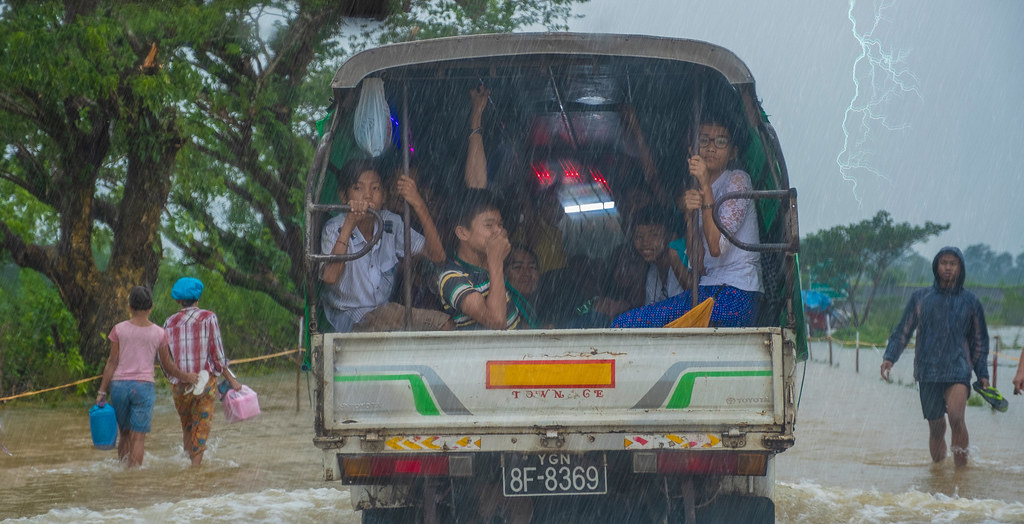
Asia is "in the eye of the environmental storm" - 99 out of the 100 most vulnerable urban centres are in the continent - ASEAN member countries are particularly sensitive to the alarm raised by the report. In Southeast Asia the climate emergency is intertwined with the recurring threat of extreme weather events (such as typhoons), and exacerbates their effects, resulting in increasingly devastating and complex phenomena from which local emerging economies may struggle to recover. The most vulnerable cities in the area include Indonesia's Surabaya and Bandung, along with the capital of Malaysia Kuala Lumpur, and Singapore. Jakarta has a double record: the Indonesian capital faces recurring earthquake disasters and flooding, and increasingly severe air pollution while sinking below sea level at an unparalleled rate worldwide.

These data suggest a worrying scenario, in which not only ecosystems but also future perspectives of economic and social development would be put to the test. This is particularly true in an area that aims to become increasingly attractive to investors. The growing burden of climate risk in the cost-benefit analysis risks making investments in vulnerable cities and areas less secure and profitable, and therefore less attractive. This could affect long-standing efforts to make Southeast Asia a prime destination for financial flows.

The  methodology adopted in the report is in line with the recent trend of integrating non-financial parameters in the analysis of investment decisions, the development of operating standards to which companies must aspire, aware that the demarcation lines between environmental, political, social and economic risks are more and more blurred. The new paradigm of sustainability and financial responsibility provides for the integrated assessment of Environmental, Social and Governance (ESG) issues and aims to harmonize the pursuit of economic objectives with the protection of the interests of other stakeholders involved.

As stated by Fabio Panetta, economist and member of the Executive Board of the European Central Bank (ECB), the application of the ESG model to the world of finance "is an important innovation to place the financial system at the service of collective well-being" and "has become a key tool for dealing with climate risks, which have become progressively more serious due to the emergence of irreversible environmental damage". The potential of green and sustainable finance for recovery and long-term growth was also seen by the ASEAN Capital Markets Forum (ACMF). In a virtual meeting held in March, the ASEAN Finance Ministers approved the Action Plan 2021-2025, which places the promotion of growth and recovery in a sustainable key among its strategic objectives. At the same time, the Asian Development Bank (ADB) is working closely with local governments, developing strategies to channel private sector funds into green infrastructure development that can ensure a sustainable recovery from the pandemic crisis.

Will Nichols, Head of Climate and Environment research at Verisk Maplecroft, predicts that the issue of environmental sustainability in Asia's major urban centres will become crucial not only in the public debate and political agenda but also in business strategies. On the one hand, it is in the interests of companies and investors that want to make their businesses more resilient and competitive to align themselves with increasingly demanding environmental standards. On the other hand, a careful allocation of resources that takes into account the need to mitigate environmental risks would make it possible to strategically finance activities capable of producing a real positive impact on the development of Southeast Asian countries. This would make urban contexts more livable and safer and contribute to improving the quality of life of those who live there.

The importance of the Mekong for ASEAN

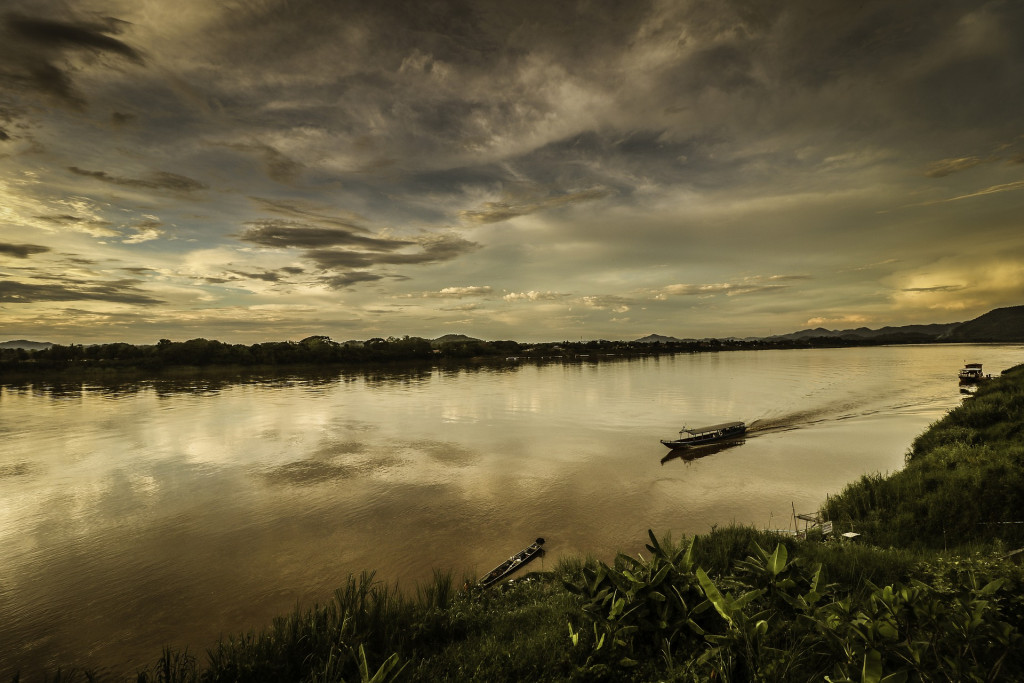
The Mekong is one of the most important rivers in Southeast Asia and the one with the greatest environmental, economic and geopolitical significance. The Mekong is a vast ecosystem with very rich biodiversity that must be protected to combat climate change. It also has an economic value as the main waterway: the river provides large quantities of fish and contributes to the irrigation of vast rice fields, enabling over 60 million people to live off it.

The river originates in China (where it is called Lacang), for a long stretch it crosses it before marking the border with Myanmar and entering Laos, where it is shared with Thailand, and after flowing through Cambodia ends its journey in a wide delta near Ho Chi Minh City in Vietnam. The river then reaches, in addition to China, five ASEAN countries: Myanmar, Laos, Thailand, Cambodia and Vietnam. Since the river crosses several states, it is at the centre of various geopolitical interests. In this regard, it should be remembered that for several years now, China has been pursuing a policy in Southeast Asia aimed at binding the continental countries of the area more closely to itself, based on the construction of infrastructures in exchange for political support at an international level. This policy, with the sole exception of Vietnam, is succeeding in Myanmar, Laos, Thailand and Cambodia. The latter has so favoured Chinese investments that it has been repeatedly accused of becoming a "client state" of Beijing - in fact during its presidency of ASEAN in 2012 - it supported Chinese positions in the South China Sea to the detriment of those of other ASEAN countries.

The Mekong is at the centre of this Chinese penetration strategy and several dams are among the most important infrastructures being planned or under construction. In this case, it can be said that the geopolitical, economic and environmental elements are inextricably linked: when China decided to build 11 dams in its stretch of river, it alarmed the countries downstream because by controlling their sources and thus indirectly the flow of water, it could hold them in check, with potential limitations in the flow of water in case of diplomatic tensions. In addition, China has also favoured the planning of other dams in Laotian and Cambodian territory, which some consider being a strategy of exchanging infrastructure for political support. Precisely, the dams are at the centre of the environmental debate as they could be the cause of the continuous drop in the river level and the resulting droughts (of which the worst occurred in 2019), which could ultimately undermine the productivity of large rice fields and therefore lead to the impoverishment of the communities that live thanks to the river.

Vietnam, during its ASEAN chairmanship in 2020, tried to raise the issue of river management and make it fully part of the ASEAN agenda. Malaysia, Singapore, the Philippines and Brunei are also interested in the fate of the river as they are major importers of rice produced by the Mekong countries. Currently, there are already two frameworks that seek to promote regional management of the Mekong with different objectives: the Chinese-led Lancang Mekong Cooperation, established in 2016, which aims to facilitate the flow of water from China by building dams, and the US-backed Mekong-US Partnership, established in 2020, which seeks to promote sustainable development in the region. From these two frameworks, it is clear that broader geopolitical interests that overwhelm the ASEAN states are at stake.

The Mekong, as highlighted, has its multifaceted importance for Southeast Asia and if ASEAN takes on the task of managing the problems related to the river, it will at the same time contribute to both strengthening its own regional integration and limiting Chinese influence in the area. It will also contribute to the environmental protection of a large area and ultimately to the fight against climate change. The greatest risk for the moment is that the river will become a second hotspot for relations between ASEAN and China (and also the USA) after the South China Sea.

ASEAN e-commerce needs to consider women inclusion

E-commerce is growing rapidly in Southeast Asia, but women are not always the full beneficiaries. Here is how the industry can become a pivotal factor of gender equality for Southeast Asian female workers. 

E-commerce could boost economic recovery and impact the conditions of Southeast Asian women workers, according to a report from the International Corporation (IFC). There is a strong incidence of female entrepreneurs in the economies of the area. For instance, on Lazada’s e-commerce platform, about one-third of Indonesian businesses and two-thirds of businesses in the Philippines are women-owned. However, these companies tend to be smaller, have lower average sales, and have fewer employees.

The IFC, a member of the World Bank, is the largest global development institution. Last week it published the report Women and e-commerce in Southeast Asia, which observes the development trends of the digital economy in the region. The focus is on the driver of the post-pandemic recovery: the spread of online transactions. "In Southeast Asia, e-commerce became a lifeline for individuals' daily essentials as well as a natural business strategy pivot for vendors and brands when offline operations were affected by COVID-19 safety measures", said Chun Li, CEO of Lazada Group.

In general, we have observed ambivalent effects of the COVID-19 pandemic on the economies of Southeast Asia. On the one hand, it has blown away some sectors of traditional economies, which were substituted by the flourishing reality of digital entrepreneurship. Lockdowns and containment measures have required small and large businesses to adapt to a new model of work, production and consumption, where e-commerce has emerged.

On the other hand, the pandemic has exacerbated gender inequalities, , burdening Asian women workers much more than their male counterparts. This shows that technological progress is not a channel for social emancipation: precise political interventions are needed so that material (and digital) availability is converted into real opportunities, especially for women. Female participation in the future of work is listed among the United Nations sustainable development goals, which promote systemic action in support of socio-economic development that cannot be separated from the full involvement of the female workforce. At the regional level, many steps have been taken in terms of policies for female inclusion, but these efforts have not yet translated into progress towards a real increase in the economic and professional weight of Asian women. The most urgent challenges concern labour force participation, gender discrimination in employment, financial inclusion and representation in senior management positions.

Several considerations apply to the digital economy. The e-commerce market in Southeast Asia has tripled since 2015 and is expected to triple again by 2025. The IFC report focuses on how to broaden the beneficiary base of this digital boom and believes it is crucial to overcome discriminatory barriers that prevent women from fully participating in the benefits of the digital economy. The report suggests how e-commerce can offer a solution to the eternal trade-off between family and work, which women are often called upon to deal with. According to the Asian Development Bank, increasing female participation in the workforce and closing the wage gap would have a huge impact on the growth of the region in general: the estimated benefits have been quantified at $ 3.2 trillion in the economies of Asia-Pacific.

Southeast Asia is one of the few regions where the presence of women in the labour market is declining, but it has at least one feature in common with most economies in the world: the vast majority of the unpaid domestic work is done disproportionately by women. In the IFC report, there is the significant testimony of an entrepreneur who says: "My home was far from my workplace and my little one was still a child. Eventually, I decided to quit my full-time job. But I was used to working, so I started selling online”. An example that many others could follow.

If care work employs mostly women, and mostly for free, e-commerce can be a game-changer. It would guarantee more flexibility for Asian workers and allow them to emancipate themselves economically by running a business activity with leaner production models. On the other hand, without adequate public measures to support the substantial inclusion of women in the digital economy, the risk may be to create profitable digital services without questioning the structural discriminations that prevent women's full inclusion in the job market. Asian women workers may be asking for e-commerce as well as "bread and roses" (a song manifesto for the income and dignity of American workers at the beginning of the last century), but the lack of careful political intervention to accompany its development could be a missed opportunity for gender equality.

ASEAN: Believing in the power of ideas

Investment in technology and human capital is giving Southeast Asia a competitive edge in the new digital age

Southeast Asia may soon become a benchmark for the rest of the world in the creation of Knowledge-Based Economies, the most relevant concept for economic progress in the new millennium. A recent report by the United Nations shows that several champions of innovation and entrepreneurship are Asian, with some absolute excellences. Singapore is ranked second in the world - only behind Sweden - for technology transfer; Malaysia is depicted as the top country among emerging economies for human capital and innovative policies.

Significant progress can also be seen in Indonesia and the Philippines, where technological development over the last few decades is resulting in an important entrepreneurial dynamism, as well as bridging several institutional gaps.

In particular, recent studies confirm that in Indonesia the increase in the number of innovative enterprises is leading not only to a technological competitive advantage but also and above all to sustainable economic growth.

The report emphasises the role of three main factors as drivers of economic growth: the quality and access to telecommunications infrastructure (ICTs), the rate of growth of human capital through digital literacy and the free flow of information within countries.

First and foremost, a good telecommunications infrastructure guarantees fast, secure and cheap network access for all. In this respect, the governments of Singapore and Malaysia are among the most promising.

The issue of human capital is closely related: massive investments in training, research and development and digital skills in schools, as well as in orientation courses aimed at better understanding the dynamics of the labour market, always lead to an unprecedented use of the media. This raises awareness to citizens, as well as fostering the free creation and sharing of new ideas from which innovative companies are born and bring wealth, in a virtuous circle.

Southeast Asia is laying strong foundations for moving from a low value-added manufacturing-based economy to an economy to a dynamic knowledge-based economy, where the primary role is played by information transfer and Knowledge-Intensive Entrepreneurs, in a perspective of ‘creative destruction’ of knowledge, here recalling Schumpeter’s works. These entrepreneurs - as in the case of e-commerce and the sharing economy - have created digital ecosystems that permeate every dimension of users' lives, from payments and travel to necessities.

In addition, the pandemic has had important consequences in Southeast Asia: a region inhabited by 600 million people, where proximity and daily physical exchange was a way of life, has seen a radical change in its habits. The latest data show that digitalisation has only brought prosperity to those nations that had previously invested in ICTs, training and research and development.

Philippines, Singapore and Malaysia: who are the new italian Ambassadors

Marco Clemente (Manila), Massimo Rustico (Kuala Lumpur) and Mario Vattani (Singapore) are the new Italian ambassadors in the ASEAN area. That's who they are

Ambassadors have changed in three Italian offices in ASEAN countries. Massimo Rustico was chosen for the Kuala Lumpur office, Marco Clemente for the Manila office and Mario Vattani for Singapore. Here is a short biography of them.

Ambassador Massimo Rustico, born in 1958, entered diplomacy in 1987 after graduating in economics and commerce from La Sapienza in Rome. He began his career in 1989 as the second commercial secretary in Kuwait, before moving to the Permanent Representation of Italy to the UN in New York in 1991. In 1994 he was appointed Consul in Tehran and after the Consulate was abolished, he was assigned to the Embassy as First Secretary. Then he moved to the Consulate General in Houston, where he became Consul General in 2002. Since January 2006 he has been Consul General in Istanbul. Promoted to Minister Plenipotentiary in 2009, in March 2010 he was appointed Coordinator for the internationalisation of Italian companies operating in the construction and large-scale works sector. In the same year, he was temporarily assigned to the National Association of Building Constructors (A.N.C.E.). He then moved to work directly for the Director-General for the Promotion of the Country System, maintaining the same position at the A.N.C.E. until 2015. Finally, he became Ambassador Extraordinary and Plenipotentiary of Italy to Hungary on 14th November 2016. Now he will land in Malaysia: once again - as in Kuwait, Iran and Turkey - he will carry out his duties in a predominantly Muslim country.

Ambassador Marco Clemente, born in 1959, graduated from LUISS in Rome and entered diplomacy in 1985. Initially assigned to the Directorate-General for Emigration, then he was posted to Canberra as the first Secretary of Legation. In September 1990 he was appointed Consul in Caracas. He became Legation Counsellor in 1995 and worked in the Directorate-General for Political Affairs until 1998. Later, in 1999, he was appointed Regent at the Consulate General in Johannesburg and the following year, in 2000, he was confirmed as Consul General. Promoted to Embassy Counsellor in 2002, he was appointed Chargé d'Affaires with Letters to Yerevan (Armenia) in June 2003 and subsequently confirmed in 2006 as Ambassador to Armenia in 2006. Returning to Italy in 2007, he was assigned to the Directorate-General for European Countries until 2008, when he was promoted to Minister Plenipotentiary. Released from his post in 2008 to serve at the Ministry of Defence as Diplomatic Advisor, he was appointed Ambassador to Tallinn on 1st December 2012. Now the new assignment in Manila, a country with which Italy (where the Filipinos are the fourth most numerous community of migrants) has deep relations.

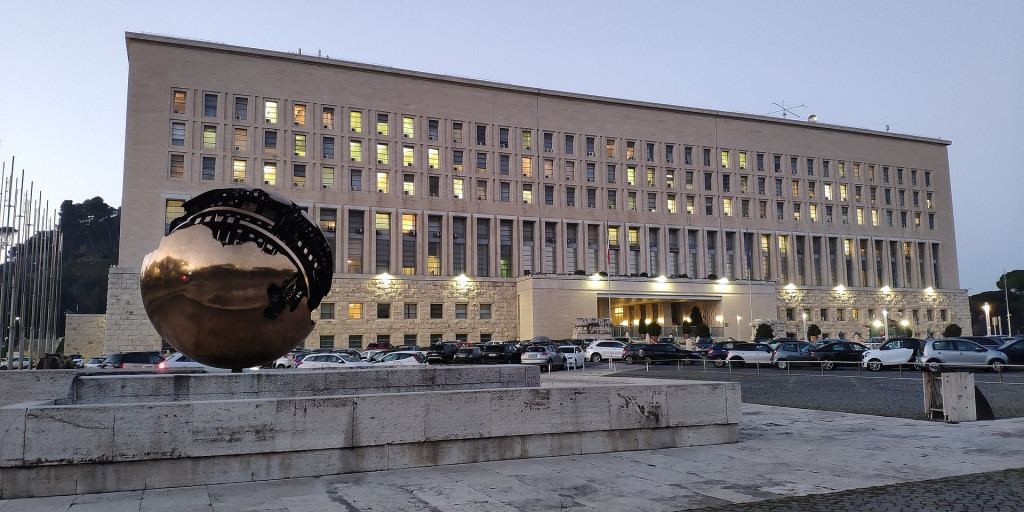
Mario Vattani, born in 1966, entered diplomacy in 1991. His first assignment was in Washington D.C. From 1999 to 2001 he was the Italian Consul in Cairo, while from 2001 to 2003 he was Diplomatic Counsellor at the Ministry of Agriculture and Forestry Policies. In 2004 he was at the Diplomatic Institute, seconded to Tokyo for a study programme and in 2005 he was promoted to Embassy Advisor and confirmed in Tokyo as First Commercial Advisor. In 2008 he served in the Municipality of Rome as Diplomatic Advisor to the Mayor. In May 2011 he was appointed Minister Plenipotentiary and took up his post as Consul General in Osaka. Since 2014 he has been serving at the Farnesina for coordination in the Asia-Pacific sector. In continuity with his commitment in the region, therefore, the appointment in Singapore.

In a period of economic and political rapprochement with ASEAN, the change of guard in the Italian representations does not go unnoticed. It is still too early to foresee the implications of the changes in the diplomatic corps, but it is undoubtedly expected that there will be an even greater commitment on the part of Italy in Southeast Asia. The new Ambassadors have the unavoidable challenge of implementing the partnership by helping Italian exports to this increasingly crucial region and promoting stability in all crisis areas.

Funds to support women workers in Asia

Funds for Asian women workers: the post-pandemic recovery in Asia focuses on the economic resilience of women

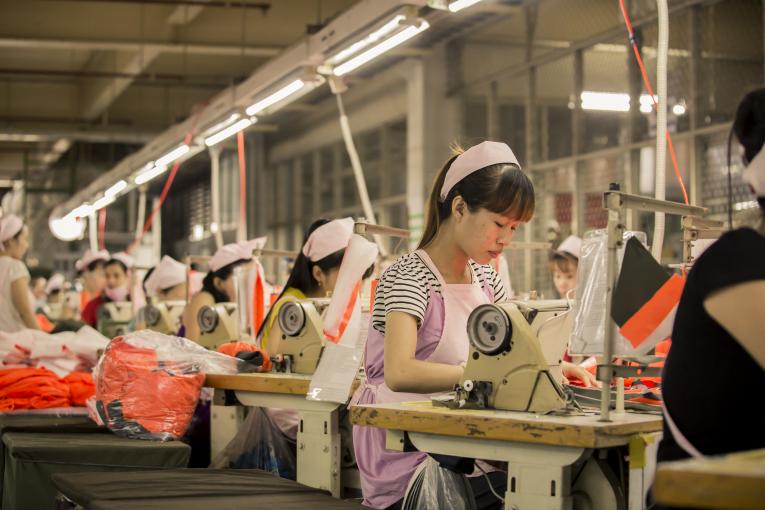
Fashion company PVH has just launched its first funding initiative to support women employed in global value chains. The so-called Resilience Fund for Women in Global Value Chains is a joint action of BSR, the United Nations Foundation’s Universal Access Project, and Win/Win-Win Strategies in collaboration with their founding partners and stakeholders. A pioneering initiative that starts from South Asia and intends to invest in the health, safety and economic resilience of women, the backbone of global value chains.

The Fund's goal is to raise at least USD10 million in joint funding over three years to support locally developed solutions to the systemic problems that make women more vulnerable to crises, as demonstrated by the Covid-19 pandemic. Starting from the disproportionate impacts that Covid-19 has had on women workers involved in the supply chain, the Fund intends to address these problems and provide them with the necessary financial resources. It will help strengthen women's economic resilience, long-term health and well-being and will reform corporate philanthropy with its democratized and locally driven approach.

The Resilience Fund for Women is launching its first phase in South Asia, with expansions to other regions planned by the beginning of 2022. Unlimited funding is foreseen for organizations in South Asia, relying on the experience of local actors to understand women workers’ needs and thus better target the resources of the Fund. Its representative advisory board, placing local institutions and feminist leaders as equal partners with investors in determining fund management, aims to respond flexibly to the changing realities to be faced.

The Fund is open to investors across a wide range of sectors. They are entrusted with the task of building new links with women’s funds and local organizations that focus their activities on the safety, protection, sexual and reproductive health of women, all considered as factors of long-term economic resilience.

The RISE Fund (Responsive Interventions Supporting Entrepreneurs), recently launched by the Australian government's Investing in Women initiative to assist the recovery of women’s SMEs in Southeast Asia, stands in the same direction. The funding project provides capital injection in two phases, integrating a wider range of public efforts and other donations to mitigate the economic impact of the Covid-19 pandemic. Women’s SMEs represent an important source of economic dynamism, resilience, and unexplored market opportunities, which will instead be crucial factors for the post-pandemic recovery in Southeast Asia.

To glue these initiatives is the growing focus of ASEAN on women. A key signal in this regard was the l’ASEAN Regional Study on Women, Peace and Security, launched on International Women's Day 2021. The first study on women, peace and security in ASEAN underlines the renewed institutional commitment in support of gender equality and women's leadership, involving these core principles in the ASEAN Comprehensive Recovery Framework and the ASEAN Vision post 2025.

The adoption of significant financial measures configures a promising future for the protection of Asian women workers. Improving working conditions, empowerment and economic support for women are essential goals in the post-pandemic recovery in Asia.