
Elections in Indonesia: the issues of the vote

The Indonesian presidential elections take place on Wednesday 14 February. The vote is highly anticipated to understand who will be Joko Widodo's successor

By Aniello Iannone

On December 12, the presidential debate in Indonesia brought together presidential candidates Ganjar Pranowo (PDI-P), Prabowo Subianto (Gerindra) and Anies (AMIN coalition composed of (PAN): the National Commitment Party, a moderate nationalist party and Islamic, and (PKS): the Justice and Prosperity Party, an Islamic political party that is based on the principles of Islam and seeks to implement policies in line with Islamic values ​​in society and government.The vice presidential candidate next in Anies Baswedan, Muhaimin Iskandar, is the secretary of the party.Finally, the (PPP): the Unity and Development Party, is a political party formed by Islamic organizations, whose policies are centered on the principles of Islam and active participation in nation building and development. ), who debated Indonesian political issues. Among the topics discussed were the fight against corruption, the protection of minorities, the Papua issue, the democracy index and economic development. Although the debate highlighted the differences in the candidates' programs, the ethical question, in particular linked to Gibran, Joko Widodo's son and vice-presidential candidate, added a unique complexity in view of the upcoming elections, among the most significant post-Soeharto.

Family matters

The choice of vice president plays a crucial role in Indonesian elections, particularly involving those who may not fully identify with the presidential candidate. This dynamic emerged clearly during the 2019 elections, especially after the scandal of the Ahok case, the former governor of Jakarta who in 2018 was accused of blasphemy, from which Joko Widodo had to face instability and political criticism, especially from radical Muslim groups in Indonesia, such as the Muslim Defense Front, who accused him of being a communist and of Chinese descent. The use of political identity in Indonesia partially reflects the country's historical and political process, not based on narrative ideology, but on political identity.

In this context, during the 2019 election campaign, Jokowi chose Ma'ruf Amin, a senior representative of the Indonesian Muslim organization, as a strategy to gain the support of a Muslim population skeptical of his party. This choice has proven effective, although it has prompted questions from nationalists who struggle to identify an identity connection between PDI-P and Ma'ruf Amin.

The political situation in Indonesia has reached partly paradoxical situations. After his defeat in the 2019 elections, Prabowo, the defeated candidate, surprisingly took over as Defense Minister in the Jokowi 2.0 government, a key role that helped reduce and weaken the opposition. This event, along with subsequent strategic maneuvers during the 2024 election campaign, raised suspicions about the direction of Indonesian politics. Jokowi's shadow is cast over the vice president elections, with Gibran, son, current mayor of Surakarta, proposed as vice president candidate.

Gibran, currently 36 years old, should not have been able to run as he is below the age limit allowed by the Indonesian constitution to become vice president, i.e. 40 years. However, through a legislative reform, Constitutional Court judge Anwar Usman, (husband of Idayati, sister of President Joko Widodo) initiated the initiative to change the rules to the advantage of Joko Widodo and Gibran. This maneuver resulted in the reduction of the minimum age to run for office from 40 to 35, with special provisions requiring at least one term as mayor. In practice, it is an ad-hoc law designed specifically for Gibran.

A few months before February 14, election day, the political landscape in Indonesia is preparing to face inevitable conflicts between coalitions and alliances. Joko Widodo always seems closer to the Gerindra party rather than the PDIP. If Prabowo-Gibran were to win, Joko Widodo is likely to take a key role, perhaps in a ministry, acting as a mediator between Gibran and Prabowo, forming a nuanced third term. However, the prospect of Prabowo-Gibran's victory raises not only political, but also social questions. Questions arise about what factors push the population to vote for a party composed of a person accused of human rights violations and crimes against humanity, like Prabowo, and a young man who grew up in his father's shadow.

This situation raises interesting questions about the political and social awareness of Indonesian voters. Entrusting political responsibilities to leaders with a controversial history and the promotion of a political heir become elements of profound reflection in the context of the country's democratic framework. It is hoped that the community will be able to weigh the weight of moral considerations and human rights in the context of their political choices, perhaps opening a new chapter in Indonesia's political history. The outcome of the upcoming elections will not only determine the composition of the government, but may also influence the international perception of Indonesia and its position in the global political landscape. There remains a big question mark over how Indonesian society will respond to this crucial challenge and how the election results will shape the country's future.

ASEAN's Vision on 2024

We publish here an excerpt from the final document of the January 28-29 meeting in Luang Prabang, Laos, between ASEAN foreign ministers 

On January 29, 2024, the Lao Foreign Ministers' retreat was held in Luang Prabang, Lao PDR. We had in-depth discussions on the implementation of the ASEAN Community Vision 2025 and priorities for the Lao chairmanship in 2024, as well as concrete and sustainable ways to further strengthen the ASEAN Community, ASEAN's unity, centrality and resilience amid regional and global challenges. We also exchanged views on ASEAN's external relations and recent regional and international developments of common interest and concern. 

We reaffirmed our strong commitment to upholding regionalism and multilateralism, and stressed the importance of adhering to the key principles, shared values and norms enshrined in the United Nations Charter, the ASEAN Charter, the Declaration on the Zone of Peace, Freedom and Neutrality, the 1982 United Nations Convention on the Law of the Sea (UNCLOS), the Southeast Asia Nuclear Weapon Free Zone Treaty (SEANWFZ).

We reaffirmed our shared commitment to maintaining and promoting peace, security and stability in the region, and to the peaceful resolution of disputes, including full respect for legal and diplomatic processes, without resort to the threat or use of force, in accordance with the principles of international law.

We discussed the developments in Myanmar and reaffirmed our unified position that the five-point consensus remains our main reference for addressing the political crisis in Myanmar, with the sole objective of restoring peace, stability and a Myanmar-led comprehensive political resolution. We welcomed the ASEAN leaders' reviews and decisions on the implementation of the Five-Point Consensus Five-Point Consensus, adopted at the 40th and 41st ASEAN Summits in 2022 and the 43rd ASEAN Summit in 2023. 

We reaffirmed ASEAN's commitment to assist Myanmar in finding a peaceful, comprehensive and lasting solution to the ongoing conflict, as Myanmar remains an integral part of ASEAN. ASEAN member states welcomed the appointment of H.E. Alounkeo KITTIKHOUN, former Minister in the Office of the Prime Minister of the Lao People's Democratic Republic, as the ASEAN Chair's Special Envoy for Myanmar for 2024, as we continue our efforts to promote progress in the implementation of the Partnership Agreement with Myanmar.

We appreciated his efforts to date to reach out to stakeholders and trust his willingness to help the people of Myanmar find a Myanmar-led solution toward a peaceful, stable, and unified Myanmar that contributes to peace and prosperity in the region.

Read the full document here

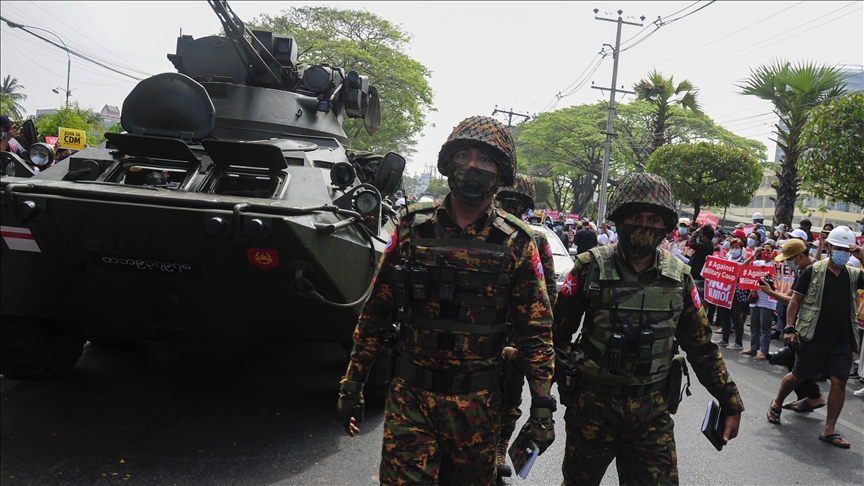
Myanmar, future in the balance three years after the coup

For some, for the first time, the hypothesis of a victory for the civil resistance against the military junta does not seem so remote. For others, the Tatmadaw remains the best-armed force. Operation 1027 could reinvigorate opposition to the regime and find an unprecedented fit between the pieces of the Burmese puzzle in 2024

By Agnese Ranaldi

"I would say the revolution has reached the next level, rather than saying it has reached a turning point. What we have now is the result of our preparation, organization and construction over the last three years." The spokesman for Myanmar's national unity government, Nay Phone Latt, recently told the Associated Press. What he is referring to is "Operation 1027", one of the most powerful and extensive offensives that the anti-coup resistance has ever launched against the Tatmadaw, the army responsible for the February 1, 2021 coup in Myanmar. It has put the military junta headed by General Min Aung Hlaing in difficulty, and at the turn of the third anniversary of the start of the civil war it could reconfigure the power relations, changing the fate of the conflict.


The puzzle

Like a déja-vu, years after the last military coup, the results of the 2020 Burmese legislative elections won by Aung San Suu Kyi's National League for Democracy left the military dissatisfied, and they did what they do best: contract your muscles and take back your power. The political force close to the army, the Union of Solidarity and Development Party, had won only a few dozen seats. After seeing his request for a vote recount denied by the electoral commission, general and head of the armed forces Min Aung Hlaing opted for strong measures. With a campaign of raids and imprisonments, he arrested State Chancellor Aung San Suu Kyi and President Win Myint, along with other leading figures of the executive branch, returning the country to military dictatorship.

The coup regime, which represents the majority Bamar ethnic group (the largest among the approximately 135 officially recognized ethnic groups), has however armed its own enemy. As University of Sussex professor David Brenner explained on Twai, Myanmar was already the scene of the longest ongoing civil war between ethnonational rebel movements and the army of an ethnocratic and "disciplined" democracy - as the Constitution of 2008, which granted broad discretionary power to the military class. The coup d'état succeeded in recomposing the interests and identity claims of one of the most composite states in the world. With no small effort, the ethnic groups Chin, Kachin, Karen, Kayah, Mon, Rakhine, Shan, and others have variously taken up arms.

At first in a fragmented, uncoordinated way. As they had always done: divided into ethnic militias, each on their own territory, with their own methods of training and action. As Brenner points out, not all of them have positioned themselves clearly. The civil resistance movement, represented by the government of national unity, is supported by the Karen and Kachin militias. The Arakan army, explains the researcher, "seems to have opted for a strategic ambiguity", while the Wa State has been declared a neutral zone (and the respective United Wa State Army is also financially supported by China to protect the stability of the 'area). 

In the last phase of the conflict, the military was losing ground and consensus. They sought to strengthen and replenish the Pyusawhti militia, named after a legendary warrior king, mentioned in some royal chronicles as having founded the first Bamar empire of Bagan in the 9th century. They promised the new recruits weapons, lands and money. But many members began to defect. Frontier Myanmar reports the experience of a young man identified with the fictitious name Ko Tun Min, who says he was forced to join one of the pro-junta militias in Sagaing, central Myanmar. The militia led by ultranationalist monk U Wasawa had threatened residents of his village that it would seize their homes if they refused to join up. On October 28, one day before the start of "Operation 1027", the leader summoned his men to say that there would be imminent clashes shortly thereafter. A week later, Ko Tun Min managed to escape. “I told my superior that I had to leave the base to buy cigarettes and I never returned,” he told Frontier Myanmar.

The piece

If the Tatmadaw loses ground, consensus, military strength, then "it is collapsing". “We are already receiving many deserters - Zin Mar Aung, spokesperson for the Burmese shadow government, told Nikkei Asia - and a large part of the military is ready to surrender”. According to Zin Mar Aung, the morale of the military junta and its soldiers is at an all-time low because they are losing their "logical foundation": the claim to act as guarantors of national cohesion and security.

The offensive from the northeast came on time, and inspired resistance across Myanmar. It began on November 27 in the Shan state, in the north-east of the country, but soon spread to the eastern Rakhine and Chin states. It was a coordinated attack against a dozen military outposts in northern Shan State, along the country's eastern border with China. The operation was organized by the Three Brotherhood Alliance, composed of the Myanmar National Democratic Alliance Army, the Ta'Ang National Liberation Army and the Arakan Army. According to Al Jazeera, it is a group that is part of a coalition of seven ethnic armed organizations that maintain close ties with China and have bases or territories near the border with the country.

"The fact that the Three Brotherhood Alliance is vigorously participating in the fight against the junta has greatly affected the balance of power. The strength of the revolution is increasing," said Tayzar San, an activist who led the country's first demonstration against the coup d'état. As a aid worker identified by the name Victor tells Al Jazeera, until then the Alliance had kept its distance from the crisis, while its members fought individually, supporting the resistance of various armed groups. According to him it was a matter of time before they went to war. “This is the beginning of the end game,” he said.

The fit Understanding Myanmar's present is complex. As Carla Vitantonio, who worked for years in the country as an aid worker, told in Myanmar Swing, the more one delves into the history of this territory, the more the ethnic, social and political panorama becomes denser. It becomes difficult to come up with a coherent narrative. Even recomposing the matrix of relationships that animated the civil war of the last two years, although it is recent history, is an ambitious work. For some, like Victor, for the first time the hypothesis of a victory of the civil resistance against the military junta does not seem so remote. On December 5, General Min Aung Hlaing called on armed ethnic groups to "politically" resolve their problems with the coup plotters in power. But as Bertil Lintner points out in the Irrawaddy, “while Myanmar's army may be spread thin on many fronts and incapable of defeating the resistance, it remains the country's most effective and best-armed fighting force.” What is certain, however, is that Operation 1027 reinvigorated civil resistance to the military junta. Who knows, in 2024 he might find an unprecedented fit among the infinite pieces of the Burmese puzzle.

Risky maneuvers on the South China Sea

Tensions over disputed waters between China and the Philippines have escalated during 2023, as Vietnam tries to keep its balance while deepening relations with the United States. Beijing moves on Cambodia and Thailand, both of which have a new premier

By Sabrina Moles

"A maritime community of shared destiny." And here the Xi Jinping-era motto about "a community of shared destiny" becomes a message thrown toward its "sea" neighborhood. A neighborhood that is certainly not stable, and now more than ever an object of attention for all those economic, political and social realities that overlook a 3.6 million square kilometer body of water that affects 60 percent of global maritime trade. According to 2017 data from the Center for Strategic and International Studies (Csis), more than $3.37 trillion worth of goods transit these waters, and just as many opportunities still lurk in the depths: metals, oil, gas. 

If the Pacific in general is now one of the hottest spots in international dynamics the South China Sea sits there like an active volcano that could erupt at any moment. With the end of the pandemic, the monitoring and patrolling of the area that each government carries out to protect its sovereignty over part of these waters has also resumed, and any confrontation-particularly with Chinese vessels-could light the fuse. Diplomacy has taken few steps to protect freedom of navigation, and future years will decide the fate of these claims.

In 2016, the Permanent Court of Arbitration in The Hague rejected China's claims, following a complaint by the Philippine government in 2013. Since then, the process of redefining rights of passage and exploitation of natural deposits has also suffered continuous interruptions. Nations in the area have long demanded respect for the rules covered by the United Nations Convention on the Law of the Sea (UNCLOS), which does not cover the kind of "historic" sovereignty Beijing claims to have over the South China Sea. An area circumscribed by the so-called "nine-dash line" on its maps that encloses what the People's Republic considers to be its waters.

Since the 1990s, countries in the region have been trying to build a dialogue that could lead to the establishment of shared rules. The most significant progress came in 2002 with the ratification of a non-binding Declaration on the Conduct of Parties (Doc), but since then the idea of a binding Code of Conduct (Coc) has never really taken off. On the sidelines of the July 2023 ministerial, China and the countries of the Association of Southeast Asian Nations (Asean) established "common guidelines" to speed up negotiations, an action that reflects an attempt to revive the initiative but still sees the group's countries divided. 

Indonesia, as chair for 2023, hosted the Association's first joint maritime exercises near the nine-stretch line. Signs that put China on edge, but not too much. In Asean, outside the Philippines, Vietnam, Indonesia, and Malaysia, the issue is less of a priority and may return to the margins in view of the rotating presidency of Laos, a country very close to Beijing. Indeed, the principle of consensus understood as unanimous agreement among the parties does not allow for the landing of a more determined strategy toward China. 

Chinese companies and armed forces, meanwhile, continue to build. China has already placed military bases in the Spratlys, to the point that-according to U.S. Navy reports-three of these islets can be described as fully militarized due to the presence of anti-ship and anti-aircraft missile systems. 

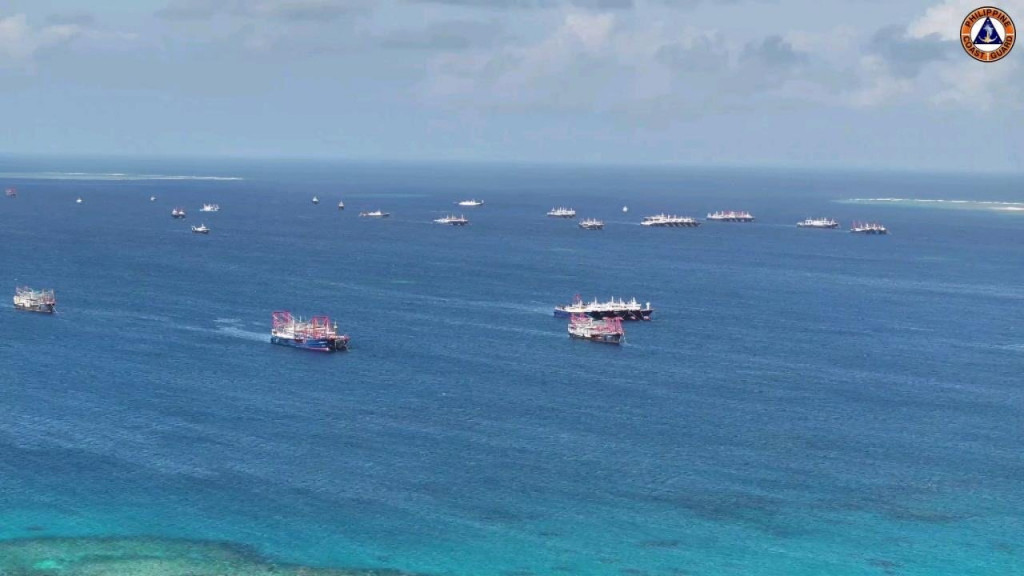
The presence of Chinese ships remains constant and "alarming," Manila said of the record 153 Chinese-flagged vessels located near its exclusive economic zone. Confrontations with Chinese vessels going as far as 800,000 nautical miles beyond its zone of jurisdiction are not uncommon, according to Coast Guard reports from countries in the area. The list includes the less than ten-meter ship approach between a Vietnamese fishing vessel fishing and the Chinese navy in March 2023, the two collisions between Chinese vessels and Philippine ships in October 2023, and the confrontation between Chinese ships and the Philippine Coast Guard with the opening of water cannons. Philippine President Ferdinand Marcos has adopted a more aggressive policy on maritime security, returning to strengthening military cooperation with the United States. 

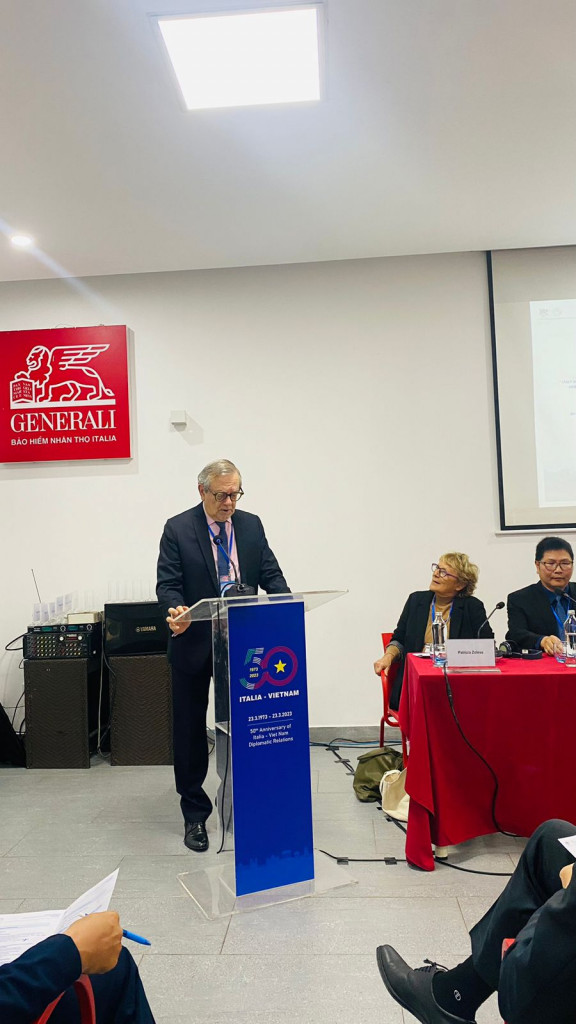
Negotiations for an agreement with Hanoi are also underway. It is precisely Vietnam's position that is most under attention. Last September Joe Biden was in Hanoi for a visit described as "historic" and which led to his being received at the Vietnamese Communist Party headquarters. Bilateral relations have been high and contacts on military supplies have deepened, with Vietnam fearing a growing alignment between China and Russia after the war in Ukraine, with the latter struggling to maintain its position as a defense supplier. But beware of thinking that Hanoi is ready to be enlisted by anyone. Compared to the more assertive Philippines, Vietnam continues to want to balance its position, as evidenced by Xi Jinping's December visit. An important signal of assurance for Beijing.

On the Thailand and Cambodia side, however, the approach to maritime security appears softer toward the Chinese giant. Having validated the rise of Hun Manet, son of former Prime Minister Hun Sen who officially became his heir after the July elections, a prospect of continued good neighborly relations is now before observers' eyes. The first signs came with the ban on U.S. officials' access to the Ream naval base in 2021, while the news of the first docking of Chinese ships at one of the key military facilities in the region is from December 2023.

Militarily, China has also been catching up with Thailand, with which it has long held joint exercises. While in 2017 the agreements called for one naval exercise, in 2023 the frequency of meetings increased to three, including air and ground operations. Washington has reduced the scope of military cooperation since the 2014 coup, creating a vacuum that China soon sought to fill. 

Thailand's Landbridge will bring East and West closer

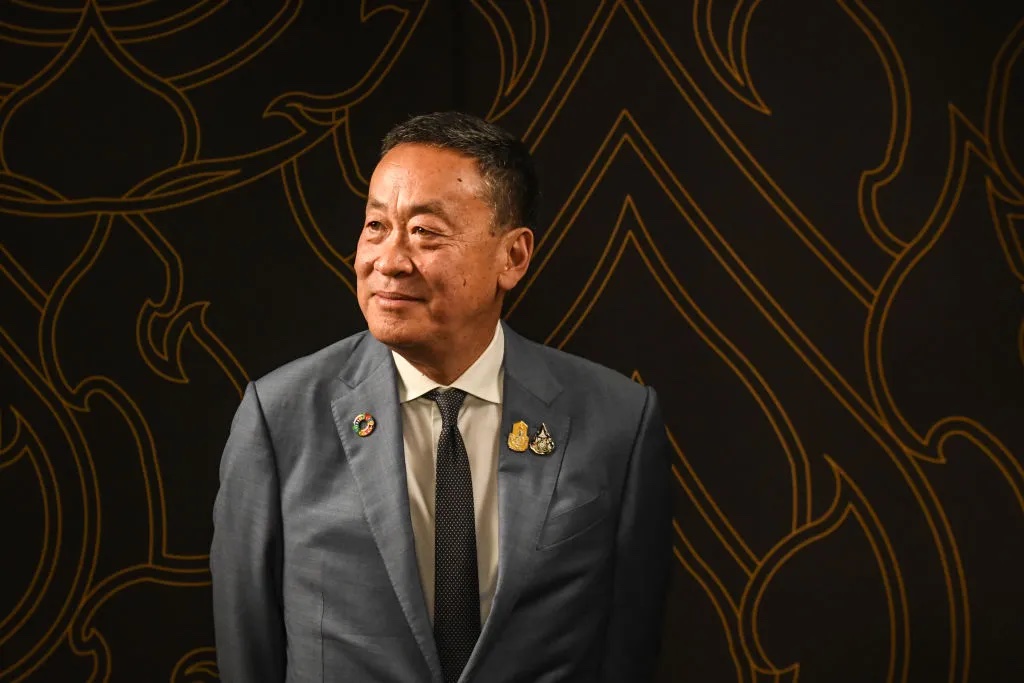
We publish here an excerpt of the speech by the Prime Minister of Thailand Srettha Thavisin on the Landbridge project

Thailand's Landbridge mega infrastructure project is an effort towards creating seamless connectivity to boost long-term growth prospects in the region and is fully in line with my Government's proactive economic diplomacy.

The project will include the construction of deep-sea ports in Ranong, on Thailand's Andaman coast, and Chumphon, in the Gulf of Thailand. Located approximately 90 kilometers apart, the two ports will operate under the “one port, two sides” concept, supported by a highway and double-track railway lines to connect the ports with each other and with the country's national network.

Each port will have the capacity to handle up to 20 million standard containers per year. The plan also includes the installation of a network of oil and gas pipelines. The total estimated cost is 1 trillion baht ($28 billion).

The Landbridge project represents an unprecedented opportunity to improve connectivity between the Pacific and Indian Oceans and to link economic activity between the two regions.

It promises to facilitate greater movement of goods and people between East and West, offering a viable route for maritime trade beyond the Straits of Malacca.

Once completed, the Landbridge is expected to reduce travel times by an average of four days between the Indian Ocean and the Pacific and reduce transportation costs by 15%. For a company shipping goods from Chennai to Yokohama, for example, this could mean savings of up to five days and 4% on costs.

Those familiar with Thailand's logistical development might see the Landbridge as a modern reworking of a century-old proposal to dredge a canal across the Kra Isthmus.

Although it was originally approved in 1989 as part of Thailand's Southern Economic Corridor, various considerations have left this project unrealized to this day. Now the timing will align well with the growth prospects of the economies of the Indian subcontinent and Africa.

Plans call for the first phase of construction to begin in September 2025 and last until October 2030. Contractors will likely be able to bid on the project between April and June 2025.

The Landbridge is expected to bring benefits of 1.3 trillion baht to the Thai economy and increase the country's annual gross domestic product growth rate by 1.5% through increased export opportunities and the creation of 280,000 jobs . It will also bring new development opportunities for other provinces in southern Thailand.

The role of the military in Southeast Asian politics

The function of the military in the political arena is not monolithic, and variations in this role are clearly evident in the context of Southeast Asia

By Aniello Iannone

For several Southeast Asian countries, including Indonesia and Myanmar, the role of the military in domestic politics has been one of the most significant elements in the development of the region's political history. Indonesia's history is a telling example, with a military regime in power for several decades in the second half of the 20th century that eventually went through a process of transition to democracy in the late 1990s. Thailand also provides an example of a country where the military influenced constitutional changes to insert itself into the political decision-making process. This has created a unique political dynamic in the country, with the military playing a major role in national politics. On the other hand, there are countries such as Myanmar, where the military has also tended to use force and interference in national decision-making processes. 

Indonesia and the role of the military 

'Indonesia declared its independence at the end of Dutch colonial rule and Japanese occupation in 1945. Since then, the country has gone through a series of significant reform and transformation events, including developments in the armed forces. The Indonesian National Armed Forces (Tentara Nasional Indonesia, TNI), formerly known as ABRI (Angkatan Bersenjata Republik Indonesia), was established in 1945 with the primary task of protecting and defending the nation. This role was paramount during the struggle for independence against Dutch invasion after Japan left the country defeated during World War II. During this period, the role of the TNI was emphasized, and senior military leaders stressed the importance of the TNI in resisting the Dutch invasion. This situation laid the foundation for indoctrination and military-civilian involvement in Indonesian politics.

However, when the TNI failed to achieve a satisfactory role in line with its aspirations in Indonesian politics under Soekarno's leadership, a political and economic crisis that hit Indonesia in the 1950s during Soekarno's "guided democracy" was an opportunity for the military to take action to get involved in Indonesian politics. These events occurred at the same time as a series of tensions between the military, radical Muslim groups, the rebellion of the Communist Party Indonesia (PKI), tensions also due dalal economic crisis due to inadequate economic policies of Soekarno The situation peaked in the coup led by Soeharto on September 30, 1965, who later assumed the presidency in 1968.

The main consequences of the 1965 events, besides the genocide and elimination of the PKI, saw the establishment of an authoritarian regime from 1965 to 1998. The Soeharto era, often called the New Order, is an example of an authoritarian regime established through a military coup. It is important to consider the significant role played by the armed forces until the fall of this regime and during the initial period of "reformasi," which refers to the reform movement that followed Soeharto's resignation. The TNI, known as ABRI (1959-2000), played a key role as the backbone of the state, being until the fall of the regime the largest political organization in the country. In Indonesia, the ABRI had a strong ideological connection based on its involvement in the civil affairs of the state. The concept of "dwifungsi" (dual-function) refers to military application in the military's own areas to those more belonging to the state's bureaucratic apparatus, played a crucial role in regimes such as the one under Soeharto in Indonesia, with effects still well present in contemporary Indonesia. 

The politico-military regime in Thailand 

The military role in Thailand's political history has been a crucial element since the end of the absolute monarchy in 1932. The country has experienced a series of military coups and political tensions that have influenced the path of democracy in this nation.

A significant period in Thai politics was when Thaksin Shinawatra came to power in the late 1990s. During those years Thailand was marked by a sharp decline in levels of democratization also due to the 1998 financial crisis and the victory of the Thai Rak Thai party, led by Thaksin, in the 2001 elections. This victory created social divisions that sparked conflicts between pro-monarchy groups, such as the People's Alliance for Democracy (PAD), and pro-democracy groups, such as the United Front for Democracy Against Dictatorship (UDD). Political tensions led to the first military coup in 2006, which saw the direct intervention of the military to stop the electoral process that would return Thaksin to power. These social conflicts hampered political stability and elections for several years. Only in 2011, through an agreement between anti-regime groups, the military and the monarchy, did Yingluck Shinawatra, Thaksin's sister, become prime minister. The political crisis of 2013-2014, including anti-government Shinawatra protests and the emergence of movements such as the pro-monarchy People's Democratic Reform Committee (PDRC), led to the dissolution of parliament and early elections. However, elections were not held because of the military coup by the National Council for Peace and Order (NCPO), led by General Prayuth Chan-o-Cha. Thailand remained under military rule until 2019.

It is important to note that the 2014 coup was different from the 2006 coup because of the strong military involvement in the government and the 2017 constitutional changes that gave significant advantages to the military in the prime ministerial elections. This reflects the evolution of the military's role in Thailand's political process. This significant role of the military is still evident in the 2019 and 2023 general elections, where the selection of the prime minister continues to depend on the Senate, composed of members who are not directly elected, many of whom come from the armed forces and police. This reflects the persistence of the strong military role in Thai politics and the complexity of the political landscape in this country.

The military regime in Myanmar

Analysis of political and economic development in Myanmar reveals a complex and interesting picture worthy of further study. Since the 1962 coup, during which U Nu's government was overthrown by the military, the action was seen as a response to U Nu's economic policies considered a betrayal of socialist principles. This assessment stemmed from the perception that the economic measures taken by the U Nu government were at odds with the ideological foundations of the regime, based on socialism that led Myanmar went through a political transformation based on a one-party regime controlled by the military.

During this period, the military played a significant role in controlling the economic aspects of the country. Today, Myanmar's political history has become further complicated with a series of events that have left the country lagging behind, both in terms of development and political participation, compared to the rest of Southeast Asia.

Political instability and a series of military coups have been factors that have hindered the process of economic development in Myanmar. However, the lens through which to view the slow pace of this development should be broader, including an understanding of why there is military intervention. The comparison with Thailand offers an interesting analogy. Although both have suffered the same number of coups, Thailand has experienced much more robust economic development than Myanmar.

The role of the military in the two countries has different dynamics. In Thailand, the military role has shifted from "janitor" to "ruler," especially after the coup and the 2019 elections. In contrast, in Myanmar, the military maintains a "praetorian" position, especially after 2011 and the 2021 coup. This indicates a direct intervention of the military in the political processes and development of the country. These conditions are not only influenced by the military role, but also by the significant contribution of elites, especially during the government of Aung San Suu Kyi. This government reflects a failure in various aspects of Myanmar's domestic political policies, especially with regard to the serious issues of genocide involving the Rohingya ethnic group.

Conclusion 

The military role in regime management, particularly in the post-World War II period, has been the main focus in theoretical policy analysis. It is important to note that the military role is not monolithic, and variations in this role are clearly evident in the Southeast Asian context. For example, in Indonesia and Thailand, the armed forces not only play the role of security maintainers, but also act as governors (Thailand) or semi-governors. At the same time, in Myanmar, the military role is purely praetorian in nature, manifesting a propensity to preserve the status quo without any substantive dialogue with the opposition. This decision reflects a strong determination to keep policy in line with the vision and interests held by the Myanmar Armed Forces.

The renaissance of Malaysian cinema

International awards spotlight domestic struggles against censorship and interventions needed to develop the film industry.

In recent years, Malaysian films have finally gained international attention and recognition. In May, "Tiger Stripes" (2023), a coming-of-age horror film directed by Amanda Nell Eu, won the Critics' Week Grand Prix at the Cannes Film Festival, becoming the first Southeast Asian film to win the prestigious award. On Oct. 5, the government selected the film as the Malaysian nominee in the Best International Feature Film category for the upcoming 96th Academy Awards. Several other Malaysian-made films have also won global accolades, including Woo Ming Jin's "Stone Turtle" (2023), Yasmin Ahmad's "Slit Eyes" ("Sepet," 2004) and Lay Jin Ong's "Brothers" ("Abang Adik" 2023), which won the best film award at the Far East Film Festival in April.

Notable among the stars of this renewed success is certainly Michelle Yeoh, who won the Oscar for best actress for "Everything Everywhere All at Once" (2022) at the Academy Awards. Malaysia's King Al-Sultan Abdullah Ri'ayatuddin and Prime Minister Anwar Ibrahim were among the first to congratulate the Malaysian actress. Film buffs, however, argue that Malaysian government policy has contributed nothing to her success abroad. Yeoh's is one of many cases of Asian actresses and actors who have ventured out of the country for better opportunities: veteran South Korean actress Youn Yuh-jung, who won the Oscar for 'Best Supporting Actress' for her role in "Minari" (2020); Malaysian-born Henry Golding and Ronny Chieng both starred in "Crazy Rich Asians" (2018); and Yeo Yann Yann, also of Malaysian descent, starred in the Disney+ series "American Born Chinese." Malaysian screenwriter Adele Lim has also made a name for herself in the United States, working on "Crazy Rich Asians" and the Disney animated film "Raya and the Last Dragon" (2021). In 2023, Lim made her Hollywood directorial debut with "Joy Ride" with Oscar nominee Stephanie Hsu.

Despite all these success stories, the country's film industry remains very static. Strict censorship laws and limited access to funding are proving to be major obstacles for many local filmmakers and actors hoping to develop their careers. Some industry figures have expressed the main criticisms. According to Badrul Hisham Ismail, director of "Maryam" (2023), "Malaysia has everything, but it is everywhere and everywhere, which means getting nothing, being nobody and nowhere." Badrul noted that Yeoh had not appeared in any Malaysian-produced films, making her success at the Oscars irrelevant to the Malaysian government's film policy. Local writer and stand-up comedian Shamaine Othman agrees with Badrul that the film industry in multi-ethnic Malaysia is highly polarized. In local productions, most high-budget roles are for actors from the majority ethnic Malay community, while actors of Chinese descent often choose to leave to work on American or Chinese productions. "For many non-Malays, it seems like the right way to go," Shamaine said, "being here just means constantly being cast as token characters."

Another critical issue hindering local film development is surely cultural conservatism in predominantly Muslim Malaysia, which has led to the banning of many films with LGBTQ references, including recent releases such as "Lightyear" (2022), "Thor: Love and Thunder" (2022) and "Whitney Houston: I Wanna Dance With Somebody" (2022). Sexual and gender issues are not the only dangerous terrain on which filmmakers must navigate. Ethnic and religious issues are also sensitive areas where filmmakers must tread carefully to avoid regulatory repercussions. The film "Mentega Terbang" (2021), directed by Khairi Anwar, caused much controversy when it was removed by Viu, a Hong Kong-based streaming platform, apparently for referring to apostasy from Islam, a crime in Malaysia. The film was eventually banned from all screening platforms in September. At the center of a national uproar, the director and cast were investigated by Malaysian authorities for their role in the film. No charges were filed, but according to Malaysiakini, an independent news outlet, the director received death threats.

Lutfi Hakim Arif, executive producer of "Maryam," told the Nikkei that "creeping conservatism" in the Malaysian film industry is nothing new, especially in relation to Malaysians and Muslims. Both Badrul and Lutfi said the Malaysian censorship board operates under a double standard, giving the green light to films that reference sex, scandals and celebrities and blocking films such as "Mentega Terbang" that challenge the nation's status quo. According to Badrul, the main goal of the censorship board is to "control thoughts," while showing no interest in Malaysian films, which are, on the other hand, technically very good, as evidenced by the success of the following Malaysian-made animations, "Ejen Ali: The Movie" (2019), "Upin & Ipin: The Lone Gibbon Kris" (2019), and "Mechamato Movie" (2022), which were screened in Southeast Asia. "Mechamoto" was the first non-Japanese cartoon to be screened on Japanese TV channels, winning the prestigious Anime Fan Award at the Tokyo Anime Award Festival 2023. Locally, it ranks among the top five highest-grossing films to date (as of January 35.8 million ringgit, or $7.51 million).

Malaysia was a film powerhouse in the 1950s and 1960s, when actor and director P. Ramlee made several successful films for Shaw Brothers in Singapore and Kuala Lumpur. However, as contemporary actor and screenwriter Redza Minhat says, the industry landscape has failed to evolve, hampered by a small market polarized between productions aimed at Malay, Chinese and Indian audiences, the country's three main ethnic groups. "For such a small market, you need to have a long-term strategy; to overcome the obstacles in the industry, you need to bring the right people together, and the first thing is to have the political will," said Redza, whose latest the film "Imaginur" (2022) has garnered box office takings of 6 million ringgit in the first month since its release in Malaysia in late February. Redza said that ending censorship would be the best way to address the problems of the Malaysian film industry and proposed that FINAS - National Film Development Corporation Malaysia - use slate financing as a development tool. Slate is a type of film financing in which an investor provides financing for a portfolio of films, rather than for a single film, to reduce risk and diversify investment.

Meanwhile, there is already an air of change with new business entities entering the Malaysian market. In the past two years, leading Malaysian film studios Golden Screen Cinemas and Astro Shaw have ventured into the production of blockbuster action films such as "Polis Evo 3" (2023), "Malbatt: Misi Bakara" (2023) and "Air Force the Film: Selagi Bernyawa" (2022). In May, streaming platform Amazon Prime Video said it would include more local movies and dramas, including "Imaginur." On the other hand, so-called over-the-top (OTT) streaming services, which viewers access via the Internet, are growing steadily, although still lagging behind cable and satellite competitors such as Netflix, Apple TV, Disney's Hotstar and HBO. According to Statista, OTT user penetration will reach 63.7 percent of the Malaysian market this year, with revenues exceeding 1 billion ringgit.

Kamil Othman, President of FINAS, said the government is working on updating and amending the National Film Act to meet the needs of the industry, as films have great potential to contribute to GDP growth. Kamil said the film support system needs to be amended to fill gaps and encourage film production. "There is no single point of reference and FINAS intends to be one, at least within the scope of law enforcement. We are trying to see right now how this public-private partnership can work best," he said. "The answer could be a new tax system, new incentives."

On Oct. 13, the government announced a number of initiatives intended to help filmmakers, including reductions and exemptions of 25 percent, from the entertainment tax-applied on cinema tickets and art performances, tax incentives for film production, and further support for digital content and film production in Malaysia. However, broader changes in policy may be needed for the future of the industry. Former Malaysian Minister of Youth and Sports Syed Saddiq Abdul Rahman said the government and the film industry should reform the censorship regime by appointing a diverse group of professionals to the censorship board.

Malaysia is therefore looking for a middle ground. The way forward should be a policy that gives confidence to the film industry, whose enormous potential is before everyone's eyes, by aiming for independence, with no more restrictions on artistic freedom.

Artificial Intelligence increasingly prevalent in ASEAN

Four Indonesian entities signed a letter of intent in Jakarta with AI Singapore, the national artificial intelligence programme. Just one of the initiatives

Article by Tommaso Magrini

Generative artificial intelligence applications are gaining ground in the ASEAN region. And it is doing so alongside concrete applications that can contribute on several fronts. The National University Health System (NUHS) in Singapore, for example, plans to use Amazon Bedrock and generative artificial intelligence to improve the patients’ experience. It is experimenting with Amazon Bedrock to develop a solution that automates patients’ discharge summaries, so that physicians can focus on patient consultation. In the meantime, Bangkok Biznews is taking advantage of the Claude2 foundation model on Amazon Bedrock to refine and develop summaries of its own news, making it easier and faster for readers to consume the content. For what concerns Malaysia’s 123.rf, its AI image generation service uses Stability AI on AWS with a significant application of Amazon Sagemaker. But there are also those who are developing homegrown applications. For example, a similar instrument to Chat GPT is in the pipeline as a result of a new collaboration agreement between Singapore and Indonesia. Four Indonesian entities signed a letter of intent with AI Singapore in Jakarta, the republic’s national artificial intelligence program, to co-develop a new large-scale linguistic models instrument using technology similar to Chat GPT. The collaboration between the countries to create such tools for the region, is important to face the Southeast Asian underrepresentation in language models commonly used today. Indonesian Deputy Minister of Communications and Information Technology Nezar Patria added that the collaboration highlights how AI has helped the workers of the country to become more efficient in their work. By 2030, AI could add $366 billion to Indonesia’s gross domestic product and nearly $1,000 billions in added GDP across all Southeast Asia.

ASEAN, less poverty and inequality

Association member countries continue to record progress on 2030 agenda goals

The ASEAN 2030 Agenda for Sustainable Development aims to end poverty in all its forms everywhere and reduce inequality within and between countries. Progress toward these goals can be monitored by, among other things, examining the extent to which ASEAN member countries are reducing the incidence of poverty and income inequality. Poverty is defined as the inability to meet a minimum standard of living, while inequality refers to disparities in a wide range of areas, including not only income and wealth, but also education, health, and nutrition, among others. The latest available data indicate that most ASEAN member countries have experienced a decrease in poverty incidence.

The Democratic Republic of Laos and the Philippines witnessed a significant decline in their poverty rates, falling from 24.0 percent to 18.3 percent in 2018 and from 23.5 percent in 2016 to 18.1 percent in 2021. Vietnam also saw a significant decline with its poverty rate standing at 4.2 percent in 2022. Similarly, Indonesia and Thailand also recorded a decline in their poverty rates, reaching 9.5 percent (2022) and 6.8 percent (2020), respectively. On the other hand, Cambodia's national poverty rate increased from 13.5 percent in 2016 to 21.5 percent in 2021. Important steps forward have also led to improvement on the income equality front in most ASEAN member states. Thailand successfully reduced its Gini index from 0.49 in 2010 to 0.43 in 2021. Similarly, Vietnam and Cambodia also made significant progress, decreasing from 0.43 in 2010 to 0.38 in 2022 and from 0.34 in 2010 to 0.29 in 2017. Thailand, Malaysia, and Singapore also experienced a reduction in income inequality, albeit at a slower pace. The Philippines and Singapore recorded the highest level of income inequality but even for them the level has fallen sharply in recent years. ASEAN is looking ahead to 2030 with increasing confidence.

See the full report on ASEAN's 2023 data here.

ASEAN and China: the bond remains deep

Southeast Asia and Beijing are linked by deep trade entanglements. And this will not change even in 2024

By Lorenzo Riccardi

In October 2023, Indonesia inaugurated its first high-speed rail network, with a trip by President Joko Widodo on the bullet train between the capital Jakarta and the city of Bandung. A $7.3 billion investment for a 140-kilometer route built by Chinese and Indonesian companies that allows travel at peak speeds of 350 kilometers per hour, facilitating trade and logistics in the region.

November 2023 saw the launch of the first high-speed passenger train linking Beijing, the Chinese capital, and Vientiane, the capital of Laos.

This is a long tourist route on the China-Laos railway, adding to the routes between Yunnan Province and the ASEAN region inaugurated in the previous two years. A project symbolic of Southeast Asia's relationship with the People's Republic of China that is part of the Belt and Road Initiative, with the goal of promoting the movement of people and goods between southern China and Southeast Asia. 

This infrastructure is part of a larger project that will lead to connecting with 5,500 kilometers of high-speed network Beijing with Singapore through Laos, Thailand, Malaysia and linking the capitals Vientiane, Bangkok, Kuala Lumpur and Singapore to promote the region's logistics, trade and tourism.

The Belt and Road Initiative, from which Rome recently exited, includes 42 of the continent's 49 nations in Asia and all 10 Southeast Asian countries from Brunei to Indonesia.

For China, the ASEAN region occupies a key geopolitical position, serving as a crossroads for major sea routes and attracting the interest of every global power. 

Economically, the region's aggregate gross domestic product exceeds $3.6 trillion, driven by some of the highest growth: 4.2 percent in 2023 and 4.6 percent in 2024 according to International Monetary Fund (IMF) estimates.

Southeast Asia's role in global supply chains, rich natural resources and trade agreements highlight the region's strategic importance, while infrastructure development and connectivity initiatives increase its global relevance.

According to IMF estimates in the October outlook, China will grow at 5 percent in 2023 and 4.2 percent in 2024, while variations in GDP trends are observed for ASEAN countries with Cambodia, the Philippines, Indonesia and Vietnam showing the highest growth rates for 2023-2024.

Brunei is the region's smallest economy and shows a decline of 0.8 percent in 2023, with a notable recovery to 3.5 in 2024, indicating a turnaround. Cambodia performs the best, with gross domestic product increasing by 5.6 percent in 2023 and further increasing by 6.1 percent in 2024.

The Philippines, forecast a change of 5.3 percent in the current year, and a further increase to 5.9 percent in 2024, confirming the highest growth in the ASEAN-5 Group of the five countries with the largest population and GDP.

Indonesia and Laos maintain a steady trend, with Jakarta at +5 percent for both 2023 and 2024 and Vientiane at 4 percent over the two-year period. Malaysia shows incremental figures at 4 percent in the current year and 4.3 percent for next year.

An increase of 2.6 percent is estimated for Burma in both 2023 and 2024, while Singapore, which has the largest GDP per capita, is estimated to expand at 1 and 2.1 percent in the two-year period 2023-2024.

Finally, the International Monetary Fund forecasts a gradual increase over the two years for Thailand, with growth of 2.7 and 3.2 percent; Vietnam, among the region's large economies, has the largest delta with GDP + 4.7 percent in 2023 and a projection of 5.8 percent in 2024.

ASEAN and Beijing grow above the global average, which stands at +3 percent in 2023 and 2.9 percent next year. 

China has Southeast Asia as its top trading partner with $826 billion in trade as of November 2023, above Beijing's aggregate import and export volume recorded with the European Union ($716 billion) and the United States ($607 billion) in the first eleven months of the year. 

Kuala Lumpur, which has just signed mutual visa-free entry agreements with China is the largest exporter with $94 billion in November Chinese customs data (nearly four times the volume of Italian exports to China, which stands at $24.9 billion) while Hanoi is the largest importer of Chinese products with about $124 billion.

To promote partnership in trade, China and the Association of Southeast Asian Nations have signed a series of agreements on economic cooperation with a large number of bilateral and multilateral treaties signed over the past 20 years.

-Framework Agreement on Comprehensive Economic Cooperation between ASEAN and China: Signed in 2002, this agreement served as the foundation for economic cooperation between Beijing and ASEAN member countries. It outlined the principles and areas of cooperation, including trade, investment and economic integration.

-ASEAN-China Free Trade Area (ACFTA): Implemented in several stages between 2005 and 2010, the ACFTA promoted the establishment of a free trade area between China and ASEAN with the reduction or elimination of tariffs on a wide range of goods, encouraging greater trade flows.

-Agreement on Trade in Goods and Comprehensive Economic Cooperation between ASEAN and China: Signed in 2004, this agreement introduced specific provisions for the reduction and elimination of duties on various goods traded between China and ASEAN countries.

-ASEAN-China Investment Agreement: Signed in 2009, it aims to promote bilateral investment flows by establishing a framework for investment protection and facilitation.

-ASEAN-China Free Trade Area Update Protocol: Signed in 2015, this protocol further enhanced trade relations between China and ASEAN with tariff reductions and addressing issues related to trade in goods, services and investment.

-Protocol amending the Framework Agreement on Comprehensive Economic Cooperation between ASEAN and China: Signed in 2015 with the aim of deepening economic integration by addressing issues such as customs procedures, certificate of origin rules and trade facilitation.

-ASEAN-Hong Kong, China Free Trade Agreement: effective as of 2019.

-Regional Comprehensive Economic Partnership: (RCEP) entered into force in 2022 is a multilateral free trade agreement in the Asia-Pacific region. It is considered one of the largest trade agreements in the world as it involves a large number of countries: the 10 members of ASEAN and their six trading partners-China, Japan, South Korea, Australia, New Zealand and India.

Apple, another decisive step in Vietnam

Global technological giants are increasingly present in and around Hanoi

Article by Tommaso Magrini

Vietnam is preparing for a crucial development in its economic and technological ambitions. Apple is, in fact, allocating resources for iPad product development to the Southeast Asian country for the first time, an important step toward strengthening the Southeast Asian country’s position as an alternative manufacturing hub outside China. Apple is collaborating with China’s BYD, a leading iPad assembler, to move resources to Vietnam for new product introductions. This is the first time this happens for such a major Apple device. Engineering verification for trial production of an iPad model will begin in the middle of February next year, says Nikkei Asia. The model will be available in the second half of next year. BYD was also the first supplier to Apple to help the U.S. tech giant move iPad assembly to Vietnam for the first time in 2022. The move requires substantial resources both for the tech company and its suppliers, such as engineers and investment in lab equipment to test new features and functions. Most of Apple’s new product introduction is done in China, in collaboration with Cupertino engineers, to take advantage of the country’s decades of experience in hardware production. But the geopolitical uncertainties are forcing the company to rethink this approach. Apple also has plans to send some iPhone trials to India. Vietnam has emerged as Apple’s most important technology manufacturing hub outside of China. The Cupertino-based tech giant has asked suppliers to build new manufacturing capacity for almost all of its products except for iPhone, from AirPods to MacBooks, Apple Watch to iPads. Apple will continue to work closely with Chinese suppliers in its supply chain shift, but Vietnam is becoming increasingly central.

Recently active members
Foto del profilo di Alessio
Foto del profilo di Monika
Foto del profilo di Gabriel
Foto del profilo di Elena
Foto del profilo di Lorenzo
Foto del profilo di Alessandro
Foto del profilo di Cristina
Foto del profilo di Rocco
Foto del profilo di Clara Lomonaco
Foto del profilo di Redazione
Foto del profilo di Davide Gugliuzza
Foto del profilo di Anna Affranio
Foto del profilo di Ilaria Canali
Foto del profilo di Nicolò
Foto del profilo di Angelo Cangero
Who is online
There are no users currently online
Members
  • Foto del profilo di Alessio
    Active 1 giorno, 13 ore fa
  • Foto del profilo di Monika
    Active 2 giorni, 21 ore fa
  • Foto del profilo di Gabriel
    Active 3 settimane, 3 giorni fa
  • Foto del profilo di Elena
    Active 1 anno, 4 mesi fa
  • Foto del profilo di Lorenzo
    Active 2 years, 6 mesi fa