Malaysia during the Covid-19 emergency

The crisis has hit the country mainly from an economic point of view, but there are also opportunities

With the aim of better understanding how Malaysia coped with the health crisis and its economic and social impact, on May 19th the Italy-ASEAN Association organized a webinar with Zuraida Kamaruddin, Malaysian Minister for Housing and Local Government, and Giovanni Andrea Toselli, CEO of PwC Italy.

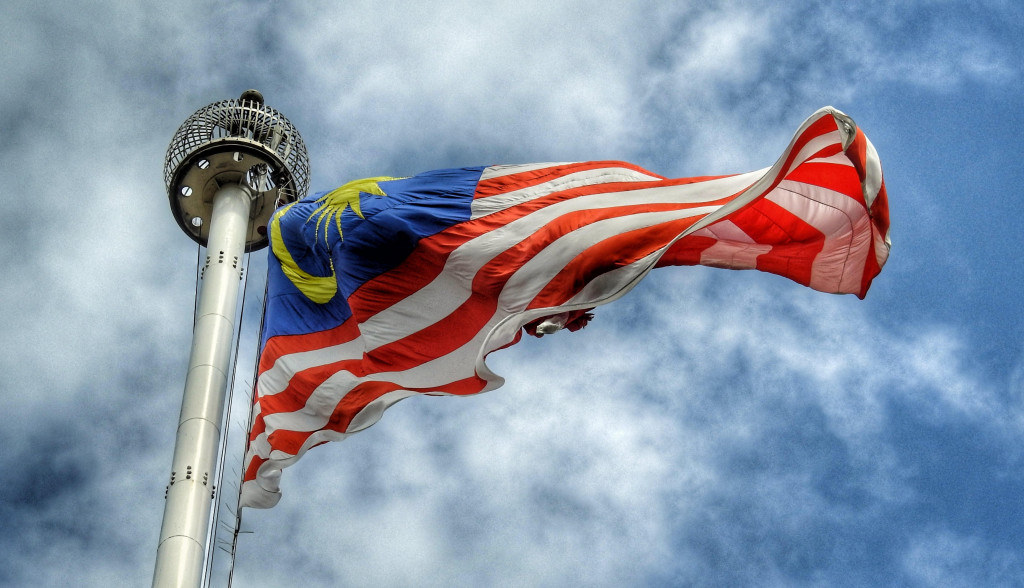
Today, like most countries, Malaysia is suffering the consequences of the Covid-19 pandemic. However, the Malaysian government was able to promptly put in place significant measures aimed at tackling the medical, economic and social impact of the crisis.

With regards to the containment of the health crisis, as soon as the numbers started to grow in mid-March, the government immediately imposed lockdown and social distancing measures in the country, leaving only essential medical and grocery services open and active. No large gathering or private visits to friends and relatives were allowed, not even to celebrate Ramadan. Moreover, all people coming from abroad have to undergo two weeks of quarantine in special medical facilities, and only when checked will they be allowed to return to their homes. The government also dealt with the case of the many local workers operating in Singapore, developing a common protocol to protect the safety of all the citizens. To complete its approach with a regional dimension, Malaysia is engaging with ASEAN partners to develop a single coordination protocol aimed at effectively dealing with the consequences of the health crisis throughout South-East Asia. To date, the Malaysian authorities' intention is to phase out the containment measures gradually until 9 June, with a cautious and proportionate approach.

As for the economic impact of the pandemic, the government promptly intervened with strong measures to stimulate the economy and support businesses and workers. Among the main actions taken by the Malaysian government that are worth mentioning: the suspension of payment for rents, the extension of tax deadlines for SMEs, measures to support the unemployed and infrastructure investments. The stimulus packages for the economy have been among the most substantial in the Asia-Pacific area and for the moment Malaysia leads the ranking of ASEAN countries with an intervention of about 65 billion dollars. Despite the considerable effort however, the Malaysian Central Bank estimates the country's GDP growth in 2020 to be between -2% and 0.5%. The sector that is suffering the most for the moment is tourism, a fundamental asset of the Malaysian economy. The government is planning major support plans with the aim of boosting local tourism and relaunching international arrivals, when the conditions will allow it.

It is however interesting to highlight, that during this emergency, some sectors have had the opportunity to expand and develop. E-commerce platforms are growing in the country and demand for digital services is increasing. Smart-working is contributing to transform the scenario, generating new trends and creating opportunities. In addition, after the impact of this crisis, people seem to be more sensitive towards environmental and health issues in the country.

It is therefore important to underline that despite the economic and social consequences that the Covid-19 crisis is causing in Malaysia, the government’s prompt response and the dynamism of the Malaysian economy still allows the country to offer interesting opportunities for investors, especially with regards to the digital and tech sectors.


Article edited by Tullio Ambrosone.
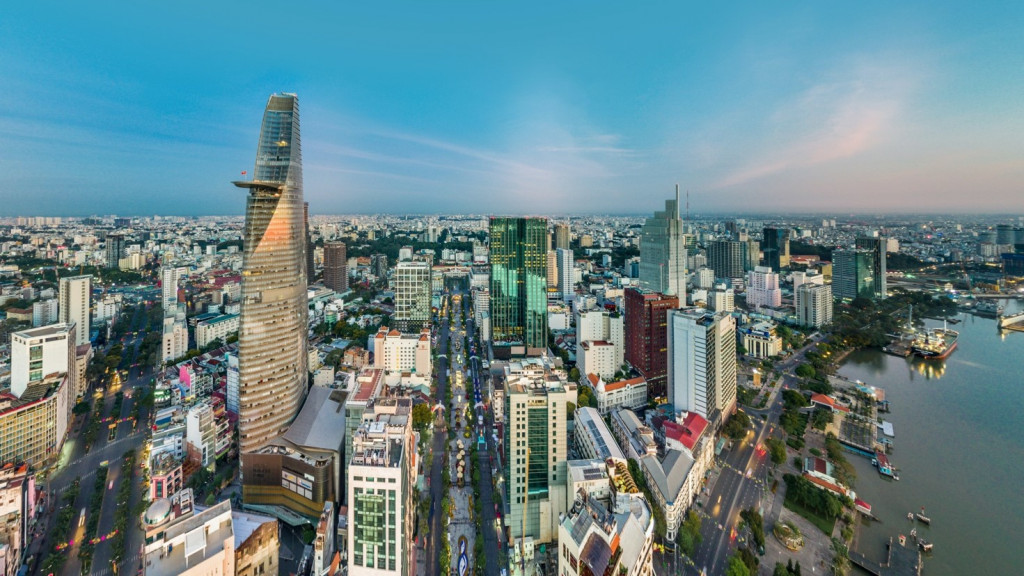
Il momento del Vietnam

Nonostante la guerra commerciale tra USA e Cina e l’impatto della pandemia, il Vietnam si candida ad assumere un ruolo di spicco in questa nuova fase

Con una popolazione giovane e dinamica e attraverso una serie di riforme strutturali significative, negli ultimi decenni il Vietnam ha vissuto una crescita rapida e costante. A dispetto di crisi domestiche e internazionali, l’economia vietnamita si è mostrata forte e solida, sostenuta da una robusta domanda interna e da un’industria manifatturiera orientata all’esportazione. L’adesione all’Associazione delle Nazioni del Sud-Est asiatico ha poi contribuito nel tempo a rafforzare la posizione del Paese, sia sul piano regionale che su quello internazionale.

Negli ultimi anni, lo scontro commerciale tra Cina e Stati Uniti ha generato effetti collaterali che hanno interessato gran parte delle catene di valore regionali e globali. Per aggirare le tariffe e contenere i costi di produzione, diverse aziende hanno cominciato a trasferire le attività produttive dalla Cina ad altri Paesi della regione e in particolare del Sud-Est asiatico. Tra questi, si è distinto il Vietnam che, grazie alla competitività della sua economia, è stato in grado di attirare flussi di investimenti consistenti. Secondo diversi esperti e analisti, sembra proprio che in termini commerciali il Paese sia uno dei maggiori beneficiari dello scontro gli Stati Uniti e Cina.

Il 14 maggio l’Associazione Italia-ASEAN ha organizzato un webinar sul tema del Vietnam e della sua risposta all’emergenza sanitaria con l’Ambasciatore d’Italia in Vietnam, Antonio Alessandro, e il Direttore Generale per le Relazioni Internazionali delle Province del Vietnam, l’Ambasciatore Nguyen Hoang Long. L’obiettivo era quello di fare un punto della situazione in Vietnam alla luce della recente crisi economica e sanitaria.

Oggi infatti, data la profonda integrazione con l’economia globale, il Vietnam è  stato duramente colpito dalla pandemia di Covid-19. In termini di danni subiti dall’economia, il crollo del turismo, il calo della Borsa e la parziale interruzione delle catene di valore hanno fortemente danneggiato le attività economiche nel Paese. Tuttavia, l’impatto sanitario della pandemia non è stato così grave in Vietnam come in altri Paesi, grazie a diverse misure proattive che le autorità hanno messo in campo per affrontare l’emergenza. Sul piano sanitario, la capacità del governo di agire con prontezza per isolare i casi positivi, tracciare i contatti e attuare quarantene selettive, ha dato i suoi frutti. Nel Paese i casi di Covid-19 sono meno di trecento, con una mortalità pari a zero, e solo pochi casi gravi. Le autorità vietnamite, che hanno anche ricevuto gli apprezzamenti dell’Organizzazione Mondiale della Sanità, sono state in grado di fornire una risposta repentina e completa, che ha messo il Paese nelle condizioni di contenere l’impatto sanitario del virus e limitare gli effetti sul piano economico. Nonostante il Fondo Monetario Internazionale stimi per il Vietnam una crescita del 2,7% nel 2020, il governo vietnamita punta ancora a raggiungere l’obiettivo di crescita del 5% con un’ambiziosa strategia di rilancio, mirata a stimolare il consumo interno, attirare investimenti esteri diretti e sostenere l’esportazione di beni ad alto valore aggiunto.

Nonostante l’impatto della pandemia dunque, Il Vietnam si candida a svolgere un ruolo di primo piano nel contesto regionale e internazionale in questa fase incerta. La Presidenza temporanea dell’ASEAN, il seggio non permanente nel Consiglio di Sicurezza delle Nazioni Unite e l’entrata in vigore degli accordi di libero scambio con l’Unione Europea ad agosto mettono il Vietnam nelle condizioni ideali per continuare a sostenere lo sviluppo economico, politico e sociale del Paese nel breve e nel lungo periodo.


Article edited by Tullio Ambrosone.
La rilevanza del Mar Cinese Meridionale

Con l’abbondanza di risorse naturali e la sua posizione strategica questo mare è diventato il teatro di un teso scontro regionale

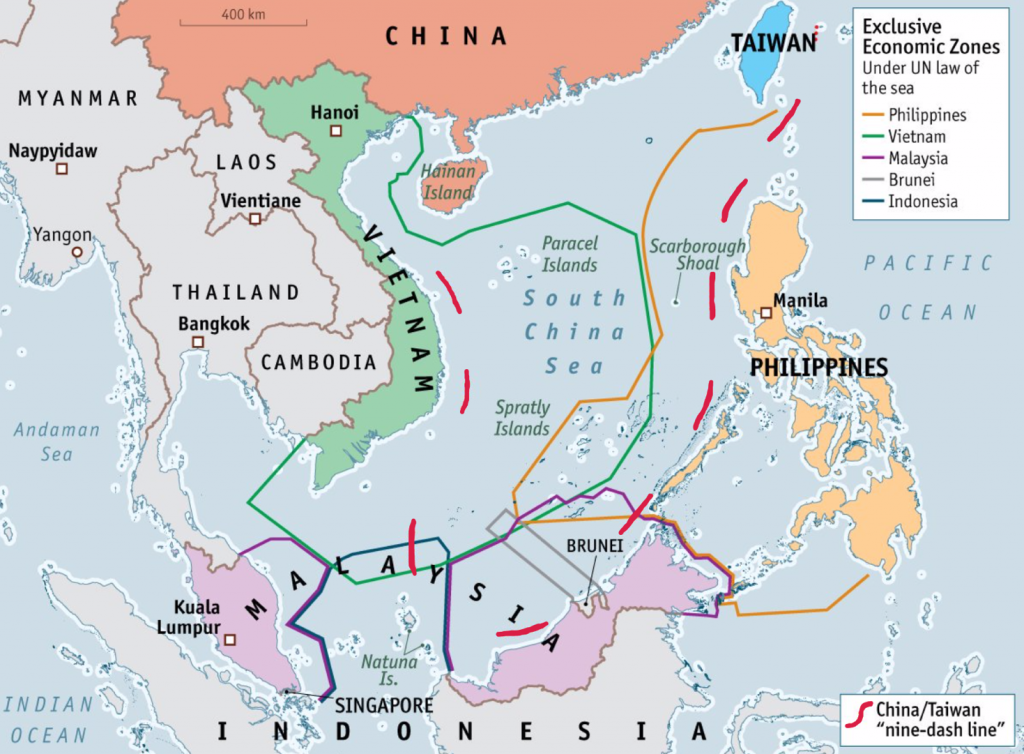
Il Mar Cinese Meridionale è al centro di un lungo e complesso scontro geopolitico che coinvolge diversi Paesi del Sud-Est asiatico, la Cina e altre potenze globali tra cui gli Stati Uniti. L’area è infatti incredibilmente ricca di risorse naturali con riserve di circa 11 miliardi di barili di petrolio, oltre 50 trilioni m³ di gas naturale e il 10% delle riserve ittiche mondiali. L’elemento più importante, tuttavia, è che il 30% del commercio marittimo mondiale transita nel Mar Cinese Meridionale, conferendo una cruciale rilevanza geopolitica alla regione. Si tratta dunque di uno specchio d’acqua di fondamentale importanza strategica, e diversi Paesi nella regione avanzano rivendicazioni territoriali, spesso contrastanti.

Nel cuore geografico e simbolico del Mar Cinese Meridionale ci sono diversi arcipelaghi di isole remote e disabitate, rivendicate da Cina, Vietnam, Filippine, Malesia, Taiwan e Brunei. Per molti di questi Paesi, l’accesso alle risorse di quest’area potrebbe rivelarsi fondamentale nel lungo periodo. Chi riuscisse a fare valere le proprie rivendicazioni territoriali su queste isole potrebbe includerle nella propria zona economica esclusiva, ottenendo diritti esclusivi su tutto il territorio e dunque il sottosuolo circostante.

La maggior parte di questi Paesi basa le proprie rivendicazioni sulla Convenzione delle Nazioni Unite sul diritto del mare, ma la Cina sembra avere una posizione diversa, in contrasto con la comunità internazionale. Pechino avanza una rivendicazione storica sul Mar Cinese Meridionale che risale ad alcune esplorazioni navali del XV secolo. Il governo cinese individua i propri confini nell’area compresa all’interno della linea tratteggiata, la famosa “nine-dash line”, tracciata alla fine della Seconda Guerra Mondiale e comprendente circa il 90% del conteso specchio d’acqua.

Negli ultimi anni, la Cina ha portato avanti una politica di potenza volta a imporre le proprie rivendicazioni territoriali con la costruzione di isole artificiali, basi militari e distretti amministrativi, scatenando le proteste delle nazioni coinvolte. Le mosse di Pechino non hanno solo indispettito i Paesi della regione, ma anche la comunità internazionale, con gli Stati Uniti in testa. Gli USA hanno grossi interessi geopolitici nella regione, e sono dunque interessati a contenere le ambizioni di Pechino e a rafforzare il proprio ruolo di potenza militare e geopolitica nell’area del Pacifico.

Meccanismi di risoluzione delle dispute internazionali hanno più volte contestato l’approccio cinese nella regione, cercando di proteggere i diritti territoriali legittimi di Paesi più piccoli, come le Filippine o il Vietnam. Ma la Cina sembra trascurare le risoluzioni delle Corti internazionali e pare determinata a non retrocedere, paventando anche l’uso della forza per affermare le proprie rivendicazioni.

Finora le dispute nel Mar Cinese Meridionale non hanno preso una piega violenta, ma si sono limitate alla sfera politica e diplomatica. Dal 2017, la Cina e i Paesi ASEAN hanno deciso di provare a risolvere la contesa sul piano diplomatico, attraverso la redazione di un Codice di Condotta per il Mar Cinese Meridionale, ovvero un sistema regolatore per risolvere le dispute nella regione. Tuttavia, l’accordo è ancora lontano dalla sua conclusione, e le difficoltà che stanno emergendo non sono poche.

I Paesi coinvolti tendono sempre più a difendere le proprie rivendicazioni militarizzando la regione e provocandosi a vicenda, con gravi rischi per tutta l’area. È una situazione complessa che continuerà ad attirare l’attenzione della comunità internazionale, evidenziando segnali importanti sull’atteggiamento geopolitico della Cina nei prossimi anni e il suo rapporto con i Paesi del Sud-Est asiatico.


Article edited by Tullio Ambrosone.

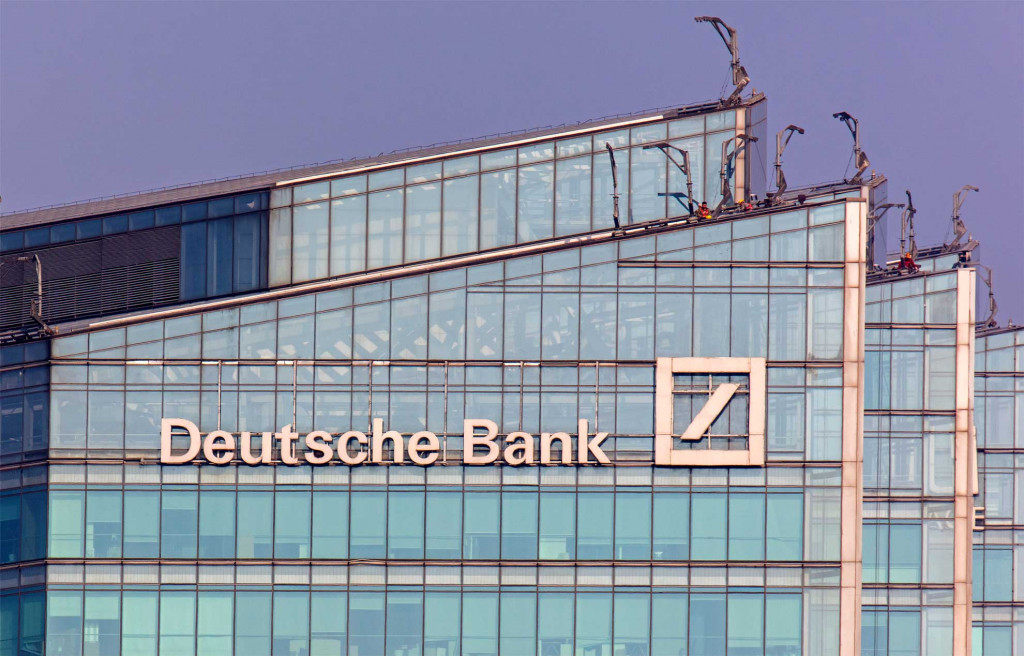
La Deutsche Bank in Thailandia

Nel 1978 la prima filiale e da allora un continuo espandersi in tutto il Paese

Il 16 aprile 2020, la Deutsche Bank, nell’ambito di un programma di modernizzazione dei pagamenti guidato dal governo della Thailandia e volto a sostenere l’inclusione finanziaria e l’introduzione dei pagamenti elettronici, ha lanciato il servizio di pagamenti istantanei “PromptPay”. Tale piattaforma, utilizzando un numero di conto o un proxy-id (numero identificativo dell’imposta sulle società), consente di ricevere pagamenti e rimborsi delle imposte sul reddito direttamente dal Dipartimento delle Entrate, senza alcun costo aggiuntivo.

Questa innovativa modalità di pagamento, già introdotta in ASEAN con le piattaforme “Fast” a Singapore e “DuitNow” in Malesia – come osservato da Burkhard Ziegenhorn, responsabile ASEAN del settore Corporate Bank di Deutsche Bank – accrescerà l’efficienza e la velocità dei pagamenti per le aziende nazionali, agevolandole nella sostituzione graduale delle tradizionali transazioni commerciali. Infatti, da un recente report di DB sull’argomento risulta che l’Asia è più propensa all’abbandono di carte di credito e contanti in favore dei pagamenti online ritenuti più sicuri ed affidabili; propensione che l’Istituto tedesco intende assecondare e valorizzare nel continente. Del resto, sin dal 1870, anno della sua fondazione, la Deutsche Bank ha sempre avuto l’ambizione di divenire una banca dal respiro internazionale. Tanto è vero che già nel 1872 vennero aperte le prime due filiali a Shangai e Yokohama e nel 1906, con il nome di Deutsche-Asiatische Bank, la prima filiale di Singapore. Alla fine degli anni’70 la Banca di Francoforte sul Meno approda anche in Thailandia; più precisamente, l’8 settembre 1978, l’Istituto tedesco inaugura la sua prima sede nella capitale Bangkok, operando sotto il nome di Banca Asiatica Europea. Solo pochi anni prima, infatti, la Deutsche-Asiatische Bank e le sue filiali erano state accorpate nella neonata Banca Asiatica Europea (Eurasbank), che diverrà nel 1986 Deutsche Bank (Asia).I primi tentativi e colloqui esplorativi per aprire filiali in Thailandia risalgono al 1960, tuttavia solo nel 1977 il ministro delle finanze thailandese concederà la licenza per l’apertura di una filiale a Bangkok, chiedendo però che fosse consentito alla Thai Farmers Bank di aprire una sede ad Amburgo. Il 3 luglio 1978 l’allora Eurasbank ottenne la licenza e poche settimane dopo iniziò ad operare in un ufficio nel centro della Capitale. Dall’epoca la Deutsche Bank non ha smesso di crescere, aumentando costantemente il numero di filiali e di dipendenti nel Paese e in generale in tutta la regione ASEAN, consapevole delle potenzialità e delle possibilità di espansione in una delle aree economicamente più vivaci del pianeta. Non a caso il 21 ottobre 2019 Pimolpa Suntichok, da poco Chief Country Officer della Deutsche Bank per la Thailandia, dichiarava al Bangkok Post la forte volontà del gruppo bancario di aumentare la quota di clienti locali, considerando la Thailandia tra le economie più importanti dell’area ASEAN.

La strategia dell’Istituto bancario nel Paese, infatti, si sviluppa secondo due direttrici principali: supportare i clienti europei interessati a sfruttare le catene locali di produzione, soprattutto nel settore automobilistico, e agevolare il commercio verso l’estero delle società thailandesi. Nel 2019 la politica di sviluppo delineata dalla Deutsche Bank ha generato in Thailandia una crescita a due cifre del suo volume d’affari e i suoi profitti sono cresciuti del 50% rispetto al 2018.


Articolo a Cura di Alessio Piazza.

L’outsourcing nelle Filippine

Come le Filippine sono diventate un hub del BPO

Il Business Process Outsourcing (BPO) è uno dei settori in più rapida crescita nelle Filippine, al punto da rappresentare uno dei tre pilastri dell’economia del paese, insieme alle rimesse inviate dai lavoratori filippini all’estero ed al turismo.

La crescita del BPO nelle Filippine ha mostrato infatti un tasso di espansione medio annuo del 20% nel corso dello scorso decennio. Secondo i dati dell’Oxford Business Group, il settore rappresentava solo lo 0,075% del PIL nel 2000, dato cresciuto progressivamente fino a raggiungere il 12% nel 2019.

Secondo gli ultimi dati del governo filippino l’industria del BPO impiega 1,35 milioni di lavoratori, la maggior parte dei quali (87,6%) nei call center, mentre quasi il 12% lavora in aziende di computer e servizi informatici. Nell’ultimo anno, è emerso un forte trend di crescita anche del segmento del Data Analytics.

La Roadmap 2016-2022 della IT and Business Process Association of the Philippines (IBPAP) si pone tuttavia obiettivi di crescita ancora maggiori per il settore, puntando a toccare – entro un paio di anni – 1,8 milioni di persone occupate, 40 miliardi di dollari di fatturato complessivo e una quota del 15% nel mercato globale del BPO.

Il settore BPO è fortemente internazionalizzato nelle Filippine: il 55% delle aziende opera a livello globale (il 65% delle quali esporta verso gli Stati Uniti), il 27% a livello regionale e solo il 18% all’interno del Paese. Sono tre le ragioni principali per cui le Filippine sono riuscite a diventare un hub internazionale del BPO.

In primo luogo, il governo filippino si è attivato fin dai primi anni 2000 per incentivare gli investitori ad esternalizzare nel Paese. Ha infatti messo in atto diverse politiche liberali, inclusi benefici fiscali e misure di semplificazione nelle procedure in materia di occupazione.

Il secondo aspetto riguarda il bilinguismo. Oltre al filippino, gli studenti imparano fin da subito l’American English. La padronanza della lingua inglese e l’affinità con la cultura occidentale conferiscono alle Filippine un vantaggio concorrenziale rispetto ai suoi diretti competitors nel BPO, come l’India.

Infine, il salario medio dei lavoratori filippini nel settore è meno della metà di quello delle loro controparti nei paesi occidentali. Gli Stati Uniti ed altre imprese anglofone sfruttano questo fattore per abbassare i loro costi fissi.

Nonostante la crisi legata al COVID-19 abbia avuto un impatto negativo e rallentato la crescita del BPO nelle Filippine, le multinazionali straniere non hanno abbandonato il paese. Se la crisi continuerà a favorire la domanda di servizi telematici è infatti probabile che il settore riprenda presto la propria traiettoria positiva di crescita.

Articolo a cura di Amiel Masarap e Maria Viola.

Myanmar, towards progressive liberalization

In recent years, Myanmar has approved major liberalization reforms aimed at attracting foreign investments.

After 35 years, the first free general elections were held in Myanmar in 2015 with the victory of the National League for Democracy. Since then, a progressive liberalization and openness to internationalization began in the country, after years of isolation dictated by the military government.

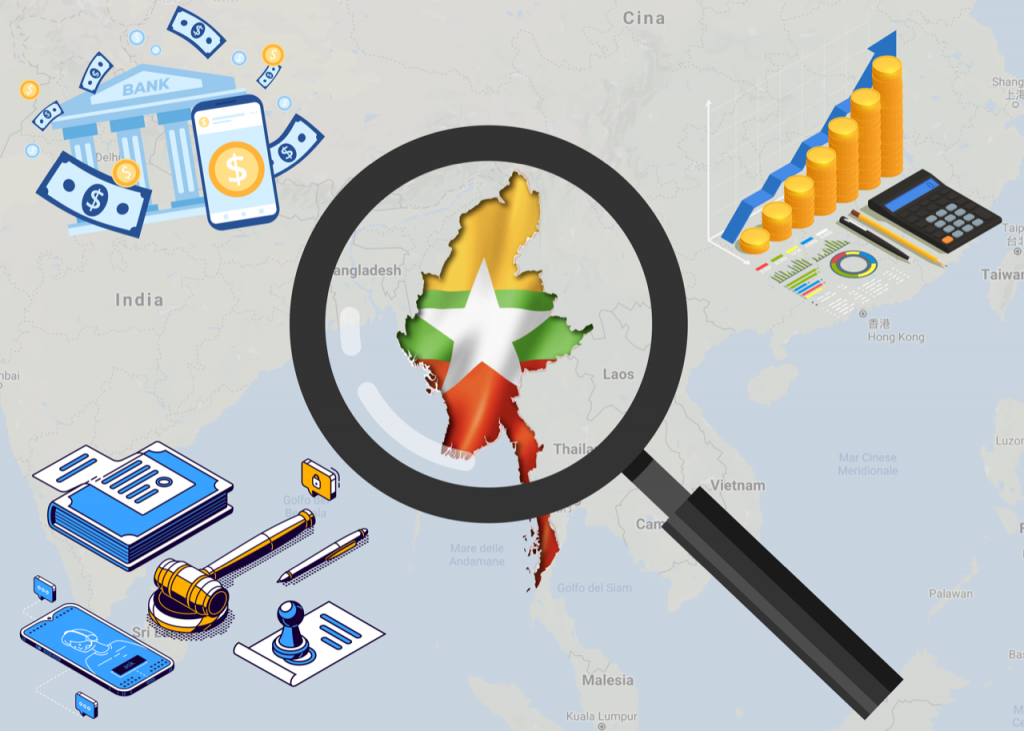
The new liberalization policies aim at the access of foreign investors into the country, especially in the banking, insurance and trade sectors (retail and wholesale). The strategy of attracting new foreign direct investments focuses in particular on a simplification and standardization of bureaucratic procedures and a modernization of business law.

These measures were positively assessed by the World Bank, which - prior to the Covid-19 emergency - estimated GDP growth at 6.5% for both 2020 and 2021, despite a global economic slowdown.

As early as 2016, the Yangon Stock Exchange of Myanmar (YSX), a joint venture between the Myanmar Economic Bank, the Japanese Daiwa Institute of Research and Japan Exchange Group, was inaugurated, however the inflow of foreign direct investments was hampered by the rigorous controls established by the military government, gradually eased in 2018 with the reduction of restrictions on the entry of foreign capital in the retail and wholesale sector.

The new company law rules replace a 1914 law and allow foreign investors to be able to hold up to 35% of the shares of a local company. Analysts predict that the influx of foreign capital will spread a greater culture of transparency, best practices and know-how, important for the development of Myanmar's business landscape.

In addition, a bureaucratic simplification process was also started: in the autumn of 2018, the Myanmar Companies Online (MyCO) was set up, an online system for registering online companies, aimed at promoting transparency and reducing the number of documents needed to start an activity.

Since November 2019, the Central Bank of Myanmar has allowed insurance companies and foreign banks to access the local market, providing them with the necessary licenses. In the coming years, the government will support the opening and liberalization of new investment sectors.

Since March 2020, foreign investors have been admitted to trading on the Myanmar stock market. To participate in the negotiation, foreign investors (resident and non-resident) will have to open an account with national intermediaries specialized in holding investment funds.

For now, only five companies are listed on the YSX, three of which are open to foreign investment, for a total of approximately 9 million dollars of shares available for purchase. However, it is likely that requests will come from investors to further loosen certain aspects: for example, to date, a personal verification of identity is needed, which requires physical presence in Myanmar.

Liberalizations in the banking sector

Starting from early April 2020 and following the gradual process of liberalization in the financial sector, the Central Bank of Myanmar allowed seven banks from all over Asia to enter the country market, in which they will begin operating from 2021, after being issued of the necessary licenses.

This is important news for the banking sector, in which Aung San Suu Kyi’s governance has heavily invested, if we consider that, up to 2019, Myanmar granted "branch licenses", allowing foreign banks to only operate towards businesses, but forbidding them from accept deposits. Only since November 2019 there had been a first opening to the offering of services to families and consumers.

The new licenses will allow foreign banks to offer a full range of services such as lending to private customers and businesses, exchanging foreign currency, managing liquidity and withdrawing deposits from companies, banks and individuals in both foreign and local currency. This information was confirmed by Siam Commercial Bank, one of Thailand's largest banks, which is close to entering Myanmar

However, foreign banks still suffer from limitations, as they will only be able to open branches in the country, therefore with a separate legal entity and established as a Myanmar-based company.

A possible alternative for foreign banking companies will be to invest in local banks, up to the 35% of the shared social capital.

However, the legislation of the former military government continues to weigh on Myanmar's banking sector. Sean Turnell (economic adviser to Aung San Suu Kyi) said that the biggest obstacle lies in the rules that set the interest rates by law at 13% for loans with collateral and 16% for unsecured loans. This prevents customers in a low risk class from being adequately assessed and rewarded. The deposit rate is also set by law at 10%. According to Turnell’s words, the government aims to eliminate those limits in the near future.

A further obstacle is also represented by the cultural barriers that still exist in the country. Citizens have scarce confidence in the banking sector and prefer to store physical currency or store wealth in the form of gold and jade. In fact, 90% of Myanmar citizens do not have a bank account.

However, also in Myanmar as in the whole ASEAN, digital wallet services are beginning to spread (the first being Wawe Money in 2017), which could allow a rapid evolution of the mobile financial services market, despite the important regulatory barriers still in place.

Despite the steps forward, however, investors remain concerned about the stability of the country, the lack of transparency in the decision-making processes and the poor coordination between the various levels and institutional bodies which are responsible for issuing licenses and permits to operate in the Country.

However, the proactivity shown by the government in recent years seems to be going in the right direction. The country can also count on a great availability of workforce, low production costs and the wealth of natural resources, as well as commercial links with the dynamic economies of ASEAN.

Articole edited by Gabriel Zurlo Sconosciuto

Gli equilibri commerciali in Asia ai tempi del Covid-19

Nel primo trimestre del 2020 l’ASEAN è risultato il primo partner commerciale della Cina

Negli ultimi anni il panorama commerciale globale ha subito profonde trasformazioni che hanno contribuito a produrre nuove e significative dinamiche economiche nel continente asiatico.

Fino a qualche anno fa, prima della guerra commerciale tra USA e Cina e prima dello scoppio della pandemia, Unione Europea e Stati Uniti erano rispettivamente il primo e il secondo partner commerciale della Repubblica Popolare Cinese. Oggi invece, nel bel mezzo di una crisi sanitaria ed economica globale, l’ASEAN ha scavalcato UE e USA ed è risultato il maggior partner commerciale della Cina nel primo trimestre del 2020. Secondo l’Amministrazione generale cinese delle dogane, nei primi tre mesi di quest’anno, il commercio bilaterale totale tra ASEAN e Cina è aumentato del 6,1% su base annua a 140,62 miliardi di dollari, nonostante l’emergenza sanitaria.

Diversi elementi sono intervenuti a produrre questo scenario, con cambiamenti profondi per tutto il sistema commerciale e per gli equilibri di potere globali.

Sul versante europeo, ha sicuramente influito la Brexit. La Gran Bretagna rappresentava infatti circa il 10% degli scambi commerciali tra UE e Cina. Con la sua uscita dall’Unione dunque, i Paesi europei hanno perso una quota significativa del rapporto commerciale con la Cina, che ha influito pesantemente sui dati aggregati relativi al commercio UE-Cina.

Dall’altra parte dell’Oceano Atlantico, invece, la guerra commerciale avviata dall’amministrazione di Donald Trump ha contribuito in maniera decisiva al deterioramento dei rapporti commerciali tra USA e Cina, scatenando diversi effetti collaterali. Non sono cambiati solo i rapporti tra Washington e Pechino, le tensioni commerciali hanno finito per spingere molte aziende a trasferire capacità produttive dalla Cina ai Paesi del Sud-Est asiatico, rinforzando catene di valore e sistemi produttivi regionali. Lo scontro con gli USA ha anche indotto le autorità cinesi a rafforzare i legami economici e diplomatici con i partner del continente asiatico, mettendo i Paesi ASEAN in una posizione di primo piano, date le dimensioni del blocco commerciale.

Inoltre, la gravità dello shock economico causato dalla pandemia di COVID-19 ha contribuito ad acuire tali trasformazioni, mettendo in crisi il sistema economico e commerciale globale. Secondo le stime del Fondo Monetario Internazionale, i Paesi più colpiti a livello economico sono quelli occidentali, in Europa e Nord America, mettendo Paesi come quelli del Sud-Est asiatico nelle condizioni di guadagnare terreno a livello commerciale. Inoltre, rafforzando le dinamiche scaturite dalla guerra commerciale, le misure restrittive attuate dai governi per limitare i contagi stanno inducendo molte aziende a rivedere le catene di produzione e fornitura, favorendo soluzioni regionali a scapito di meccanismi globali.

Sembra dunque che le trasformazioni degli ultimi anni stiano spingendo il continente asiatico verso maggiori forme di cooperazione economica e commerciale. Cina e ASEAN sono oggi più vicine dal punto di vista economico e diplomatico di quanto non lo fossero qualche anno fa. Lo scenario resta complesso e indefinito, sarà fondamentale seguire l’evolversi della situazione nei prossimi mesi per capire la portata dei cambiamenti in corso e analizzarne l’impatto a livello globale.

Article edited by Tullio Ambrosone

Emergenza COVID-19: le opportunità per l’ASEAN

Smart working ASEAN

Nonostante la gravità della crisi, si aprono scenari interessanti

Anche nei Paesi del Sud-Est asiatico l’epidemia di coronavirus sta avendo un impatto significativo: diverse aree sono in isolamento, i grandi eventi sono stati annullati o rinviati, le strutture mediche sono in difficoltà e il sistema economico ne sta risentendo. Tuttavia, la grave emergenza sanitaria ed economica che i Paesi ASEAN stanno affrontando sta aprendo nuovi scenari, che potrebbero recare alcuni benefici nel lungo termine.

Le aziende stanno iniziando a diversificare le loro catene produttive, spostando investimenti e capitali dalla Cina verso i Paesi del Sud-Est asiatico. Anche prima della pandemia, tensioni politiche come la guerra commerciale tra Washington e Pechino, stavano spingendo le grandi compagnie a dirottare le catene di produzione dalla Cina a Paesi terzi, ma l’emergenza sanitaria ha finito per accelerare questo trend. Nel tentativo di diversificare la produzione infatti, grandi aziende come Google e Microsoft trasferiranno le attività di fabbricazione di nuovi telefoni, computer e altri dispositivi dalla Cina a Vietnam e Thailandia. Altri giganti come Sony e Nokia investiranno in Indonesia, mentre Samsung sta puntando sul Vietnam. Questi esempi non solo dimostrano l’intenzione delle grandi aziende di evitare la dipendenza dalla Cina e scommettere sulle economie del Sud-Est asiatico, ma rivelano anche una grande opportunità per la regione di sviluppare maggiori competenze nel settore della produzione tecnologica.

La crisi sanitaria, che obbliga i Paesi a imporre misure di distanziamento sociale, sta anche trasformando il mondo del lavoro. Sta cambiando infatti anche la mentalità imprenditoriale, che si sta adattando al contesto di crisi e sta sfruttando la tecnologia per affrontare le limitazioni ai movimenti e il distanziamento sociale. Aziende come CoXplore o AngkorHub, specializzate in co-working e piattaforme di smart-working, stanno crescendo in maniera significativa negli ultimi mesi, evidenziando un trend che potrebbe sopravvivere alla crisi. Specialmente nel Sud-Est asiatico, regione densamente popolata, queste start-up hanno il potenziale per trasformare l’approccio al lavoro e numerose aziende sono pronte a investire in questa direzione, anche dopo l’emergenza.

L’isolamento di migliaia di persone, inoltre, sta offrendo grandi occasioni al crescente settore del ride-hailing nel Sud-Est asiatico. Aziende come Grab e Gojek stanno intensificando le proprie attività nei Paesi ASEAN, con l’obiettivo di fornire servizi di consegna a domicilio a più persone possibile durante l’emergenza. Altri settori, come quello della vendita di prodotti alimentari online, stanno crescendo nella regione, aprendo nuovi scenari non solo per le aziende, ma anche per i lavoratori.

Ancora una volta dunque un momento di crisi sta offrendo opportunità e dando vita a nuove tendenze economiche e sociali. Nonostante il contesto di grande tensione, la crisi del sistema sta avviando trasformazioni che porteranno benefici nel lungo termine. Sarà interessante continuare a seguire l’evoluzione della situazione per identificare nuovi trend e capire che volto avrà la regione del Sud-Est asiatico dopo questa epocale crisi sanitaria ed economica.

Article edited by Tullio Ambrosone

Failed constitutional reform attempt in Myanmar

The Union, Solidarity and Development Party (USDP) and Tamtadaw militaries block Suu Kyi's reforms

On 10 March, Myanmar's parliament began voting on the constitutional revision law, strongly supported by the National League for Democracy, party of the State Counsellor Aung San Suu Kyi.

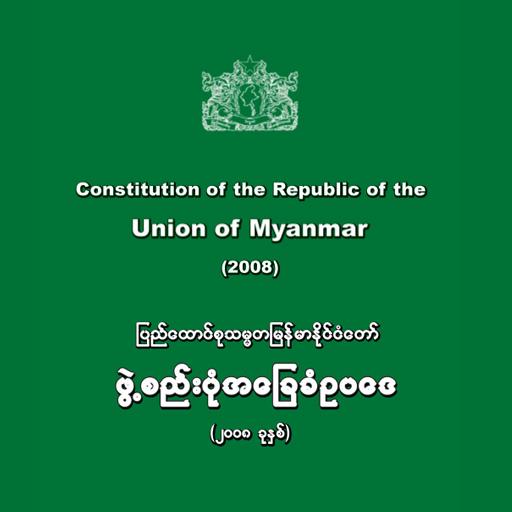
The parliamentary opposition of the Tamtadaw militaries and the USDP is tough but effective. The Burmese Constitutional Charter entered into force in 2008 and guarantees the military a quarter of the seats in parliament. It also guarantees them a majority in several state committees, one above all the National Defence and Security Council. The Charter itself provides for a three-quarters majority for the constitutional revision process, a majority which, de factowithout the military's vote is impossible to achieve.

Thus, the parliamentary opposition of the Tamtadaw militaries and the USDP was effective In the first days of voting, in fact, the two main proposals of the reform were rejected: the one concerning the reduction, gradually and over 15 years, of the seats assigned to the Armed Forces and the one finalized to amend Article 59 of the Constitution, which denies citizens with relatives of foreign nationality the possibility of competing for the Presidency of the Country. It is precisely the latter provision that represents the most important obstacle for Counsellor Suu Kyi, widow of the British Oxford University scholar, Michael Aris, and mother of two children with British citizenship. The two proposals reached respectively 404 and 393 "yes", therefore not enough to reach the 75% of votes in favour required by the Constitution.

Another fundamental aim of the constitutional reform is reducing the majority necessary for the revision of the Constitutional Charter from three quarters to two thirds.

The boycott by the military and the USDP had already begun a few months ago, when the members of the two sides had left the Amendment Committee, a body which was supposed to study and prepare the new institutional structure of Myanmar. Their aim is surely to arrive at the next elections with the current constitutional structure, limiting the power of the National League for Democracy.

The United States and the European Union have been waiting for years for a turning point in the country which, despite the great expectations placed in Aung San Suu Kyi, are struggling to arrive. Myanmar is 'under observation' on issues such as money laundering and human rights violations against ethnic minorities, one of which is that of the Rohingya, a Muslim majority group persecuted and, for this reason, forced to take refuge in Bangladesh. China and Japan are not of the same opinion and, in a continuous "regional dispute", do not miss any opportunity to strengthen relations with the country.

This attempt to reform the institutions, with the aim of definitively reducing the power of the army, seems to have foundered. For the moment, everything is postponed to the next national elections scheduled for Autumn 2020.

Article edited by Alessio Piazza

Has BRI been infected?

The impact of Covid-19 on ASEAN countries, through interrupted supplies and quarantined workers.

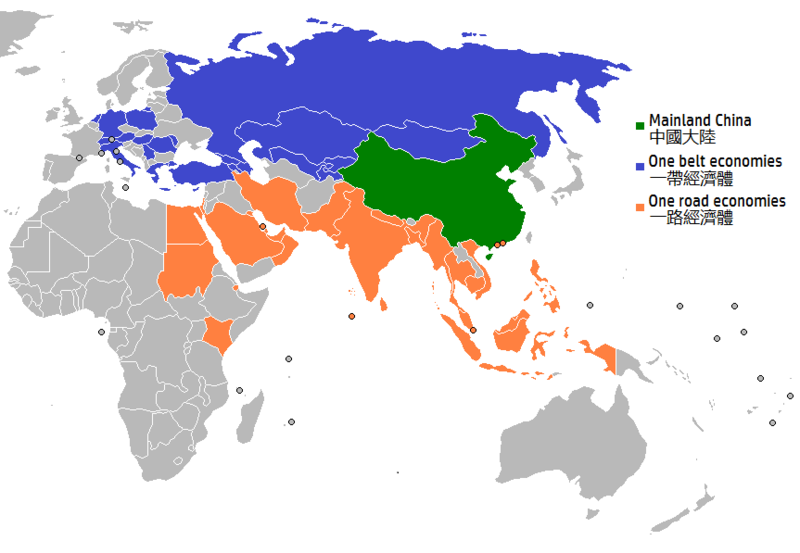
The Covid-19, after the spread in China and the consequent severe restrictive measures, has also spread in ASEAN countries. That resulted in the shutdown of several productive establishments (as it happened in Cambodia for more than two-hundreds factories, which had their productivity interrupted because of the lack of Chinese raw materials). Furthermore, it caused the halt of important infrastructural projects, including those related to the Belt and Road Initiative, (BRI; the Chinese strategic project aimed to connect the Country and its economic partners through new strategical roads, railways and maritime thoroughfares)

ASEAN authorities are beginning to assess the damages due to the Coronavirus. Delays on BRI related projects, in particular, could hamper economic recovery in the next months.

In Indonesia, the Coordinating Minister of Maritime and Investment Affairs announced the delay of the 6 billion high speed railway that will link Jakarta to Bandung: 50% of the materials and 20% of the workers are from China. The construction of the 510 MW hydropower plant in Batang Toru was interrupted too.

Delays are also occurring in Cambodia, where BRI rendered Sihanoukville special economic zone, in the province of Preah Sihanouk, with the purpose of creating an ideal investment platform for companies in the ASEAN area. The project is suffering from a gradual lack of supplies from China, and it is seeing the offices of Chinese leaders remain empty. That will result in a further prolongation of the construction time and it will exponentially increase the costs. However, The Cambodian leader Hun Sen stays positive, hoping that the fabrication will resume after the first quarter of the year.

In Malaysia, up until one month ago, Malaysia Rail Link assured that the East Coast Rail Link – which is worth 10.4 billions and which will link Kuala Lumpur and Putrajaya to east coast states such as Pahang, Terengganu and Kelantan - wouldn’t have been subject of any delay. Due to the current decisions taken by Malaysian government, which put the state in a total lockdown, at least for the next 14 days it is not excluded that slowdowns or temporary interruptions will occur for the project, which is currently completed at 15% .

Instead, the virus is not slowing the China-Laos Railway down, due to be ready for 2021, that will transform Laos from a landlocked country into a terrestrial hub. The central administration had already decided not to interrupt for the Spring Festival: officials and workers have stayed on the construction site, sheltered from the Covid outbreak. Moreover, Chinese and Laotian engineers are starting to lay the foundations of the electricity line, the first BOT (build- operate-transfer) electricity grid in Laos, which will supply the railway.

BRI has a targeted completion date of 2049, but even this date seems to waver as the virus’s impact on economy will be felt for many years to come.

.

Articole edited by Gabriel Zurlo Sconosciuto

ASEAN is betting on free trade

Negotiations for the RCEP are coming to an end and the agreement should see the light at the end of 2020

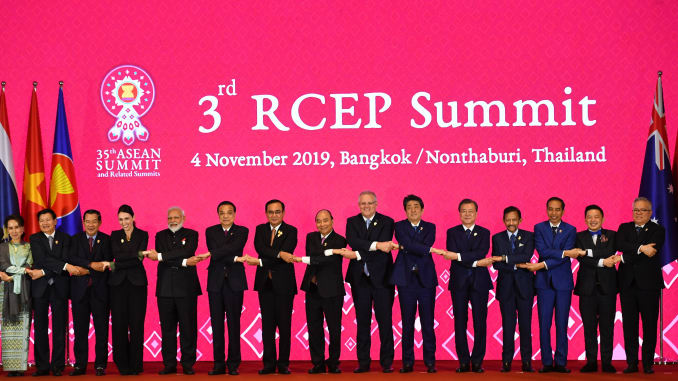
After lengthy negotiations, this year several countries on the Asian continent are preparing to conclude one of the world's largest trade agreements ever. The agreement, called Regional Comprehensive Economic Partnership or RCEP, involves ten countries of the ASEAN bloc and five of its main trading partners, namely China, Japan, South Korea, Australia and New Zealand. Together these countries make up almost a third of the world's population and global GDP, more than trading blocs such as the European Union, USMCA or Mercosur.

The initial project also included India that then preferred to withdraw from the agreement for fear of damaging domestic production and benefiting China. In fact, several analysts and observers argue that Beijing could use the RCEP as an opportunity to counter American influence in the region and revamp its role as guarantor of free trade at the global level. Donald Trump's aggressive commercial policy has also contributed to strengthening this dynamic, leading several countries to give even more importance to the RCEP negotiations.

Although less ambitious than agreements such as USMCA, RCEP will boost trade in the Asian region by lowering tariffs, standardizing customs rules and procedures, and extending market access especially to member countries that do not have major trade agreements in place. The most significant innovation is the development of common rules of origin for the whole trade bloc

Once the agreement is signed, member countries will be able to obtain a single certificate of origin that will allow companies to easily move products within the bloc, without having to worry about the specific criteria of the rules of origin of each country. This will reduce costs for companies by encouraging them to export more towards RCEP member countries and develop regional value chains

La riduzione delle tariffe e altri benefici non saranno applicati in base alla sede centrale di un’azienda, ma in base alla sede di produzione, consentendo così anche ad aziende americane o europee, che già producono in un Paese RCEP, di esportare in altri stati del blocco alle stesse condizioni.

The reduction in tariffs and other benefits will not be applied according to the company's headquarters, but according to its manufacturing location, thus also allowing non-Asian companies, which already produce in RCEP countries, to export to other states of the bloc under the same conditions. However, it should also be stressed that the agreement will encourage the development of supply chains inside the Asian region, which in turn will leave Western companies at a disadvantage, unless they are located there. It should also be noted that compared to other trade agreements, RCEP only contains some limited measures on services, investments and common standards and does not include specific references to the protection of workers and the environment.

The RCEP should enter into force at the end of 2020, a few months later than initially planned. As the world navigates the aftermath of a major trade war, the case for free trade is under siege. RCEP can offer an optimistic answer to the challenges world trade is facing, in the name of multilateralism and free trade.

Article edited by Tullio Ambrosone

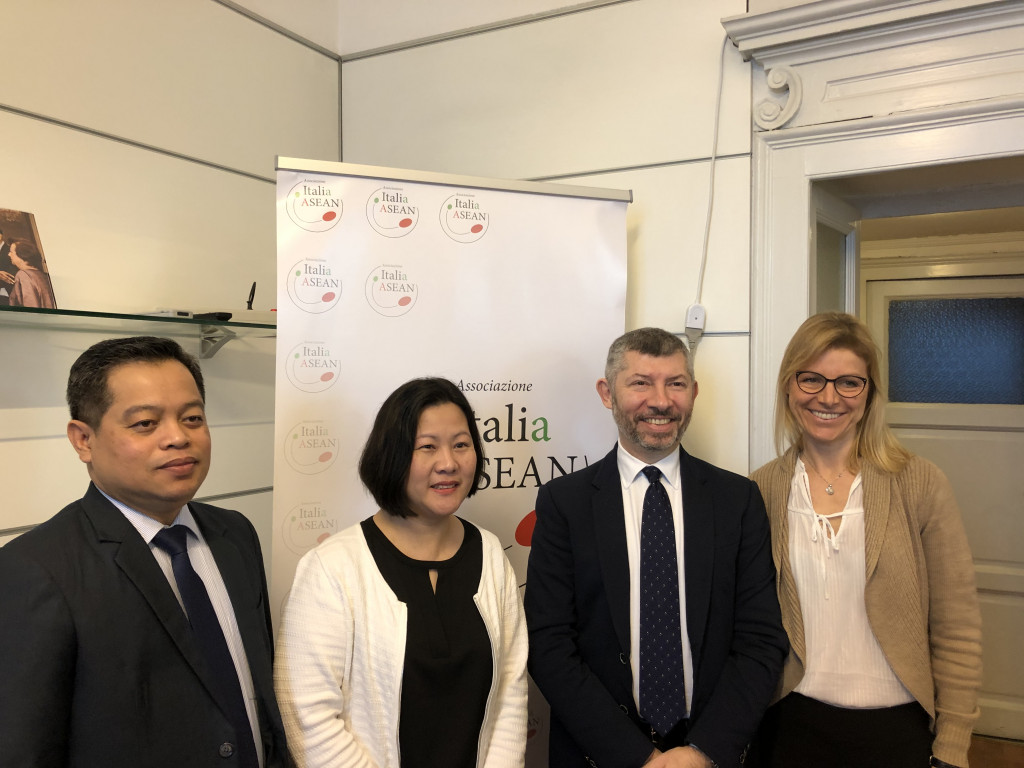
Working breakfast with Ivan Scalfarotto, Undersecretary to the Ministry of Foreign Affairs

Ivan Scalfarotto Associazione Italia-ASEAN

Undersecretary Scalfarotto described the strategy to support the internationalization of Italian enterprises.

On February 17th, the Italy-ASEAN Association had the pleasure to host a meeting in Milan with Mr. Ivan Scalfarotto, Undersecretary to the Ministry of Foreign Affairs and International Cooperation. Undersecretary Scalfarotto discussed alongside Secretary General Alessia Mosca and the Members of the Association about the position of Italy in the current state of international trade.

Undersecretary Scalfarotto confirmed the commitment of the Italian Government to strengthen the economic and diplomatic ties with ASEAN and described the strategy to support the internationalization of Italian enterprises

He highlighted the importance of international trade for the Italian economy. As a matter of fact, exports were fundamental for economic growth during the latest financial crisis: between 2010 and 2017, Italian export grew of +6,4%, while the GDP shrank of -0,8%. Italy would have suffered even more of the economic crisis, if its enterprises were not able to rely on foreign markets.

Furthermore, the “Made in Italy” brand is based on the production of high-quality goods from imported products, such as agri-food and textile products. For example, Italy is well-known for coffee and chocolate, but it does not produce coffee beans and cocoa. Italy does not even produce enough wheat to support its pasta industry

Given the skills of the Italian enterprises, one might be tempted to think that companies can compete on global markets on their own. However, Undersecretary Scalfarotto stressed that, globally, the value of G2G (Government to Government) agreements far exceed those of B2B (Business to Business). He explained that the government can and should play a role as a pro-active actor in facilitating economic exchange. Indeed, it is hard for single companies to install a stable and trusty dialogue with foreign partners without receiving the support of the Government (especially in Asian countries).

To this matter, Undersecretary Scalfarotto then proceed by reporting cases where the Italian Government - through its agencies - was crucial for the internationalization of Italian enterprises. As an example, he cited the role of Cassa Depositi e Prestiti Group in filling the void left by financial institutions in providing funding credit to Italian companies. He also stated that the Italian Government is currently addressing in a unified manner critical issues to international trade, such as external tariffs and duties.

Undersecretary Scalfarotto emphasized that trade can play a key role as a foreign policy instrument, as the Trump administration have showed. Therefore, Government should intervene in crucial sectors where irregularities can emerge (as it is the case with 5G technologies), in order to establish a level playing field. level playing field.

In conclusion, Undersecretary Scalfarotto highlighted the strategic role of the Association of South-east Asian Nations. From the economic point of view, it represents in total the 5th largest economy in the world. From a geopolitical point of view, instead, the region is a great stabilizer to the tensions between bigger regional powers. Therefore, Italy and the European Union should play a more active role in South-East Asia, filling the void left by the US in Asia-Pacific. In fact, strengthening the economic relations with Asian countries can be a tool to promote political stability and growth in the region, a strategy already adopted by the European Union in Latin America.


Recently active members
Foto del profilo di Alessio
Foto del profilo di Monika
Foto del profilo di Gabriel
Foto del profilo di Elena
Foto del profilo di Lorenzo
Foto del profilo di Alessandro
Foto del profilo di Cristina
Foto del profilo di Rocco
Foto del profilo di Clara Lomonaco
Foto del profilo di Redazione
Foto del profilo di Davide Gugliuzza
Foto del profilo di Anna Affranio
Foto del profilo di Ilaria Canali
Foto del profilo di Nicolò
Foto del profilo di Angelo Cangero
Who is online
There are no users currently online
Members
  • Foto del profilo di Alessio
    Active 7 ore, 6 minuti fa
  • Foto del profilo di Monika
    Active 3 giorni, 20 ore fa
  • Foto del profilo di Gabriel
    Active 3 settimane, 4 giorni fa
  • Foto del profilo di Elena
    Active 1 anno, 4 mesi fa
  • Foto del profilo di Lorenzo
    Active 2 years, 6 mesi fa