Asean

South-East, a model for managing tensions

The region has rapid growth and expanding economy suggest that the region can become a model for managing competition between major powers

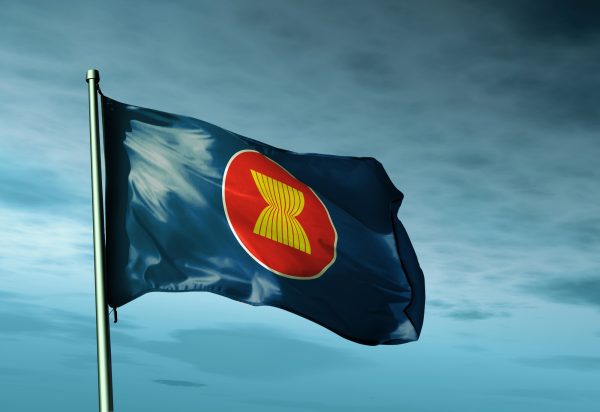
"South-East Asia is far from a monolith: its countries have different foreign policies and objectives, some of them at odds with each other. But the region's rapid growth and expanding economy suggest that its countries will become more powerful over time and, with them, probably more able to avoid external interference. South-East Asia may have been defined in the past by conflict between great powers, but today it may become a model for managing competition between great powers'. Thus judges an analysis by Huong Le Thu, published in the latest issue of Foreign Affairs. South-East Asia has worked hard to maintain and expand diplomatic and security stability. In addition to the ASEAN-led multilateral security architecture, the region has established many plurilateral and bilateral agreements with third states. These are ad hoc groups, such as the joint patrolling of the Mekong River by China, Laos, Myanmar and Thailand. According to Foreign Affairs, as geopolitical tensions rise, the already large number of these partnerships is set to increase. These complex and often overlapping agreements are central to Southeast Asia's efforts to engage with all, but without making exclusive commitments to any. Southeast Asian states are also becoming more active in groups that include participants from outside their neighbourhood. Last year, for example, Cambodia hosted the high-profile East Asia Summit, Thailand held the Asia-Pacific Economic Cooperation forum, and Indonesia chaired the G20. Individually, Huong points out, some South East Asian governments have learnt that competition between the US and China has advantages. The clash between Beijing and Washington may scare politicians in the region, but it has led both governments to try to win the hearts and minds of non-aligned countries. This has helped South East Asian countries, home to young populations and cheap labour, reap all kinds of economic benefits. Vietnam, says Foreign Affairs, has benefited enormously from the US breakaway from China, as American companies have moved production to Vietnamese factories. Indonesia has also received an investment boost from US companies, including Amazon, Microsoft and Tesla. The region is also becoming increasingly critical for global supply chains. And it may point the way forward for continued prosperity.

ASEAN prepares its future

The post-2025 vision of the Community of Southeast Asian Nations will be extended to 2035 to 2045

The ability to develop long-term strategies has always been crucial and has become even more. In Asia, it is something that is traditionally more emphasized. Further proof comes from ASEAN's decision to extend its post-2025 vision by an additional ten years, taking it from 2035 to 2045. The decision was announced recently by Secretary-General Kao Kim Hourn during the seventh meeting of the High-Level Task Force on the ASEAN Community's Post-2025 Vision. Between now and 2025, the task force will have to provide an answer to the Southeast Asian region's most important challenge: how to come up with a sustainable vision in the medium to long term, to continue to sustain economic growth and accompany the foreseeable increased trade and geopolitical role of the region, given that in the coming decades, ASEAN could conceivably become the world's fourth largest economic power after China, the United States and Japan/India. In recent months, the task force has held so-called 'interface consultations' with ASEAN-related agencies, including the ASEAN Intergovernmental Commission on Human Rights, the ASEAN Centre for Biodiversity and the ASEAN Business Advisory Council (Abac). In 20 years, ASEAN could have the world's third largest population after China and India. And presumably it will also be larger in numbers. The Bangkok Post predicts that new members will join the Association in the coming years, including East Timor and, in the years to come, Papua New Guinea, which has been the group's longest-serving observer since 1986. There may also be other new members from the Indo-Pacific region. At that point, the Thai newspaper points out, ASEAN would need a several-fold increase in its budget at the Jakarta-based secretariat. The main challenge will still be to adapt to a world with polarizing trends, strengthening the bloc's centrality in order to increasingly become a major global player and preventing South-East Asia from being drawn into confrontational and oppositional logics. ASEAN has all the credentials to succeed in this.

ASEAN chipmakers benefit from the technology clash between the US and China

The technology clash between the US and China is intensifying. Third countries and companies are trying to rely less on Chinese semiconductor suppliers to avoid sudden breaks in supply chains. ASEAN countries can take advantage of the situation.

In Singapore, the French company Soitec will invest EUR 400 million to double its wafer production plant. The American Applied Materials will spend a little more, 405 million, to build a new plant. Another American company, Global Foundries, is already building a 3.6 billion plant, again in the Lion City. The shopping list of European, American and Asian companies investing in the island and some other ASEAN countries is long and impressive. And it is destined to increase if the tension between the US and China does not abate.

The clash between the two great Pacific powers is reshaping technology supply chains. Washington is trying to slow the growth of China's semiconductor sector by blocking the export of high-tech products and encouraging companies to buy chips elsewhere. US policies also affect companies in third countries. The Dutch company ASML, the world's leading manufacturer of lithographic machines (one of the many parts of the supply chain), will be subjected to much stricter export control rules after The Hague chose to follow the American line. Although the Dutch government measure does not name names, the implicit target of the measure is China.

However, there is no need to resort to legal constraints to redirect companies' strategies. The increasingly heated tones between Washington and Beijing, and the growing tensions around Taiwan, are pushing companies to shift their orders from China to other Asian countries. The economic and technological decoupling hoped for by the US is already happening to a small extent. Yet, it remains difficult to achieve given that the world's two largest economies play very different roles in global trade (and financial) flows. Each of the two contenders does not seem to be able to give up on the other and the same goes for third countries, from ASEAN to the EU, without facing harsh economic consequences. And indeed, ASEAN countries try to maintain a cordial and pragmatic equidistance between the US and China.

Working with both powers, without renouncing ties with either. This strategy, followed by most countries in the region, has diplomatic and economic reasons. On the diplomatic level, ASEAN governments would prefer a less assertive Beijing in the South China Sea (in fact, they are also increasing their defence spending), but not isolated, as they would like in Washington: maintaining good relations with China seems to be the best way to guarantee the region's security, according to the ASEAN chancelleries. Economically, both dollars and yuan are needed to finance the region's development. US and Chinese consumers and companies are interested in ASEAN-made electronic products, especially if buying goods produced by the rival becomes more difficult. Investments in facilities and infrastructure also matter: Beijing and Washington are also competing in this field, respectively with the Belt and Road Initiative and the Build Back Better World plan.

The prospects look bright for semiconductor manufacturers in the ASEAN countries (Singapore, Vietnam and Malaysia, but also Indonesia and Thailand). The clash for technological dominance in the XXI century between the eagle and the dragon assigns to the new 'ASEAN tigers' the role of the world's alternative factory, capable, however, of exchanging products and cooperating with both sides. That is, unless the two powers demand from the governments of third countries to take sides or renounce cooperation with their rival. An impossible choice for the ASEAN countries, but perhaps also for the parties to the technology dispute themselves. In this scenario, the strengthening of ASEAN's regional integration, politically and economically, could defend the diplomatic autonomy of its members and foster the development of chip value chains.

World moves closer to ASEAN

Increasing cooperation between Southeast Asian countries and global platforms such as the G7. And beyond. With the hope that more and more governments will follow the bloc's "third way"

The Association of Southeast Asian Nations is increasingly involved in global decision-making mechanisms. A very timely example is the historic first meeting between G7 justice ministers and those of the regional bloc. A joint meeting is scheduled for July, with Japan, the host country and G7 chair. A similar Japan-ASEAN meeting is scheduled for the same days. On the other hand, since the start of the war in Ukraine, it has sharpened the distance between the West and some countries. ASEAN, with its third way of neutrality and pacifism, can serve as a crucial connector in this global phase. Southeast Asians fear that the use of force to change the status quo, as Russia did in Ukraine, will spread to the Asia-Pacific. Most of all, they fear getting involved in disputes where they do not belong. "ASEAN must remain independent and a zone of neutrality amid the escalating rivalry between the U.S. and China," Prime Minister Datuk Seri Anwar Ibrahim said in recent days, stressing that ASEAN was formed to promote peace and stability in the region. "This position continues. We do not want the region to be the basis for military competition. This position has been quite consistent, although we remain friendly with all countries," he explained. Recent multilateral agreements that threaten to set the stage for an arms race are frowned upon. In 1995, 10 ASEAN member states signed the Southeast Asia Nuclear-Weapon-Free Zone Treaty, or Bangkok Treaty, which designates the region as nuclear weapons-free. The treaty also includes a protocol open for signature by China, France, Russia, the United Kingdom and the United States. So far no one has signed it, but we are finally seeing the first movements. Recently, China expressed its intention to sign the protocol for the ASEAN Nuclear Weapon Free Zone Treaty. But it will not be easy to get everyone to join. The bloc's hope is that by participating more and more frequently in global platforms, the world will increasingly choose to follow that third way it has been indicating for several years now.

The path of future food in ASEAN

By Chiara Suprani

Southeast Asia shows possible developments in the global food market. Applications for cricket flour could be countless in the Italian market, such as being used as a base or addition to cereal bars, or whey powder

As of 24 January 2023, the European Union allowed the buying and selling of flour products from Acheta domesticus, or more commonly, house cricket. Two days later, the marketing of Alphitobius diaperinus, the lesser mealworm, was launched. Brussels believes that insects are a viable alternative to increasing the costs of animal meat production, both because of their lower environmental impact and because of their protein supply, which is higher in percentage than that of animals. But while the applications for cricket flour could be countless in the Italian market, such as being used as a base or added to cereal bars, or to whey powder, a Coldiretti survey revealed that 54% of Italians are against the inclusion of cricket flour in their diet. Introducing insects, or novel foods, into the food market requires specific labeling requirements especially for allergenicity, but not only. The European Food Safety Authority (EFSA) is aware that at the current stage, the consumption of insects on the European market is limited, but the potential and benefits are there, as are the risks, especially when legislation is not yet defined. Due to different eating habits, legislation for insect consumption is more advanced in South-East Asia. In Thailand, edible insects fall under the Food Act B.E. 2522 (1979), which is the general law regulating food quality and integrity. Also in Bangkok, on 29 March, SPACE-F, Thailand's first global food-tech startup incubator and accelerator programme, the result of a partnership between the National Innovation Agency, Thai Union Group PCL, Mahidol University, Thai Beverage PCL and Deloitte Thailand, launched a mentorship programme for FoodTech startups with the aim of making Thailand the world's first foodtech hub. Earlier this year, the Malaysian Minister of International Trade and Industry successfully secured USD$4 billion worth of investments from three novel food and food tech companies: Sea Ltd, Yondr Group and Inseact. The latter specialises in insect proteins for animal feed and aquaculture and plans to open a production plant in Johor, Malaysia, the first in the region, to meet Asia's growing demand for sustainable food sources.

Telemedicine? A big growth market in ASEAN countries

The consumer-focused digital health market in Asia could grow from $37.4 billion in 2020 to more than $100 billion in 2025. This growth will be driven primarily by telemedicine

Increasing population and demand for medical services is straining the health care system in several Southeast Asian countries. In Indonesia, for example, the combination of the urban expansion of the capital Jakarta and the geographic nature of the territory divided into archipelagos has made it difficult for the more than 270 million inhabitants to access health care. Data compiled by the World Health Organization (WHO) report that in 2021 the Indonesian health service could offer 6.95 doctors per 10,000 people, a figure below the 9.28 doctors per 10,000 in Thailand and 7.51 in Myanmar. Indonesia, the fourth most populated country in the world, thus appears to have far fewer doctors per capita than the Organization for Economic Cooperation and Development (OECD) average. In fact, these numbers are worrisome when compared, for example, to the figure for Italy where there are 17.3 physicians for every 10,000 inhabitants-already believed to be a lower number than needed-or when compared even to the figure for Japan where there turn out to be 26.14 physicians for every 10,000 inhabitants. 

Companies offering telemedicine services fit into this context. These companies offer remote medical consultations through apps thus making the health care offered to citizens more convenient and faster. During the Pandemic from Covid-19 and to follow, competition among companies in this market has grown exponentially leading to an expansion of services offered in this field. Some of these apps, in fact, offer not only consultation services but also home delivery of prescriptions and medications. 

For example, Halodoc, a telemedicine app launched in 2016, in addition to allowing customers throughout Indonesia to have online consultations with more than 20,000 licensed physicians in the country at any given time, already delivers prescriptions and medicines in 400 Indonesian cities, managing, in 30 percent of them, to make delivery in just 15 minutes. This Indonesian start-up already has 20 million monthly users in the country but aims to reach 100 million in the next few years by aiming to expand its reach to Thailand, Vietnam, and Malaysia. Alodokter, a telemedicine company founded in 2014, also stands out in the Indonesian context. This app boasts more than 80,000 affiliated doctors who can prescribe drugs and send them within hours to their patients.

Also in Indonesia, Harya Bimo, chief executive officer of Klinik Pintar, is instead determined to maintain a hybrid model in which technology does not preclude clinics where patients can go to be present on the ground. In fact, Klinik Pintar is an Indonesian health technology startup that not only helps its users book teleconsultations, virtual health services but also offers its clients in-person clinic sessions.

The telemedicine sector appears to be growing strongly in other Southeast Asian countries. For example, in Singapore, the telemedicine company Doctors Anywhere, which has a user base of 2.5 million in Singapore, Indonesia, Malaysia, Thailand, the Philippines, and Vietnam, plans to acquire Asian Healthcare Specialists (AHS) a multidisciplinary medical group with more than 10 facilities providing services, including anesthesia, dermatology, family medicine, and gastroenterology. In this way, the company could follow up on online consultations by also providing patients with visits to AHS centers. In the Philippines, citizens will also be able to benefit from a single technology super-app starting in the coming months resulting from the consolidation of three health care companies-KonsultaMD, HealthNow and AIDE-promised by the Philippine Ayala Group.

The apps mentioned are just some of the telemedicine startups being developed in ASEAN countries. A McKinsey report predicts that the consumer-focused digital health market in Asia could grow from $37.4 billion in 2020 to more than $100 billion in 2025. In this context, telemedicine, followed by electronic pharmacies, will be the main growth driver.

Energy, so many opportunities in ASEAN

The bloc of Southeast Asian countries will double its demand for natural gas to 350 billion cubic meters by 2050

ASEAN will double its demand for natural gas to 350 billion cubic meters by 2050. In fact, even more. A truly impressive trend that accelerates in tandem with the abandonment of coal-fired power generation. Identifying the 350 billion cubic meters of demand over the next three decades was the secretary general of the Gas Exporting Countries Forum, Mohammed Hammel. The share of natural gas in the region's energy mix is projected to grow steadily to 24 percent by 2050. GECF data show that ASEAN's natural gas demand will stand at 160 billion cubic meters in 2021, of which 80 billion cubic meters will be used for power generation and 50 billion cubic meters will be used by the industrial sector. These two sectors will continue to take the lion's share of the bloc's natural gas demand in 2050. Indonesia, Thailand and Malaysia will also be major contributors to demand. Coal accounted for 24 percent of the region's energy mix in 2021, but will likely drop to 13 percent in 2050 as the share of cleaner energies increases. According to GECF data, Thailand is the largest importer of liquefied natural gas (LNG) in the region and will maintain this position in the coming decades. ASEAN's natural gas production will continue to be around 180 bcm in 2050, and the region will extract its gas mainly offshore. When combined with carbon capture and storage (CCS) technology, natural gas could cut down an additional 735 million tons of carbon dioxide emissions in the power sector alone by 2050. Hidetoshi Nishimura, president of think-tank ERIA, said natural gas can reduce emissions through its expanded use in the initial phase of the clean energy transition from 2020 to 2030 by applying existing, affordable fuels and energy technologies. In the long run 2030-2050, many advanced technologies such as co-firing with hydrogen and CCUS (carbon capture, utilization and storage) will be employed. The process will ensure many opportunities on the energy front for international players.

The circular economy (and fashion) in ASEAN

Attention to environmental issues is increasingly felt in South-East Asia, one of the main production centers of fast fashion and plastic consumption.

In recent years, a growing interest in ethical and sustainable models has started from the fashion industry. More and more fashion brands worldwide are adopting a circular economy, i.e., a production and consumption framework that promotes the idea of reuse, recycling and minimizing waste. This is largely a response to an increased consumer awareness of the negative impact of fast fashion and increased concern about environmental and social issues. This has allowed a clear growth of the sustainable fashion market. According to The Business Research Company, the global market for ethical fashion – defined as the design, production and distribution of apparel that aims to minimize harm to people and the environment – is expected to reach $11.12 billion by 2027. This is also happening in Thailand, where an increasing number of local clothing stores are contributing to the sustainability trend.

Among these there is the example of Nymph Vintage, an online store of recycled clothing. Its founder, Krittiga Kunnalekha, felt the potential hidden in fabric scraps. Scraps of curtains, used clothes and carpets, thanks to her creative hands, are transformed into a colorful range of blouses, dresses, and skirts. Krittiga focuses on so-called upcycling, dares new life to fabrics to create unique garments. A major turning point for Bangkok's reputation as a fast fashion capital, both in terms of shopping and its large wholesale malls stocked with cheap, mass-produced clothing.

Marry Melon – the brand founded by Sarita Prapasawat – represents another success story. When she opened her own shop four years ago, Sarita sewed each garment herself using second-hand clothing fabrics bought at thrift markets in Thailand or overseas. Her brand rose to prominence in 2022 when several local influencers and actresses started wearing her designs. This landed her a deal with Bangkok-based retail brand Pomelo, also earning her place in their online store.

Indonesia is also responding to the serious plastic waste emergency with examples of virtuous entrepreneurship. Plastic packaging - a by-product of the country's rapid economic development - is everywhere, polluting entire landscapes and waterways. This issue prompted the young Syukriyatun Niamah to found Robries, a startup that aims to transform plastic waste into furniture and home accessories, preventing it from ending up in the sea. The Indonesian entrepreneur studied product design before founding the startup in 2018, applying her skills to experimenting with recycling processes to convert plastic waste into useful products. From tables and chairs to brightly colored vases. The fledgling company, which is seeking a $250,000 Series B funding round, recycles four types of plastic waste: polypropylene, high-density polyethylene, low-density polyethylene, and high-impact polystyrene. The goals are ambitious: to educate people about a zero-plastic lifestyle, by taking their products around Indonesia; enter the global market; enhance your upcycling capacity with more efficient processes.

Plastic is a very serious problem in Southeast Asia, where take-away drinks, from hot coffee to tea, are often served in plastic bags and some street vendors use hard-to-disposable packaging for take-away meals, although some they've switched to paper straws, wooden utensils, and biodegradable containers. Plastic addiction has become even more evident during the COVID-19 pandemic which has increased the use of delivery services. 

“Compared to the rest of the world, South and Southeast Asia use more single-use plastic due to its affordability,” said Prak Kodali, CEO and co-founder of Singapore-based pFibre, which uses plant-based biodegradable marine ingredients to make films for flexible packaging.

In line with the urgency on the part of Asian governments and companies to respond to climate change, more and more green companies are trying to promote the circular economy in ASEAN, especially aiming to reduce or eliminate the waste generated by human consumption. 

In Vietnam, ReForm Plastic transforms low-value plastics into building materials and other products. Using compression molding techniques, he converts plastic into panels that can serve as base materials to be molded into consumable items. Its co-founder, Kasia Weina, told Nikkei that the startup has converted more than 500 tons of low-value plastic into products, with the capacity to process up to 6,000 tons in eight plants. They are poised for rapid expansion with eight installation or operating facilities in Asia and Africa: two in Myanmar, two in Vietnam, one in Bangladesh, one in the Philippines, one in Ghana and one in Laos, aiming to process over 100,000 tons of waste of plastic per year by 2030.

Such efforts have global significance because plastic accounts for 80% of all debris in the world's oceans. ASEAN generates tens of millions of tons of plastic waste annually. A volume of solid waste and marine debris set to increase together with expanding urbanization and a growing class of consumers. The long-term effects are just emerging. The Circulate Initiative – a non-profit organization addressing ocean plastic pollution in South and South-East Asia – noted that eliminating plastic pollution in India and Indonesia alone by 2030 would save 150 million tons of greenhouse gas emissions, released during the decomposition process that can take hundreds of years.

The challenge for startups in this sector is to raise funds at a time when investors are held back by global macroeconomic uncertainties, rising interest rates and inflationary pressures. However, dedicated funding efforts continue to support the circular economy. The Incubation Network, which connects investors and young companies with a sustainability agenda, said it has helped startups raise $59 million in capital since it was set up in 2019. The same year, Circulate Capital launched its first fund of investment in the world dedicated to startups and small businesses that fight the threat of plastic in the oceans.

ASEAN outlines its future

Internal working meetings have begun within the bloc to develop a document containing the post-2025 vision. Already key principles are emerging

Southeast Asia is looking to the future and is doing so by setting a few key principles at the top of its agenda. First: action orientation. Second: sustainability. Third: enterprise, boldness and innovation. Fourth: adaptability and proactivity. Fifth: adaptability and resilience. Sixth: inclusiveness, participation and collaboration. These are the six primary goals on which ASEAN is intent on building and guidelines for building its future. Yes, because as Netty Muharni, an official of Indonesia's Coordinating Ministry for Economic Affairs, explained in recent days, the development of the ASEAN Vision post-2025 was the main theme of the meeting of the ASEAN Economic Community Vision Working Group, which was first chaired by the Indonesian government on March 2 in Belitung. The six core elements are expected to be agreed upon by the leaders of member countries of the Southeast Asian bloc at the 42nd ASEAN Summit to be held next May in Indonesia itself, which holds the 2023 chairmanship. However, to anticipate and support future economic integration, several new features including health, global megatrends, creative economy, sustainability, digitization and cooperation with partners outside the bloc will also be included in the joint development document. In a way that often deals with continuous emergencies, ASEAN is trying to look further and develop its post-2025 vision to set a new and clear agenda for better economic integration and to adapt to the technological advances, geopolitical shifts and economic transformations that are changing the current global landscape. As always, it will do so through internal coordination and consultation mechanisms of not only political, but also economic and social actors. A crucial factor for the region whose diplomatic, commercial, productive and technological relevance is steadily increasing. A trend that will only accelerate with a clear vision on the direction taken.

The ASEAN response to climate change: artificial intelligence

Some South-East Asian countries are starting to use artificial intelligence services in order to act faster and reduce the impact of floods and inundation

Thailand and Vietnam, like other South-East Asian states, are countries that, due to their geographical location and climate, frequently experience flooding. These floods can be 'deadly' to varying degrees, causing widespread damage to infrastructure, and mainly resulting in loss of life. According to the World Meteorological Organisation, climate- and water-related hazards caused USD 35.6 billion worth of damage in Asia in 2021. The annual WorldRiskIndex identified the Philippines as the country most vulnerable to disasters in 2021, and many other Asian countries were also classified as very high risk. One way these countries are working to mitigate the impact of floods is through the use of artificial intelligence (AI) services for weather warnings. Two companies at the forefront in this area are Weathernews and Spectee.

Weathernews is a Japanese company that specialises in weather forecasting and provides services to customers around the world. This service uses artificial intelligence algorithms to provide highly accurate weather forecasts. The service is designed to help companies and governments make better decisions based on weather forecasts, for example by issuing early weather warnings for flood-prone areas. Weathernews uses several sources to collect data for its weather forecasting services, including public weather services, its own proprietary network of more than 13,000 observation points, and reports from individuals. The company also collects observation data from ships and aircraft. 

The goal of Weathernews president Chihito Kusabiraki is to increase revenues from foreign countries by a further 30 per cent from 40 per cent to 70 per cent of the total. At present, most of Weathernews' international customers are logistics service providers, such as airline operators and shipping companies. In South East Asia, Weathernews plans to launch its artificial intelligence-based forecasting service by March 2023 in Thailand and by June 2023 in Vietnam. With this new service, the company aims to expand its customer base. The company's goal is to increase total revenue in Thailand and Vietnam to ¥3 billion (US$22.6 million) per year. 

Another company that is using artificial intelligence to provide weather warnings to flood-prone areas is Spectee, a Japanese company that specialises in providing news and information about natural disasters, including floods, through the use of artificial intelligence algorithms that can quickly identify images, videos and information about floods, shared on social media. This information is then used to create alerts that can be sent to authorities and emergency responders in affected areas. The company announced that once a partner is found, it will set up a local unit in the Philippines that will keep track of information, photos and videos on social media to map natural disasters in the country. 

The advantage of using artificial intelligence services for weather warnings in flood-prone areas such as Thailand and Vietnam is that they can provide real-time information that can help authorities act quickly. However, using artificial intelligence services for weather warnings also presents potential problems. One of these is that many people may not have access to the technology needed to receive weather warnings. For example, people living in remote areas may not have access to smartphone networks. This could make Spectee's system inefficient. Another concern is that companies and government agencies in emerging Asian economies may find it difficult to afford products designed for customers with greater economic hardship. 

Despite these concerns, it is clear that artificial intelligence services for weather warnings have the potential to be a powerful tool for mitigating the impact of floods. By providing real-time information on weather patterns and flooding, these services can help authorities to act quickly and reduce the impact of flooding on local communities. As these services continue to develop and become more advanced, it is likely that they will play an increasingly important role in disaster response efforts not only in South-East Asia, but worldwide.

Asia’s Third Way

How ASEAN Survives—and Thrives—Amid Great-Power Competition

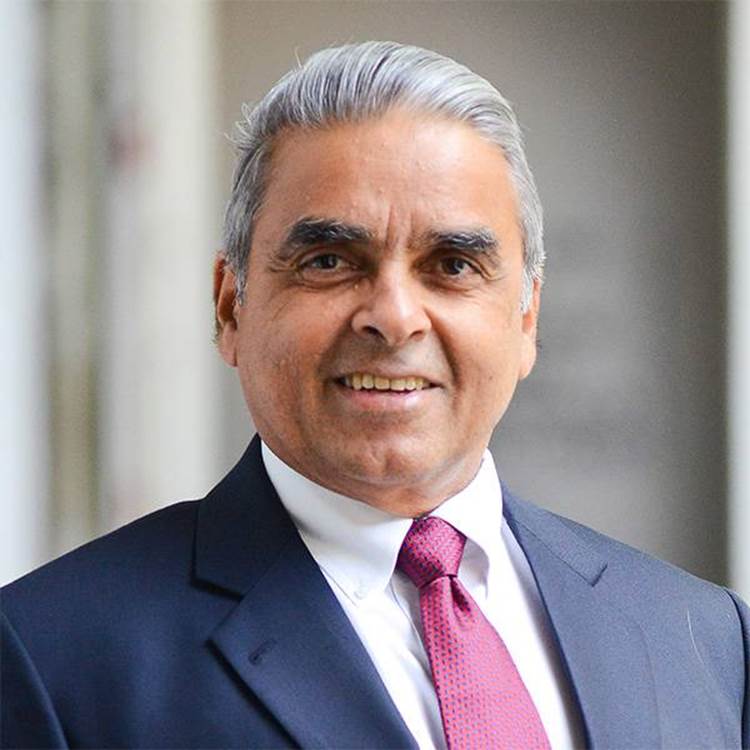
We offer below an excerpt from the latest essay by Kishore Mahbubani, published by Foreign Affairs

The defining geopolitical contest of our time is between China and the United States. And as tensions rise over trade and Taiwan, among other things, concern is understandably mounting in many capitals about a future defined by great-power competition. But one region is already charting a peaceful and prosperous path through this bipolar era. Situated at the geographical center of the U.S.-Chinese struggle for influence, Southeast Asia has not only managed to maintain good relations with Beijing and Washington, walking a diplomatic tightrope to preserve the trust and confidence of both capitals; it has also enabled China and the United States to contribute significantly to its growth and development. This is no small feat. Three decades ago, many analysts believed that Asia was destined for conflict. As the political scientist Aaron Friedberg wrote in 1993, Asia seemed far more likely than Europe to be “the cockpit of great-power conflict.” In the long run, he predicted, “Europe’s past could be Asia’s future.” But although suspicion and rivalry endured—particularly between China and Japan and between China and India—Asia is now in its fifth decade of relative peace, while Europe is once again at war. (Asia’s last major conflict, the Sino-Vietnamese war, ended in 1979.) Southeast Asia has endured a measure of internal strife—in Myanmar especially—but on the whole, the region has remained remarkably peaceful, avoiding interstate conflict despite significant ethnic and religious diversity. Southeast Asia has also prospered. As the living standards of Americans and Europeans have languished over the last two decades, Southeast Asians have achieved dramatic economic and social development gains. From 2010 to 2020, the Association of Southeast Asian Nations (ASEAN), made up of ten countries with a combined GDP of $3 trillion in 2020, contributed more to global economic growth than the European Union, whose members had a combined GDP of $15 trillion. This exceptional period of growth and harmony in Asia is not a historical accident. It is largely due to ASEAN, which despite its many flaws as a political and economic union has helped forge a cooperative regional order built on a culture of pragmatism and accommodation. That order has bridged deep political divides in the region and kept most Southeast Asian countries focused on economic growth and development. ASEAN’s greatest strength, paradoxically, is its relative weakness and heterogeneity, which ensures that no power sees it as threatening.
Keep reading on Foreign Affairs

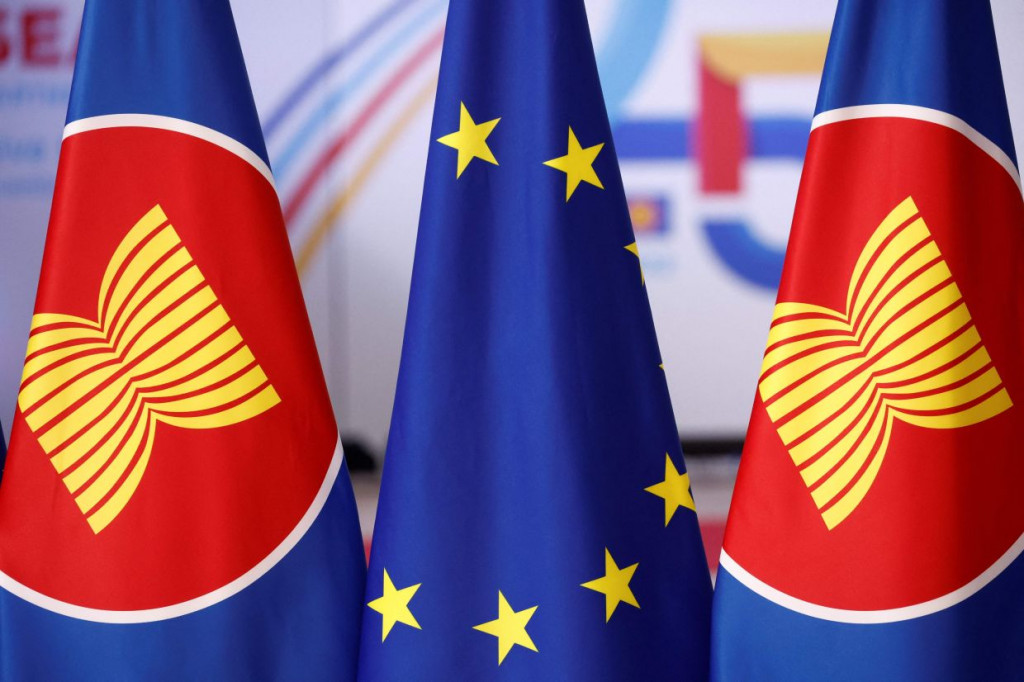
More cooperation between the EU and ASEAN

From trade to green policies, the two blocs are set to deepen their cooperation in 2023

Free trade agreements, trade and investment, energy transition and green policies. There are many points on which the European Union and ASEAN are moving in the direction of further strengthening relations. Indonesia, the rotating chair of the Southeast Asian bloc of nations for this year, has already shown a firm intention to work hard to implement or foster new trade agreements with Europe. The first intention is to complete the Indonesia-EU Comprehensive Economic Partnership Agreement (IEU CEPA). Given the comprehensiveness and high level of ambition of the IEU CEPA, which covers 16 negotiating areas, this is a daunting task but one on which Jakarta has high hopes. The 13th round of negotiations, convened Feb. 6-10, was an initial test case for the prospects of completing the agreement by the end of 2023. And the feeling is that everything will be done to get it done. Singapore and Vietnam have already implemented trade agreements with the EU. A successful conclusion of the IEU CEPA would stimulate Thailand, Malaysia and the Philippines to resume negotiations for similar agreements. As The Diplomat points out, bilateral free trade agreements between the EU and ASEAN countries will then serve as building blocks for a future EU-ASEAN agreement, which will kick the relationship between the two blocs into even higher gear. Then there is the chapter on environmental policies. The European Green Deal is considered among the EU's top priorities in the 2023 strategy on ASEAN and Indonesia. Southeast Asian countries are getting serious about energy transition goals, but some obstacles remain to be overcome. Most notably the EU's no-deforestation rules, which have been negatively received by Indonesia and Malaysia, the world's two largest palm oil producers, who have deemed them "discriminatory" against developing countries. However, the EU has reassured that it is determined to resolve the issue diplomatically, indeed congratulating Jakarta on its progress: "Indonesia's achievements to stop deforestation are remarkable. The target date has been set for December 2022 and there are no sanctions for what has happened in the past," said EU Ambassador to Jakarta Vincent Piket recently. All sides seem intent on resolving any doubts to further strengthen cooperation between the two blocs. At all levels.